
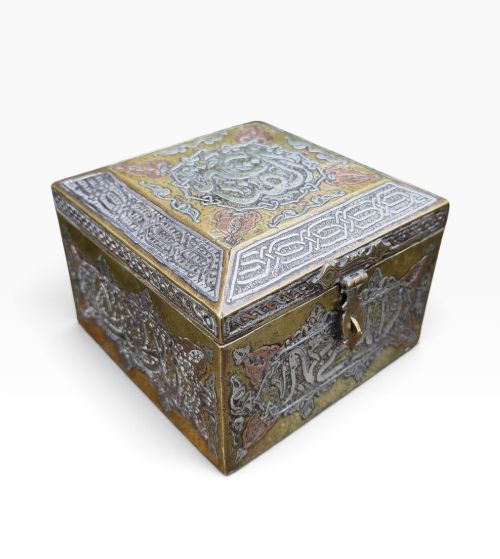
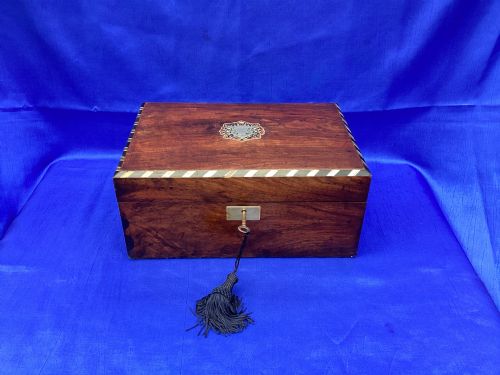
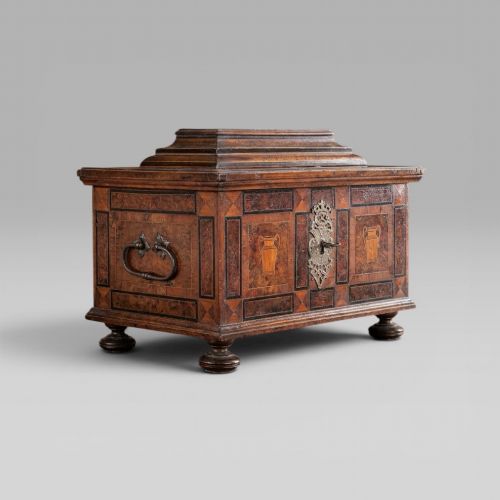
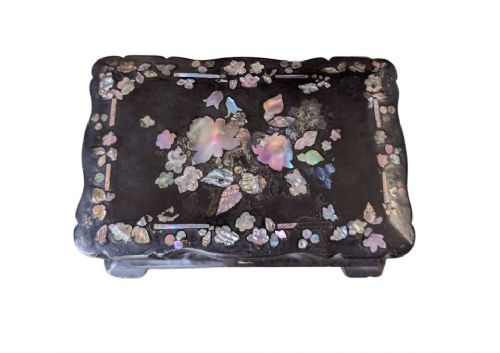
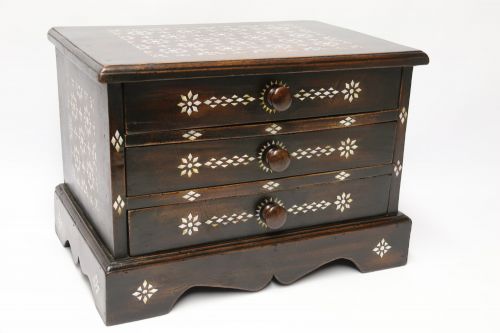
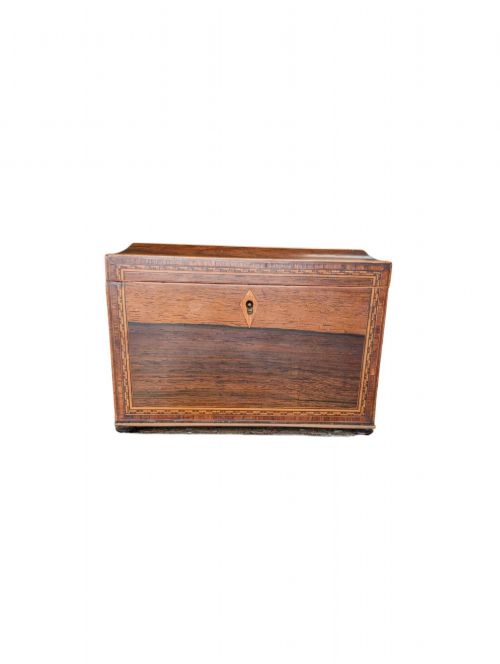

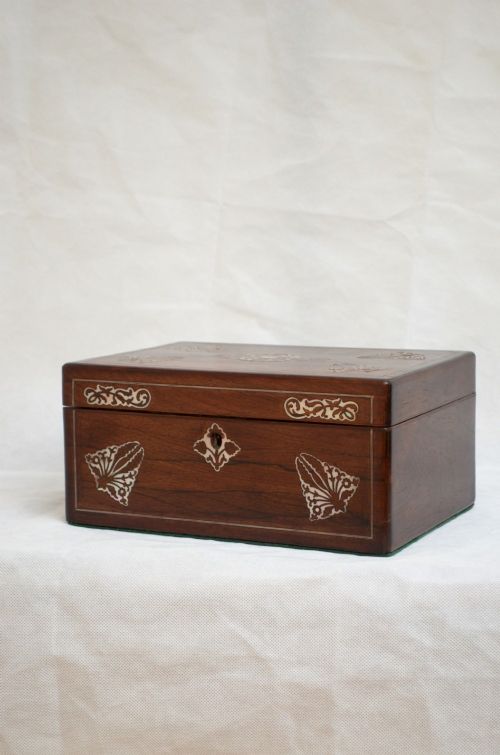

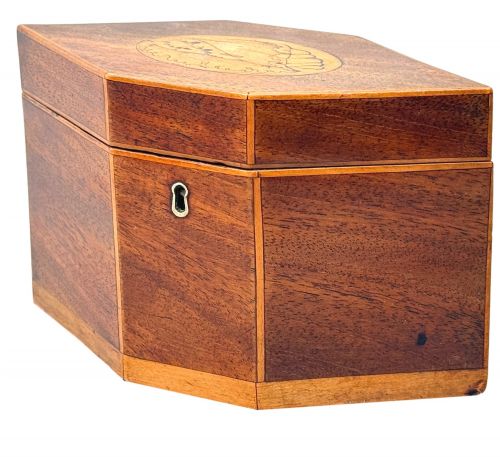
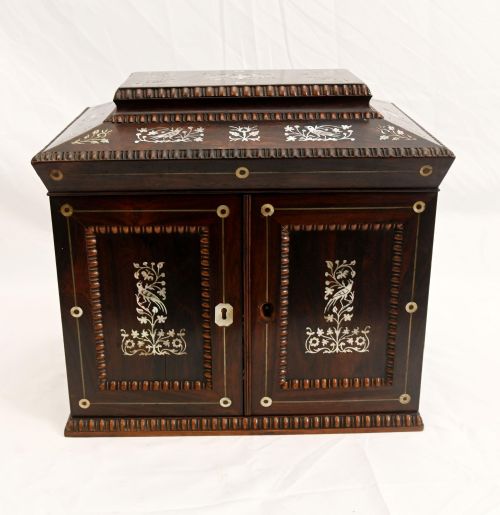


Antique Inlaid Trinket Chest
An antique inlaid trinket chest holds small valuables, combining fine cabinet work with decorative surface detailing from the Georgian, Regency, and Victorian eras.
Antique Inlaid Trinket Chest
An antique inlaid trinket chest appears in forms such as tea caddies, jewellery boxes, miniature chests of drawers, and decorative caskets. These containers served domestic functions for storing tea, jewellery, and personal keepsakes.
The pieces on this page span from the late seventeenth century through the Victorian period and into the early twentieth century. Regional examples include Anglo-Indian, Italian Sorrento Ware, Damascus Mamluk revival work, and Ottoman pieces alongside British Georgian and Regency designs.
How they were made
Cabinet makers built these chests using hardwoods such as mahogany, rosewood, walnut, yew, and coromandel, often utilising burr veneers for figured grain patterns. Frameworks relied on traditional joinery tailored to small-scale furniture and portable boxes.
Decoration involved inlay techniques using contrasting materials like mother-of-pearl, brass, boxwood, bone, and silver. Specialised regional methods such as Tunbridge Ware parquetry and Sorrento wood mosaics created intricate geometric and pictorial surface patterns.
What varies in quality
The standard of execution in the inlay work distinguishes individual pieces, with precise hand-cut geometric or floral motifs representing superior craftsmanship over simpler execution. The selection of base timbers, particularly figured veneers and exotic hardwoods, sets the foundational grade of the object.
Internal arrangements and surviving original fitments, such as fitted trays, velvet or silk linings, and working brass locks with keys, elevate the standing of a box. The crispness of exterior mouldings and the stability of the carcase construction further separate standard production from finer examples.
The Antique Inlaid Trinket Chest Glossary
- Tea Caddy
- A small box or chest originally designed to store loose tea leaves, often featuring internal compartments or mixing bowls. Surviving examples frequently incorporate fine veneers and inlay.
- Tunbridge Ware
- A type of decorative woodwork produced in Kent, characterised by mosaic patterns assembled from thousands of tiny tinted wood blocks. These geometric designs create detailed pictorial images on box lids.
- Parquetry
- A geometric mosaic of wood pieces used for decorative floors and box surfaces. It differs from marquetry by forming regular angular patterns rather than figurative scenes.
- Sorrento Ware
- Italian woodwork originating from the town of Sorrento, featuring inlaid olive wood and micro-mosaic decoration. Pieces often depict architectural scenes or floral motifs.
- Marquetry
- The art of applying pieces of veneer to a structure to form decorative patterns and pictures. Craftsmen cut various woods and shell materials to fit precisely within a prepared recess.
Antique Inlaid Trinket Chest: Frequently Asked Questions
How do I date an antique inlaid trinket chest?
Dating relies on identifying the underlying timber, the construction methods used for the interior compartments, and the prevailing decorative style. Examining the hinges, locks, and fastening screws provides further chronological clues.
Georgian and Regency boxes often feature simpler mahogany or rosewood carcases with brass stringing, whereas Victorian pieces frequently display heavier mother-of-pearl inlay and elaborate fitted trays.
What were these boxes originally used for?
These containers served specific domestic purposes, primarily safeguarding expensive commodities like tea leaves, or housing personal jewellery, documents, and small keepsakes. Interior layouts with partitions, removable trays, and velvet linings reflect these functional origins.
Tea caddies included lidded canisters inside, while jewellery chests incorporated tiered trays and ring slots to organise valuables.
How do I care for a rosewood or mahogany box?
Maintain these wooden chests by keeping them away from direct sunlight and consistent heat sources, which cause timber to warp and veneers to lift. Dust gently with a dry, soft cloth and avoid chemical polishes.
Feeding the wood occasionally with appropriate conservation wax preserves the moisture and lustre of the original polish.
What is the difference between marquetry and parquetry?
Marquetry involves cutting diverse veneers to form pictorial scenes, scrolls, or floral arrangements on the surface of a box. Parquetry constructs geometric, repeating patterns using angled blocks of wood.
Both techniques appear across the periods represented, adding decorative contrast to the primary timber of the chest.