


Inlaid Wooden Tabletop Drawers
Inlaid wooden tabletop drawers bring exceptional cabinet-making skill to small surfaces, offering clever storage disguised as decorative art.
Inlaid Wooden Tabletop Drawers
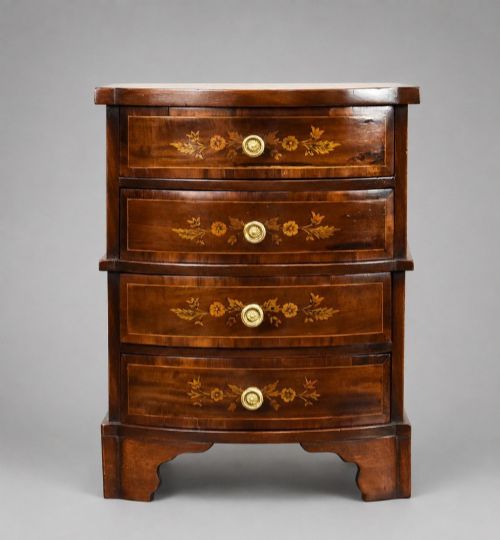
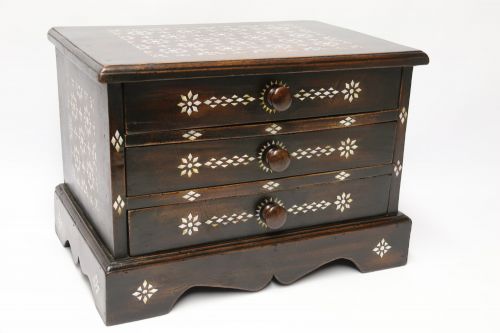
Inlaid wooden tabletop drawers span several centuries of small-scale cabinet making, including miniature chests and dressing mirrors with storage compartments. Buyers seeking inlaid wooden tabletop drawers encounter diverse forms ranging from compact collector cabinets to Georgian and Regency toilet mirrors.
The pieces on this page originate from various periods such as the seventeenth century, Georgian era, Victorian period, and nineteen-twenty. Makers constructed these items in miniature chest formats and desktop configurations to hold precious items or assist with personal grooming.
How they were made
Craftsmen utilised primary timbers like mahogany, walnut, oak, and amboyna to build the core structures of these tabletop pieces. They integrated boxwood inlay, mother of pearl, and brass details to decorate the surfaces.
Marquetry techniques created complex pictorial designs across drawer fronts and mirror frames, particularly in Dutch and Anglo-Indian examples. Cabinet makers fitted bone and specialised hardwoods to provide contrast and structural definition.
Current listings feature pieces spanning the seventeenth century through to nineteen-twenty, utilising brass, mahogany, glass, walnut, and bone.
What varies in quality
The refinement of the inlay work distinguishes standard pieces from superior examples, particularly where contrasting woods meet with precision. Finer items display meticulous attention to detail in the marquetry patterns and the selection of figured timbers.
Proportion and execution of small-scale hardware, such as brass fittings and original mirror supports, indicate the level of care invested by the original maker. The integration of secondary woods and the stability of the miniature drawer construction further separate ordinary items from exceptional ones.
The Inlaid Wooden Tabletop Drawers Glossary
- Marquetry
- Veneers applied to a structure to form decorative patterns or pictures. This technique defines the visual character of many Dutch pieces.
- Bow front
- A convex curved cabinet front that projects outward. This shape appears on select miniature chests.
- Toilet mirror
- A small looking glass mounted on a tabletop stand, frequently fitted with drawers at the base. These serve for grooming and personal use.
- Collector chest
- A small cabinet designed to house specimens or small valuables in shallow drawers. These feature careful internal compartmentation.
Inlaid Wooden Tabletop Drawers: Frequently Asked Questions
What were inlaid wooden tabletop drawers used for?
These pieces served practical storage functions on tabletops and dressing tables, holding small valuables, documents, or personal items.
Versions with attached mirrors combined grooming functions with concealed drawer space for daily accessories.
How do I date an inlaid tabletop chest?
Dating relies on examining the timber species, construction joints, and inlay styles characteristic of periods like the Georgian era or Victorian times.
Secondary woods and hardware types also offer reliable clues to the decade or century of manufacture.
Where should I place these in a room?
Their compact scale allows them to sit comfortably on sideboards, desks, or chests of drawers without dominating the floor space.
Placing them away from direct sunlight protects the delicate inlaid woods and polished timber surfaces from fading.
What is the difference between a miniature chest and a collector cabinet?
Miniature chests replicate full-sized drawer units in reduced scale, primarily for decorative display or safe storage.
Collector cabinets are specifically built with specialised shallow drawers intended for organising small objects and specimens.