






Baroque Floral Marquetry Chest
A baroque floral marquetry chest brings magnificent floral imagery and rich wood tones into a room.
Baroque Floral Marquetry Chest
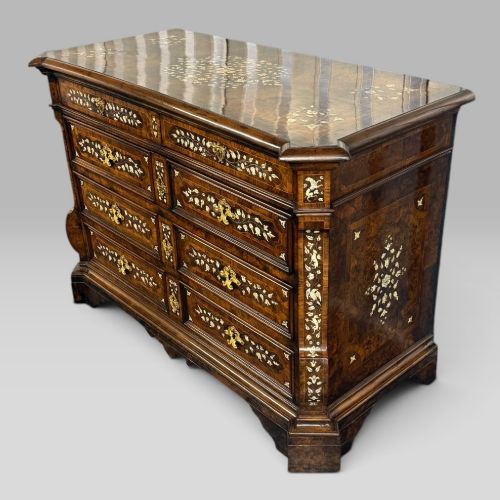
A baroque floral marquetry chest embodies elaborate decorative woodwork designed for storing valuables or linens with distinct continental style. These pieces emerge predominantly in walnut and fruitwood, decorated with intricate floral patterns across the front and drawers.
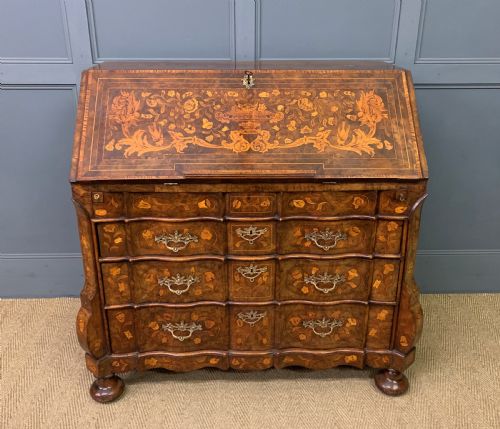
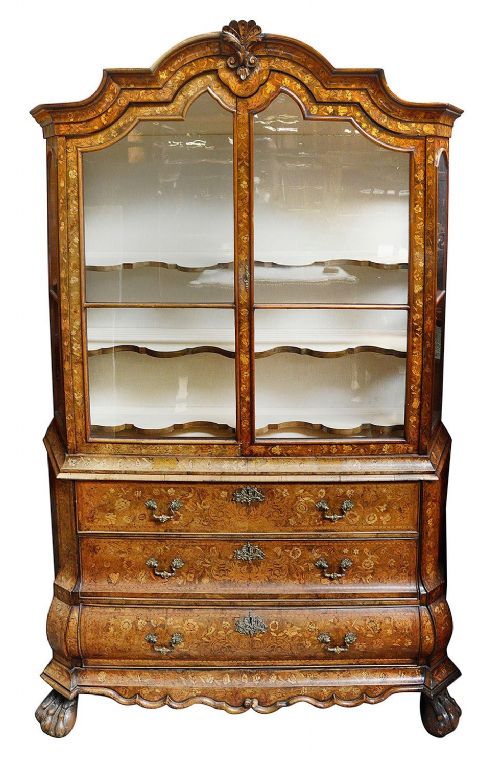
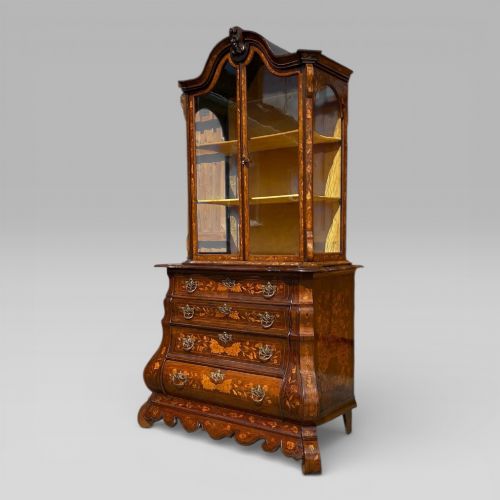
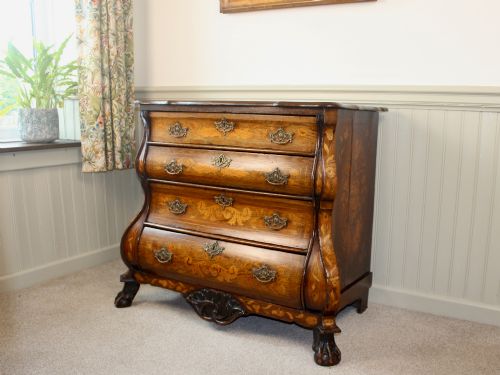
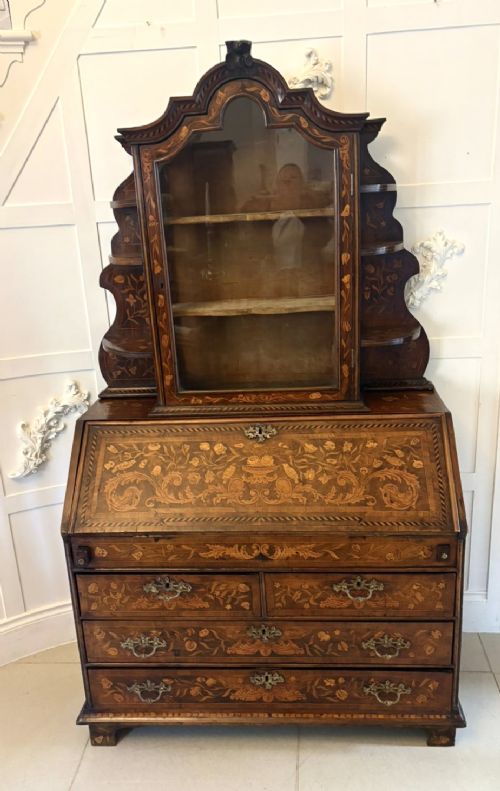
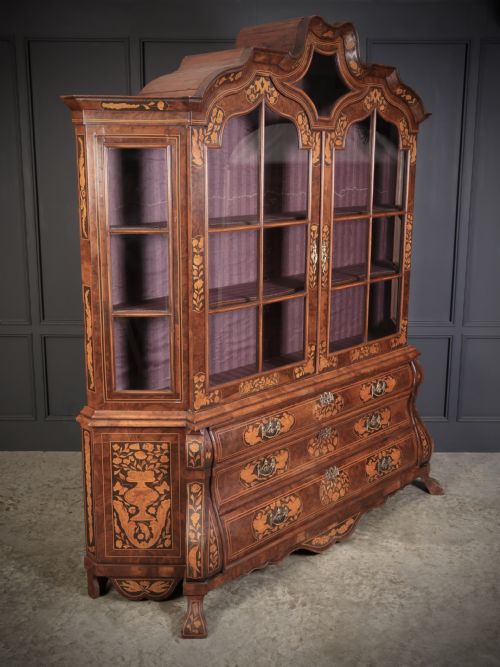
The version most commonly met on this page is the Dutch baroque chest, often featuring bombé shaping or bureau forms from the seventeenth and eighteenth centuries. Makers applied detailed fruitwood inlay to create vibrant botanical motifs that define the aesthetic of these grand items.
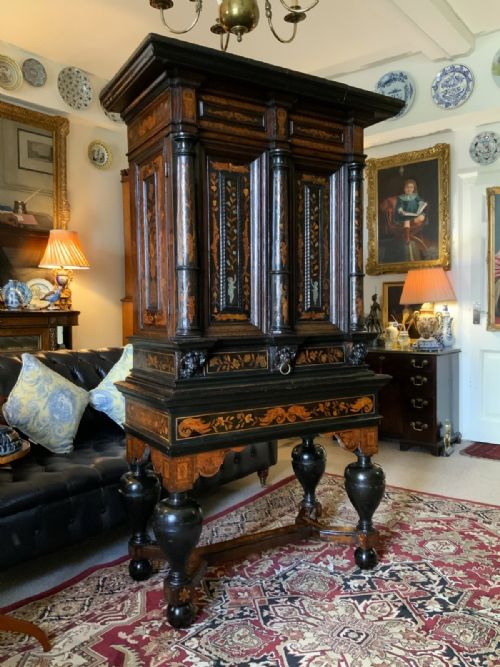
Examples range from substantial bureau bookcases and display cabinets to smaller commodes and apprentice pieces. Each form displays the characteristic floral imagery associated with northern European cabinetmaking of the period.
Assessing quality in marquetry furniture
The standard of the marquetry design and the crispness of the floral engraving determine the grade of the piece. Superior examples exhibit subtle shading within the fruitwood petals and leaves, achieved by scorching the wood edges in hot sand.
Construction details such as the integration of bombé shaping, the choice of secondary timbers, and the preservation of original brass hardware indicate higher workshops. Pieces that maintain their structural integrity alongside vibrant, unfaded veneer tones command greater appreciation.
Cabinetmakers occasionally included tiny inlaid insects hiding among the floral marquetry bouquets to surprise observant viewers.
Edwards and Roberts
The Baroque Floral Marquetry Chest Glossary
- Marquetry
- The art of applying decorative veneer pieces to a structure to form pictorial patterns. This differs from inlay by covering the entire surface rather than set-in recesses.
- Bombé
- A swelling, outward-curved contour found on the sides and fronts of advanced case furniture. The profile adds dynamic movement to seventeenth and eighteenth-century designs.
- Fruitwood
- Dense timber derived from fruit-bearing trees such as pear, apple, or cherry, prized for its smooth grain and warm tones. Artisans utilised these woods to achieve natural colour variations in floral designs.
- Bureau bookcase
- A writing cabinet featuring a sloping desk flap below upper shelving enclosed by doors. These combination pieces served multiple domestic functions in prosperous households.
Baroque Floral Marquetry Chest: Frequently Asked Questions
What is a baroque floral marquetry chest?
A baroque floral marquetry chest is a decorative storage piece adorned with detailed wood veneer floral patterns created during the seventeenth and eighteenth centuries. These items showcase elaborate continental craftsmanship, particularly from Dutch and German workshops.
Such pieces functioned as statement furniture in affluent homes, combining practical storage with artistic displays of botanical imagery. The incorporation of floral motifs reflects the period's fascination with naturalism and horticulture.
How do I care for a marquetry chest?
Protect the veneered surfaces by keeping the piece away from direct sunlight and maintaining stable room humidity. Sudden environmental changes can cause the delicate fruitwood veneers to lift or crack.
Apply a traditional beeswax polish sparingly to nourish the timber and maintain the sheen. Avoid modern liquid cleaners or excessive moisture which can damage old glue beneath the veneer.
How can I tell the period?
Examine the construction methods, secondary woods like oak or pine, and the style of the hardware for clues to the era. Seventeenth and eighteenth-century examples often display hand-cut dovetails and distinct regional carcass framing.
The complexity of the floral marquetry and the presence of specific continental forms, such as Dutch bombé curves, help narrow down the date of manufacture.
Where were these chests made?
These decorative chests originated primarily in continental European workshops, with a strong tradition centred in the Netherlands and Germany. Master cabinetmakers in cities like Amsterdam produced exceptional floral designs for wealthy patrons.
British makers also adopted these continental techniques, creating pieces influenced by Dutch styles during the William and Mary period and subsequent revivals.