



Italian Chest of Drawers
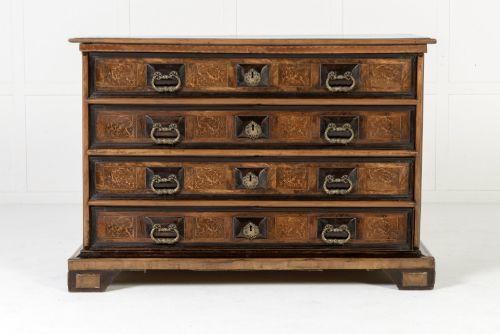
An italian chest of drawers brings continental drama to a room through sweeping serpentine lines, rich fruitwood veneers, and hand-painted Venetian scenes.
Italian Chest of Drawers
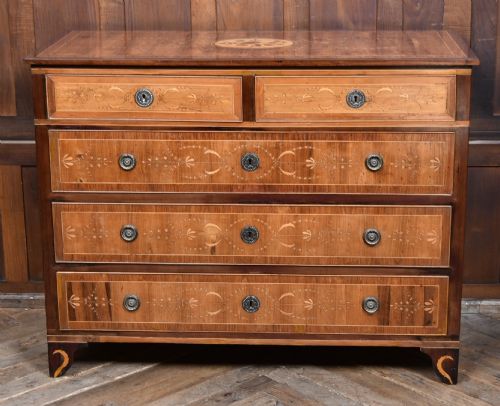
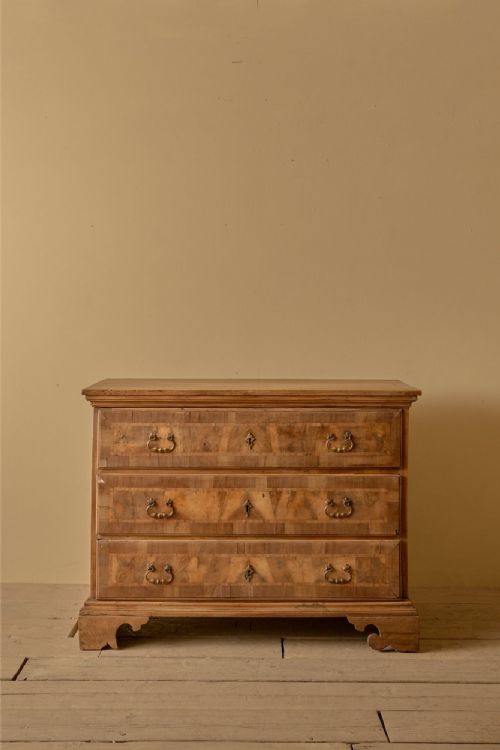
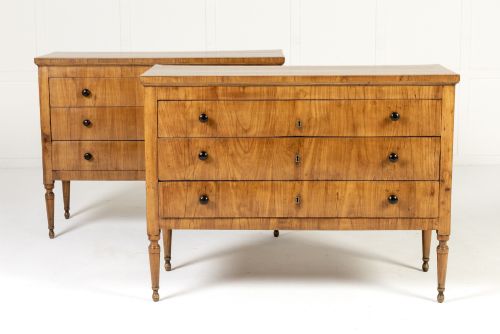
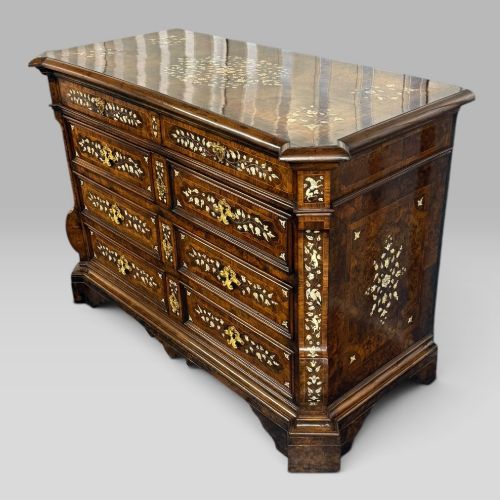
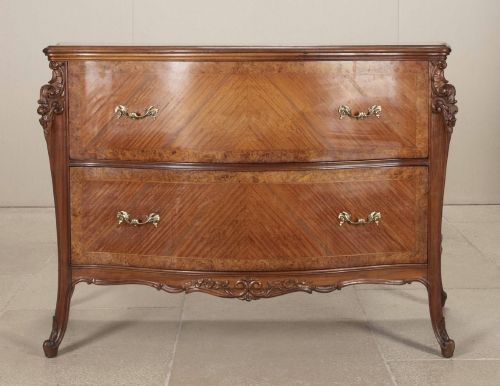
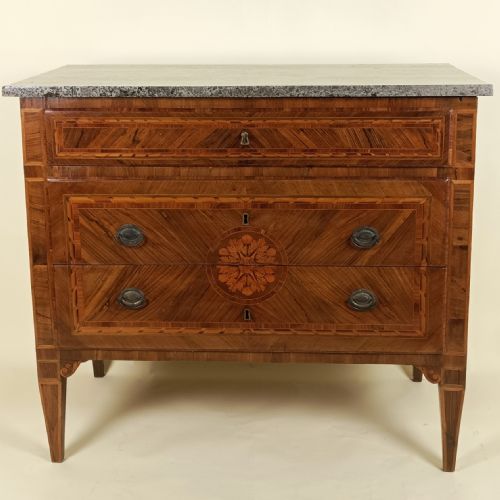
When you search for an italian chest of drawers, you encounter substantial commodes, smaller bedside cabinets, and decorative table chests spanning the seventeenth century to the twentieth century. The primary form on this page is the commode, frequently featuring shaped serpentine or bombe fronts developed during the baroque and neoclassical periods.
Regional diversity shapes these pieces, with northern workshops often employing marquetry and contrasting timbers whilst Venetian makers specialise in painted surfaces and giltwood highlights. Many examples reflect historical revival movements from the nineteenth and early twentieth centuries, adopting eighteenth-century proportions and decorative idioms.
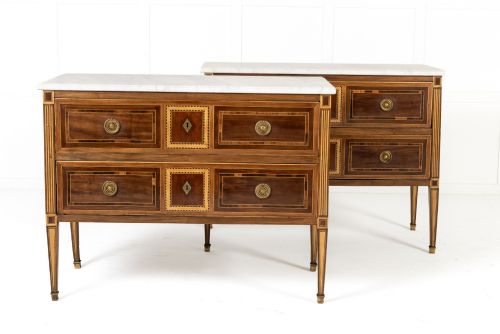
Buyers select these items to anchor a room with architectural presence, utilising the generous timber surfaces and deep drawer configurations for storage. The scale ranges from petite bedside chests to grand salon pieces designed to carry marble slabs and display decorative objects.
Materials and Construction
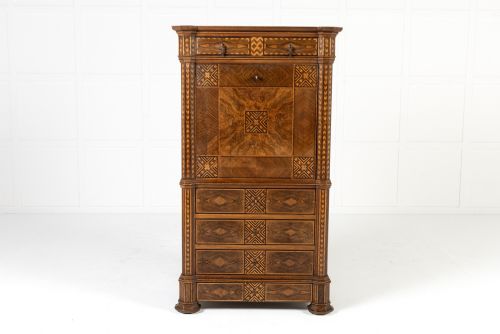
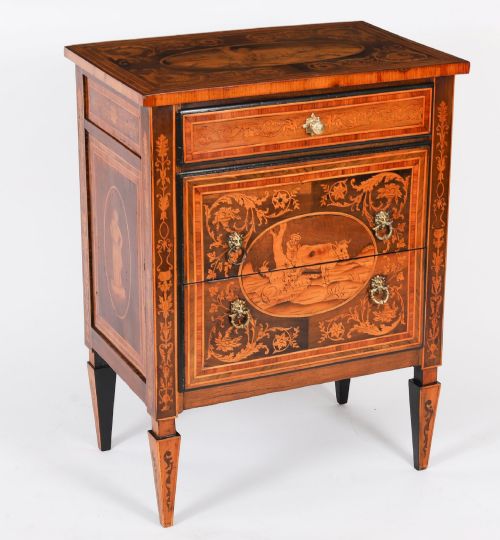
Cabinet makers utilised native and exotic timbers including walnut, burr walnut, fruitwood, olive-wood, and kingwood, often laid as complex veneers across carcases of softer secondary woods. Marquetry panels incorporate contrasting woods and tinted veneers to create geometric patterns or pictorial scenes.
Painted finishes form a significant portion of the selection, employing layered pigments, giltwood accents, and detailed brushwork depicting architectural or pastoral motifs. Many pieces incorporate fitted marble tops in various tones, resting directly upon the wooden framing of the commode top.
Italian Chest of Drawers Retail Price Guide 2026
Typical asking prices for italian chest of drawers among the pieces listed under this phrase on Sellingantiques today, from the lower quarter to the upper quarter. They describe what is for sale here now, not the wider market.
Several painted commodes hide Venetian scenes so detailed that ducks appear to gossip across the drawer divides.
Evaluating Quality
Quality rests upon the precision of the cabinet work, particularly the execution of complex curves such as bombe sides and serpentine drawer fronts where timber must be expertly shaped and jointed. Superior examples demonstrate fluid marquetry alignment across drawer divides and finely carved mouldings that integrate seamlessly with the carcase.
The sophistication of the painted decoration or veneer selection dictates the tier of the piece, with master workshops employing nuanced colour palettes and deep grain patterns. Original hardware, intact marble slabs, and preserved surface patination further distinguish higher-grade historical examples from later adaptations.
The Italian Chest of Drawers Glossary
- Commode
- A low chest of drawers, typically of continental origin and standing on short legs. These pieces often feature decorative veneers or painted finishes rather than plain utility.
- Bombe
- A bulging, outward-curved profile found on the sides and fronts of certain eighteenth-century and revival case pieces. This swollen contour requires advanced woodworking skill to construct.
- Serpentine
- A wave-like front contour curving outward in the centre and inward toward the edges. It defines the silhouette of numerous baroque and neoclassical designs.
- Marquetry
- The art of applying small pieces of veneer to a structure to form decorative patterns or pictures. Craftsmen select various woods to achieve natural contrast without using paint.
- Giltwood
- Timber that has been coated with a thin layer of gold leaf or gesso powder treated to resemble gold. It highlights carved details on high-status furniture.
Italian Chest of Drawers: Frequently Asked Questions
How do I spot a true antique Italian commode?
Examine the construction methods visible inside the drawers and along the backboards, looking for hand-cut dovetails and older tool marks appropriate to the period. Timber shrinkage, hand-forged iron or brass fixings, and natural wear patterns on the interior runners indicate genuine age.
Compare the style of the hardware and the species of secondary woods used in the carcase against documented examples from specific Italian regions. Professional dealers assess the integration of the veneer and the ageing of the underlying glues to confirm the piece's era.
Where should I place an Italian chest of drawers?
These statement pieces suit living rooms, hallways, and grand bedrooms where their decorative fronts and marble tops can be appreciated without crowding the space. A serpentine commode works well against a blank wall as a focal point beneath a mirror or artwork.
Smaller bedside chests fit neatly beside low beds, whilst table cabinets function effectively on top of desks or sideboards. Ensure the room has adequate clearance to allow drawers and cabinet doors to open fully without obstruction.
How do I care for marble top commodes?
Clean marble surfaces regularly with a soft, damp cloth and a neutral cleaner formulated specifically for stone. Avoid acidic liquids like vinegar, wine, or citrus juice, which can etch the polished surface upon contact.
Protect the timber carcase by using gentle furniture waxes on the wooden sections and keeping the piece away from direct heat sources and strong sunlight. Lifting the marble slab carefully during relocation prevents damage to the delicate wooden frame underneath.
What is the difference between baroque and neoclassical styles?
Baroque pieces display dramatic, heavy curves, exuberant carved details, and rich walnut or giltwood finishes designed to project grandeur and movement. The forms are often bold and voluminous, with strong emphasis on sculptural presence.
Neoclassical designs introduce straight, restrained lines, symmetrical marquetry, and architectural motifs inspired by classical antiquity. These later pieces favour lighter proportions and refined geometric inlay over heavy relief carving.