
Antique Mirror Sideboard
When you search for an antique mirror sideboard, you are exploring substantial dining and reception room furniture designed to reflect light and display precious objects.
Antique Mirror Sideboard
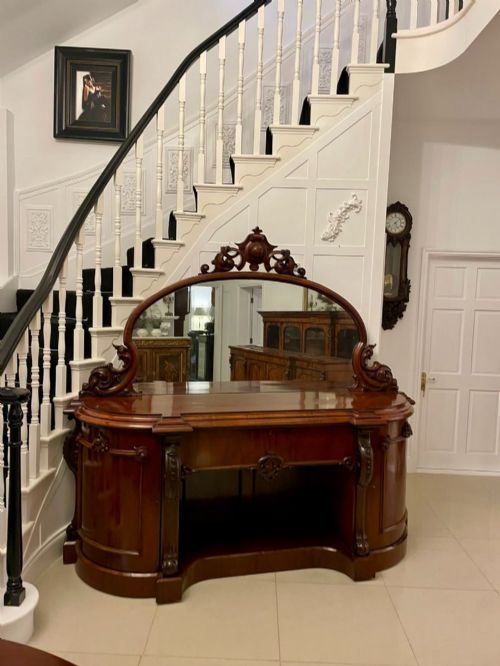
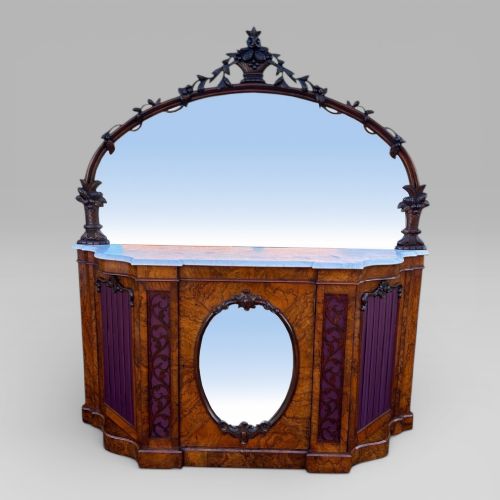
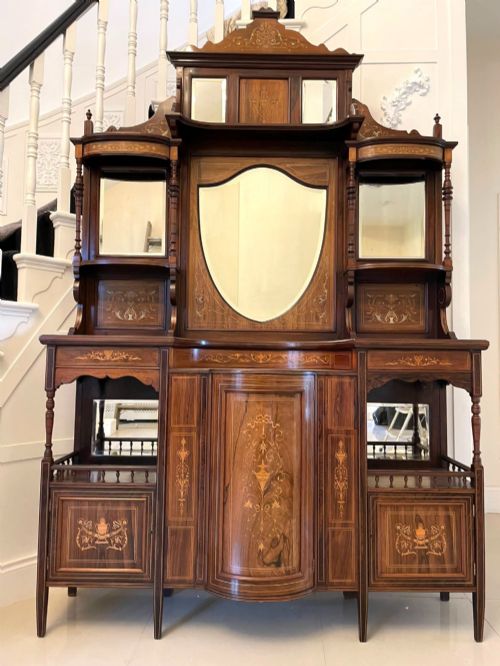
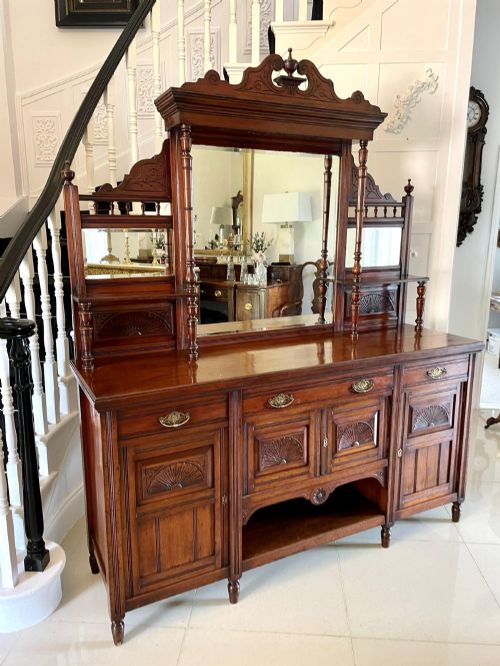
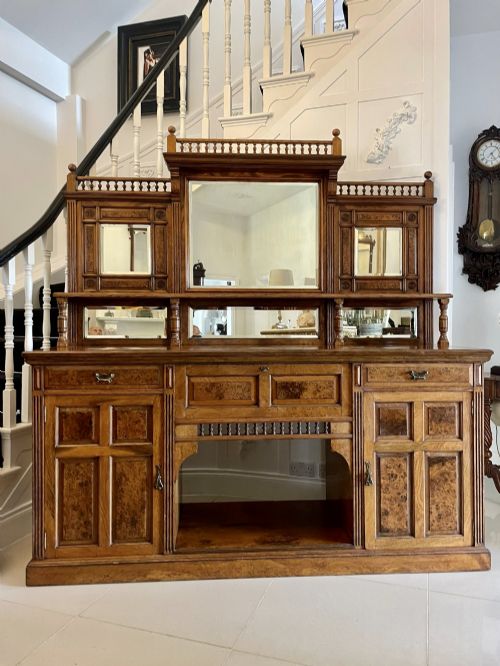
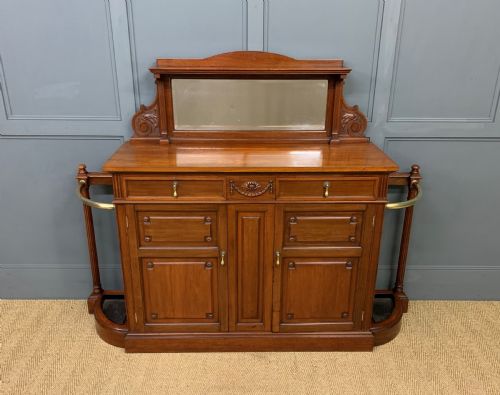
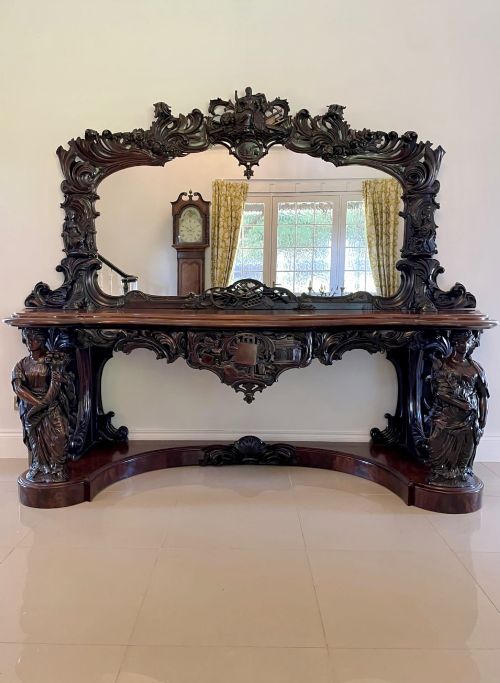
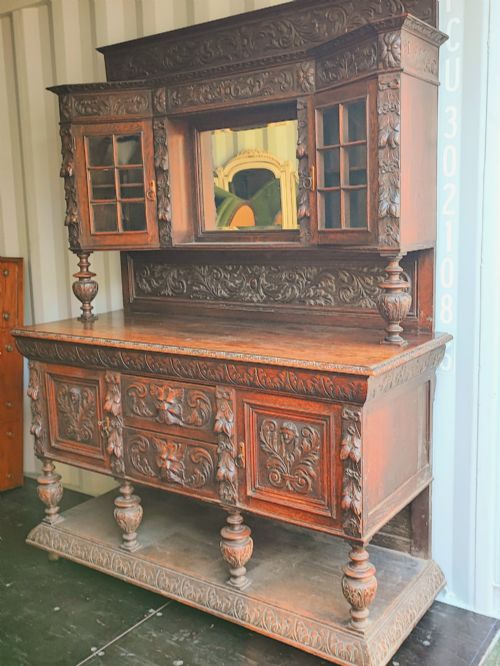
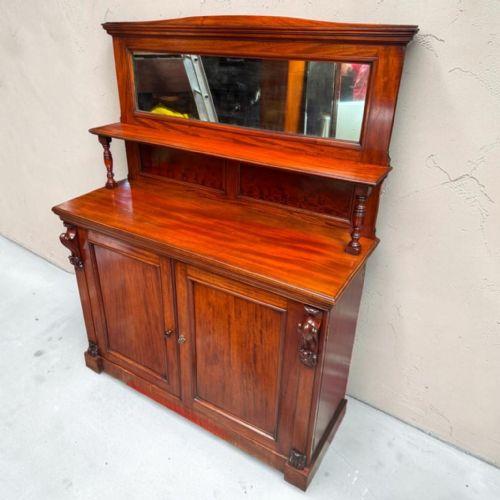
An antique mirror sideboard combines a capacious lower base of cupboards and drawers with an integrated superstructure holding a plate glass mirror. These large dining room and parlour pieces emerged strongly during the nineteenth century, developing from earlier serving tables and low credenzas into monumental architectural furniture.
The most common examples encountered on this page date from the Victorian and Edwardian eras, executed in figured mahogany, burr walnut, or carved oak. They served both practical storage functions and a decorative role in grand reception rooms, utilising the mirror glass to brighten dark Victorian interiors.
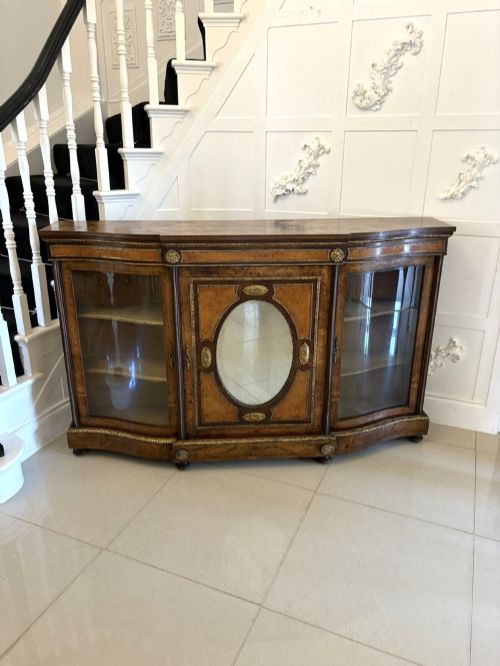
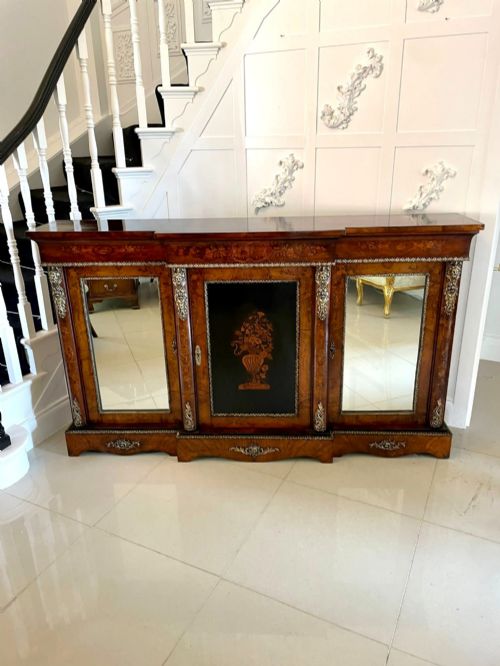
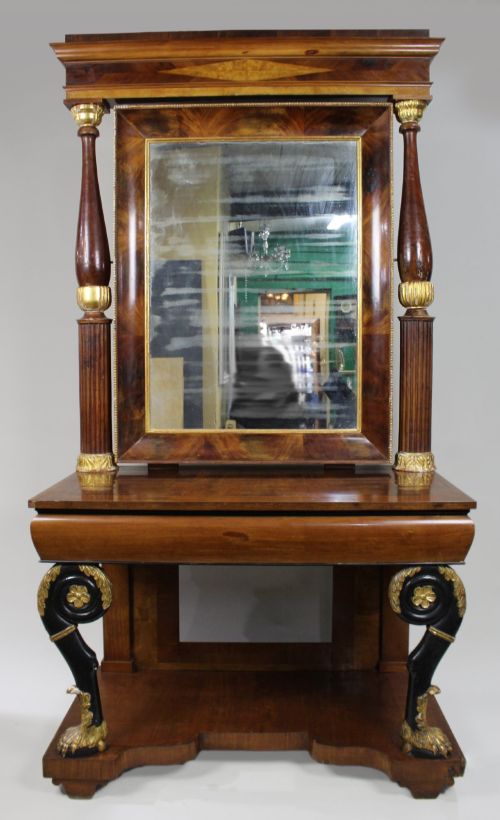
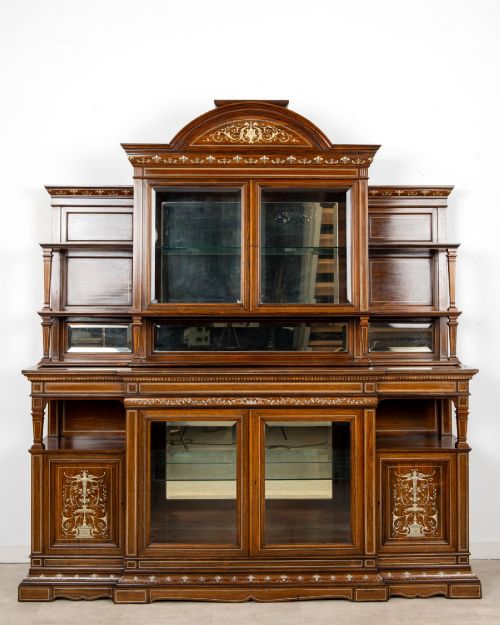
Makers produced variants ranging from simple carved oak buffet cabinets to lavishly appointed credenzas outfitted with ormolu mounts and marquetry inlay. Collectors today find pieces spanning from the Regency period through Arts and Crafts interpretations to early twentieth-century Edwardian designs.
How they were made
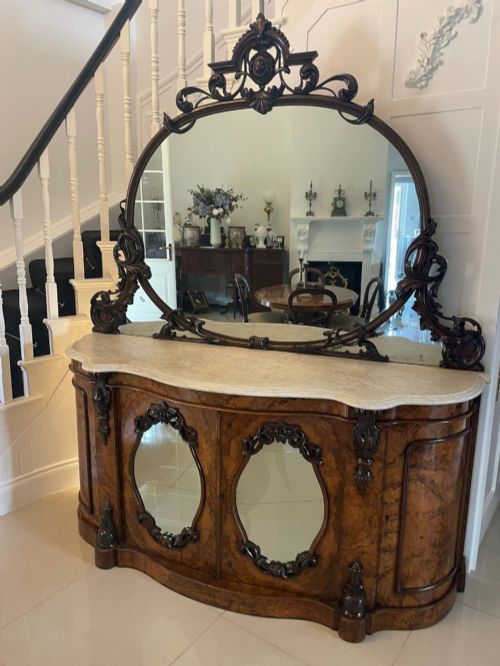
Cabinetmakers constructed the carcase and framing from dense timbers such as mahogany, oak, and walnut, often applying highly figured burr veneers or rosewood to prominent surfaces. Carpenters joined structural elements using traditional dovetail and mortise-and-tenon methods to ensure the heavy base could support both marble tops and towering wooden mirror frames.
The glass mirror plates were silvered by hand or via chemical processes, then secured within carved wooden frames and embellished with brass hardware, parcel gilt accents, or cast ormolu mounts. Workshops employed specialist carvers and marquetry artisans to execute the intricate scrolling foliage, panel inlays, and aesthetic movement details characteristic of the period.
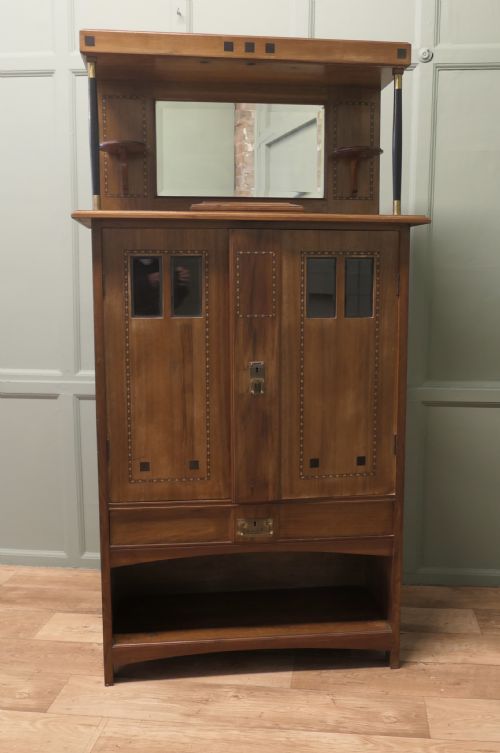
The listings show mirror sideboards spanning from the Regency era through Victorian walnut interpretations to Edwardian Arts and Crafts oak designs.
What varies in quality
The hierarchy of quality rests primarily in the selection of timber and the ambition of the carver's hand. Superior examples utilise deeply figured burr walnut, pollard oak, or solid mahogany, featuring crisp, undercut hand-carving rather than shallow machine-moulded ornamentation.
Construction details distinguish workshop tiers, evident in secondary timbers used for drawer linings, the thickness of the marble slab where fitted, and the integration of the mirror back into the base. Pieces bearing signatures or stamps from prominent cabinet-making firms command greater attention due to documented workshop provenance.
Shoolbred & Co.·Collinson & Lock·Gillows·Lamb of Manchester·James Simpson & Sons
The Antique Mirror Sideboard Glossary
- Credenza
- A low dining room cabinet or sideboard, frequently featuring mirrored doors and ormolu mounts. These pieces were often utilised for displaying silver and porcelain.
- Chiffonier
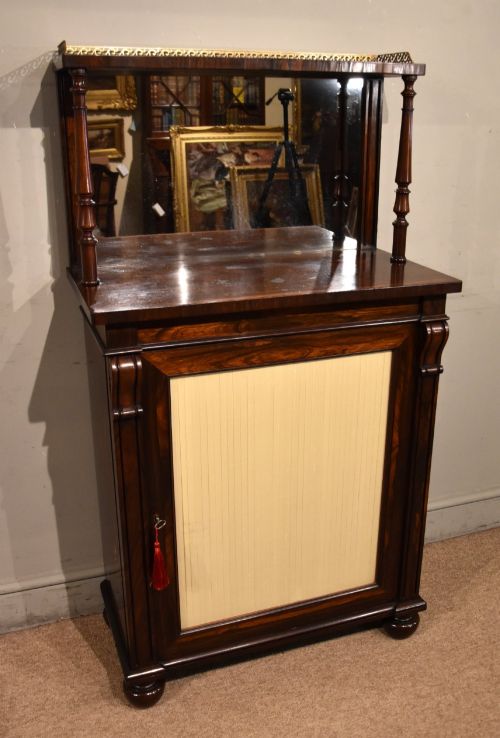
- A compact sideboard or side cabinet developed in the nineteenth century, typically fitted with enclosed shelving below and a small mirror or shelf superstructure above.
- Ormolu
- Gilded bronze mounts cast in decorative scrollwork or classical motifs. Makers applied these brass-alloy fittings to enrich the corners and doors of luxury walnut cabinets.
- Marquetry
- The art of forming decorative patterns using thin veneers of different coloured woods. Craftsmen cut geometric or floral motifs to adorn cabinet doors and drawer fronts.
- Pollard Oak
- Timber taken from trees that were cut back near the trunk to encourage dense, knotty growth. This wood yields highly prized swirling grain patterns on Victorian cabinet doors.
Antique Mirror Sideboard: Frequently Asked Questions
What is an antique mirror sideboard?
An antique mirror sideboard is a heavy reception room cabinet featuring enclosed storage cupboards below and a large framed mirror attached to the upper back. These pieces combined the utility of a serving buffet with the decorative brightness of a wall glass.
Craftsmen built them primarily in mahogany, oak, and walnut during the nineteenth and early twentieth centuries. They served as the central focal point in Victorian and Edwardian dining rooms.
How do I date an antique sideboard?
Dating relies on examining the timber species, construction methods, and stylistic cues present in the carving and hardware. Victorian pieces often display heavy carved walnut or pollard oak, whereas Edwardian and Arts and Crafts examples favour lighter oak or simpler mahogany lines.
Drawer linings, screw types, and backboards offer further clues to the decade of manufacture. Consulting the recorded historical styles helps narrow down the production era.
Are mirror sideboards difficult to move?
These pieces are exceptionally heavy and usually constructed in two main sections, separating the upper mirror superstructure from the lower sideboard base. This modular design assists with transport and placement within a room.
Careful handling is required to protect the heavy glass mirror plates and delicate carved crestings during relocation. Professional antique movers ensure the frame and marble tops remain secure.
Where should I place a mirror sideboard?
A mirror sideboard suits a dining room, hallway, or spacious living room where the reflection can bounce natural light around the space. Positioning the piece opposite a window maximises this brightening effect.
The surface provides an ideal area for displaying silver, decanters, or ceramic collections above the enclosed storage space below.