
Marquetry Commode Cabinet
A marquetry commode cabinet brings patterned wood and fitted storage together, offering a surface for display alongside concealed drawers or doors.
Marquetry Commode Cabinet
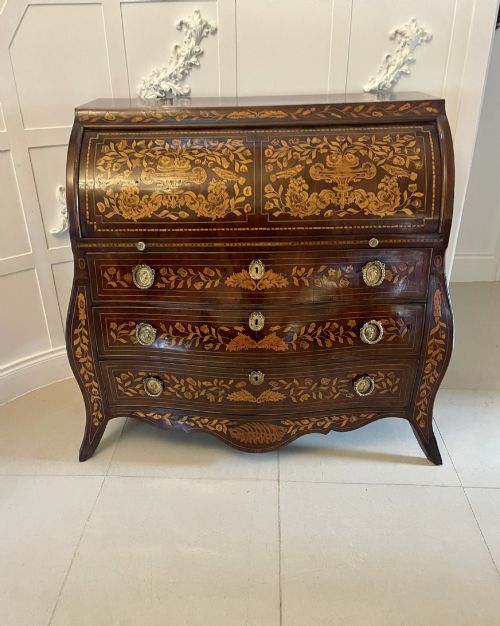
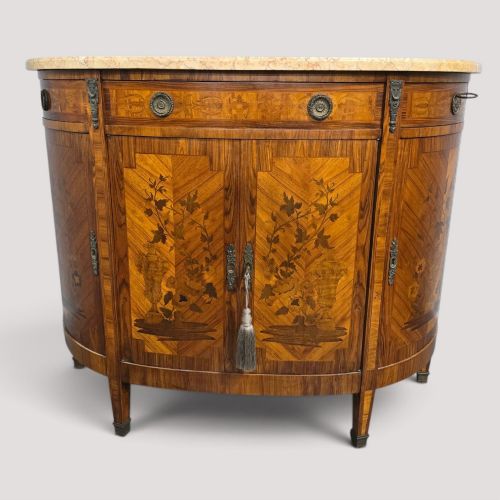
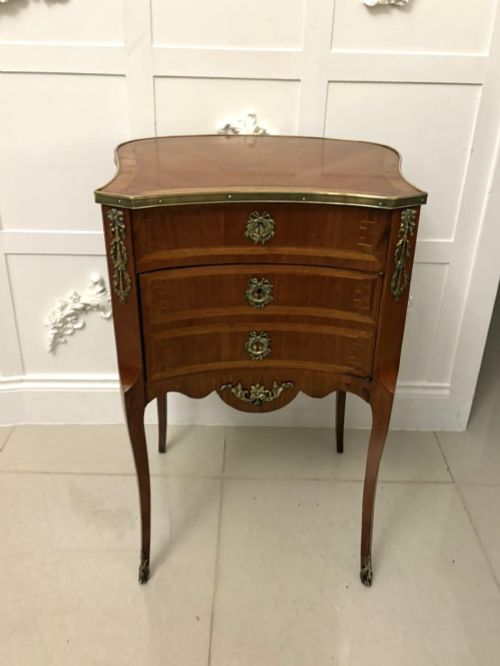
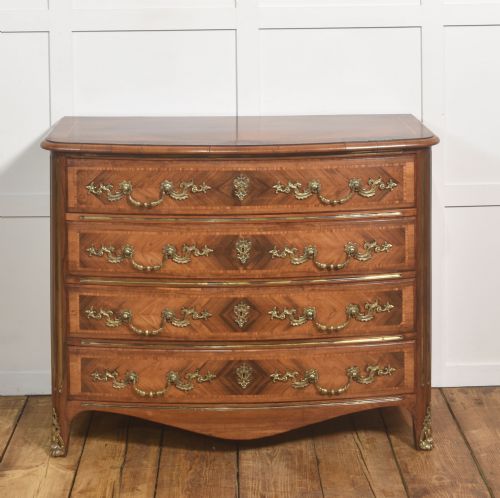
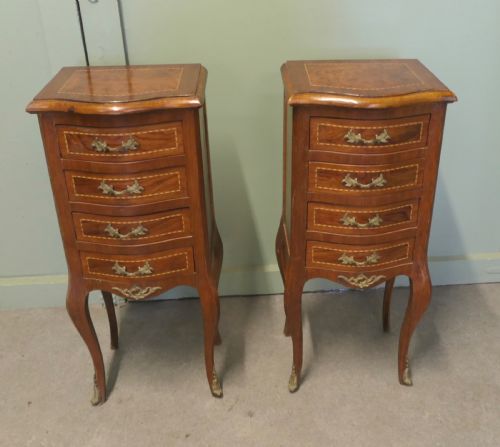
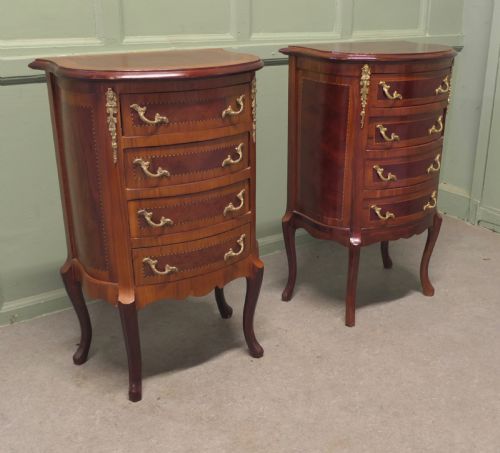
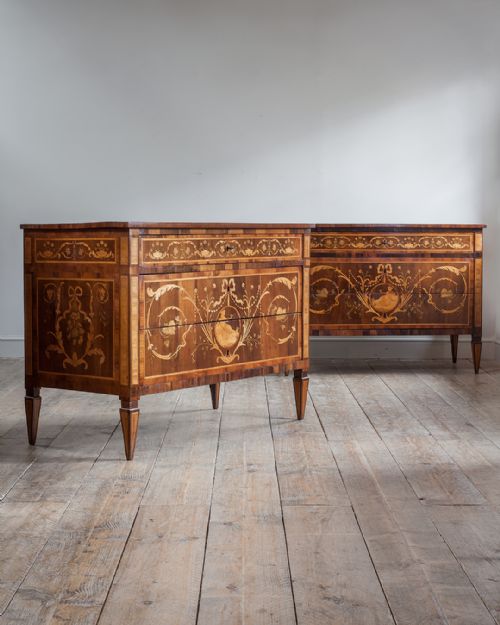
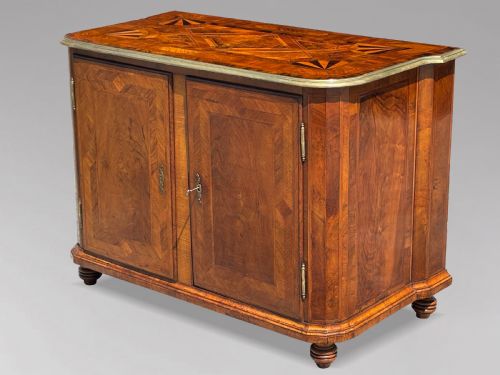
When searching for a marquetry commode cabinet, buyers encounter timber forms designed for storage and display across several centuries. The selections span chest designs, bedside lockers, and taller cabinets originating from French, English, Dutch, and Italian workshops.
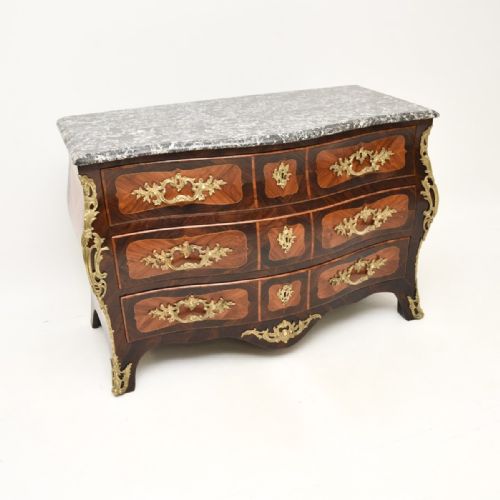
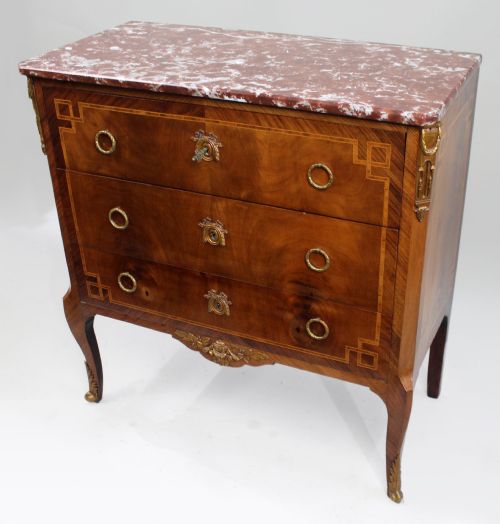
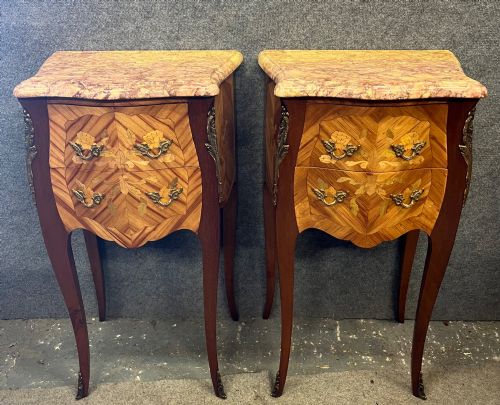
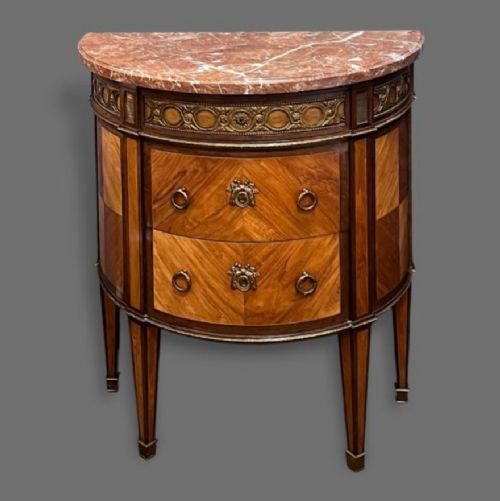
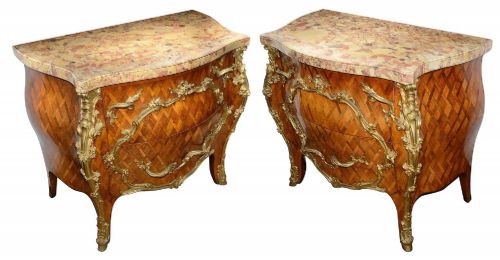
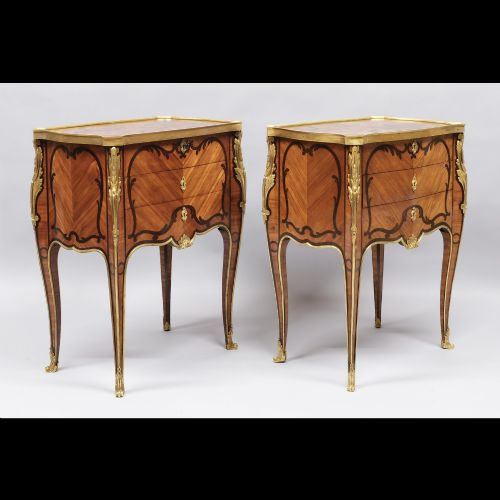
The most frequent examples on this page are French Louis XV and Louis XVI style pieces featuring serpentine fronts, demi-lune shapes, and bombé profiles. These forms frequently combine fitted marble tops with elaborate wood inlays depicting floral or geometric motifs.
Earlier examples date back to the eighteenth century, displaying walnut, mahogany, or satinwood construction alongside regional traits from Dutch or Italian makers. Later nineteenth and early twentieth century revivals mirror these classical shapes using comparable methods.
Materials and construction methods
Cabinet makers constructed carcass frames from solid timbers such as mahogany, walnut, and oak before applying contrasting veneers. Marquetry cutters sliced fine sheets of satinwood, kingwood, and assorted woods to assemble pictorial or geometric mosaic patterns across the drawer fronts and sides.
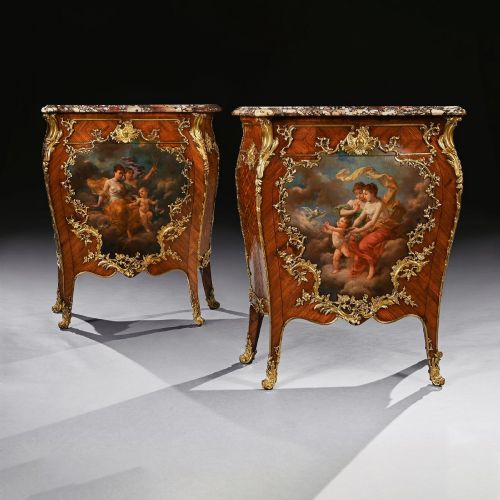
Mounts cast in ormolu, gilt bronze, and brass accent the corners, handles, and feet of continental pieces. Heavy slab marble tops, often shaped to match serpentine or demi-lune timber profiles, rest directly upon the upper surface of the cabinets.
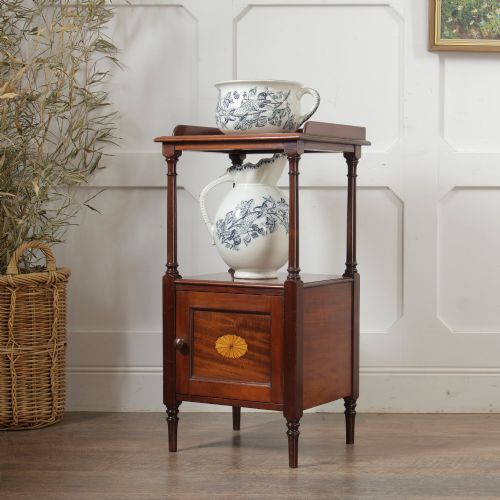
Some nineteenth century nightstands served as discreet pot cupboards, hiding utilitarian porcelain behind grand marquetry doors.
Distinguishing quality in marquetry pieces
The precision and complexity of the wood inlay dictate the visual standard of the piece. Fine workshops employed diverse botanical timbers to create subtle shading and crisp floral details, whereas simpler versions rely on repetitive geometric borders.
The weight and chasing of the ormolu mounts signal the underlying caliber of the furniture. Castings with sharp definition and careful hand-finishing separate superior cabinets from standard commercial production.
Jacques Bircklé·James Hicks·Sormani
The Marquetry Commode Cabinet Glossary
- Marquetry
- The decorative technique of applying fine veneer pieces to a structural carcass to form pictorial or geometric designs. Artisans cut contrasting woods together to ensure tight joints.
- Ormolu
- Gilt bronze mounts applied to furniture for decorative enrichment and edge protection. The technique involves coating cast bronze with a mercury and gold amalgam.
- Demi-lune
- A half-moon or semicircular shape employed in the design of tabletops and cabinets. This profile allows pieces to sit flush against a wall while projecting outward.
- Bombé
- A swollen or bulging convex contour characteristic of rococo case furniture. The curved sides require skilled shaping of both the wooden carcass and its veneer.
Marquetry Commode Cabinet: Frequently Asked Questions
How do I place a marble top commode?
Marble topped pieces suit hallways, living rooms, and bedrooms as focal storage units. Ensure the floor is level so the heavy stone sits squarely on the wooden frame.
Keep the cabinet away from direct heat sources to protect the underlying veneers and timber joints from drying out.
What is the difference between a commode and a side cabinet?
A commode typically refers to a low chest of drawers or a cabinet with drawer tiers designed for domestic storage. Side cabinets often incorporate cupboard doors or open shelving.
Both forms share similar decorative treatments, including marquetry veneers and marble tops, across eighteenth and nineteenth century periods.
How do I care for marquetry surfaces?
Dust the marquetry regularly with a soft, dry cloth to prevent particulate buildup in the veneer joints. Avoid modern silicone sprays that can degrade historic polishes.
Maintain a stable room humidity to prevent the thin veneer elements from lifting or shrinking over time.
How can I tell a revival piece from an eighteenth century original?
Examine the interior secondary woods, construction joints, and backboards for tool marks consistent with specific manufacturing eras. Eighteenth century pieces display hand-cut joinery methods distinct from later factory production.
Stylistic cues also help, as nineteenth century revival makers frequently exaggerated serpentine curves and employed machine-sawn veneers.