
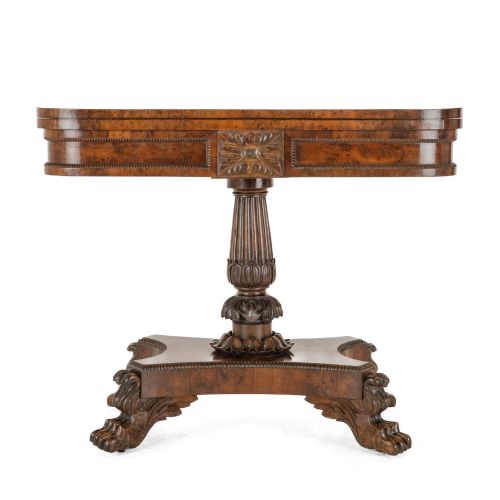


Antique Burr Yew Furniture
Antique burr yew furniture brings together rich swirling timbers and traditional forms, offering pieces that draw the eye in any room.
Antique Burr Yew Furniture
Antique burr yew furniture encompasses items built from the highly figured, knotted growths of the yew tree, prized for their dense and swirling grain patterns. Pieces span centuries, ranging from early examples through the Georgian, Regency, and Victorian eras up to the twentieth century.
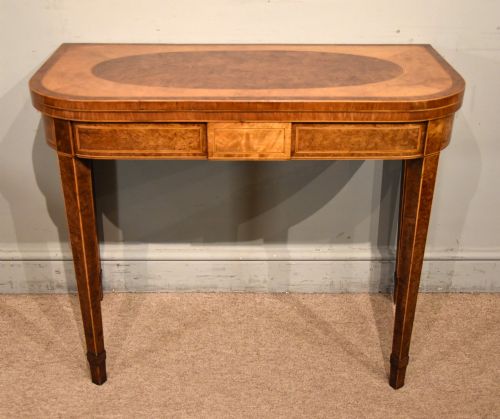
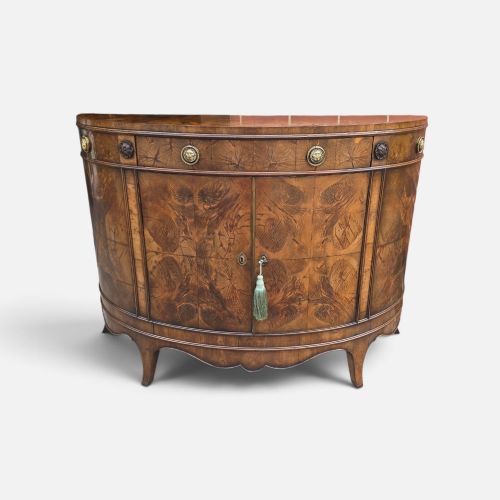
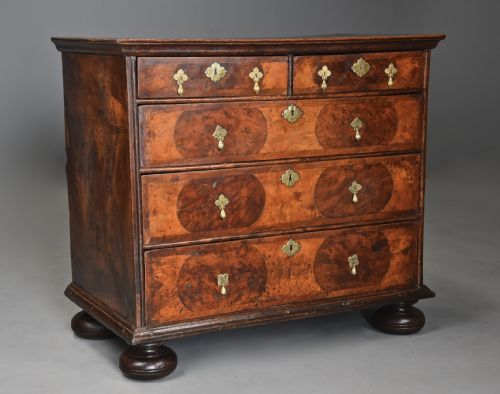
Buyers will encounter a varied selection of forms on this page, including card tables, chests of drawers, side cabinets, and Windsor armchairs. The assortment includes both formal items like demi-lune commodes and side tables, alongside more domestic seating and occasional pieces.
How they were made
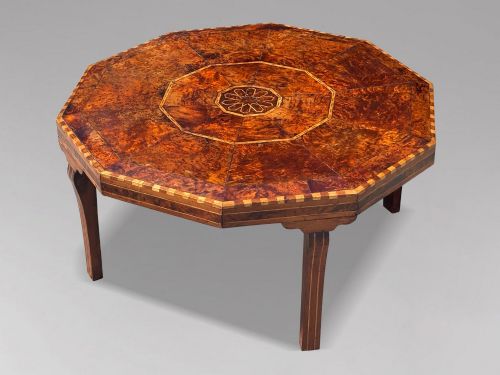
Craftsmen utilised thin veneers of burr yew sliced from knotted burls, laying them carefully over solid foundational woods like yew, elm, or walnut to create striking geometric and symmetrical patterns on tabletops and drawer fronts. This technique required immense skill to handle the unruly, twisting grain of the burr without splitting the timber.
Secondary materials such as brass for handles or castors, satinwood stringing for contrast, and glass for cabinet doors appear alongside structural elements in maple and walnut. Joinery techniques varied from the turned spindles of country Windsor chairs to the fine cabinet-making required for Regency card tables and miniatures.
Listings feature items from the seventeenth century through to the twentieth century, incorporating materials like burr yew, elm, walnut, and brass.
What varies in quality
Quality rests heavily on the exuberance of the burr yew grain and how skillfully the veneer is matched and laid across the surface of the piece. A superior item displays a rich, deep natural colour and a clear, unbroken pattern across the panels.
The refinement of the underlying form also dictates worth, separating robust vernacular country furniture from sophisticated urban cabinet-making. Original surface patination, retention of period brassware, and the crispness of inlaid details elevate certain examples above standard domestic items.
John Moss Worksop·S Jamar of London
The Antique Burr Yew Furniture Glossary
- Burr yew
- The knotted growth or burl of a yew tree yielding timber with a highly swirling, mottled grain pattern. Cabinet-makers sliced this wood into decorative veneers.
- Veneer
- A thin layer of choice wood adhered to a base of a different timber to create decorative surfaces on furniture. This method allowed craftsmen to display expensive grains efficiently.
- Commode
- A movable ornamental chest of drawers or cabinet, often with curved or serpentine fronts. These formal pieces usually date from the Georgian and Regency periods.
- Windsor chair
- A wooden armchair featuring a solid saddle-seat into which legs and spindles are wedged directly. Burr backs and splats frequently appear on these traditional seating items.
- Teapoy
- A small stand or table fitted with compartments for storing tea, which was historically an expensive commodity kept under lock and key. They often sat on central pillars with tripod feet.
Antique Burr Yew Furniture: Frequently Asked Questions
What is burr yew wood?
Burr yew comes from the knotted growths or burls found on yew trees, creating complex, swirling patterns within the timber.
Cabinet-makers slice this figured wood into thin veneers to cover furniture surfaces.
How do I care for antique yew furniture?
Keep wooden pieces away from direct sunlight and steady heat sources to prevent the timber and delicate veneers from drying out.
Apply traditional wax polish occasionally and buff gently with a soft cloth to maintain the surface sheen.
Are these pieces made of solid yew?
While some vernacular items like Windsor chairs incorporate solid yew, many formal tables and cabinets utilise thin burr yew veneers.
These decorative veneers are laid over secondary structural woods such as elm, walnut, or plain yew.
What period are most items from?
The selection spans multiple eras, with significant representation from the Georgian, Regency, and Victorian periods.
Earlier examples from the seventeenth century and later twentieth-century items also appear among the listings.