
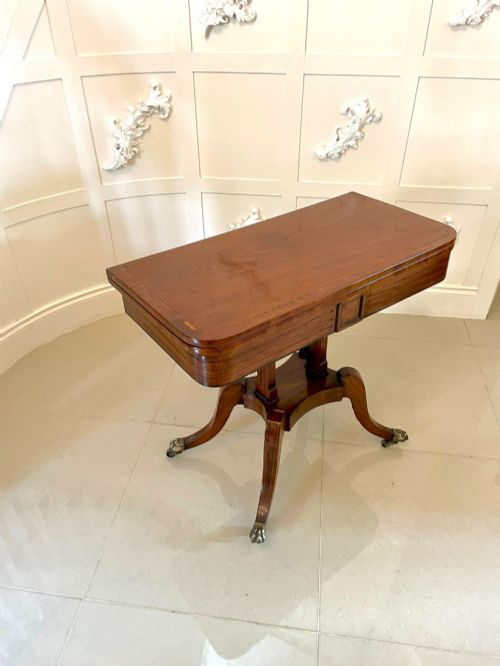
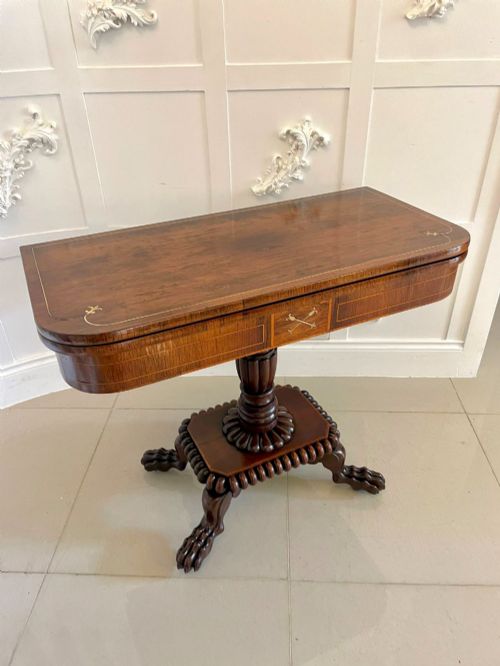
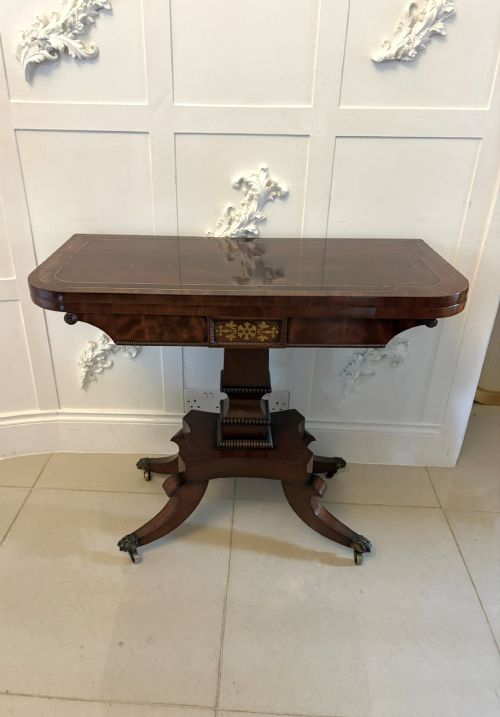
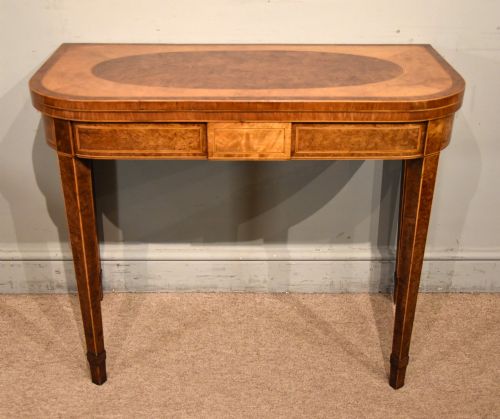
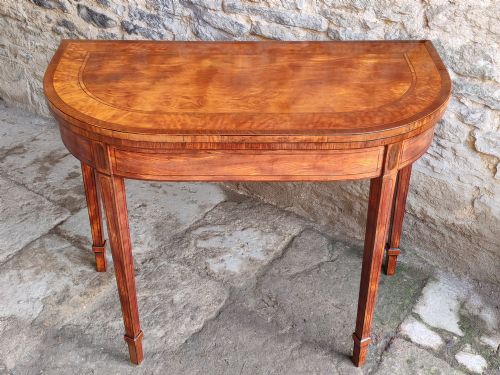
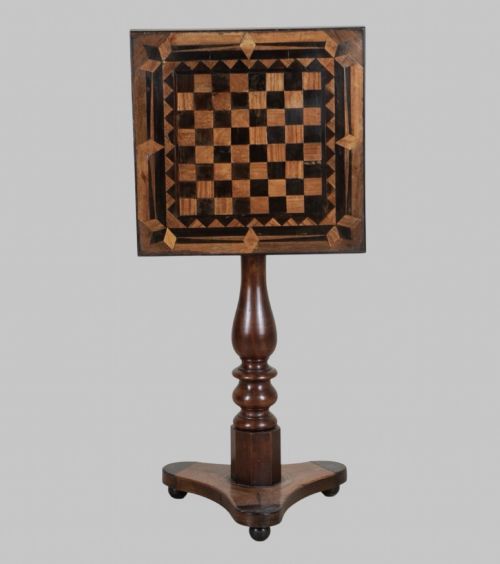
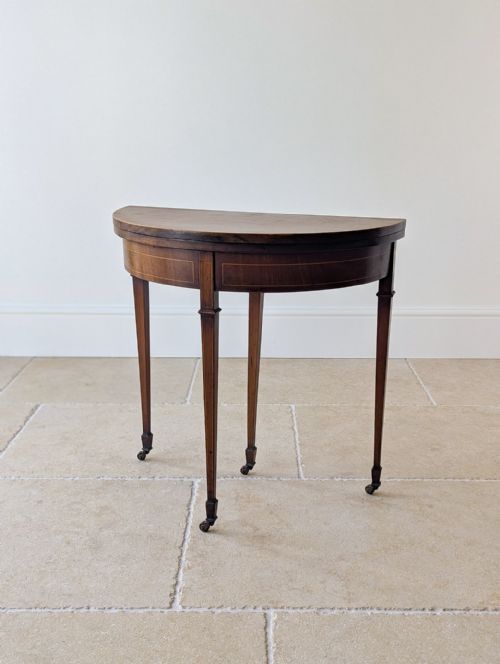
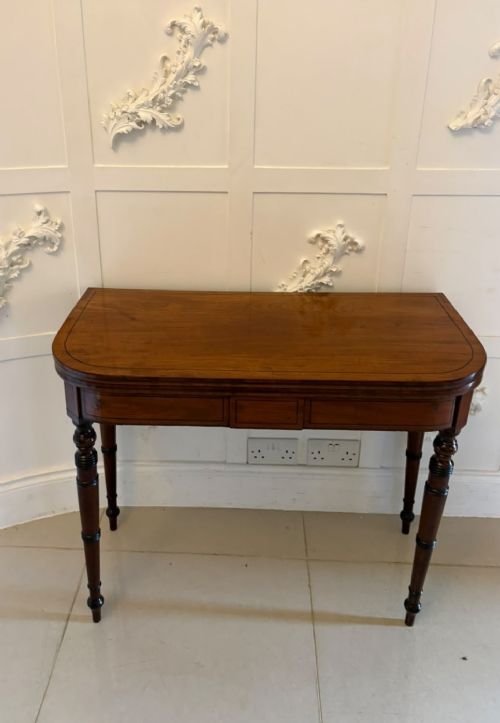
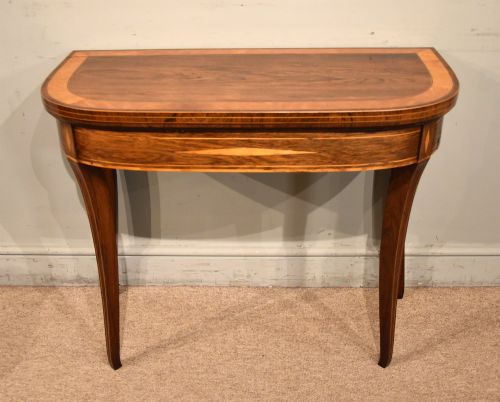
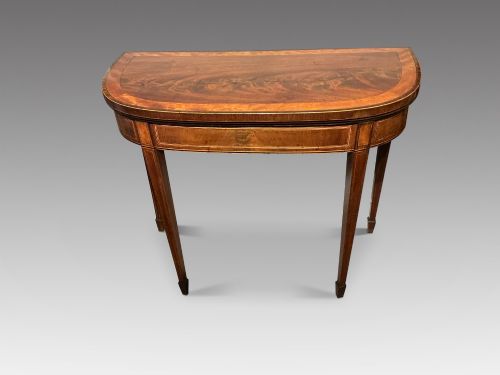
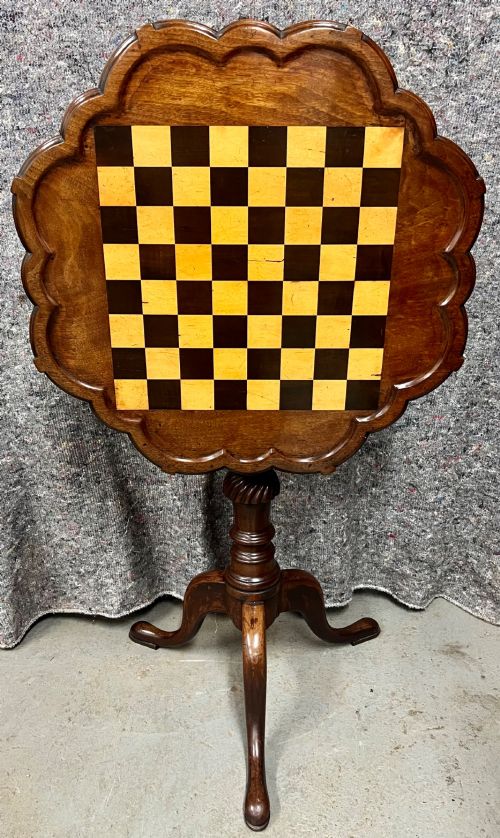


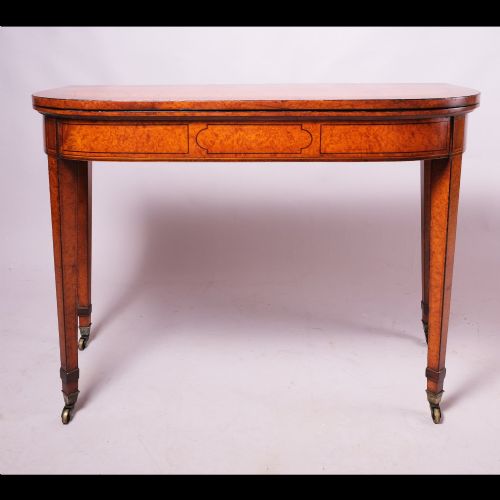
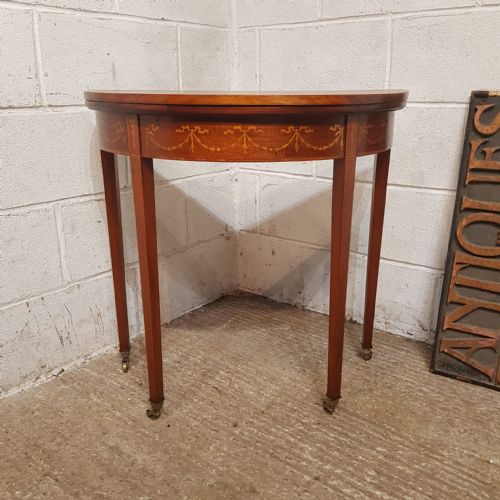
Georgian Inlay Games Table
A georgian inlay games table offers a clever folding top for play and display, combining cabinet work with social history.
Materials and Techniques
Cabinet makers utilised dense timbers such as mahogany and rosewood for structural stability, applying veneers of satinwood, boxwood, ebony, and amboyna to create figured surfaces. Brass inlay appears frequently to accent the contours of Regency tops and friezes.
Inlay techniques combined contrasting woods and fruitwood to form geometric stringing and pictorial motifs, while hinges allowed tops to turn over or fold flat when shifted from tea service to card games.
Judging Quality
Quality rests upon the selection of timber figures, where richly grained Honduras mahogany or meticulously matched satinwood elevates the visual weight of a piece. The crispness of the inlay and the precision of the mitres reveal the competence of the workshop.
Construction details dictate longevity, from the tight fit of fold-over hinges to the balance of tripod bases and the integrity of internal pivot mechanisms designed to support the weight of the open top.
Listings feature pieces spanning the 18th century, Georgian, Regency, and Edwardian periods, constructed from mahogany, satinwood, and rosewood.
Bruce & Burns of Edinburgh
The Georgian Inlay Games Table Glossary
- Demi-lune
- A half-moon shape popular for console and card tables designed to stand flat against a wall when closed. This form allowed tables to occupy minimal space until opened for use.
- Fold-over top
- A hinged wooden surface that doubles in area when unfolded to reveal a baize-lined playing surface or polished timber. It rests on pivoting legs or a swinging gate-leg frame.
- Stringing
- Thin lines of contrasting wood inlay used to outline borders, edges, and panels. It creates subtle definition on mahogany and satinwood surfaces.
- Tripod base
- A central pillar supported by three spreading feet, commonly found on chess and occasional tables from the George III period. This construction provides stable support on uneven floors.
Georgian Inlay Games Table: Frequently Asked Questions
What is a georgian inlay games table used for?
These tables served primarily as multi-functional furniture for the parlour, functioning as side or console tables when closed and opening to accommodate cards, chess, or tea.
Their dual nature allowed households to save space while maintaining formal entertaining standards during the Georgian and Regency periods.
How do I identify a Regency period table?
Regency pieces often incorporate brass inlay, rosewood veneers, and bolder geometric motifs reflecting early nineteenth-century design tastes.
They frequently feature demilune shapes or rectangular tops supported by heavier pillar bases compared to earlier eighteenth-century forms.
What woods are common in these tables?
Mahogany forms the primary structural carcass for the majority of examples, supplemented by Honduras mahogany for figured tops.
Satinwood, rosewood, boxwood, and ebony appear as contrasting veneers and stringing to create decorative borders and inlaid motifs.
How do I care for an antique wood surface?
Keep wooden tables away from direct sunlight and steady heat sources to prevent the shrinkage and splitting of delicate veneers.
Apply traditional wax polish sparingly and buff with a soft cloth to preserve the natural lustre of the aged timber.