


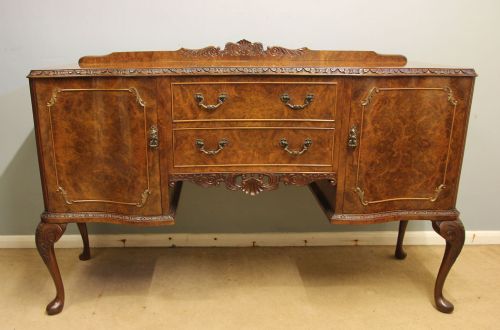
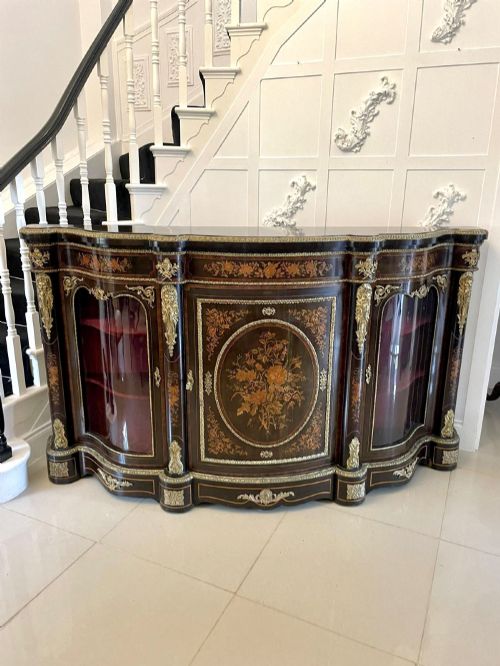
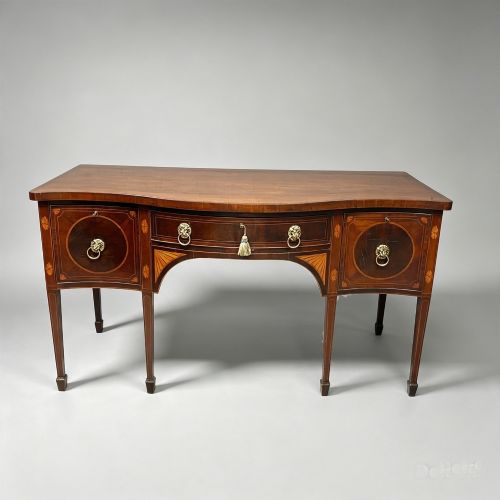
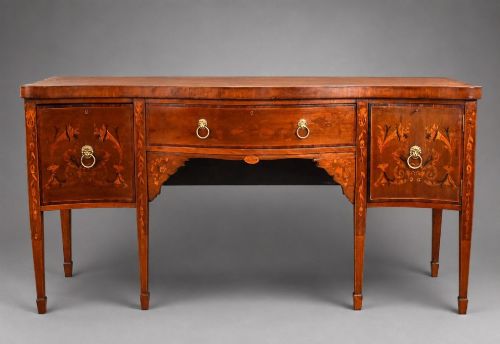
Antique Serpentine Credenza
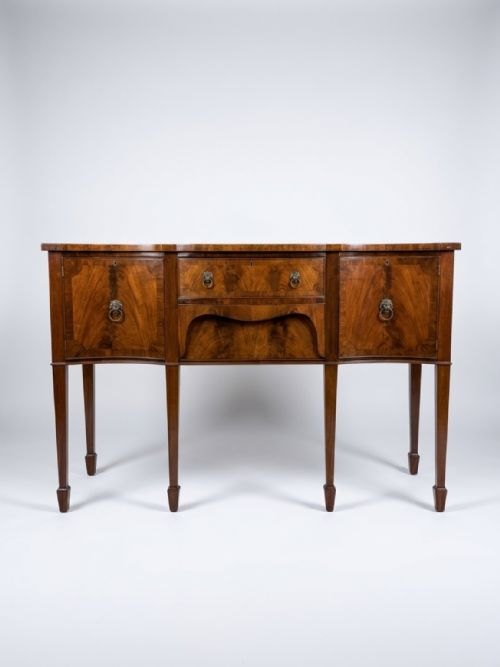
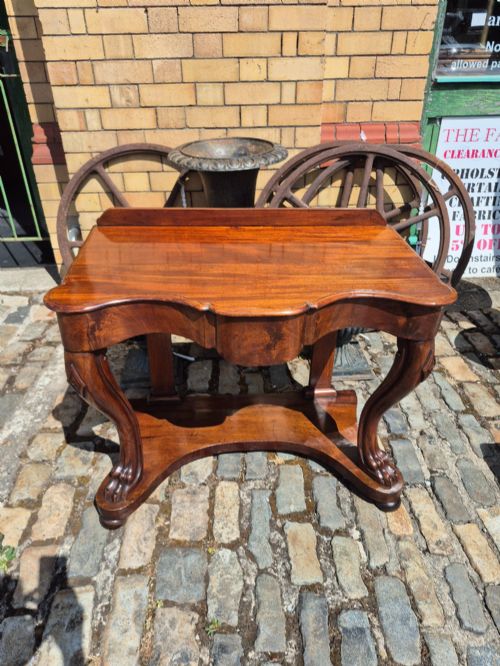
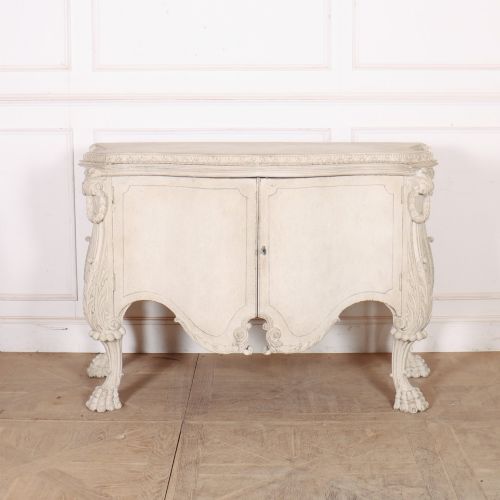
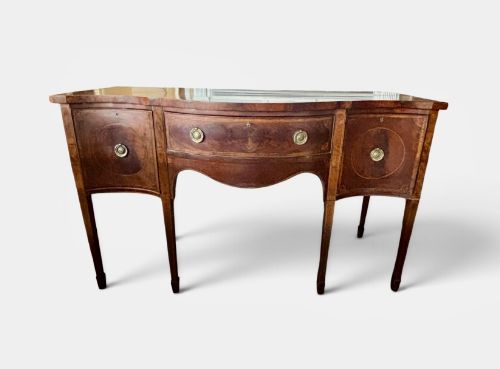
When you want an antique serpentine credenza, you are looking for a cabinet with a curving, undulating front that combines storage with display.
Antique Serpentine Credenza
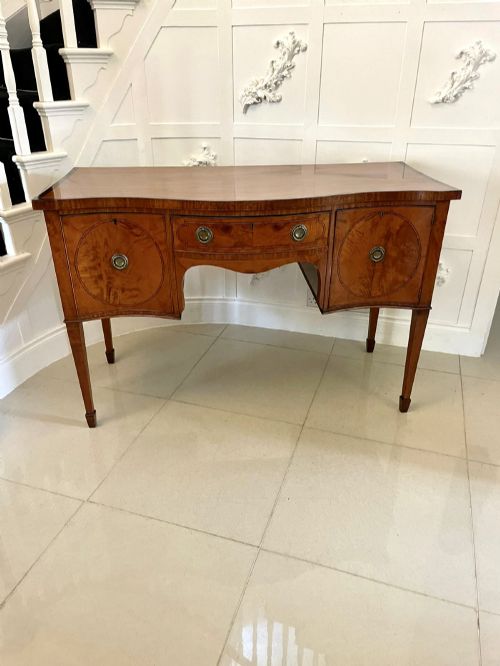
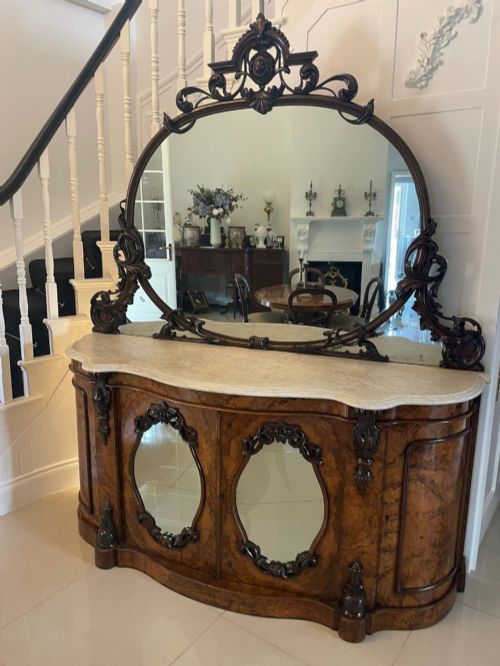
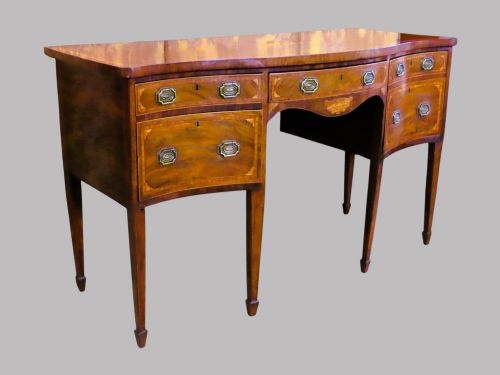
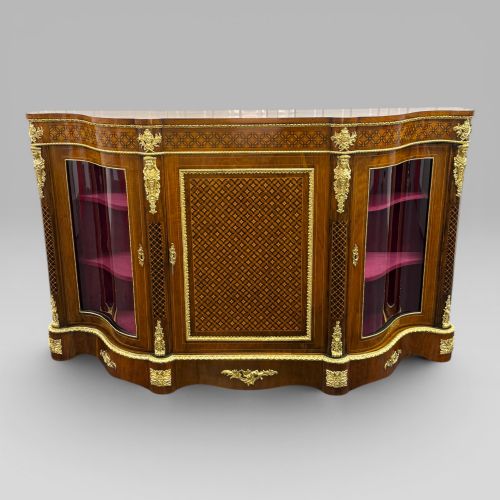
An antique serpentine credenza is a substantial cabinet designed for the principal rooms of a grand home, uniting the enclosed storage of a sideboard with the display capabilities of a pier cabinet. The form is defined by its undulating serpentine front, which curves outward in the centre and inward at the sides, or vice versa.
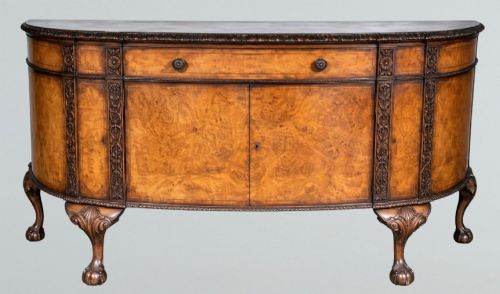
The versions you will most commonly meet on this page date from the Victorian period, frequently fashioned from burr walnut with rich marquetry and ormolu mounts. Alongside these mid-nineteenth-century examples appear Georgian mahogany iterations and later Sheraton or Chippendale revival pieces from the early twentieth century.
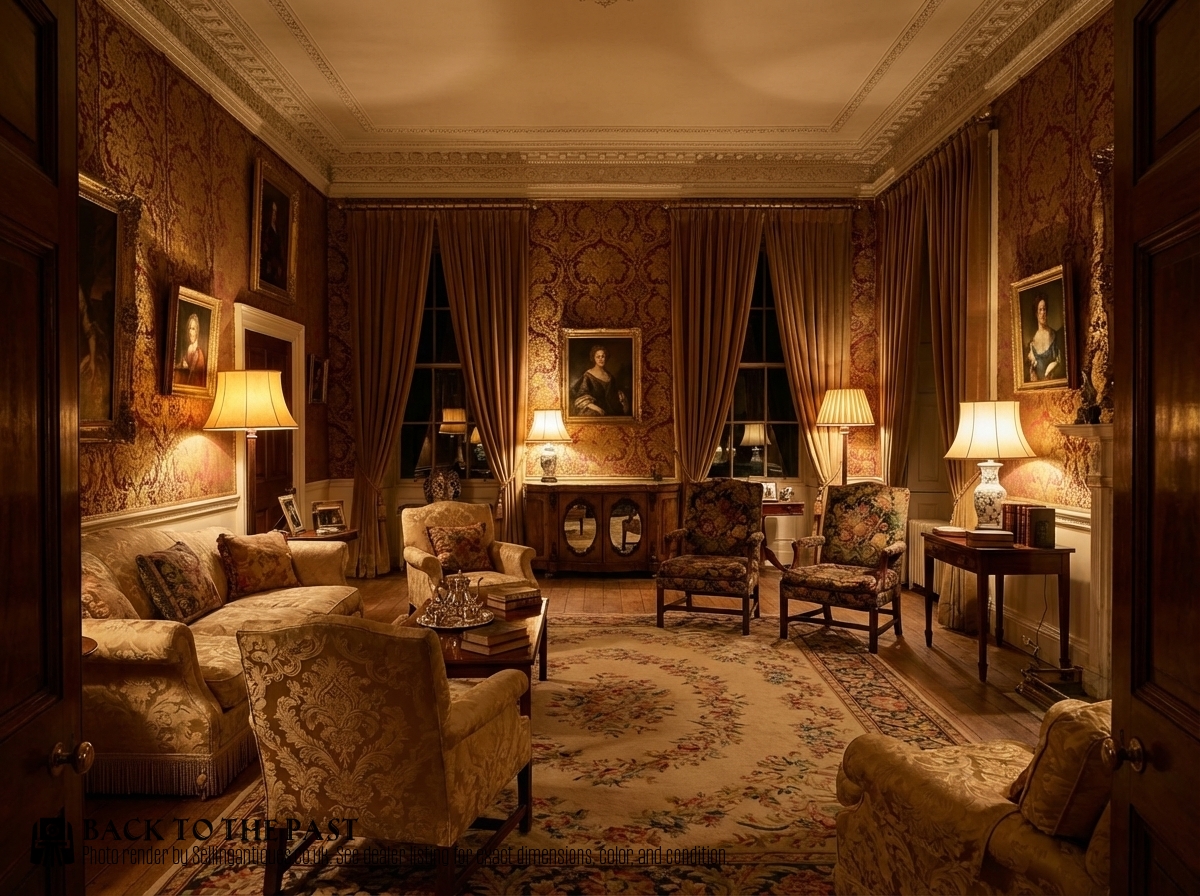
These pieces served variously for storing dining silver, displaying porcelain, or providing a grand surface for serving. Their distinctive footprint allows them to sit flat against a wall while projecting visual movement into a room through their rhythmic curves.
How they were made
Cabinetmakers constructed these undulating carcases from robust primary timbers like mahogany and walnut, applying delicate veneers of burr walnut, satinwood, or rosewood to the curved surfaces. Achieving the precise serpentine contour required exceptional skill in shaping both the solid wooden framing and the flexible veneers laid upon it.
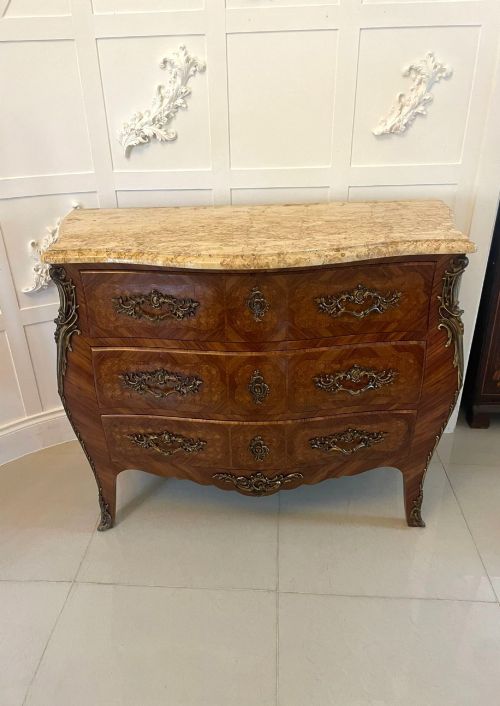
Ornaments of cast ormolu, brass inlay, and marquetry pictorial panels adorned the doors and friezes, transforming functional storage into decorative art. Marble tops frequently provided a durable, cool surface on French and Victorian iterations, while glazed central doors showcased prized collections behind glass.
Antique Serpentine Credenza Retail Price Guide 2026
Typical asking prices for serpentine credenza among the pieces listed under this phrase on Sellingantiques today, from the lower quarter to the upper quarter. They describe what is for sale here now, not the wider market.
Several credenzas retain secret compartments designed to hide cutlery sets, proving that Victorian dining habits valued hidden organisation.
What varies in quality
The distinction between ordinary and exceptional pieces rests upon the ambition of the design and the execution of the cabinetwork. Superior examples exhibit tightly figured burr walnut veneers that flow seamlessly across the serpentine curves without buckling or lifting at the tight radiuses.
Finer pieces distinguish themselves through the crispness of their hand-carved details, the weight and detail of their gilded ormolu mounts, and the complexity of their floral marquetry. The integrity of the secondary timbers and the smooth operation of the shaped doors further separate workshop standards from exhibition quality.
Gillows·Maison Gagneau·Pauly et Cie
The Antique Serpentine Credenza Glossary
- Serpentine
- A front contour characterised by a convex centre flanked by concave wings, creating a rhythmic 'S-shaped' curve. This profile demands advanced woodworking precision.
- Ormolu
- Gilded bronze mounts applied to furniture edges and mounts during the eighteenth and nineteenth centuries. The quality depends on the sharpness of the metal chasing.
- Marquetry
- Inlaid patterns of various woods, ivory, or shell assembled to create floral or geometric pictures on the cabinet surface. It differs from simpler veneer by its pictorial complexity.
- Boulle
- A style of marquetry utilising tortoiseshell and brass inlay, named after the famed French cabinetmaker. It brings a shimmering, reflective texture to the furniture front.
- Figure
- The natural grain pattern in wood, such as the swirling swirls found in burr walnut. Highly figured timber commands greater appreciation among collectors.
Antique Serpentine Credenza: Frequently Asked Questions
What is a serpentine credenza?
A serpentine credenza is a low, curving cabinet originating primarily in the nineteenth century, designed to combine enclosed storage with display surfaces. Its undulating front gives the heavy wooden form a sense of fluid movement.
These pieces typically featured glass doors for displaying porcelain or solid panelled doors concealing shelves, topped frequently with white marble or polished timber.
Where were they placed?
Historically, these cabinets stood against the main walls of formal dining rooms, drawing rooms, or entrance halls. Their shallow depth allowed them to occupy narrow wall spaces without obstructing foot traffic.
The finished backs on certain examples meant they could also function as free-standing room dividers or console pieces in grand interiors.
How do I care for the wood?
Maintaining these surfaces requires keeping them away from direct sunlight and steady sources of artificial heat to prevent the delicate burr veneers from drying and cracking. Gentle dusting with a dry, soft cloth preserves the original polish.
Applying specialised furniture wax sparingly once or twice a year feeds the timber and maintains the soft lustre of the antique finish without building up heavy residues.
How do I distinguish Victorian from Georgian?
Georgian serpentine pieces, dating from the eighteenth century, rely on solid mahogany with restrained carving, focusing on the purity of the architectural line and proportion. Victorian iterations from the mid-nineteenth century embrace exuberant burr walnut veneers, elaborate marquetry, and lavish ormolu mounts.
Revival pieces from the Edwardian era often combine earlier proportions with lighter construction methods and paler secondary woods.