




Two Door Corner Cupboard
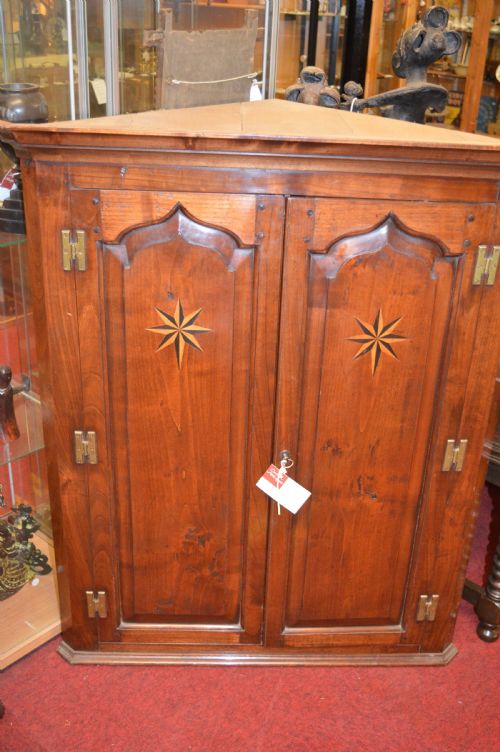
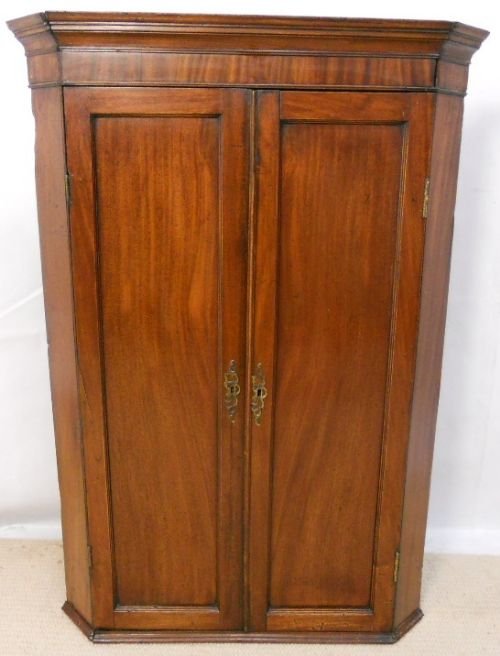
These two door corner cupboard examples turn neglected rooms into display spaces using timber and glass.
Two Door Corner Cupboard
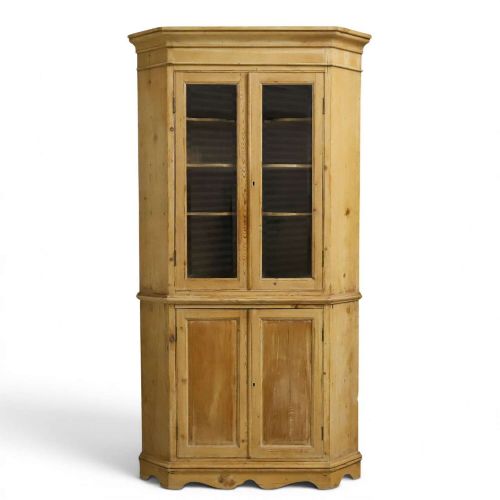
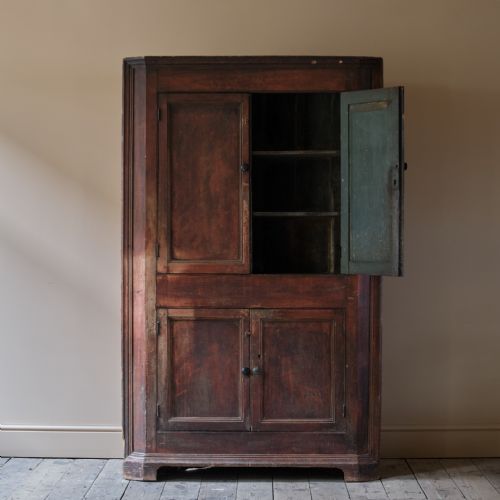
A two door corner cupboard provides fitted storage that utilises empty room angles efficiently. The pieces on this page span Georgian, 19th Century, and 1920 periods, appearing in materials like mahogany, oak, pine, and paint.
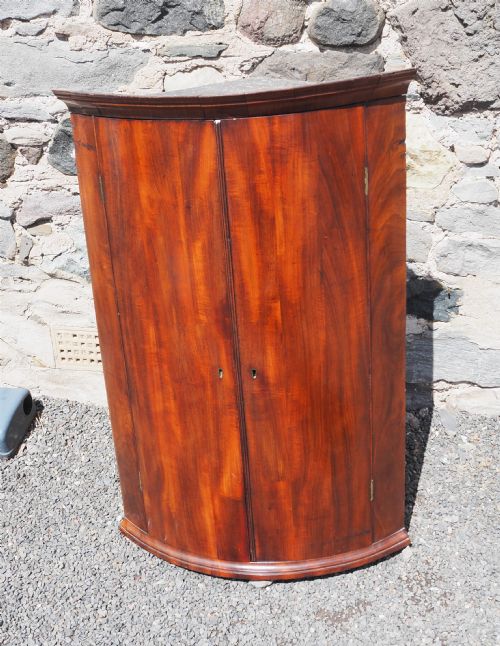
Most examples take a hanging form or a two-part construction, occasionally presenting a bow front or barrel front. Country house pieces share shelf space with smaller country examples.
Makers shaped these cabinets for domestic interiors using styles ranging from Victorian Country and Welsh Country to Georgian Chinoiserie and Sheraton Revival.
How they were made
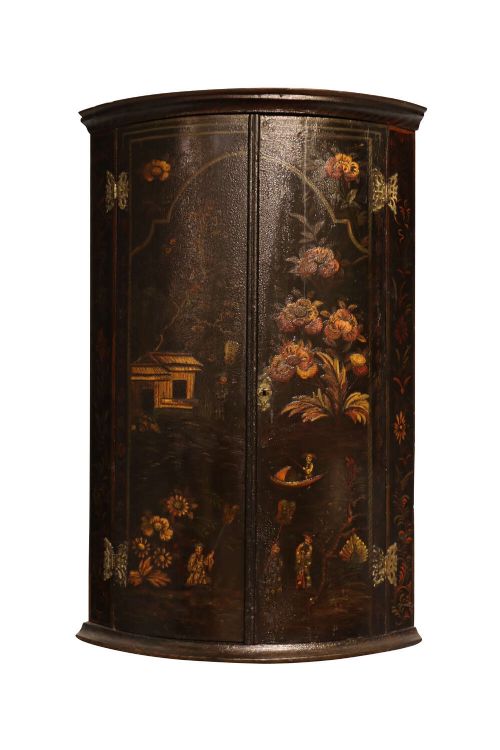
Cabinet makers constructed these cupboards primarily from solid mahogany, oak, and pine timbers. Selected pieces feature fine detailing, paint, or black lacquer Chinoiserie finishes.
Glazing appears on doors to showcase contents, complemented by brass and iron hardware. Two-part forms join upper and lower sections to create substantial storage units.
Several cupboards manage to hold their ground in corners while pretending they were born there.
What varies in quality
The sophistication of the timber selection dictates the distinction between standard workshops and country house commissions. Flame mahogany and figured oak surfaces display deliberate grain matching that elevates the cabinet presence.
Hardware integrity and joinery precision separate standard utility cupboards from refined pieces. Fine detailing on cornices and door mouldings reflects the skill invested by the maker.
The Two Door Corner Cupboard Glossary
- Bow front
- A convex curved cabinet front that projects outward from the corners. This shape softens room angles and demands precise joinery.
- Hanging cupboard
- A wall-mounted cabinet designed to be secured through its backboards. These pieces save floor space in domestic interiors.
- Two-part form
- A cabinet built in separate upper and lower sections. This construction aids transport and installation in domestic spaces.
- Chinoiserie
- European imitation of Chinese artistic styles, seen here in black lacquer finishes. It introduces decorative motifs to corner furniture.
- Flame mahogany
- Timber cut from the fork of the mahogany tree to produce a flickering flame pattern. Cabinet makers used it for visual impact on primary surfaces.
Two Door Corner Cupboard: Frequently Asked Questions
Where should I place a corner cupboard?
These cabinets fit neatly into ninety-degree room angles that often remain empty. They suit dining rooms, living spaces, or hallways where floor space is limited.
Hanging versions mount directly to walls, while free-standing units rest on the floor. Both options turn awkward corners into practical display areas.
How do I date a corner cupboard?
Timber choice and construction methods offer clues to the period of origin. Oak and pine often point towards earlier country pieces or 19th-century vernacular work.
Mahogany and specific styling like Sheraton Revival or Georgian Chinoiserie link pieces to formal 18th-century and 19th-century workshops.
What is a two-part corner cupboard?
A two-part corner cupboard consists of an upper cabinet resting securely upon a lower base section. This construction method made heavy furniture easier to move through domestic doorways.
Such pieces often provide substantial storage capacity compared to simpler hanging variants.
Are these cupboards suitable for modern homes?
These cabinets integrate smoothly into contemporary rooms by using dead space effectively. Their traditional timber finishes add warmth and character to neutral walls.
Glass doors allow you to display ceramics, glassware, or books while keeping dust away.