


Chinoiserie Corner Cupboard
A chinoiserie corner cupboard brings painted oriental scenes and dark lacquer into neglected domestic angles.
Chinoiserie Corner Cupboard
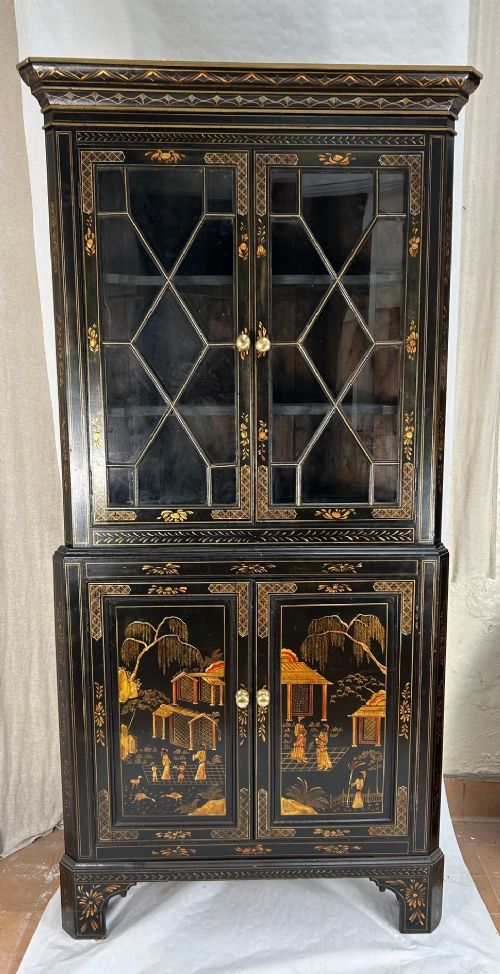
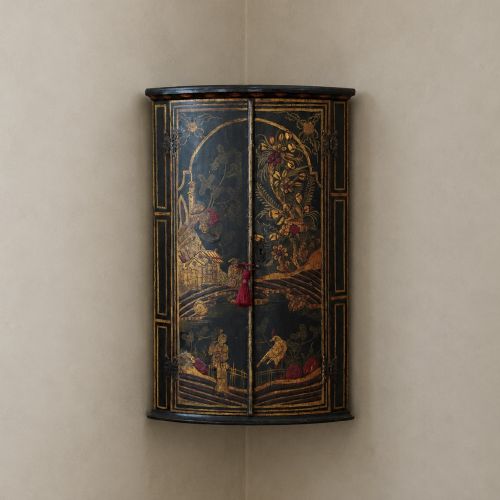
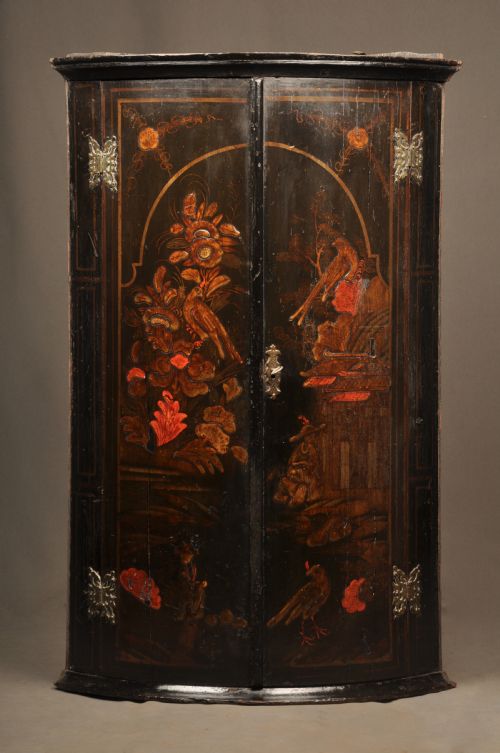
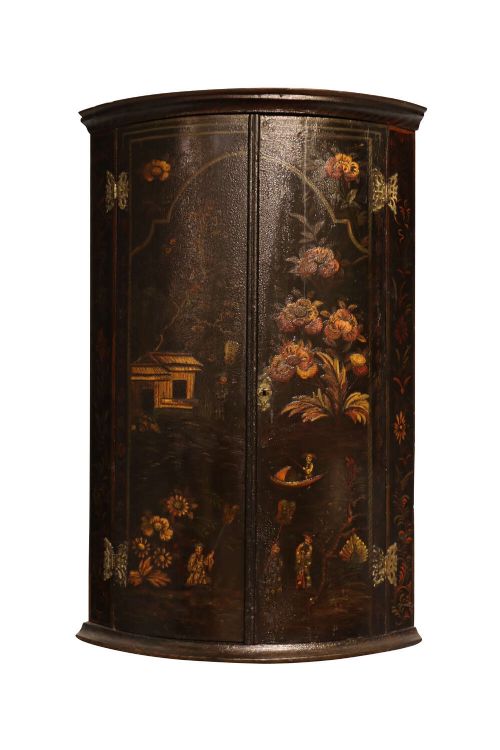
A chinoiserie corner cupboard occupies unused room junctions with fitted storage, designed specifically to display decorative painted surfaces across flat or curved doors. The pieces appearing here span from the early eighteenth century through the Georgian and Victorian eras up to the nineteen twenties.
Most examples you encounter on this page take the form of wall-hanging or standing corner cabinets, frequently featuring bow fronts or double doors. The cabinet carcass shapes itself to fit flush against two meeting walls, turning an empty corner into a decorative focal point.
How they were made
Carpenters constructed the structural carcass using timber such as pine and softwood, providing a stable foundation for the decorative skin. Brass hinges and latches secured the doors while adding functional metalwork detail to the corners.
Artisans applied layers of lacquer and paint, often incorporating gilt decoration to build up the raised oriental motifs characteristic of the style. Interiors occasionally received contrasting pigments like teal to brighten the enclosed shelving.
Listings feature woods like pine and softwood beneath lacquer, paint and gilt finishes.
What varies in quality
The sophistication of the painted narrative scenes separates standard decorative work from finer artistic execution. Superior examples display intricate gilt detailing and depth within the lacquered layers that command attention across the room.
Construction methods and timber selection dictate the physical integrity of the cabinet carcass over centuries of use. Cabinets retaining their original brass hardware and uncompromised structural joints hold greater coherence than heavily restored pieces.
The Chinoiserie Corner Cupboard Glossary
- Lacquer
- A durable resin finish applied in multiple coats to wooden furniture. It provides the smooth, glossy surface essential for traditional Asian-inspired decoration.
- Japanned
- European-made imitation of East Asian lacquerwork using layered varnish and paint. This technique produced the dark, glossy finishes seen on many eighteenth-century pieces.
- Bowfront
- A convex curved cabinet front that projects outward from the corner. This curved profile softens the hard angles of the room junction.
- Gilt
- Gold leaf or powdered gold applied to surface decorations. It highlights painted figures and architectural motifs against the dark lacquer background.
Chinoiserie Corner Cupboard: Frequently Asked Questions
How do I hang a heavy corner cabinet?
Wall-hanging corner cupboards require secure fixings anchored directly into structural wall studs or masonry rather than plaster alone. The weight of the timber carcass and lacquered doors demands robust support.
Professional installation ensures the cabinet aligns correctly in the room angle without placing undue strain on the original brass hinges and historical wood joints.
Where should I place a corner cupboard?
These cabinets suit empty room junctions in hallways, dining rooms or living spaces where flat furniture leaves awkward gaps. They draw the eye upward and make functional use of otherwise wasted square footage.
Position the cupboard away from direct sunlight to protect sensitive lacquer surfaces and painted gilt details from fading over time.
How do I clean lacquered furniture?
Dust surfaces gently with a soft, dry cloth to remove daily particles without scratching the delicate lacquer finish. Avoid using chemical sprays, abrasive cloths or excess water.
Maintain a stable indoor humidity to prevent the underlying wood substrate from expanding or contracting, which can cause the painted surface to crack.
Are these cupboards suitable for daily use?
Historical corner cupboards function well for storing lighter tableware, glassware or decorative objects behind their doors. The internal shelving organises small collections effectively.
Treat the doors and latches with care during daily opening and closing to preserve the antique brass fittings and historical hinges.