


Georgian Japanned Cabinet
A georgian japanned cabinet brings bold chinoiserie ornament and rich lacquerwork into a room, offering both display and concealed storage.
What They Are
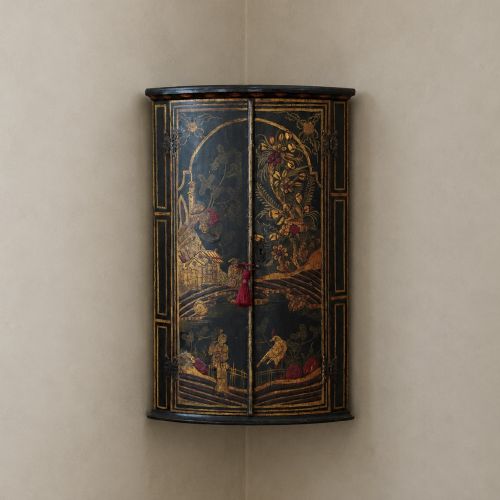
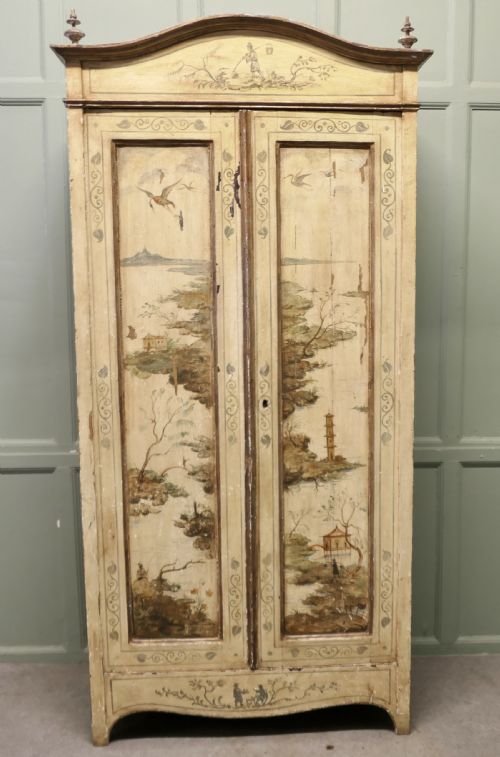
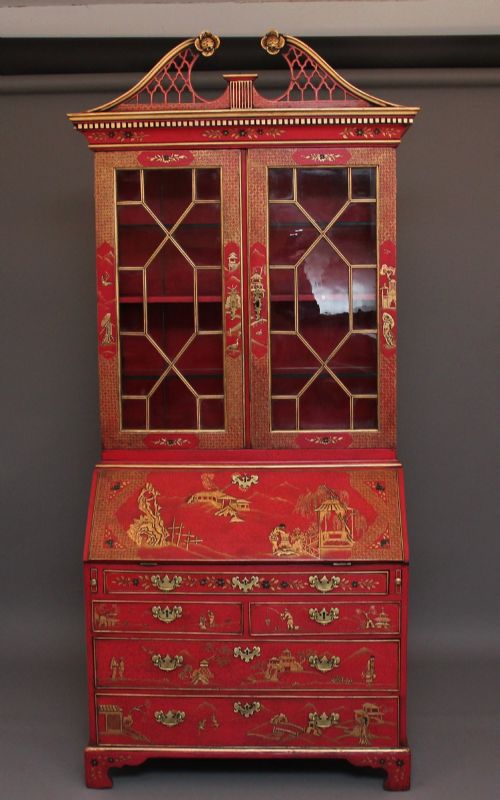
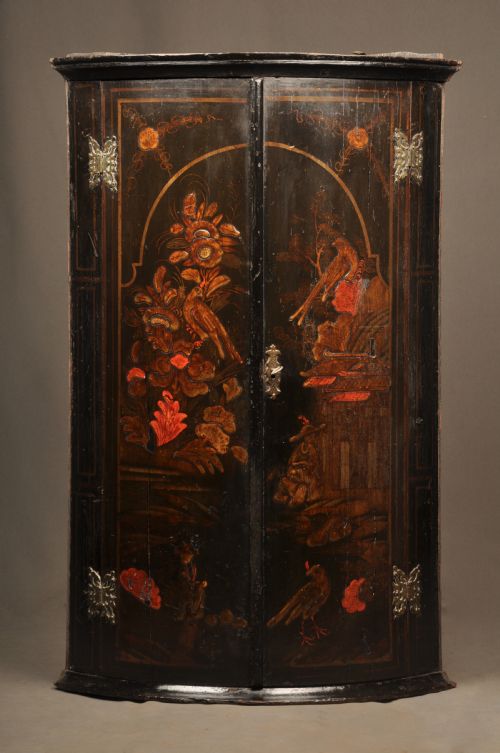
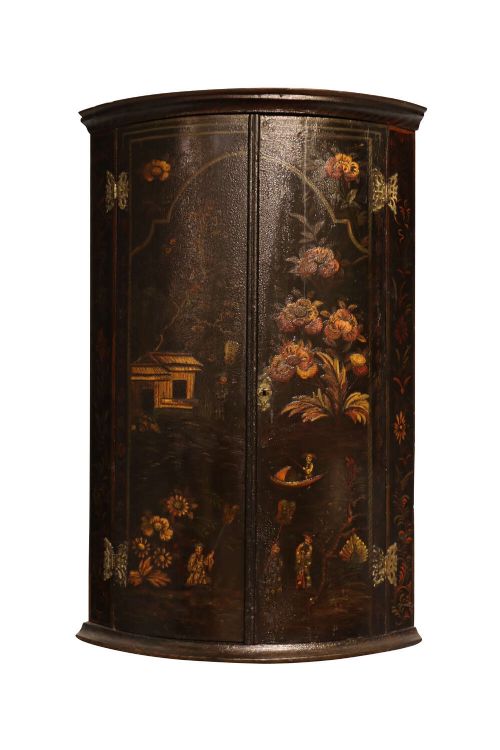
When you search for a georgian japanned cabinet, you find case furniture decorated with simulated oriental lacquerwork that was highly fashionable in British interiors. The pieces appearing here span the eighteenth century, the nineteenth century, and later revivals up to nineteen twenty.
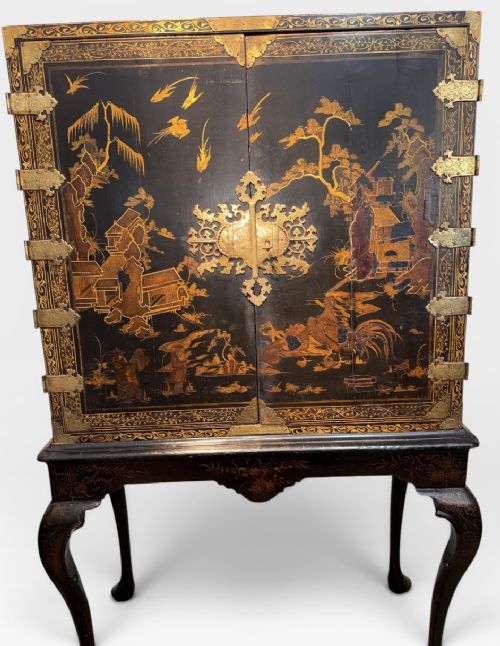
The dominant forms in this group are corner cupboards and corner cabinets designed to utilise empty wall space efficiently. A grander variation represented here is the cabinet on a stand, combining a main compartment with an elevated base.
Stylistic influences range across early eighteenth century work, Queen Anne designs, and general chinoiserie aesthetics. These works rely on black lacquer grounds embellished with raised gilt motifs depicting figures, landscapes, and fauna.
How They Were Made
Cabinetmakers utilised timber and softwood carcasses as the foundation for complex layers of lacquer and varnish. Artisans built up multiple coats to create a deep, glossy surface before applying decoration.
Gilt and gold leaf were applied by hand to highlight the intricate chinoiserie scenes characteristic of the period. Brass hardware, including hinges and escutcheons, was fitted to secure the doors and enhance the visual composition.
Retail Price Guide 2026
Typical UK retail prices for georgian japanned cabinet, calculated from the Sellingantiques database of over a million retail prices indexed since 2003. This retail price guide relies exclusively on Sellingantiques data; no external sources or auction records are used, so the figures do not describe the wider market.
Early artisans occasionally included whimsical pagodas and oversized butterflies on these cabinets that bore no resemblance to actual geography or biology.
What Varies in Quality
The sophistication of the hand-painted chinoiserie detail separates standard production from finer examples. Superior pieces display finely rendered figures and precise perspective within the lacquer landscape, while simpler items rely on repetitive motifs.
The depth and preservation of the black lacquer ground determine the visual impact of the surface. Age-related craquelure and the integrity of the original gilt work distinguish untouched period pieces from later decorative efforts.
The Georgian Japanned Cabinet Glossary
- Japanned
- European-made lacquerwork imitating Asian export panels. It involves layering varnishes and powders to achieve a glossy, dark finish.
- Chinoiserie
- The European interpretation of Chinese and East Asian artistic traditions. This style dominated furniture decoration throughout the Georgian period.
- Corner Cupboard
- A cabinet specifically constructed with angled sides to fit snugly into the corner of a room. These saved valuable floor space in period interiors.
- Cabinet on Stand
- A tall storage section elevated on a separate supporting base or frame. This form lifts the main display area to eye level.
- Gilt
- A thin application of gold leaf or gold powder used to highlight ornament. It provides sharp contrast against dark lacquer grounds.
Frequently Asked Questions
What is a japanned finish?
A japanned finish is a European imitation of East Asian lacquerwork created using layered varnishes and metallic powders. Artisans built up a hard, glossy surface before adding painted or raised gilt decorations.
This technique allowed eighteenth-century craftsmen to bring exotic oriental aesthetics into British homes without relying on imported Asian panels.
Where were corner cabinets placed?
Corner cabinets were specifically built to occupy unused wall junctions in parlours, dining rooms, and bedrooms. Their triangular footprint maximised interior storage while preserving open floor space.
Many examples feature curved or bow fronts to soften the transition from the corner into the room.
How do I care for lacquer furniture?
Lacquer surfaces require stable indoor humidity and protection from direct sunlight to prevent cracking or fading. Gentle dusting with a soft, dry cloth is sufficient for routine maintenance.
Avoid using modern chemical polishes or water, as moisture can penetrate old varnish and lift delicate gilt details.
How do I date a cabinet?
Dating relies on examining the construction timbers, carcass assembly, and secondary woods used inside the piece. Hardware styles and the specific characteristics of the lacquer also provide key chronological clues.
Comparing the painted chinoiserie motifs against known period design books helps narrow down the era of manufacture.