
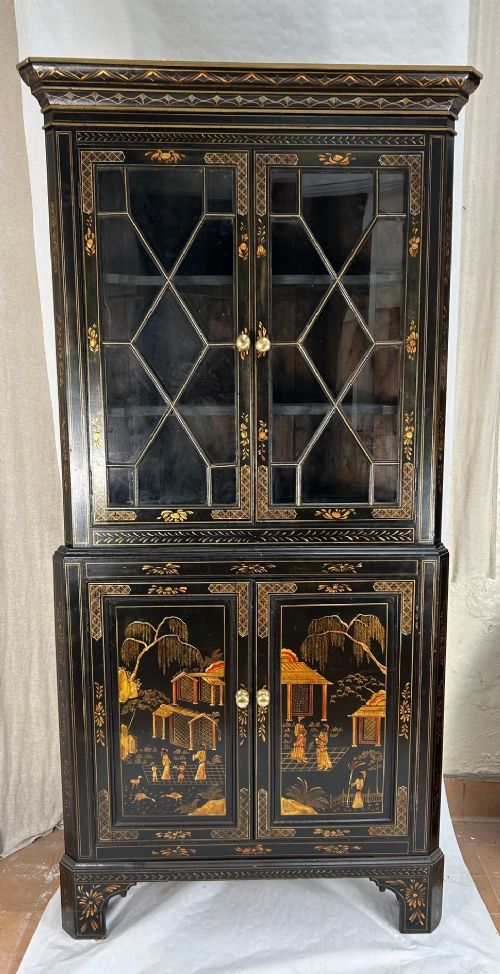
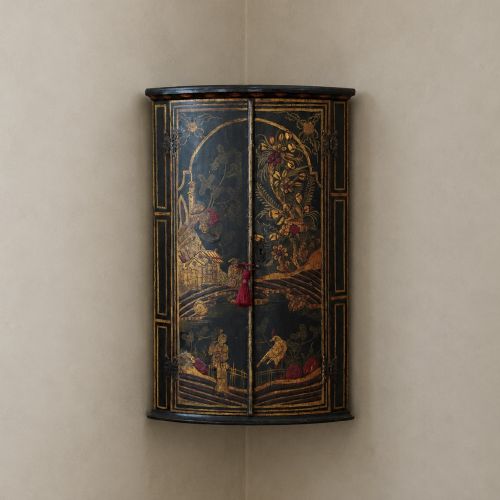
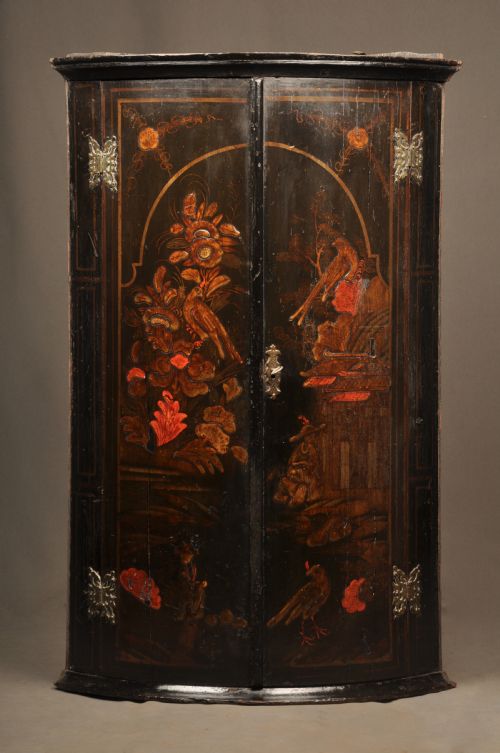
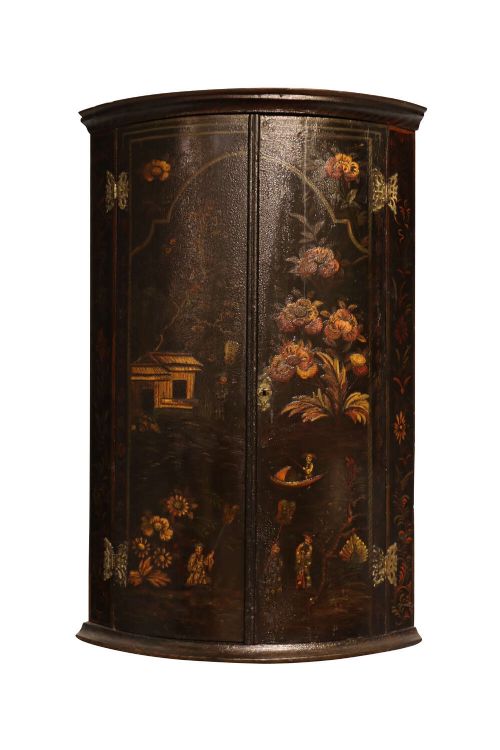


Oriental Style Corner Cupboard
An oriental style corner cupboard brings painted lacquer and Chinoiserie panels to an awkward wall.
Oriental Style Corner Cupboard
An oriental style corner cupboard is a fitted storage cabinet designed to utilise empty room angles through shaped shelves and panelled doors. These pieces use the triangular footprint of a standard corner cabinet to display decorative surface work without dominating the floor space.
The versions met on this page span several centuries, running from early eighteenth century pieces through Georgian and Victorian examples up to Edwardian and later reproductions. Makers built them in pine and softwood carcasses, applying elaborate painted and lacquered finishes to the exterior surfaces.
Chinoiserie and Aesthetic Movement styles dominate the aesthetic, presenting figures, pavilions and floral motifs borrowed from Asian art. Buyers encounter everything from bow front double door cabinets to simpler single door cupboards finished in black, red or natural wood.
How they were made
Carpenters constructed the carcasses using pine and softwood, joining the timbers to form rigid right-angled structures that fit flush into room corners. Door frames and hanging mechanisms required careful timber selection to prevent warping across the diagonal span.
Surface decoration relied on lacquer, paint and gilt applied over prepared grounds, frequently building up relief details before finishing. Brass hinges, escutcheons and keyplates secured the doors while adding metallic contrast to the dark or brightly coloured lacquer backgrounds.
Materials recorded across the selection include lacquer, brass, wood, gilt, glass, paint, pine, and softwood.
What varies in quality
The depth and execution of the lacquer work dictate the visual richness of each cabinet, separating simple painted decoration from intricate layered scenes. Hand-drawn motifs with gilt highlights show greater artistic control than flat stencilled patterns found on later vernacular pieces.
Cabinetmaking standards appear in the timber thickness of the carcass, the tightness of the corner joints and the original survival of brass hardware. Superior examples maintain balanced proportions across the bow front or flat panel doors, ensuring the piece hangs true on the wall.
The Oriental Style Corner Cupboard Glossary
- Chinoiserie
- European decorative art imitating Chinese artistic styles, typically featuring imaginary landscapes, figures and pagodas. Artisans applied this style extensively to furniture surfaces during the eighteenth and nineteenth centuries.
- Japannan
- A European imitation of Japanese and Chinese lacquerwork, created by applying layers of varnish and paint to a wooden base. Craftsmen often cured each layer before rubbing it smooth and adding gilt details.
- Bow front
- A convex curved cabinet front that projects outward from the corner walls. This shaping softens the sharp angles of a room and provides wider internal shelf space.
- Aesthetic Movement
- A late nineteenth century design style that emphasised visual beauty over narrative subject matter, drawing heavily on Japanese art. Cabinets from this period often incorporated bamboo and unconventional painted surfaces.
Oriental Style Corner Cupboard: Frequently Asked Questions
Where should I hang a corner cupboard?
These cabinets fit directly into the ninety-degree junction of two walls, making use of dead space that standard furniture ignores. They work well in dining rooms, hallways or sitting rooms where floor area is at a premium.
Fixing heights depend on whether the piece stands on the floor or mounts directly to the wall. Wall-hung versions need secure anchor points into structural studs or masonry to support the weight of the timber and contents.
How do I identify eighteenth century Chinoiserie?
Early pieces display hand-mixed lacquer grounds that often show fine craquelure and natural ageing across the surface. The painted figures and pavilions use raised gesso work to create tactile depth beneath the gilt.
Construction details also help confirm age, including hand-cut dovetails, older secondary woods in the carcass, and forged iron or early brass fixings. Later nineteenth and twentieth century copies tend to use flatter paint layers and machine-made screws.
Are these cupboards suitable for daily storage?
The triangular interior layout suits the display of porcelain, glassware or small books rather than bulky items. Shelving depths taper toward the back corner, limiting the size of objects you can place inside.
Original locks and brass latches keep the doors closed securely, but delicate lacquer surfaces require care to avoid scratches. Placing them away from direct sunlight preserves the rich red and black background tones.
What is the difference between black and red lacquer?
Black lacquer finishes provide a dark, reflective background that makes gilt details and painted figures stand out sharply. This tone aligns with traditional East Asian export aesthetics popularised during the Georgian period.
Red lacquer versions offer a warmer, more vibrant presence in a room, often appearing in Victorian and Edwardian interpretations of the style. Both finishes rely on similar layered varnishing techniques but create entirely different visual weights on the wall.