




Gold Chinoiserie Cabinet
A gold chinoiserie cabinet brings striking lacquerwork and gilded Oriental scenes into a room, offering both character and storage.
Gold Chinoiserie Cabinet
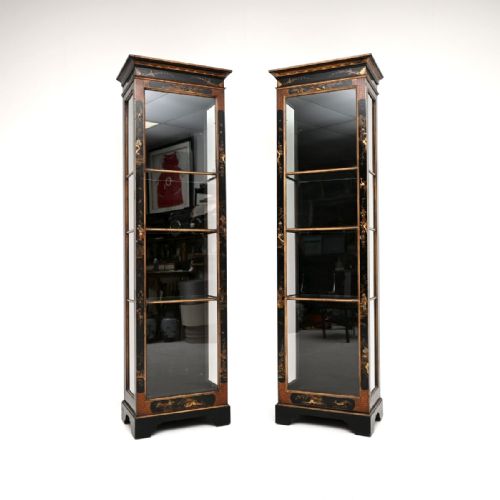
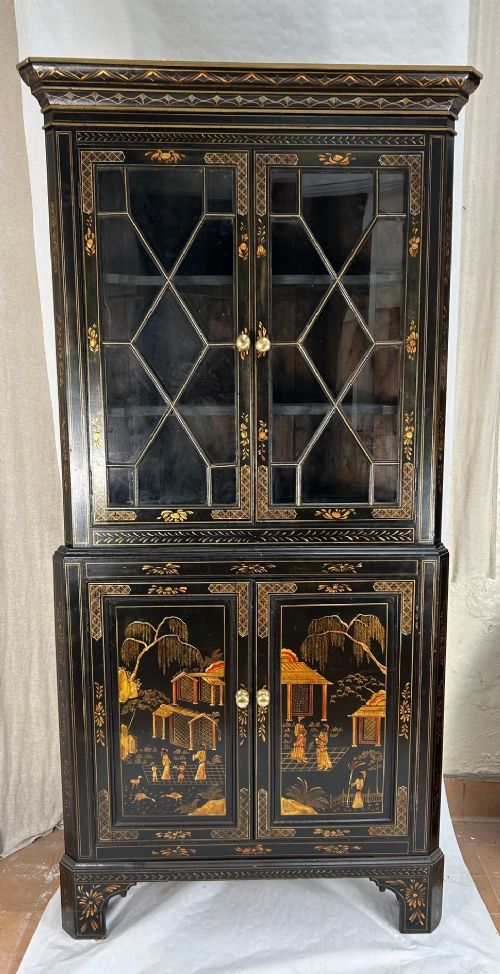
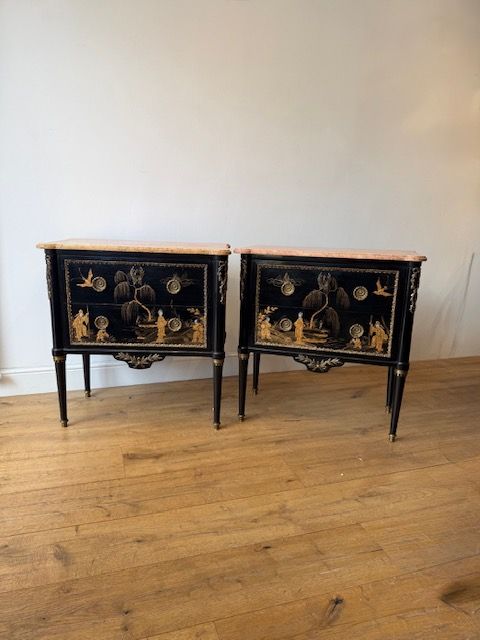
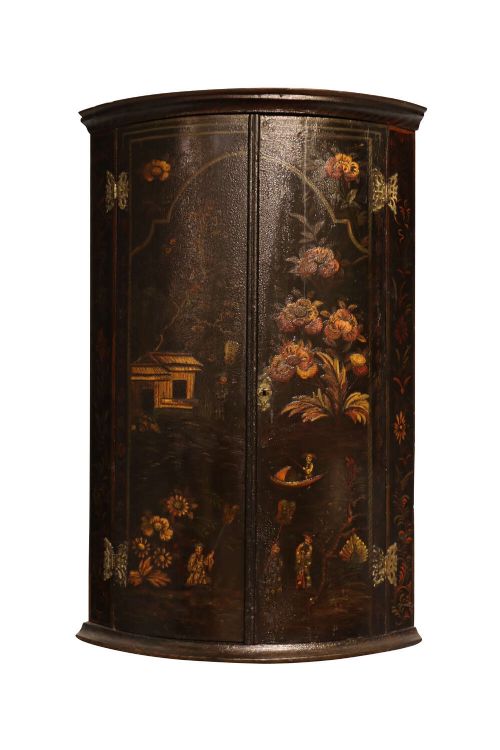
A gold chinoiserie cabinet presents hand-decorated lacquerwork featuring traditional motifs inspired by East Asian art. When you search for this phrase, you will encounter diverse forms including corner cupboards, side cabinets, bureau bookcases, and pieces raised on stands.
The selections span centuries of craftsmanship, appearing in periods from William and Mary through the Georgian and Regency eras into Edwardian interpretations and Art Deco cocktail cabinets. These items range from large bureau bookcases to compact table cabinets and decorative plates.
Black and red lacquer grounds dominate the examples seen here, often highlighted with intricate gold leaf or gilt detailing depicting figures, pavilions, and landscapes.
How They Were Made
These pieces utilise wood carcasses finished with layers of lacquer, a technique requiring immense patience and skill to achieve a smooth, durable surface. Artisans applied successive coats of lacquer before building up raised or flat decorative schemes.
Gilding and gold leaf were meticulously applied to create the luminous figures and landscapes characteristic of chinoiserie style. Additional materials such as brass handles, hinges, and occasional glass panels complement the wooden structures.
Listings span centuries of cabinetmaking, featuring materials like lacquer, brass, wood, gold leaf, and glass across various periods from William and Mary to Art Deco.
What Varies in Quality
Quality rests primarily in the depth and intricacy of the lacquer and the finesse of the gold leaf application. Finer examples display subtle modulation in the painted scenes and crisper execution of the gilded motifs.
The construction of the underlying furniture piece, whether a bureau bookcase, corner cabinet, or cabinet on stand, also dictates the standard. Superior specimens combine robust joinery with harmonious proportions and well-preserved decorative surfaces.
C.J. Mason·Coalport
The Gold Chinoiserie Cabinet Glossary
- Chinoiserie
- European decorative art reflecting Chinese and East Asian artistic influences, popular across several centuries. It encompasses stylized landscapes, figures, and architectural motifs rendered in lacquer and paint.
- Japanned
- A European imitation of Japanese and Chinese lacquerwork involving specialised varnishes and heat-curing. This technique produced glossy dark finishes embellished with raised gold decoration.
- Pen-work
- A meticulous decoration method using ink and pen to draw intricate details directly onto a treated wooden surface. It often mimics the precision of fine lacquer work.
- Bureau Bookcase
- A dual-purpose furniture form combining a sloping writing flap above drawers with enclosed shelving or cupboard space above. They often served as sophisticated home offices in grand interiors.
- Corner Cabinet
- A specialised furniture item designed to fit neatly into the corner of a room, maximising floor space while providing display or storage. They appear frequently in both 18th-century and Edwardian interpretations.
Gold Chinoiserie Cabinet: Frequently Asked Questions
What is a gold chinoiserie cabinet?
A gold chinoiserie cabinet is a decorative storage piece finished with lacquer and detailed with gilt or gold leaf scenes. These furnishings range from 18th-century bureau bookcases to Edwardian display cabinets.
They serve as focal points in a room, combining practical storage with elaborate narrative artwork derived from European interpretations of Asian design.
How do I date a lacquer cabinet?
Dating relies upon examining the underlying furniture construction, hardware, and the specific style of the lacquer decoration. Pieces from the Georgian period show different carcass construction compared to Edwardian or Art Deco iterations.
Cross-referencing the hinge types, timber species, and stylistic nuances helps determine whether a piece originates from the 18th, 19th, or 20th century.
Where should I place one?
These cabinets work effectively in principal reception rooms, dining areas, or studies where their decorative surfaces can be appreciated. Corner cupboards suit unused wall angles, while cabinets on stand command attention along main walls.
Keep them away from direct sunlight and excessive heat fluctuations to protect the delicate lacquer and gold leaf.
What is the difference between japanned and lacquered?
Japanning is a European technique developed to emulate Asian lacquer using varnishes and heat drying, whereas traditional Asian lacquer utilises natural tree sap. Both achieve a glossy dark ground adorned with gold decoration.
In marketplace listings, both terms describe the characteristic high-sheen painted finishes found on these decorative items.