






Brass Lattice Door Cabinet
A brass lattice door cabinet brings refined display space to a room, uniting timber and metal in a single functional piece.

Brass Lattice Door Cabinet
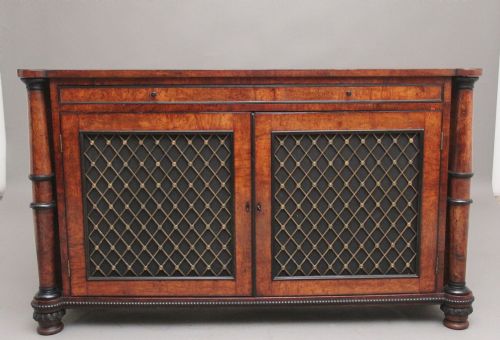
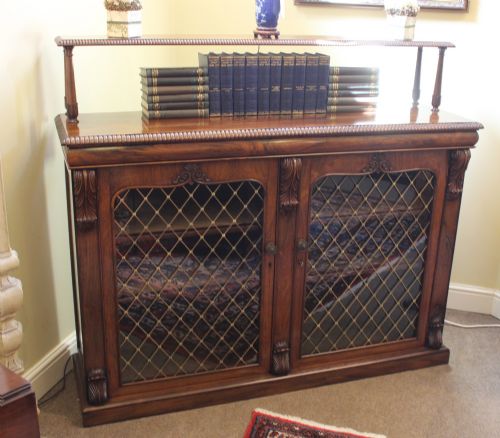
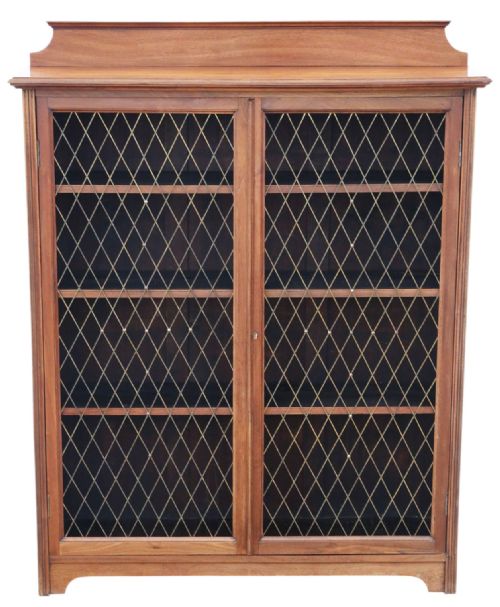
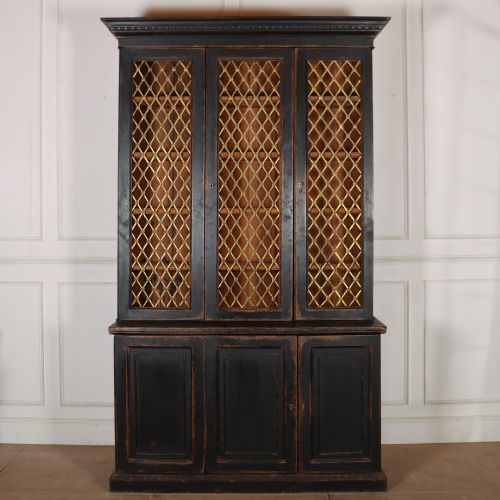
A brass lattice door cabinet is essentially a display case or storage unit fronted by a metal grille rather than plain wood or sheer glass. The forms seen here span compact cupboards, dwarf bookcases and chiffoniers.
The periods represented stretch across the nineteenth century into the Edwardian era, taking in Regency, William IV and Victorian designs. Buyers encounter rich timbers like mahogany, rosewood and walnut, often paired with distinct brass wirework.
Many of these units function as side cabinets or display pieces, offering visible storage while keeping contents secure behind metal lattices. The selection relies heavily on nineteenth-century craftsmanship and traditional cabinet-making forms.

Materials and construction methods
The primary structure relies on dense hardwoods such as mahogany, rosewood and walnut, occasionally enriched with pollard oak or ebony details. Cabinet makers constructed these pieces using traditional joinery to house heavy timber shelves and doors.
Brass forms the characteristic lattice or grille inset into the doors, working alongside glass and fabric linings to shape the display aesthetic. These metal grilles required precise wirework to fit securely within the wooden framing of the door.
Brass Lattice Door Cabinet Retail Price Guide 2026
Typical asking prices for brass lattice door cabinet among the pieces listed under this phrase on Sellingantiques today, from the lower quarter to the upper quarter. They describe what is for sale here now, not the wider market.
Assessing quality in construction and detail
The standard of a piece rests largely on the choice of timber veneer and the crispness of the brass lattice work. Finer examples display meticulous grain matching and robust internal shelving rather than basic assembly.
Attention to detail in inlay work, such as boxwood lines or ebony banding, separates standard utility furniture from finer commission pieces. The integrity of the brass grille and its secure fit within the door frame also indicate superior craftsmanship.
John McClean
The Brass Lattice Door Cabinet Glossary
- Chiffonier
- A low sideboard or cabinet, typically featuring enclosed storage below and sometimes a shelf above. This form became particularly popular during the Regency and Victorian periods.
- Pollard oak
- Oak timber taken from trees that were cut back to encourage a dense head of branches, yielding wood with a heavily figured and mottled grain. Cabinet makers used this veneer for decorative impact.
- Regency
- An English design style spanning the early nineteenth century, characterised by classical restraint and classical motifs. Pieces from this era often incorporate fine mahogany or rosewood.
- Grill door
- A door fitted with a metal or wooden lattice instead of solid panels, allowing visibility of the interior. In these cabinets, brass forms the lattice network.
Brass Lattice Door Cabinet: Frequently Asked Questions
What is a brass lattice door cabinet used for?
These cabinets serve primarily as display and storage furniture in living spaces or libraries. The lattice door design allows contents to be seen while providing a decorative metallic element.
Historically, they housed books, collections or tableware, functioning as refined alternatives to solid wooden cupboards. Today, they suit similar display roles in domestic interiors.
Are the shelves adjustable?
Many bookcases and display cabinets incorporate adjustable shelving to accommodate books or objects of varying heights. Nineteenth-century examples often use rack-and-pinion systems or traditional wooden fillets.
Checking the interior reveals whether the shelf supports are original or later additions made to improve practicality.
How do I care for rosewood and mahogany?
Maintenance involves keeping timber pieces away from direct sunlight and sudden temperature changes to prevent veneer cracking. Regular dusting with a soft, dry cloth preserves the finish.
Applying appropriate wax sparingly helps nourish the hardwood and maintains the natural lustre of the grain over time.