


Small Rosewood Sideboard
A small rosewood sideboard brings rich grain and practical low storage to a room, offering the compact proportions collectors seek.

Small Rosewood Sideboard
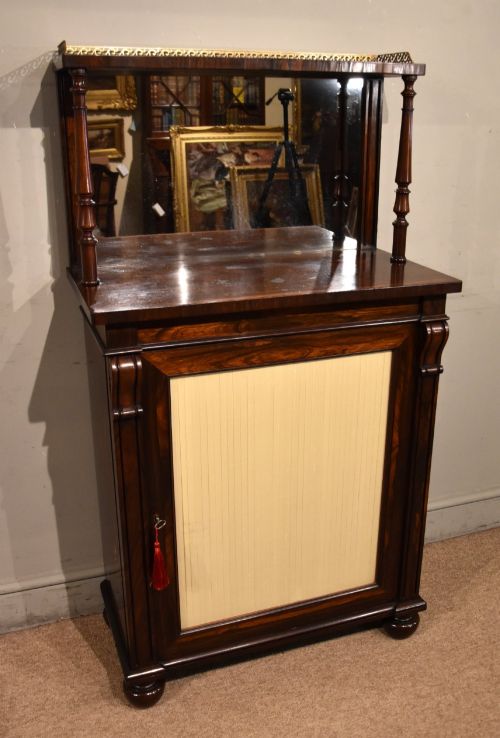
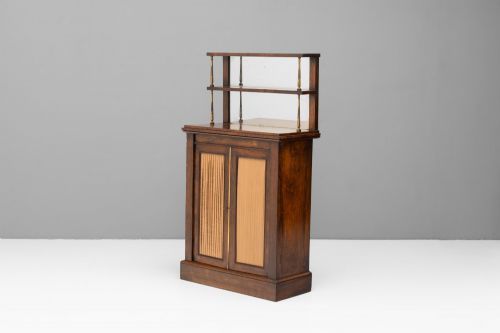
A small rosewood sideboard groups together various low cabinetry forms from the Regency, George IV, and Victorian periods, including chiffoniers, pier cabinets, and side cabinets. These pieces serve as compact storage furniture designed for dining rooms and parlours, utilising dense tropical timber with distinctive dark figuring.
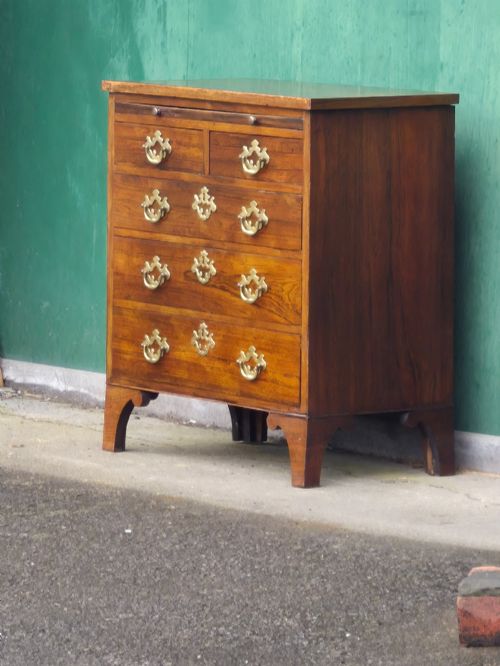
The version most commonly met on this page is the chiffonier, typically featuring a low enclosed cupboard base sometimes surmounted by a small shelf or mirror back. Other examples include dwarf sideboards, side cabinets, and chests of drawers that share the same diminutive scale.
Origins span the nineteenth century, encompassing Georgian survival styles alongside grand Regency and later Victorian interpretations. Makers and cabinetmakers of the era employed rosewood veneers and solid cuts to produce functional surface space and shelved interiors within modest footprints.
Construction and materials
Cabinetmakers constructed carcasses using native timbers such as mahogany or deal as secondary woods, applying figured rosewood veneers to the visible exterior surfaces. Selected pieces incorporate contrasting inlay work utilising ebony, burr walnut, and brass details to accentuate the panels and doors.
Glazing appears on cabinet doors alongside pleated fabric and silk panels behind glass, while pier cabinets and chiffoniers frequently integrate mirror glass into their upper sections. Brass grilles, drawer pulls, and turned feet or columns provide structural hardware and decorative accents.
Small Rosewood Sideboard Retail Price Guide 2026
Typical asking prices for small rosewood sideboard among the pieces listed under this phrase on Sellingantiques today, from the lower quarter to the upper quarter. They describe what is for sale here now, not the wider market.
Current listings span the Regency, George IV, and Victorian periods, utilising rosewood, brass, burr walnut, ebony, and glass.
Quality and execution
The distinction between tiers of quality rests upon the selection of the rosewood timber and the precision of the veneer matching across the drawer fronts and doors. Superior examples display continuous, book-matched grain patterns that demonstrate the cabinetmaker's careful planning before sawing the logs.
Refinement in secondary details such as finely cast brass mounts, delicate inlay work, and the integration of original glass or fabric linings elevate a piece above standard production. The structural joinery of the interior shelves and drawer linings further indicates the standard of workshop execution.
Gillows
The Small Rosewood Sideboard Glossary
- Chiffonier
- A low sideboard or cabinet featuring enclosed shelves below, occasionally fitted with a superstructure of shelves or a mirror. This form proved popular throughout the nineteenth century for drawing rooms.
- Pier cabinet
- A narrow cabinet designed to fit the wall space between windows, often featuring glazed doors and elaborate inlay. These pieces frequently utilise rosewood alongside burr walnut and ebony.
- Credenza
- A low sideboard or buffet originating from Italian furniture traditions, adapted in the nineteenth century to describe decorative low cabinets with doors. They provide surface display and enclosed storage.
- Simulated rosewood
- Timber painted or grained to imitate the appearance of genuine rosewood. This technique allowed workshops to achieve a fashionable dark exotic aesthetic using accessible native woods.
Small Rosewood Sideboard: Frequently Asked Questions
What is a chiffonier?
A chiffonier is a compact low cabinet with enclosed shelving, frequently topped by a small shelf or gallery.
These pieces emerged as versatile storage furniture for nineteenth-century dining rooms and parlours.
How do I date a piece?
Dating relies on stylistic markers such as Regency curves, George IV details, or Victorian proportions and inlay.
Construction methods and secondary woods also help indicate whether a cabinet dates from the early or late nineteenth century.
Where were these placed?
These cabinets were designed for reception rooms, dining spaces, and narrow wall piers between windows.
Their shallow depth allowed them to provide storage without obstructing circulation in smaller nineteenth-century rooms.
What is simulated rosewood?
Simulated rosewood is a painted or stained finish applied to alternative woods to replicate exotic grain patterns.
Cabinetmakers utilised this technique to offer fashionable dark timber aesthetics at a lower cost.