
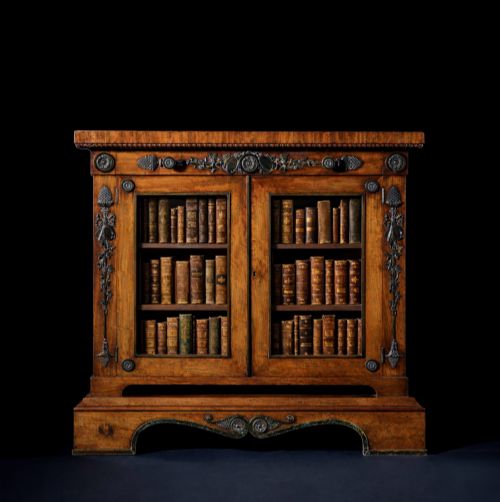
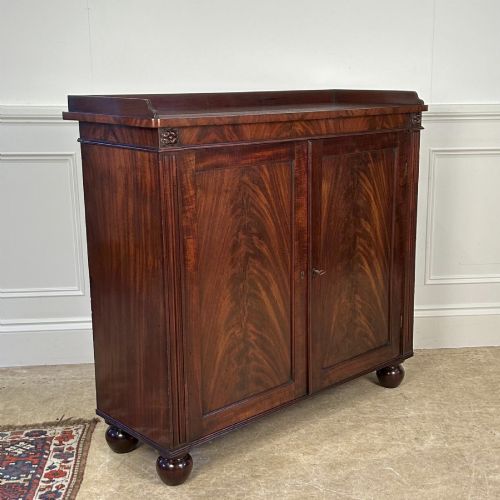
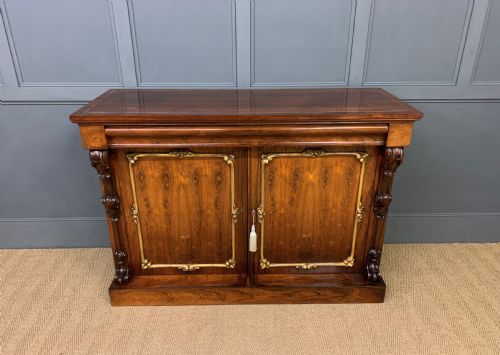


Dwarf Chiffonier Cabinet
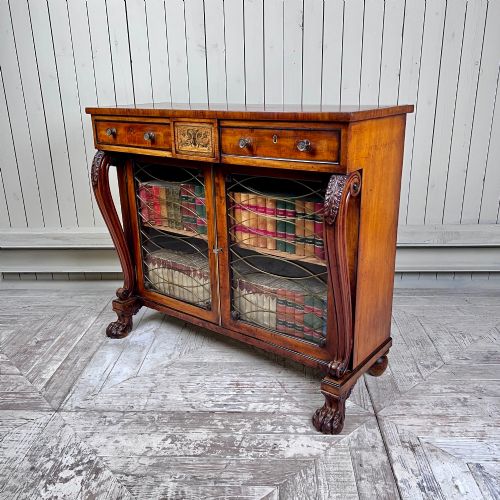
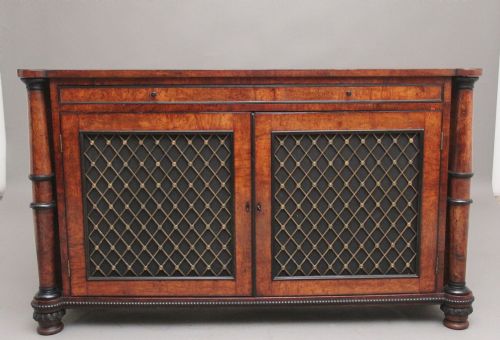
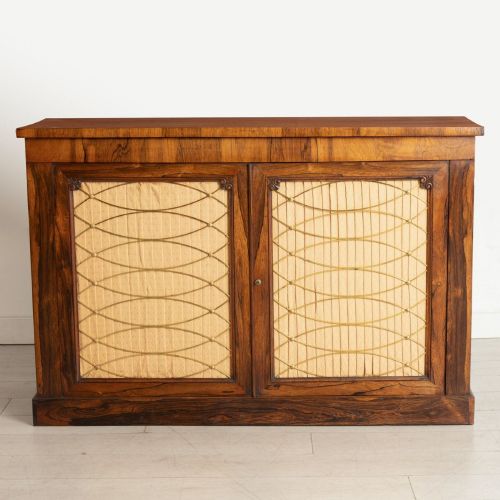
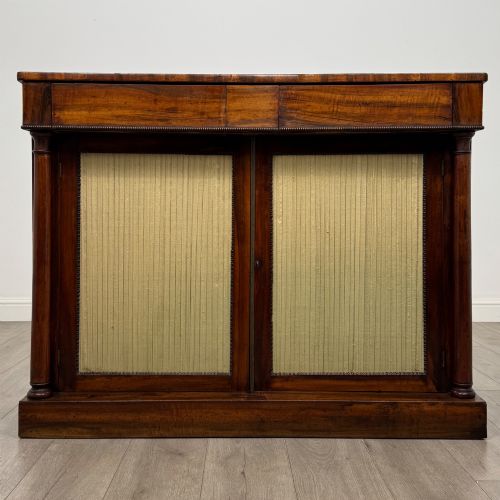
These dwarf chiffonier cabinet pieces are low timber cabinets from the Regency and Victorian periods, prized for housing books and display items compactly in smaller rooms.
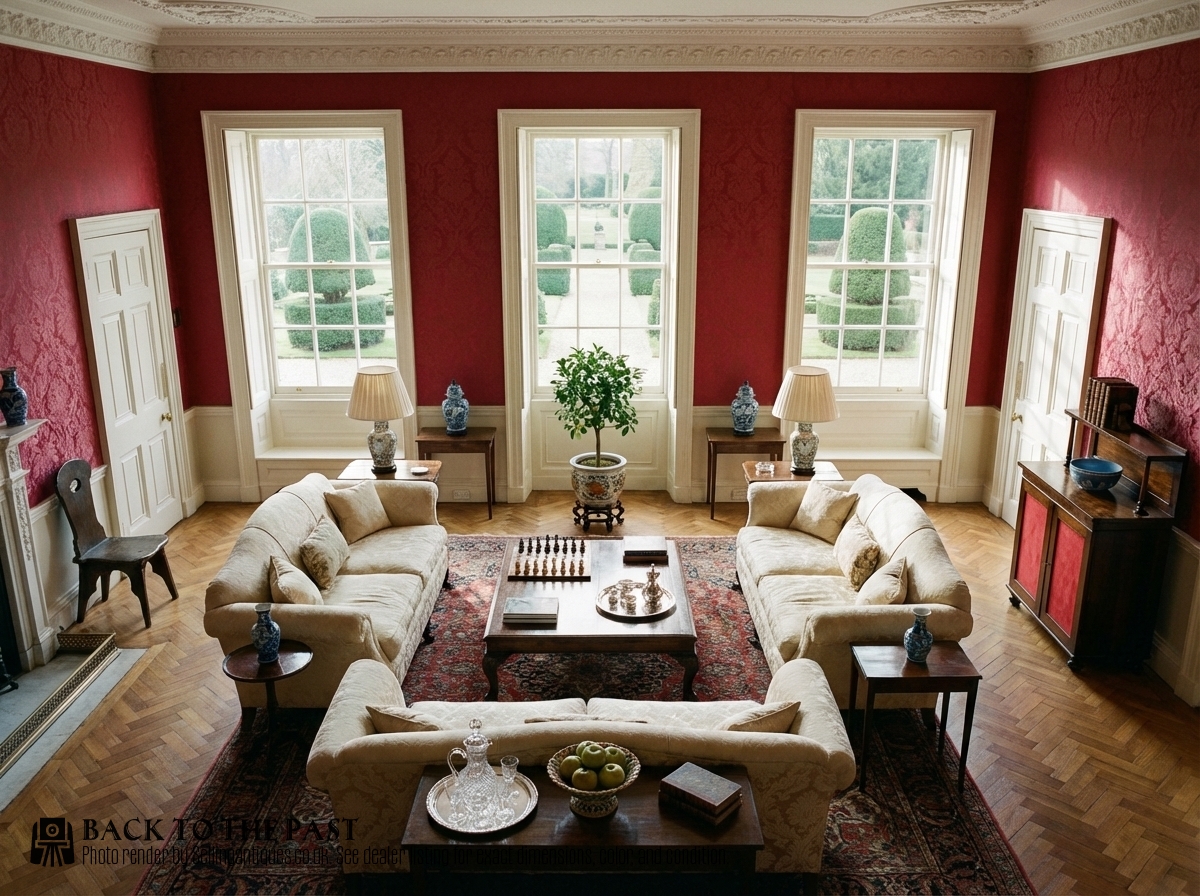
Dwarf Chiffonier Cabinet
When you search for a dwarf chiffonier cabinet, you are looking at low timber storage furniture originating primarily from the Regency and Victorian eras, often taking the form of side cabinets, dwarf bookcases, or chiffoniers. The pieces you are most likely to meet on this page span the early nineteenth century up to eighteen fifty, alongside a small number of later nineteenth century and nineteen twenty reproductions.
The dominant forms combine lower storage cupboards with upper open shelving, waterfall bookcases, or glazed doors, designed specifically to fit beneath dado rails or windows in period interiors. Mahogany and rosewood form the vast majority of these listings, frequently supplemented by pollard oak, amboyna, and ebony details.
Makers and workshops of the period utilised these dense timbers to create low profiles that served both as sideboards and display surfaces. The designation covers varied classifications such as side cabinets, sideboards, and cupboards, all sharing a compact vertical scale.
What varies in quality
Proportion and architectural detailing dictate the hierarchy of these low cabinets. Well-balanced breakfront outlines, finely cast bronze mounts, and integrated upper bookcases demonstrate a level of design ambition not found in basic side cupboards.
The integrity of secondary elements, such as original fabric panels behind glass doors and untouched patination on the timber surfaces, sets finer survivals apart. Alterations to feet, marble tops, or interior shelving shift pieces down the scale of desirability.
Some delicate Regency cabinets retain their original pleated silk behind glass doors, whispering secrets of Victorian interior discretion.
Gillows
The Dwarf Chiffonier Cabinet Glossary
- Chiffonier
- A low cabinet featuring cupboards beneath, sometimes surmounted by a small shelf or bookcase structure. It evolved during the Regency period to hold books, plate, or writing materials.
- Dwarf
- A term used by antique dealers and period makers to describe low-height furniture intended to sit beneath windows or picture rails. These cabinets avoid blocking wall space.
- Pollard oak
- Timber taken from trees that have been pollarded, resulting in a dense, highly knotted grain pattern rich in swirling figures. It was favoured by Regency and nineteenth-century cabinet makers for luxury pieces.
- Breakfront
- A cabinet design where the central section projects forward from the flanking wings. This adds architectural depth and presence to side cabinets.
- Stringing
- Thin inlaid lines of contrasting wood, such as ebony or boxwood, set flush into the primary timber surface to create geometric borders. It highlights the structural outlines of drawers and doors.
Dwarf Chiffonier Cabinet: Frequently Asked Questions
What is a dwarf chiffonier cabinet?
A dwarf chiffonier cabinet is a low timber storage piece from the Regency or Victorian era, combining lower cupboards with display surfaces or shelving.
Designed for smaller reception rooms, these cabinets offer compact storage while keeping the upper wall space clear for art or mirrors.
How do I date a Regency cabinet?
Dating relies on timber choices, such as figured rosewood or mahogany, alongside construction methods like hand-cut dovetails and brass inlay patterns.
Stylistic markers shift from the classical restraint of the George IV period to more ornate Victorian interpretations later in the nineteenth century.
Where were these cabinets placed?
These pieces sat against drawing room or dining room walls, often beneath windows or below dado rails where full-sized bookcases would not fit.
Their low profile allowed them to serve as serving surfaces, sideboards, or display units for books and decorative objects.
What woods were used?
Makers relied heavily on dense tropical hardwoods like rosewood and mahogany for their rich grain and deep natural colour.
Pollard oak, amboyna, and ebony also appear frequently as primary veneers or contrasting inlay materials.
How do I care for rosewood?
Rosewood surfaces benefit from minimal interference, requiring only dusting with a soft cloth and occasional gentle cleaning with specialist wax.
Keeping the timber away from direct sunlight and severe temperature fluctuations prevents the grain from drying or fading.