
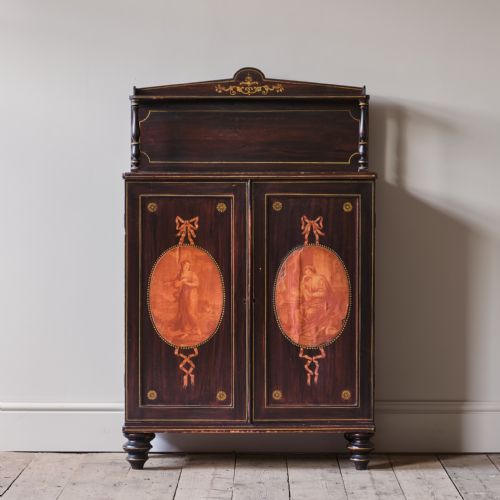


Rosewood Chiffonier Panel
Rosewood chiffonier panels form the lower door sections of low nineteenth century side cabinets, bringing rich grain and dark timber tones to living spaces.
Rosewood Chiffonier Panel
When you search for rosewood chiffonier panel items, you are looking at architectural timber inserts and door fronts salvaged from nineteenth century side cabinets and low cupboards. The examples seen here belong to the Regency, William IV, and Victorian periods, with dates stretching from around eighteen twenty to eighteen sixty. These sections come from dwarf sideboards, breakfront cabinets, and chiffoniers.
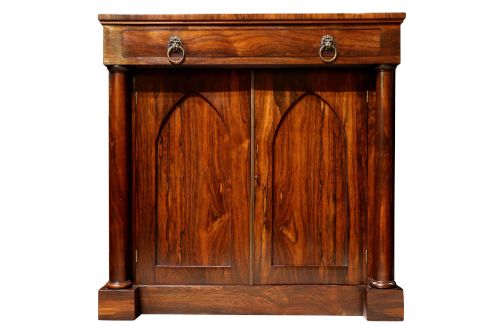
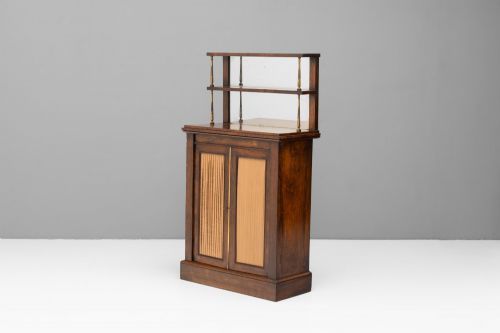
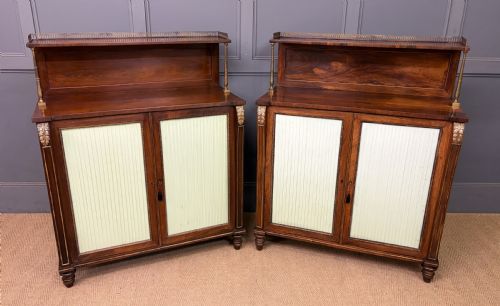
You meet pieces with plain dark timber boards alongside versions featuring Gothic panels, painted decorations, Chinoiserie scenes, and pleated silk fabric inserts. Some items present simulated rosewood grain painted over pine rather than solid tropical timber. Forms range from simple single door panels to matching pairs and four door breakfront configurations.
The origins span straightforward British cabinet making and French Revival designs. A buyer encounters these architectural elements either as part of intact side cabinets or as individual panels removed from larger furniture carcasses. Each version reflects the domestic storage needs and reception room fashions of the nineteenth century.
How they were made
Makers built these panels using dense tropical rosewood timber, selected for its dark figured grain and oily lustre. Workshops also utilised pine as a secondary wood, occasionally applying paint to simulate the appearance of genuine rosewood on simpler pieces.
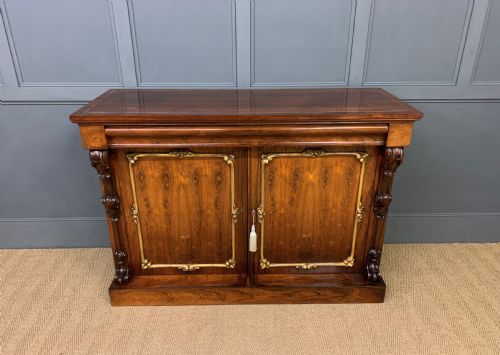
Surface decoration involved meticulous brass inlay, gilt bronze or ormolu mounts, and hand painted details including Chinoiserie motifs. Cabinet makers incorporated glazed sections, mirror glass, and pleated silk fabric behind wooden framing to soften the heavy timber appearance.
Construction relied on traditional joinery techniques suited to nineteenth century cabinet making, housing flat or raised panels within sturdy framing to allow for timber movement. Surviving pieces show the integration of brass stringing and decorative mouldings fixed directly to the rosewood substrate.
Cabinet makers occasionally faked the exotic look by painting pine to resemble rosewood, fooling guests before they touched the wood.
What varies in quality
The grade of rosewood timber dictates the visual weight of the panel, with dense grain patterns and deep natural colour separating superior examples from plain boards. Finer pieces display crisp brass inlay and well executed hand painted scenes rather than simple finishes.
The complexity of the joinery and framing distinguishes workshop standards, particularly in the precision of Gothic arch panels and breakfront mouldings. Secondary materials such as original pleated silk and genuine ormolu mounts elevate the status of a panel above standard painted pine alternatives.
The Rosewood Chiffonier Panel Glossary
- Chiffonier
- A low nineteenth century side cabinet featuring shelves or a raised back above enclosed lower cupboards. These pieces typically stood in dining rooms and drawing rooms for glassware and linen storage.
- Ormolu
- Gilded metal mounts applied to furniture surfaces for decorative effect during the Regency and French Revival periods. The technique involves applying a gold amalgam to bronze.
- Chinoiserie
- European decorative motifs inspired by Chinese art and design, popular on painted furniture panels during the nineteenth century. These scenes often depict figures, landscapes, and pavilions.
- Regency
- An architectural and furniture style spanning the early nineteenth century, characterised by classical restraint and classical revival motifs. Pieces from this era frequently employ dark exotic veneers.
- Simulated rosewood
- Painted timber grain mimicking the appearance of expensive tropical wood, commonly executed on pine during the nineteenth century. This technique offered a decorative finish at a lower cost.
Rosewood Chiffonier Panel: Frequently Asked Questions
What is a rosewood chiffonier panel?
A rosewood chiffonier panel is a timber door section or architectural insert taken from a low nineteenth century side cabinet. These components display the dark grain and polished finish characteristic of Regency and Victorian cabinet work.
They appear both as functioning doors on intact sideboards and as individual decorative elements removed from larger furniture pieces over time.
How were these panels used?
In their original nineteenth century context, these panels formed the lower cupboard doors of chiffoniers and side cabinets. They concealed interior storage space while presenting a decorative timber surface to the room.
Today, surviving panels serve as decorative wall pieces or retain their place within restored sideboards and dwarf cabinets.
How do I date a panel?
Dating relies on timber selection, joinery methods, and decorative embellishments such as brass inlay, Gothic framing, or painted Chinoiserie scenes. Regency examples tend to show crisp classical lines and precise brass work.
Later Victorian and eighteen fifties pieces introduce heavier proportions and different revival styles, helping to separate early nineteenth century work from mid century production.
What materials are used?
The primary material is dense tropical rosewood, valued for its deep colour and prominent grain. Workshops also employed pine as a base for simulated rosewood paint.
Secondary materials include brass for inlay and stringing, silk fabric behind glazed or open panels, and ormolu mounts adding metallic contrast to the timber surface.