


Rosewood Chiffonier Shelf
These rosewood chiffonier shelf pieces bring tactile timber warmth and architectural display space to a room, led by nineteenth-century Regency and Victorian forms.
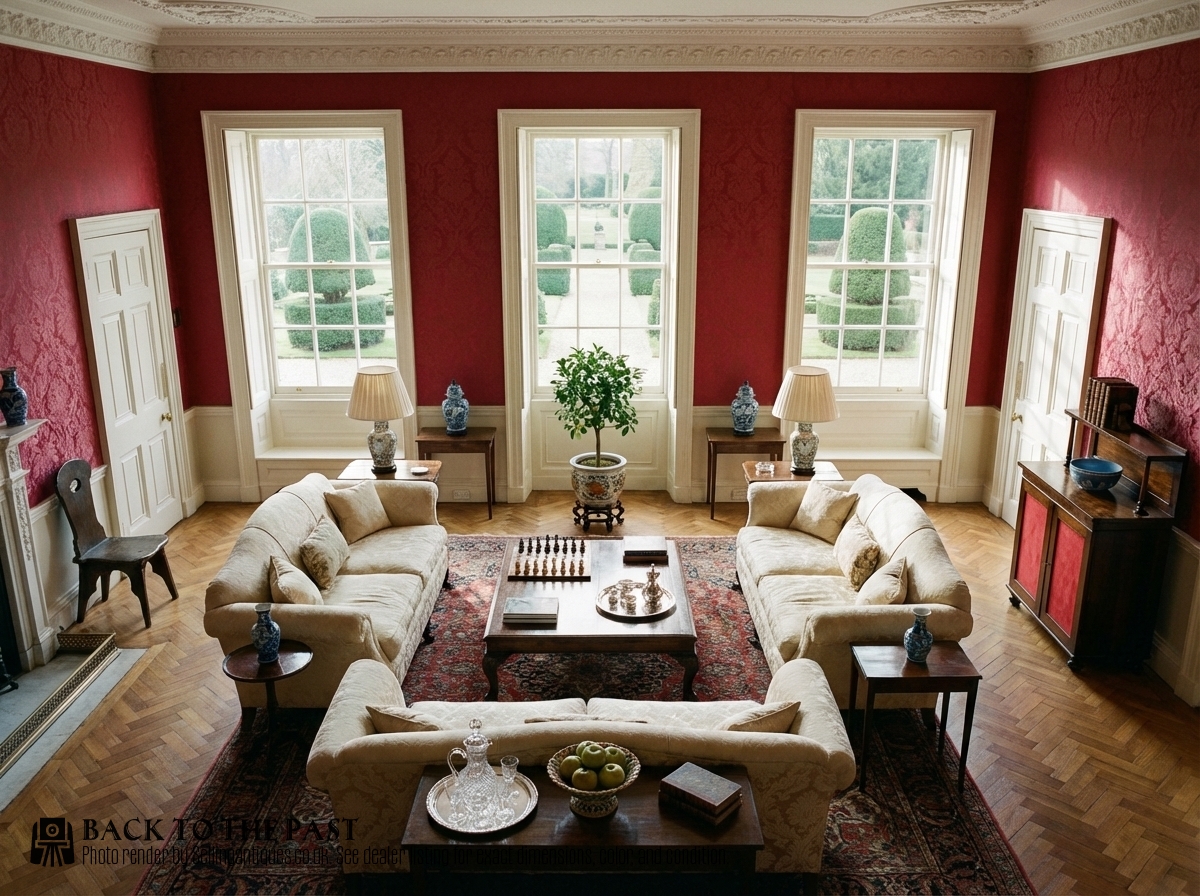
Rosewood Chiffonier Shelf
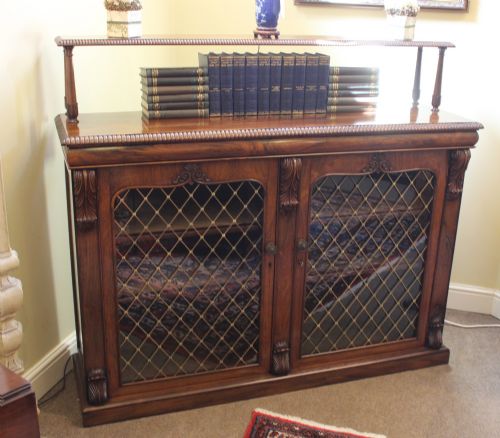
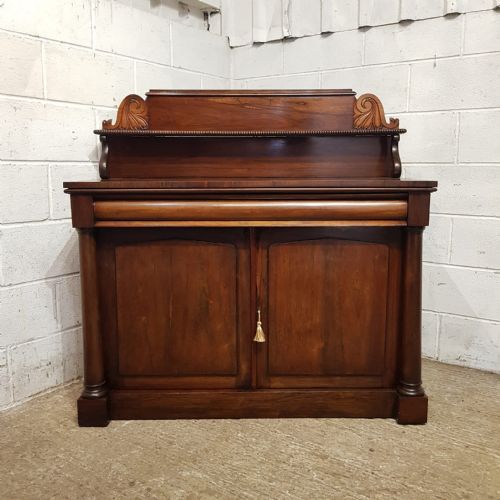
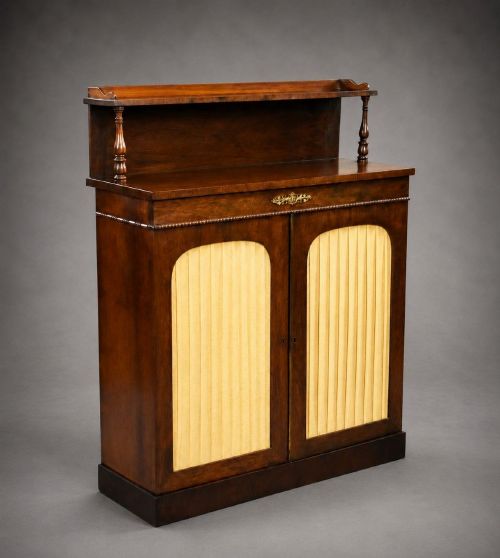
A rosewood chiffonier shelf piece combines low cabinet storage with elevated display tiers, appearing most frequently in nineteenth-century Regency and Victorian forms. These low side cabinets and bookcases utilise rich timber grains to anchor a room while providing functional surfaces for books and decorative objects.
You will encounter pieces ranging from compact dwarf cabinets to breakfront designs and corner cabinets. The selection relies heavily on nineteenth-century craftsmanship, spanning periods from George IV and William IV through to Edwardian interpretations.
Materials and construction methods
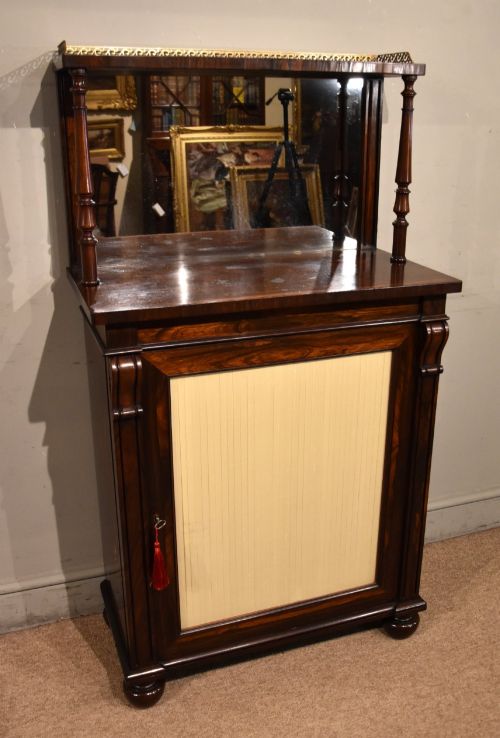
Cabinet makers utilised dense rosewood and palisander veneers over secondary timbers, frequently enhancing the dark surfaces with brass inlay and boxwood stringing. Selected pieces incorporate contrasting painted panels and simulated rosewood graining on alternative woods.
Upper structures integrate brass supports, mirrored glass backs, and marble tops to create tiered display spaces. Interior shelves and glazed or fabric-lined lower doors complete the construction of these cabinets and sideboards.
Some makers painted ordinary timber to look like rosewood, fooling casual observers with clever brushwork.
Distinguishing quality in rosewood furniture
Quality rests in the depth of the timber figuring and the precision of the brass inlay work set into the rosewood. Crisp execution of boxwood stringing and well-proportioned tiered shelving separate standard examples from finer commissions.
The integration of materials such as original mirror glass, marble tops, and painted panels influences the overall success of the piece. Structural balance across open bookcases and enclosed cabinets determines how the design holds the room.
John McLean
The Rosewood Chiffonier Shelf Glossary
- Chiffonier
- A low cabinet featuring enclosed storage below and one or more shelves above. This form evolved during the nineteenth century to serve dining and drawing rooms.
- Palisander
- A dense tropical timber synonymous with rosewood. Cabinet makers valued its dark, richly figured grain for high-status furniture.
- Breakfront
- A cabinet facade where the central section projects forward from the flanking sides. This architectural arrangement adds depth to sideboards and bookcases.
- Stringing
- Thin lines of contrasting wood inlay used to outline panels and borders. Boxwood is frequently employed against darker rosewood surfaces.
- Simulated rosewood
- Painted graining applied to a secondary timber to imitate the appearance of exotic rosewood. This technique provided the aesthetic effect at a different cost.
Rosewood Chiffonier Shelf: Frequently Asked Questions
What is a chiffonier shelf?
A chiffonier shelf combines a low timber cabinet with graduated display tiers mounted above the main surface.
These pieces provide both enclosed storage and open display space for books and decorative objects.
Where were these cabinets used?
They were traditionally placed in nineteenth-century drawing rooms, dining rooms, and parlours to hold tableware and volumes.
The compact footprint allowed them to sit against walls without dominating the floor area.
How do I date a piece?
Dating relies on observing structural characteristics, timber choices, and decorative details like brass inlay or painted panels.
Regency and George IV examples display different proportioning and mount styles compared to later Victorian or Edwardian pieces.
Can I use them as bookcases?
Many examples function effectively as open bookcases or side cabinets alongside traditional chiffonier configurations.
The tiered shelving accommodates volumes while the lower cabinet stores additional items.
How do I care for rosewood?
Keep the timber away from direct sunlight and steady temperature fluctuations to protect the natural grain and veneer.
Dust gently with a dry cloth and avoid harsh chemical polishes that can damage the polish.