


Small Rosewood Credenza
These small rosewood credenza pieces bring rich timber grain and compact elegance to a room, offering functional display space without overwhelming the floor plan.
Small Rosewood Credenza
A small rosewood credenza is a low-profile cabinet designed for storage and display, appearing across Regency, Georgian, and Victorian periods. Buyers search for this phrase to find compact storage solutions that combine deep timber tones with refined architectural proportions.
Origins stretch from the early nineteenth century into the late Victorian era, taking influences from Grand Regency, George IV, and French Chateau styles. Each iteration adapts the foundational low cabinet format to suit changing domestic tastes for neat proportions.
How they were made
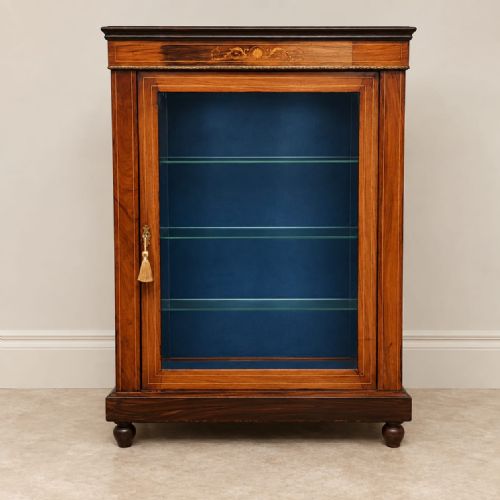
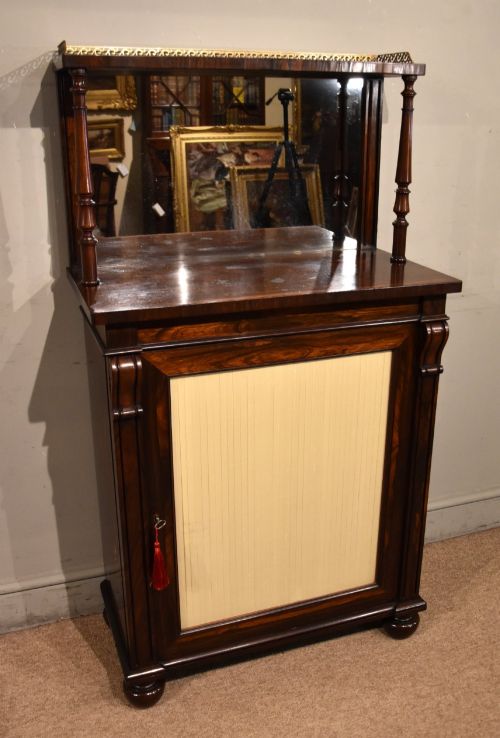
Cabinet makers utilised dense rosewood veneers applied to stable secondary timbers, often accentuating the surfaces with boxwood inlay, brass stringing, or ormolu mounts. The natural figuring of the timber provides the primary visual interest across the panels and doors.
Interiors and structural elements frequently incorporate secondary woods such as mahogany, while glass panels and mirrored backs are glazed into doors designed to protect and reflect books or decorative objects.
Listings feature pieces spanning the Regency, Georgian, and Victorian periods, constructed primarily from rosewood with brass, glass, ormolu, and boxwood.
What varies in quality
Quality rests in the precision of the timber matching and the crispness of any applied brass, ormolu, or burr walnut and ebony inlay. Superior examples display seamless veneer work where the grain patterns mirror across doors and panels with deliberate symmetry.
The refinement of the proportions and the integration of secondary materials like porcelain mounts or original glass define the upper tier of pieces. Construction honesty, such as uncompromised timber thickness and well-fitted drawer linings, separates workshops of high repute from standard production.
Gillows
The Small Rosewood Credenza Glossary
- Credenza
- A low dining-room or parlour cabinet used for serving food or displaying ornaments. The form evolved significantly through the nineteenth century.
- Chiffonier
- A low sideboard or cabinet, typically featuring shelves or a raised back. This form became a staple of Regency and Victorian interiors.
- Ormolu
- Gilded bronze used for decorative mounts and feet. It adds bright metallic contrast to dark rosewood surfaces.
- Pier cabinet
- A narrow cabinet designed to stand against the wall space between windows. These pieces often incorporate glazed doors for displaying fine porcelain.
- Inlay
- Contrasting materials such as boxwood, ebony, or brass set into the surface of the rosewood. This technique creates geometric or floral patterns.
Small Rosewood Credenza: Frequently Asked Questions
How do I date a rosewood cabinet?
Dating relies on observing structural characteristics, hardware styles, and the overarching design movement. Regency and George IV pieces tend to show classical restraint, while Victorian examples often incorporate richer inlay and varied timber combinations.
Examining the secondary woods and construction methods inside the cabinet provides further clues to its period of origin.
Where were these cabinets placed?
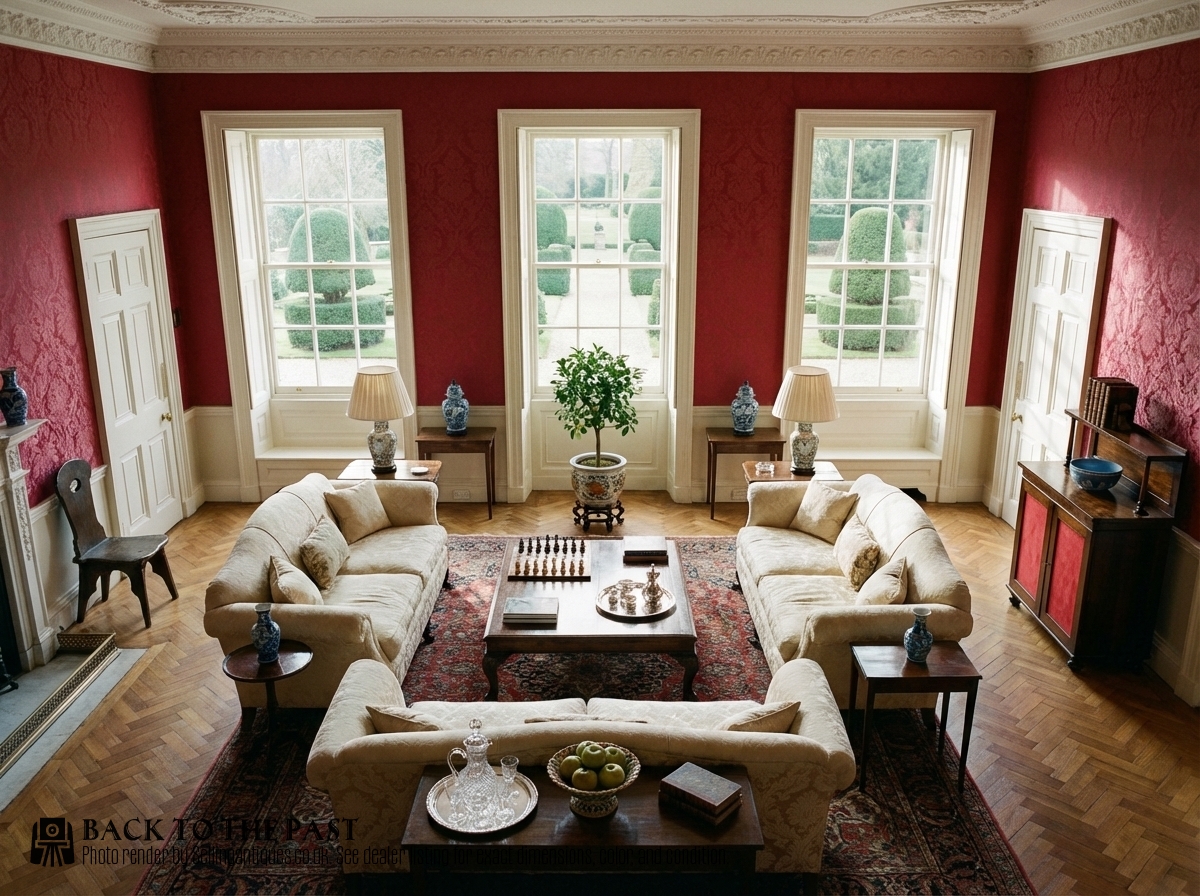
Historically, these low cabinets sat against drawing room walls, often filling the wall space between windows or serving as side pieces in dining rooms. Their modest scale allowed them to fit into tighter architectural spaces.
Today, buyers place them in hallways, living rooms, and bedrooms where surface space and low height are advantageous.
What is the difference between a credenza and a chiffonier?
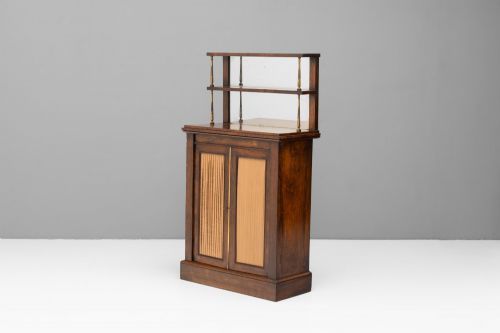
While both are low nineteenth-century storage pieces, a chiffonier often includes a raised back tier with shelves. A credenza typically presents a flat top surface designed strictly for serving or display.
Cabinet makers used these terms fluidly across the Georgian and Victorian eras, leading to considerable overlap in form.
How do I care for rosewood furniture?
Rosewood requires stable humidity levels and protection from direct sunlight to prevent the timber and veneers from drying out. Regular dusting with a soft, dry cloth preserves the finish.
Avoiding harsh chemical polishes ensures the historical patina and wax surfaces remain undisturbed over time.