


Regency Dwarf Cabinet
A regency dwarf cabinet is a low storage piece that brings refined proportions and rich timbers to a room without crowding the walls.
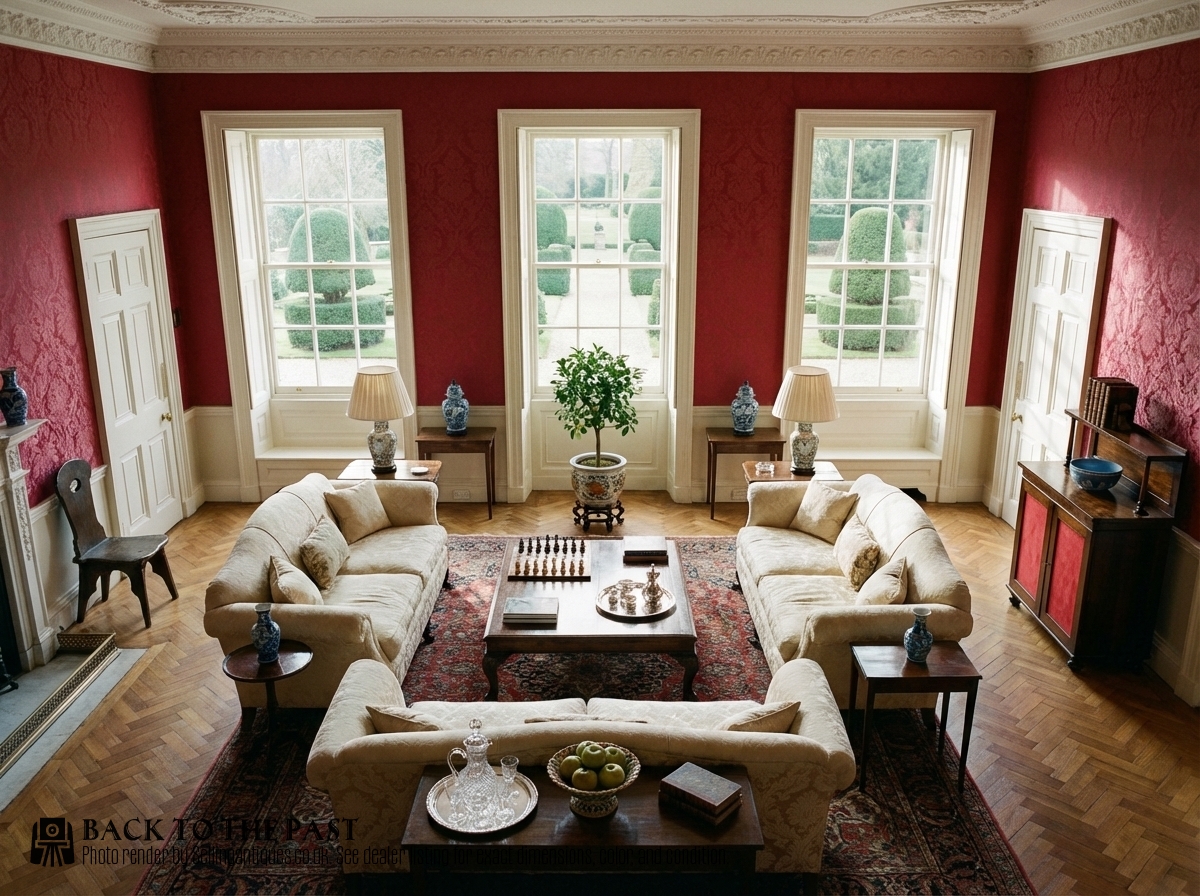
Regency Dwarf Cabinet
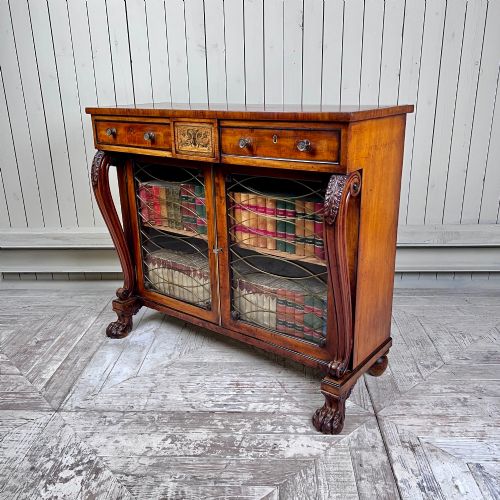
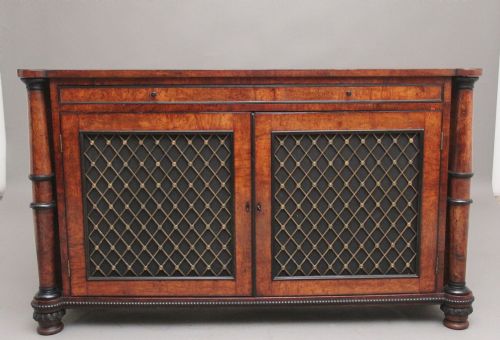
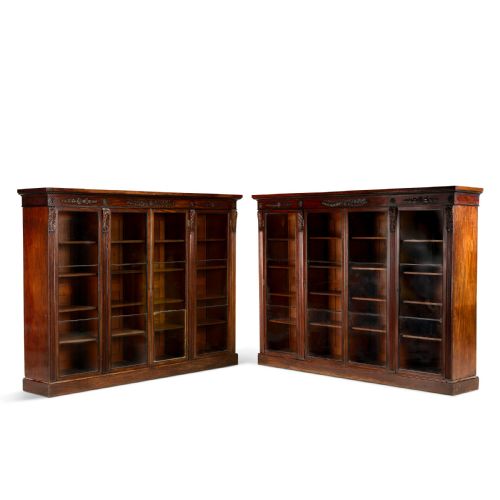
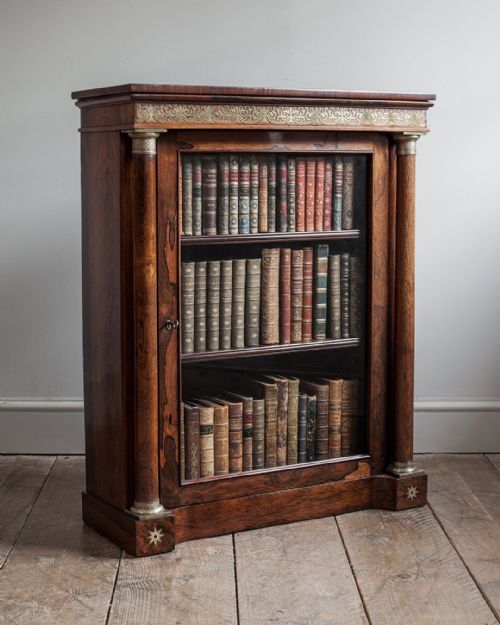
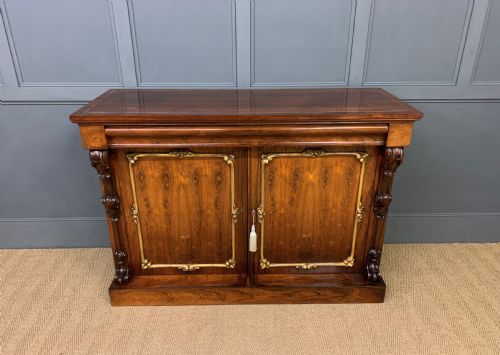
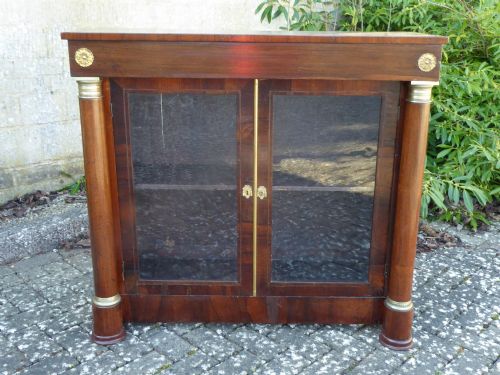
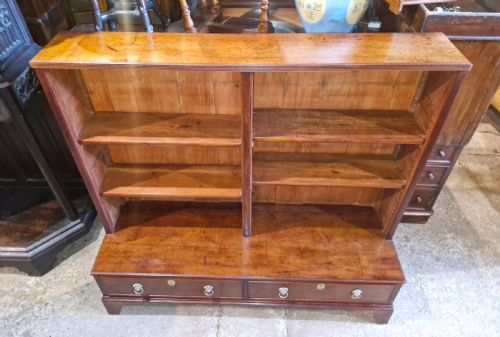
A regency dwarf cabinet is a low-slung storage piece designed for books, display, or linen, typically encountered in forms such as side cabinets, chiffoniers, and bookcases. These low proportions allow the furniture to sit comfortably beneath dado rails and picture windows while maintaining a strong architectural presence in a room.
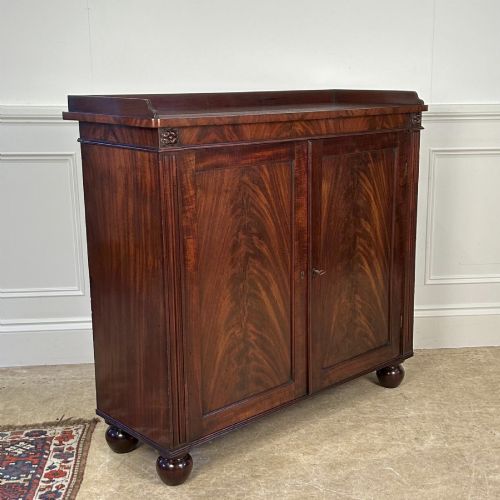
The pieces appearing on this page span the Regency period itself as well as the broader nineteenth century, drawing on Georgian and Victorian revivals alongside Grand Regency styles. Timber choices lean heavily toward rich rosewood and mahogany, often enhanced by contrasting veneers like pollard oak, amboyna, or gonçalo alves.
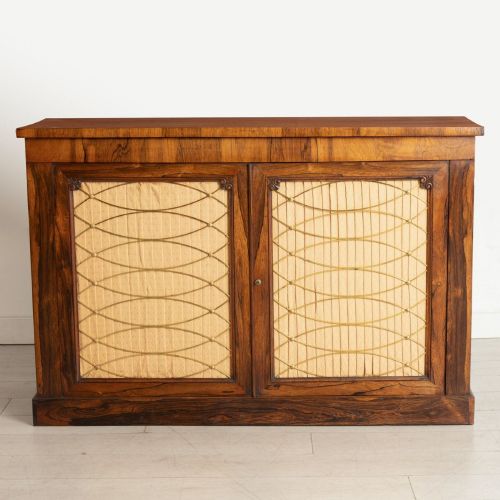
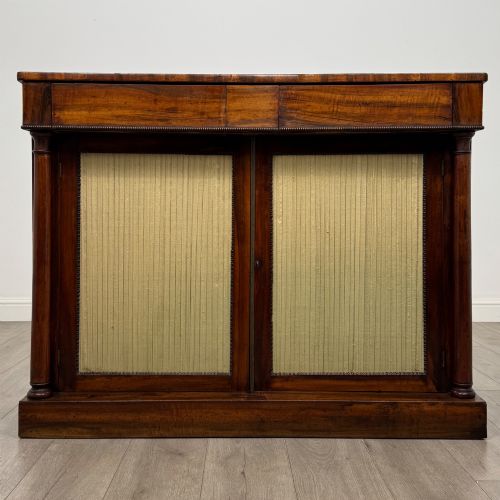
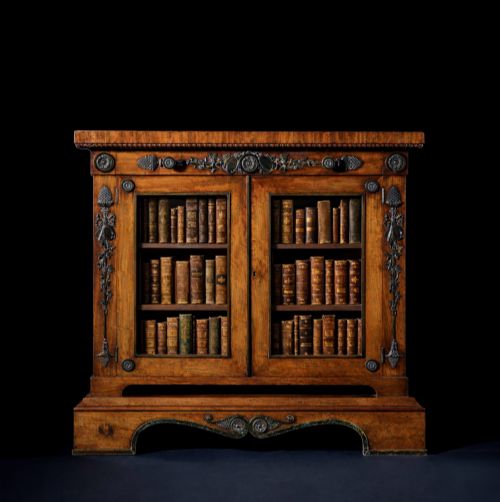
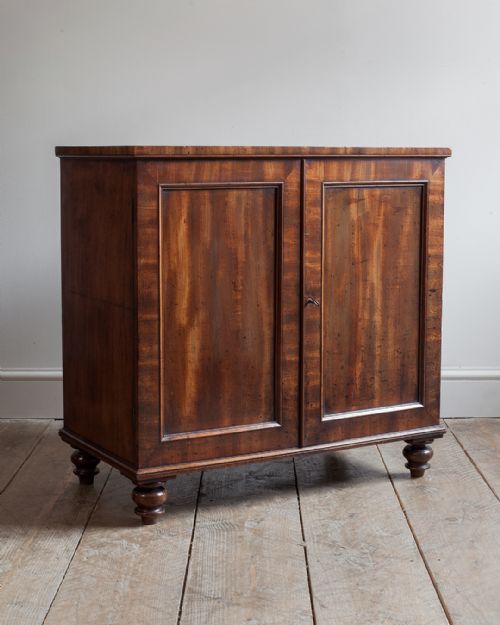
Cabinetmakers of the era produced these low pieces with various upper configurations, including open shelving, glazed doors, and silk-pleated chiffonier panels. Whether configured as a breakfront bookcase or a compact side cupboard, the form remains defined by its restricted height and balanced, classical lines.
Judging quality and craftsmanship
Quality in a low cabinet rests upon the selection of timber veneers and the precision of the brass inlay work. Finer examples display continuous grain matching across doors and drawers, alongside crisp, tightly fitted brass stringing that remains flush with the surrounding wood.
Proportion and structural integrity distinguish the finest workshops from standard production. Superior pieces exhibit balanced architectural breaks, well-figured secondary timbers in the drawer linings, and original mounts that integrate seamlessly into the overall design.
Some dwarf cabinets hide away pleated silk panels behind their doors, keeping the family linen safe from prying eyes.
Gillows
The Regency Dwarf Cabinet Glossary
- Chiffonier
- A low sideboard or cabinet, typically featuring shelves or enclosed cupboards, often fitted with fabric-backed door panels. This form evolved during the nineteenth century to serve both display and storage functions in the drawing room.
- Breakfront
- A cabinet design where the central section projects forward from the flanking wings. This architectural arrangement creates depth and shadow across the front elevation of the furniture.
- Ormolu
- Gilded bronze mounts applied to furniture for decorative accent. The technique adds metallic contrast against dark woods such as rosewood and mahogany.
- Stringing
- Narrow strips of contrasting timber or brass inlaid into the surface of furniture to create geometric borders and outlines. This linear detail defines panels and highlights the edges of shelves and doors.
- Pollard oak
- Timber taken from trees that have been pollarded, resulting in a dense, clustered grain pattern filled with small knots. Cabinetmakers prized this wood for decorative veneering on feature doors and drawer fronts.
Regency Dwarf Cabinet: Frequently Asked Questions
What is a regency dwarf cabinet used for?
These low cabinets served multiple functions in period interiors, acting as sideboards for serving, bookcases for modest libraries, or enclosed cupboards for linens and silver. Their reduced height allowed them to sit beneath windows without obstructing light or views.
Today, they adapt readily to modern living spaces as television consoles, hallway storage units, or display surfaces for art and lamps, offering substantial storage capacity without dominating the room's vertical space.
How do I date a regency dwarf cabinet?
Dating relies on observing stylistic markers, timber choices, and construction methods. Pieces made during the Regency period itself often feature crisp brass inlay, rosewood or flame mahogany veneers, and restrained classical proportions.
Later nineteenth-century interpretations may display heavier Victorian ornamentation or broader proportions while retaining the core low-profile format established during the early decades of the century.
Are these cabinets all mahogany?
While mahogany is common, many examples utilise exotic hardwoods such as rosewood, gonçalo alves, and amboyna. Workshops frequently combined primary display timbers with secondary woods like oak or pine for internal carcases and drawer linings.
Inlay work further incorporates contrasting materials including ebony, brass, and fruitwoods to create decorative borders and panels across the cabinet facades.
Where should I place a dwarf cabinet?
The modest height of these pieces makes them ideal for placement along hallways, beneath picture windows, or against living room walls where standard bookcases would feel too heavy. They work well as anchor pieces beneath large paintings or mirrors.
Ensure the cabinet is positioned away from direct heat sources and strong sunlight to protect sensitive nineteenth-century wood veneers and polished finishes from drying or fading.