
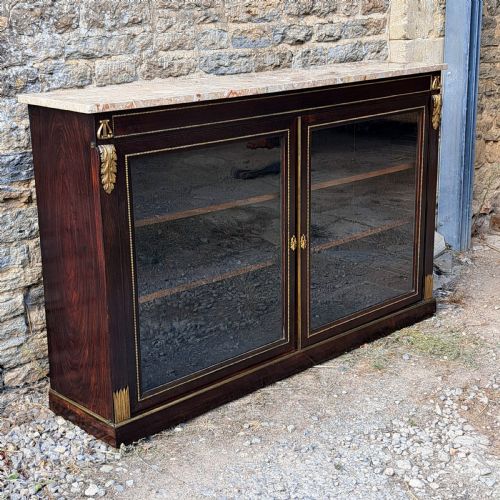
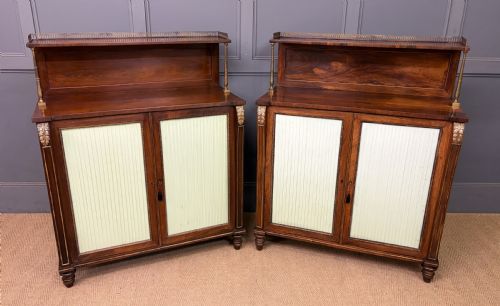

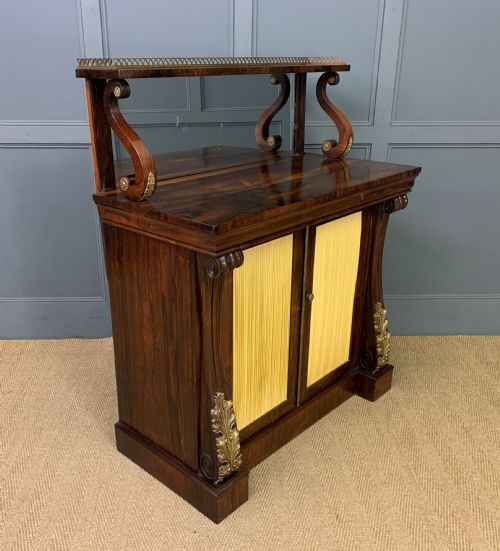


Rosewood Low Sideboard
A rosewood low sideboard brings rich, dense grain and formal presence to a room, grounding the interior with 19th-century cabinet-making.
Rosewood Low Sideboard
A rosewood low sideboard encompasses compact cabinets, chiffoniers, and credenzas designed for formal rooms during the Georgian, Regency, and Victorian periods. You are most likely to encounter Regency and mid-19th-century examples featuring enclosed lower cupboards and sometimes upper shelving or mirror backs.
The objects serve primarily as low storage units, historically used to display silver or serve food in dining spaces while housing linens or books inside. Their lower profile distinguishes them from taller breakfront bookcases or towering Victorian chiffoniers.
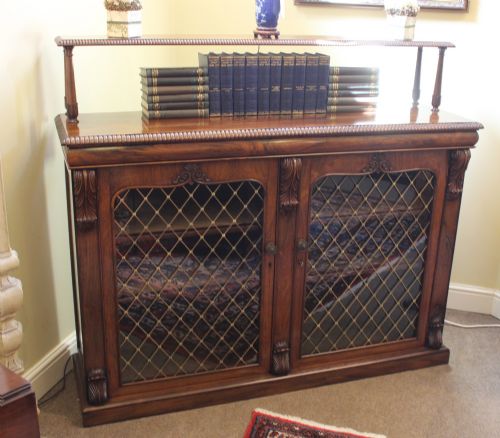
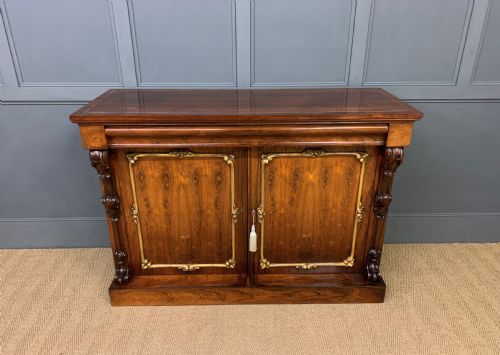
Makers adapted the form across decades, moving from strict neoclassical Regency lines to the curvaceous serpentine fronts of the Victorian era. The evidence shows frequent appearances of brass mounts, grill panels, and fabric-backed doors alongside simpler timber fronts.
Materials and construction methods
Cabinet-makers relied on solid rosewood and palisander timbers, often laid as fine veneers over secondary woods like mahogany to display striking grain patterns. Selected pieces incorporate contrasting details in ebony and detailed brass inlays set flush into the primary timber.
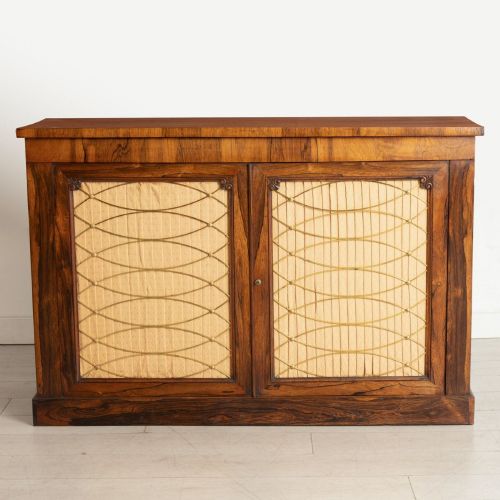
Functional elements utilise specific supporting materials, including white marble tops on select Victorian and William IV pieces, mirrored glass panels in cabinet backs, and pleated silk or fabric behind brass grilles. Mahogany framing frequently lines the interior drawers and shelves.
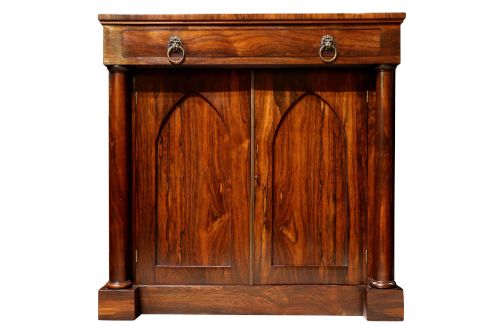
Structural assembly combines traditional jointing with decorative brass mounts and gallery rails. Cabinet doors utilise panelled construction, sometimes featuring Gothic arches or brass wire grilles instead of solid timber.
Several pieces feature pleated silk panels behind brass grilles, offering a discreet glimpse into 19th-century attempts to keep book collections dust-free.
Distinctions in craftsmanship and design
Quality rests on the selection and matching of the rosewood veneer, where symmetrical grain patterns across breakfront doors signal superior workshop practices. Finer pieces demonstrate precision in the integration of brass inlay and cast mounts rather than plain surface application.
The architectural ambition of the carcass defines the upper tier of the range, seen in breakfront configurations and serpentine forms requiring advanced timber-bending techniques. Interior lining in secondary woods like mahogany, alongside signed or attributed attribution to notable makers, elevates the status of a piece.
Gillows
The Rosewood Low Sideboard Glossary
- Chiffonier
- A low cabinet featuring enclosed cupboards below, frequently surmounted by a shelf or bookcase tier on the top. The form evolved during the Regency period to serve dining and drawing rooms.
- Breakfront
- A cabinet design where the central section projects forward from the flanking outer cabinets. This architectural arrangement creates depth and visual rhythm on long sideboard facades.
- Palisander
- A dense tropical timber related to rosewood, prized in 19th-century cabinet-making for its deep colour and pronounced figuring. It appears frequently in continental and English pieces.
- Credenza
- A low sideboard or cabinet, often serpentine in outline during the Victorian period, designed for display and storage. It typically lacks the superstructure found on chiffoniers.
- Gillow
- A celebrated firm of cabinet-makers based in London and Lancaster, known for high-quality furniture marked by refined proportions and secondary mahogany linings.
Rosewood Low Sideboard: Frequently Asked Questions
What is a rosewood low sideboard used for?
These pieces function primarily as low storage cabinets and display surfaces within a dining room, hallway, or drawing room. Historically, they held dining silver, linens, or books while providing a surface for serving.
Today, they serve well as credenzas in modern living spaces for media storage or general display, bringing rich timber tones and historical presence to an interior.
How do I tell a Regency rosewood cabinet from a Victorian one?
Regency pieces typically display restrained neoclassical lines, symmetric brass inlays, and architectural column details. They reflect an ordered, geometric aesthetic influenced by ancient Roman and Greek design.
Victorian cabinets lean towards heavier proportions, serpentine curves, and white marble tops. The decoration often incorporates elaborate floral carvings and French revival motifs.
How should I care for a antique rosewood cabinet?
Keep the timber away from direct heat sources and strong sunlight to prevent the rosewood veneer from drying out or fading. Maintain a stable indoor humidity to protect the historical glues and structural joints.
Dust regularly with a dry cloth and apply a quality wax sparingly only when the timber appears dry, following the direction of the grain.