
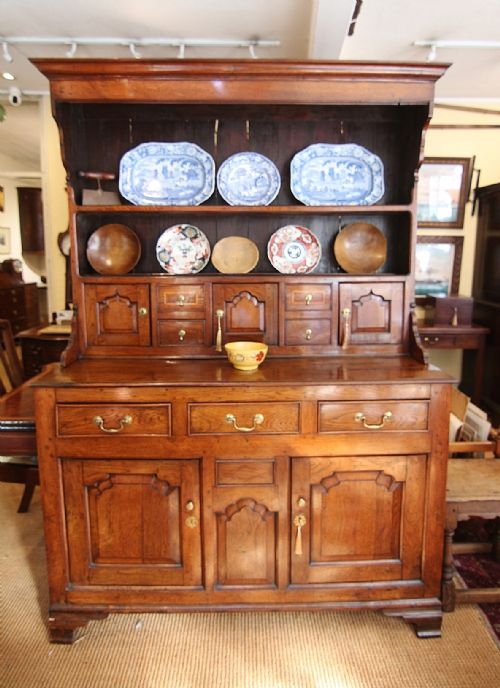
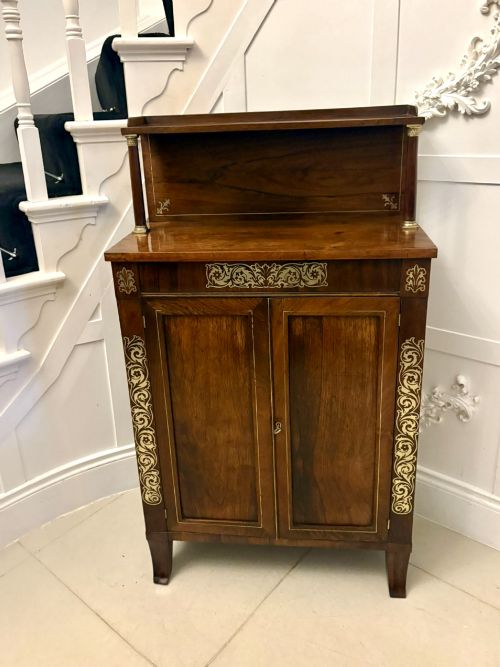
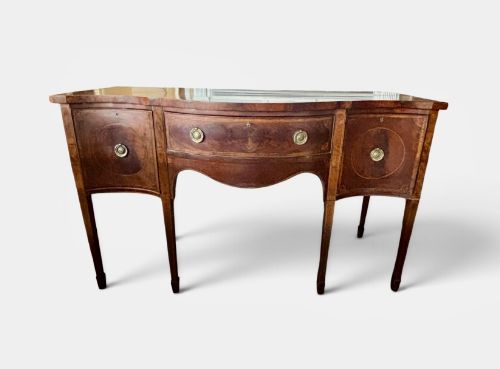
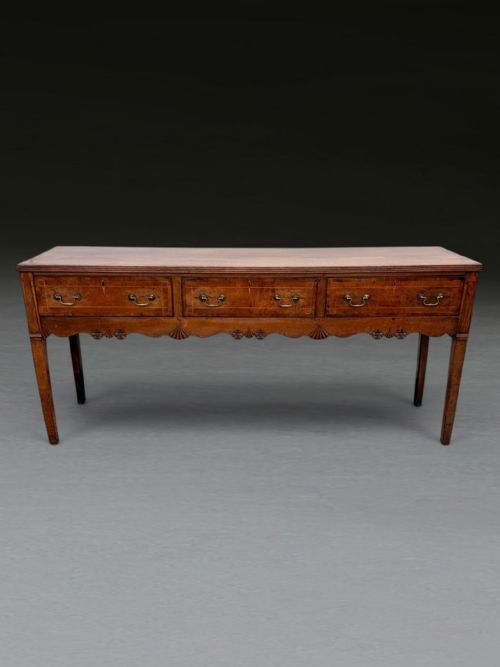
Georgian Inlaid Sideboard
A georgian inlaid sideboard brings structural grace and timber warmth to a room, offering both surface display and deep storage.
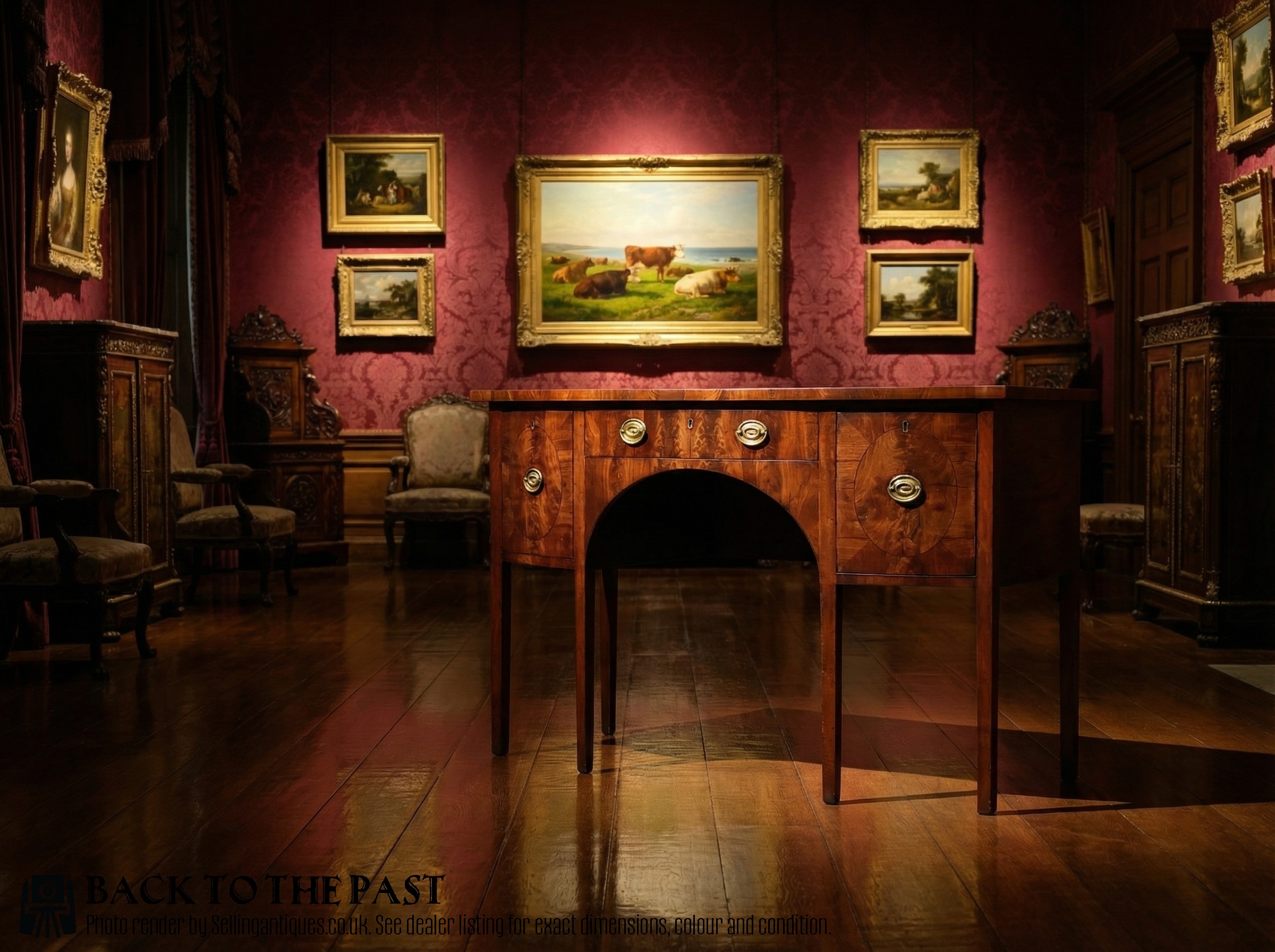
Identifying these boards
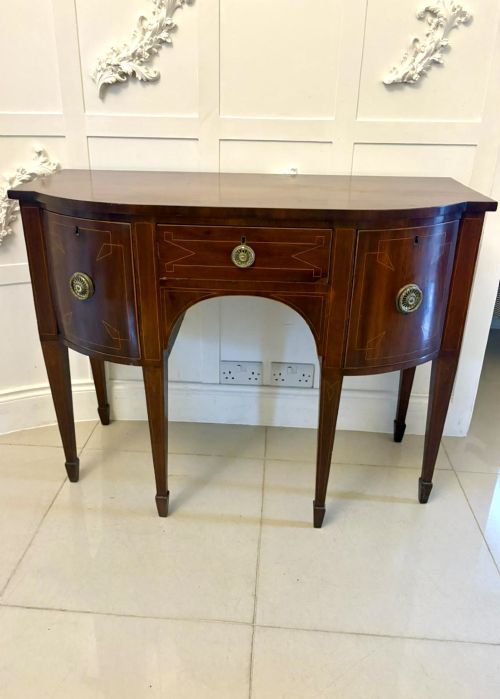
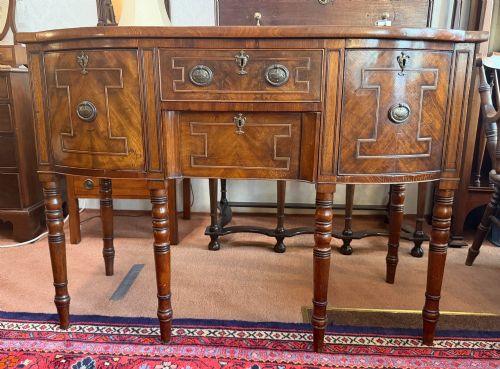
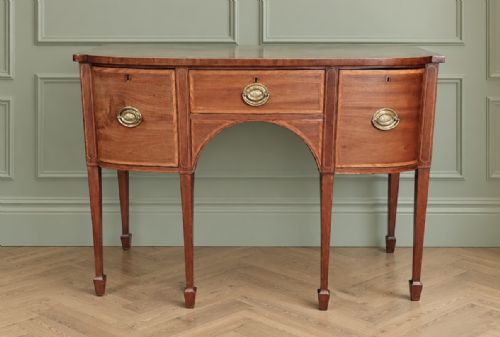
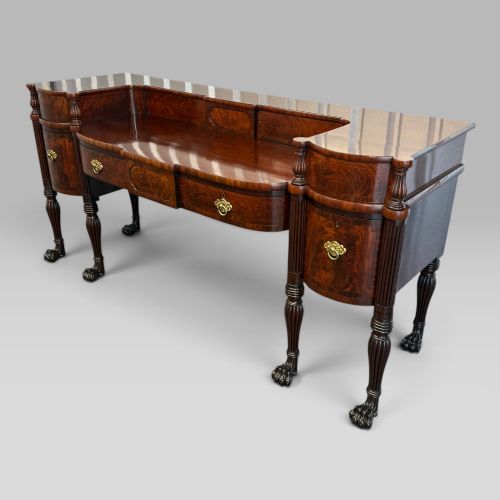
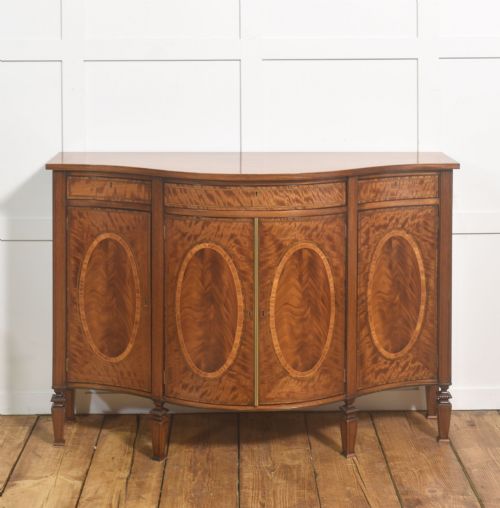
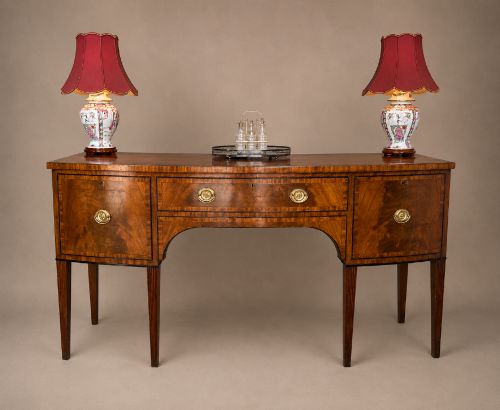
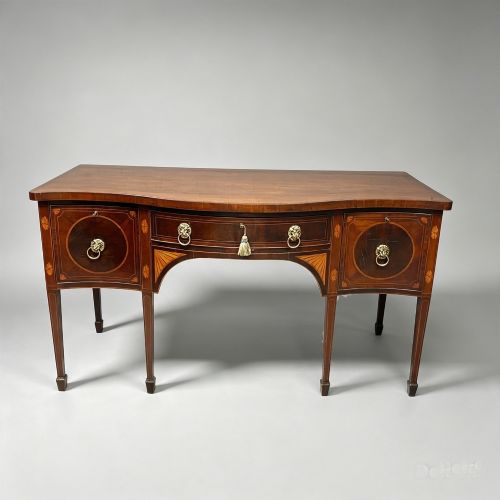
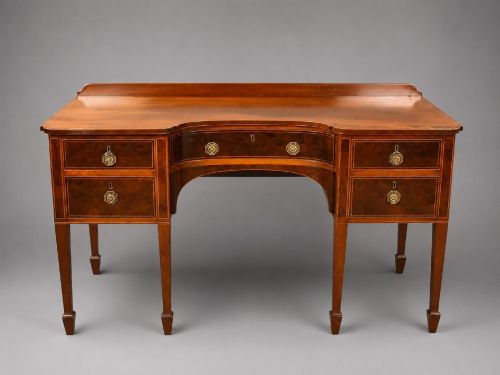
A georgian inlaid sideboard is a serving piece designed for the dining room during the late eighteenth and early nineteenth centuries. These items appear in formats ranging from straight frames to curved bow fronts and serpentine shapes. Walnut and mahogany form the primary carcasses, shaped to accommodate dining service and silver.
Makers of the period built these pieces to anchor large dining spaces, often providing deep cellarete drawers for bottles alongside utensil compartments. Smaller proportions surface occasionally, suiting more intimate rooms without losing the characteristic stringing and fan motifs. The influence of Sheraton styling and George III aesthetics runs through the surviving examples.
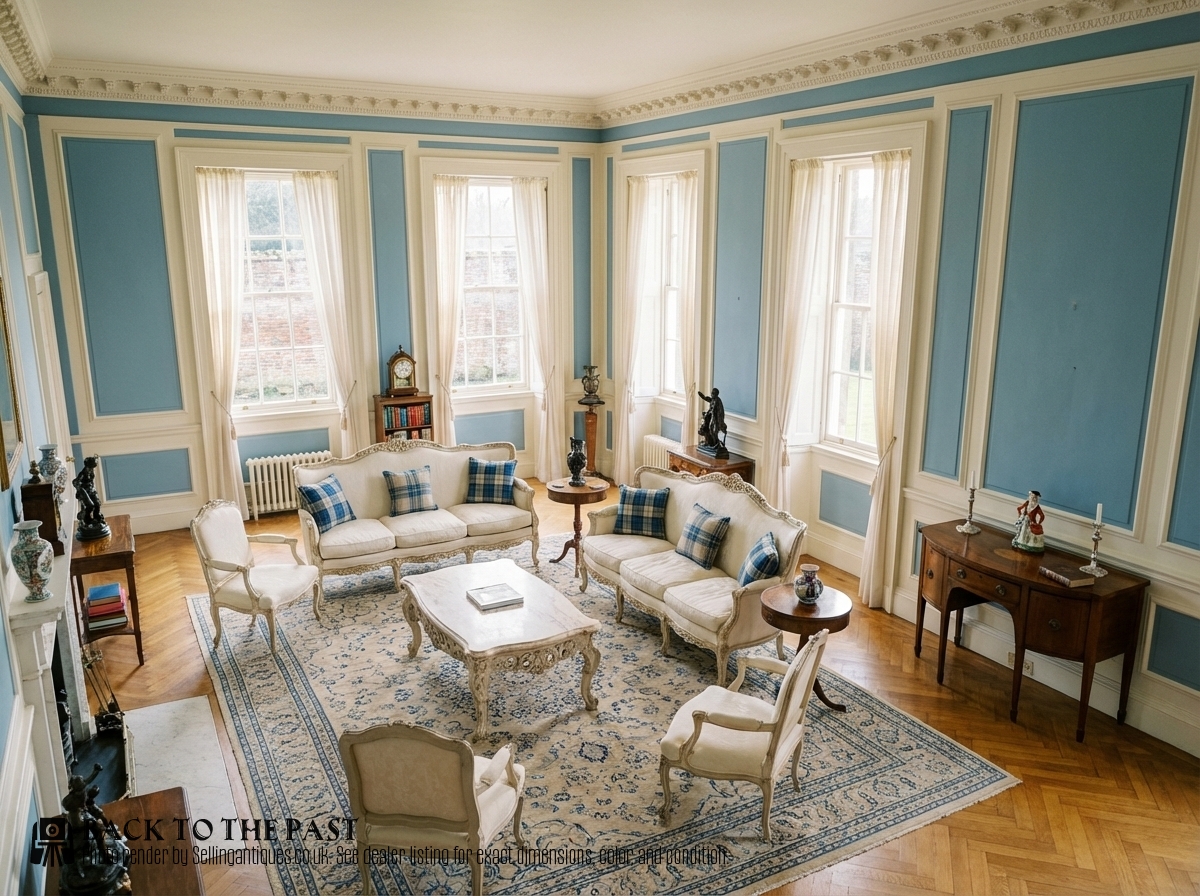
Materials and construction
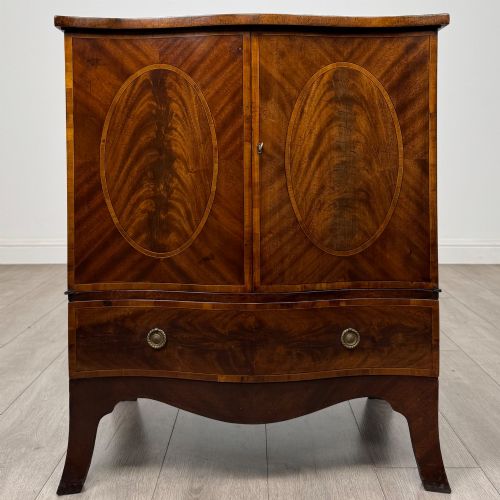
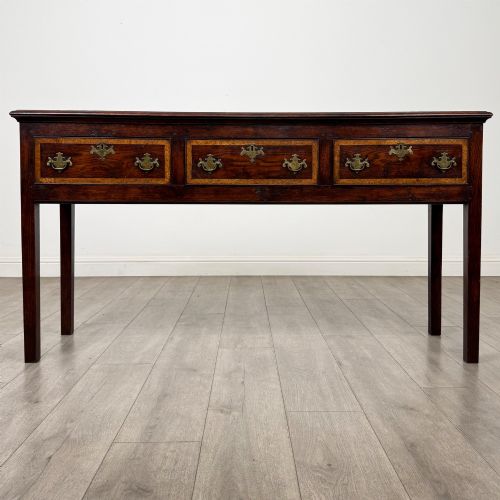
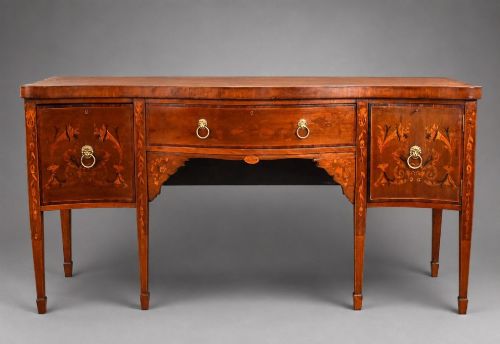
Cabinetmakers constructed these sideboards using solid mahogany and flame mahogany veneers applied over secondary timbers. Boxwood veneer and boxwood inlay provide sharp contrasting lines around drawer fronts and borders. Brass handles and mounts complete the hardware scheme, adding functional contrast to the dark wood.
Curved elements like bow fronts and serpentine shapes demand precise woodworking techniques to bend and shape the timber veneers. Inlay work involves meticulous hand-cutting of light woods into recesses carved into the primary surface. Joinery relies on traditional dovetailing for drawers and mortise and tenon frames for the main body.
Retail Price Guide 2026
Typical UK retail prices for georgian inlaid sideboard, calculated from the Sellingantiques database of over a million retail prices indexed since 2003. This retail price guide relies exclusively on Sellingantiques data; no external sources or auction records are used, so the figures do not describe the wider market.
Bow front configurations appear more often than straight or serpentine shapes across the recorded pieces.
Differentiating the pieces
The sophistication of the timber grain and the complexity of the boxwood inlay distinguish standard examples from exceptional ones. Flame mahogany panels with strong figuring indicate careful selection of the tree's growth pattern by the original cabinetmaker. Fine execution of stringing and decorative medallions shows the hand of a skilled workshop rather than standard production.
Proportion and line dictate the architectural success of a sideboard, particularly in bow front and serpentine formats. Pieces that maintain crisp edges and intact original brass hardware retain greater integrity than those altered over centuries of use.
The Georgian Inlaid Sideboard Glossary
- Bow front
- A cabinet front that curves outward in a convex arc. This shape softens the room's geometry and appears frequently in Georgian dining furniture.
- Serpentine
- A front contour that curves inward at the centre and outward at the ends, creating an 'S' shape across the width. It demands advanced woodworking skill.
- Stringing
- Thin lines of contrasting wood inlay set flush into the surface to create geometric borders and panels. Boxwood provides the bright element against dark mahogany.
- Flame mahogany
- Timber cut from the fork of the mahogany tree where branches meet the trunk, producing a rippling, flame-like grain pattern. Cabinetmakers reserved this for prominent drawer fronts.
- Cellarete
- A deep drawer or separate compartment within the sideboard designed to hold wine bottles upright. These often feature internal divisions.
Frequently Asked Questions
What is a georgian inlaid sideboard used for?
These pieces served dining rooms as serving tables and storage units for heavy silver, linen, and wine.
Today, they function well in dining spaces for entertaining or in hallways as statement storage consoles.
How do I identify a georgian piece?
Look for construction traits like hand-cut dovetails on drawer boxes and the use of solid mahogany with fine boxwood stringing.
Periods span the late eighteenth century into the Regency era, showing classical proportions and restrained decorative carving.
How do I care for mahogany furniture?
Keep wooden surfaces away from direct heat sources and strong sunlight to prevent the timber and veneers from drying out.
Apply natural beeswax periodically to nourish the grain and maintain a soft, protective sheen.