

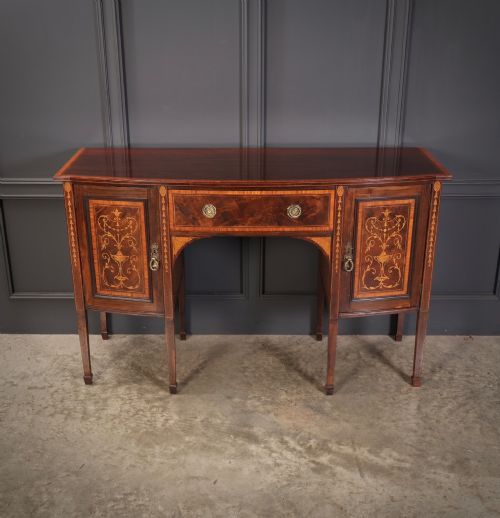
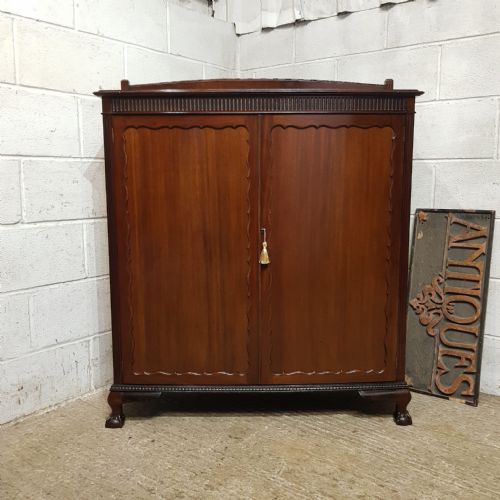


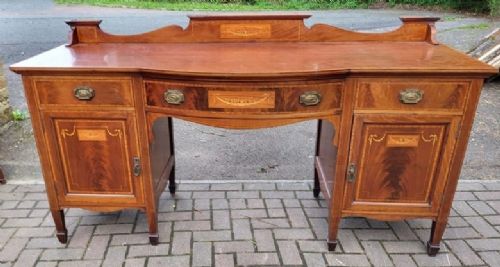

Edwardian Bowfront Sideboard
An Edwardian bowfront sideboard brings curving elegance to a dining room, offering deep storage within a refined wooden facade.

What They Are
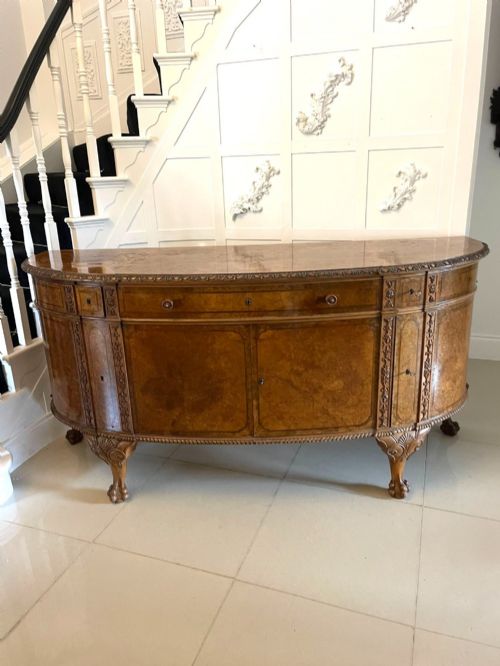
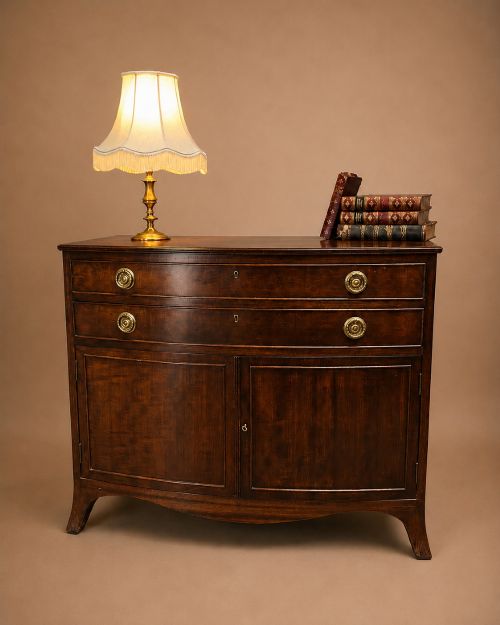
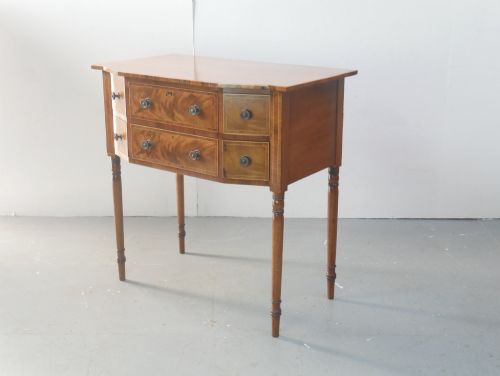
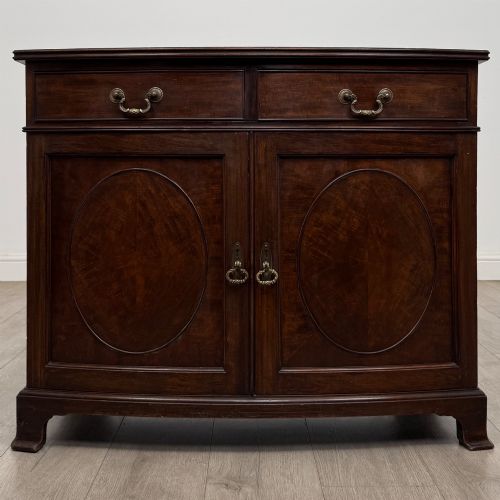
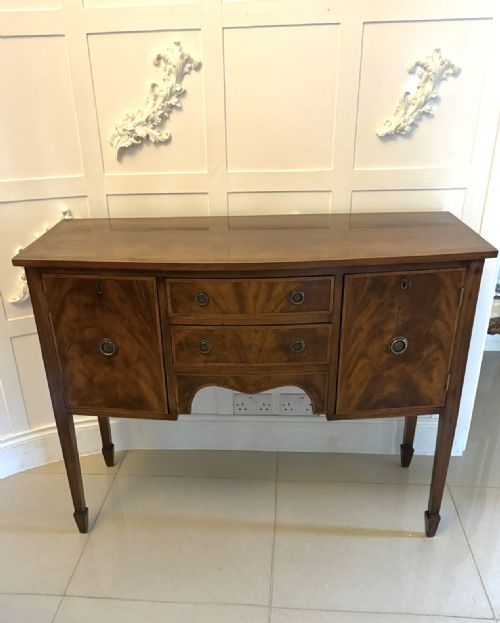
An edwardian bowfront sideboard stands as a practical dining room focal point, combining deep central storage with a graceful curved front profile. These pieces are most frequently encountered from the Edwardian period, though examples stretch back to the Regency and Georgian eras.
Makers and makers' workshops of the period produced these items to serve large households, requiring generous proportions and robust structural integrity. Buyers will find that the core form remains consistent while decorative stringing and wood selection introduce subtle variety.
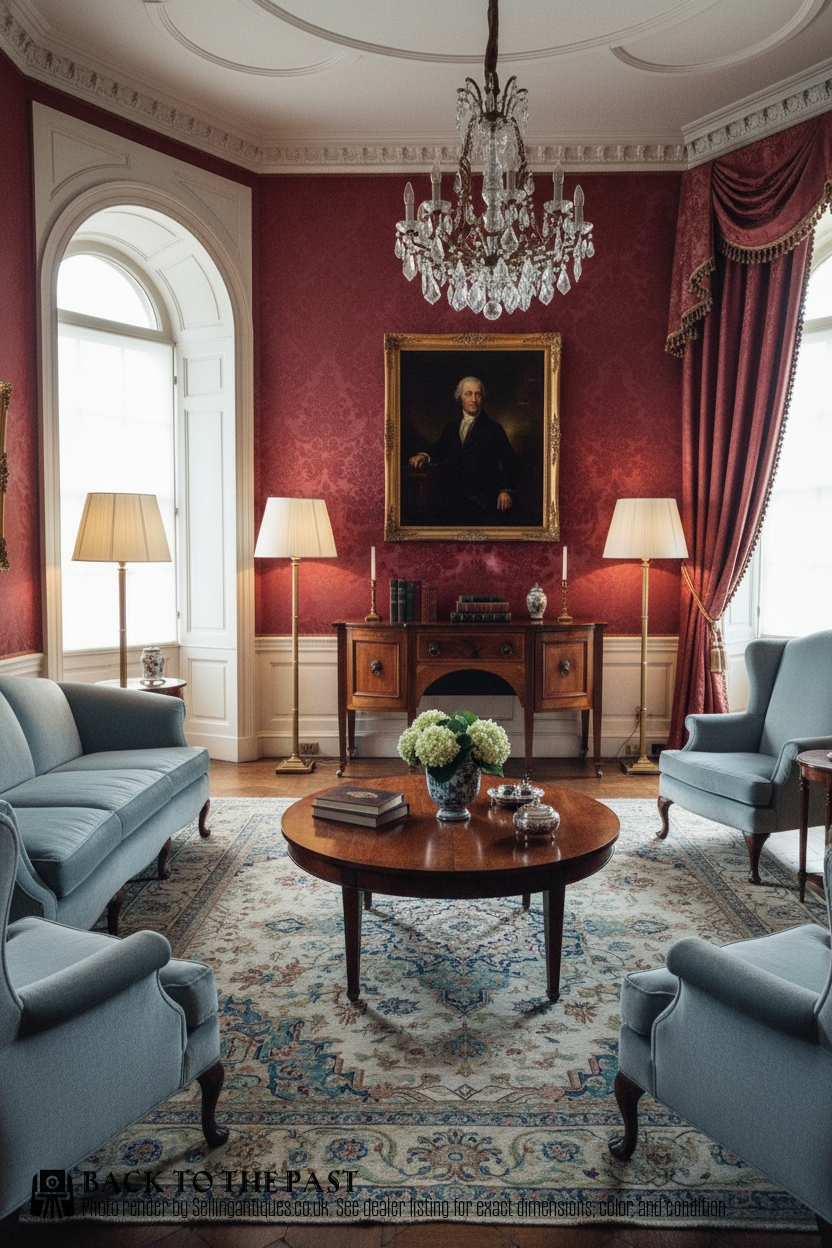
How They Were Made
Cabinet makers of the period constructed these sideboards using solid mahogany and carefully selected wood veneers, bending timber to form the characteristic curved bowfront. Internal carcases and drawer linings often utilise secondary timbers, whilst exterior surfaces receive fine mahogany boards.
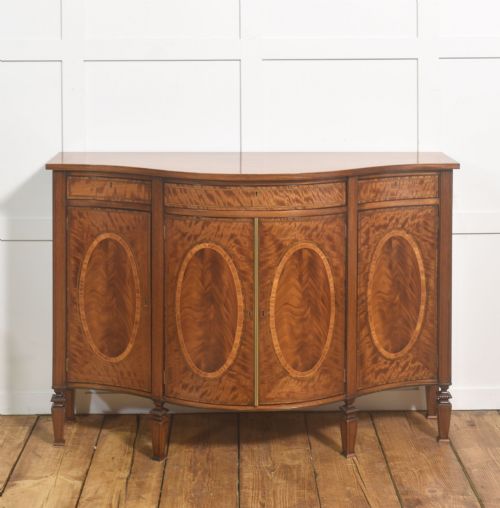
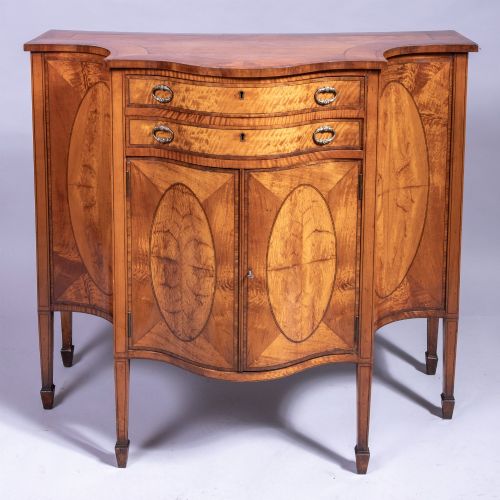
Decoration relies upon intricate inlay and satinwood crossbanding, applied as contrasting borders around drawer fronts and top panels. Brass handles and drawer pulls are fitted to complete the hardware, reflecting the standard joinery techniques of early twentieth century and nineteenth century workshops.
Retail Price Guide 2026
Typical UK retail prices for edwardian bowfront sideboard, calculated from the Sellingantiques database of over a million retail prices indexed since 2003. This retail price guide relies exclusively on Sellingantiques data; no external sources or auction records are used, so the figures do not describe the wider market.
The listings span Edwardian, Regency, and Georgian periods, utilising mahogany, satinwood, and brass across various sideboard and cabinet formats.
What Varies in Quality
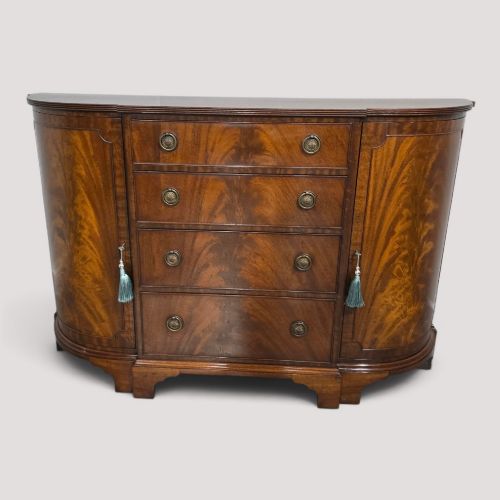
The hierarchy of quality rests primarily upon the choice of timber and the precision of the inlay work. Finer examples display figured flame mahogany veneers and intricate satinwood crossbanding that align perfectly across drawers and doors.
Structural refinement also separates standard production from superior pieces, particularly in the smoothness of the curved drawers and the weight of the brass fixtures. Lower tiers feature simpler panels without inlay, while top tier items exhibit thoughtful proportion and skilled cabinet making.
The Edwardian Bowfront Sideboard Glossary
- Bowfront
- A curved front profile where the central section sweeps outward in a convex arc. This shape softens the room and provides extra depth to the central drawers.
- Crossbanding
- A decorative border of veneer laid perpendicular to the surrounding grain. It frames the top surface or drawer fronts in a contrasting timber such as satinwood.
- Inlay
- Pieces of contrasting wood or shell fitted into depressions in the base timber to form decorative patterns. Edwardian examples often utilise fine stringing lines.
- Breakfront
- A piece of furniture where the central section projects forward from the flanking outer sections. This architectural arrangement adds depth and formal presence.
- Flame mahogany
- Mahogany timber exhibiting a distinctive flickering flame-like grain pattern. Cabinet makers reserved this highly decorative veneer for prominent exterior surfaces.
Frequently Asked Questions
How do I care for a mahogany sideboard?
Keep the wood away from direct heat sources and strong sunlight to prevent the mahogany finish from drying out or fading. Regular dusting with a soft, dry cloth preserves the polished surface.
Aplying a quality beeswax occasionally feeds the timber and maintains the natural lustre of the veneer without building up heavy residues.
Will an edwardian sideboard fit a modern dining room?
These sideboards offer substantial internal storage behind their curved doors, making them practical for holding modern dining ware and glassware. Their traditional proportions require sufficient floor space to allow the bowfront to project into the room.
Measuring the clearance around dining chairs ensures the doors and drawers open fully without obstruction in contemporary spaces.
How do I distinguish Edwardian pieces from Georgian ones?
Edwardian pieces often feature lighter mahogany tones, delicate inlaid stringing, and machine-assisted precision in the joinery. Georgian items generally display heavier solid timbers and hand-cut construction details.
Examining the secondary woods inside the drawers helps clarify the period of manufacture, as timber availability shifted over the course of the nineteenth century.
What is the purpose of satinwood crossbanding?
Crossbanding uses contrasting timber to create a distinct border that frames the main panels of the sideboard. The pale yellow tone of satinwood provides a sharp visual contrast against darker mahogany.
This decorative technique draws the eye to the geometry of the drawers and demonstrates the cabinet maker's skill in handling multiple wood types.