
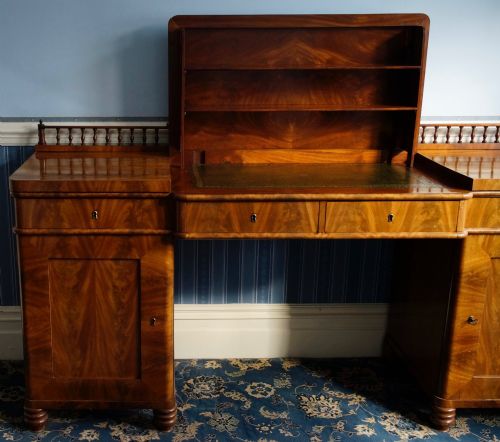
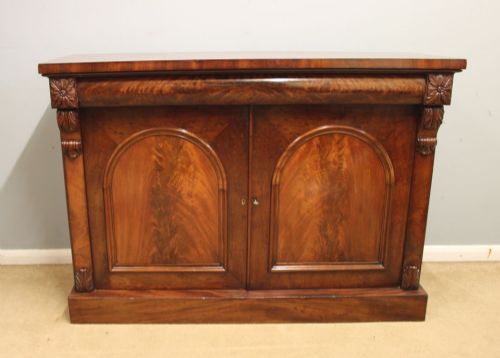
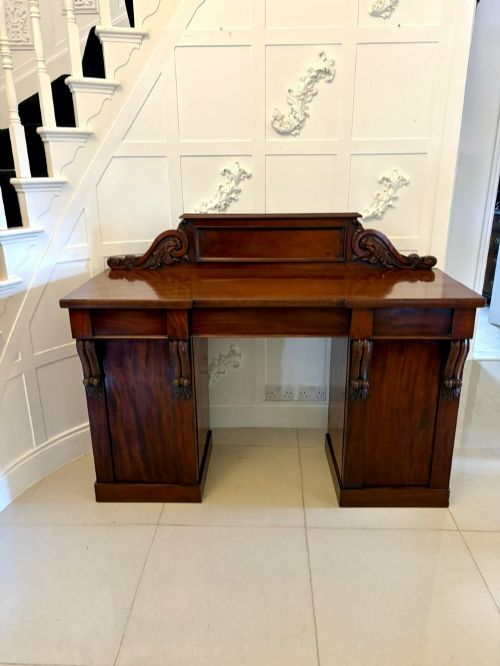
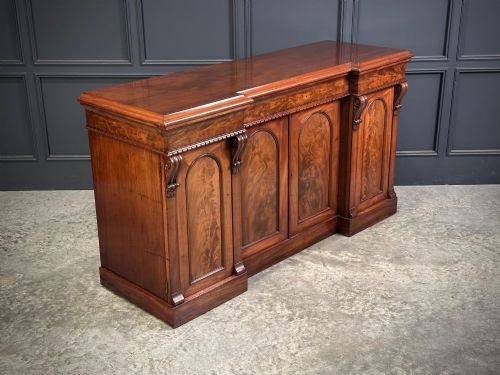
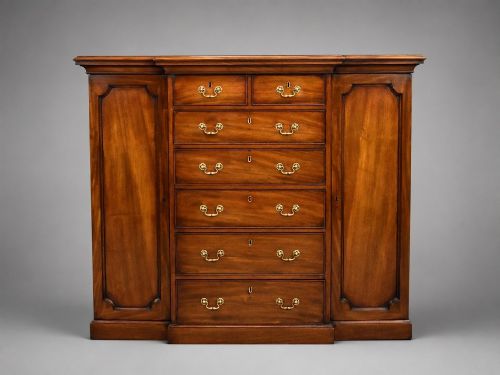
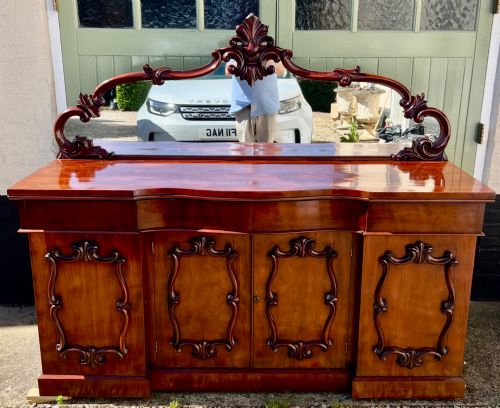
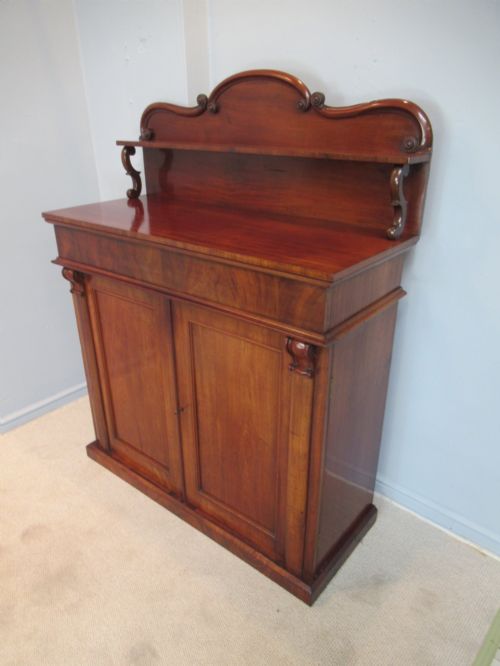
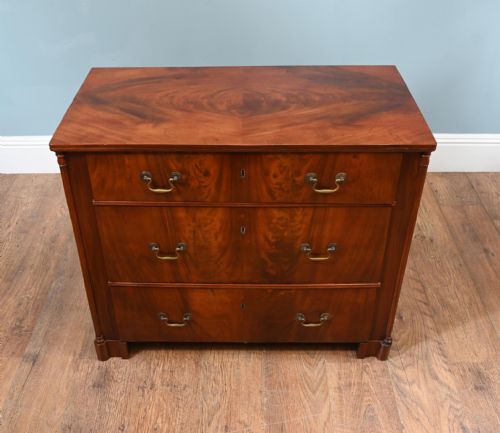
Victorian Flame Mahogany Sideboard
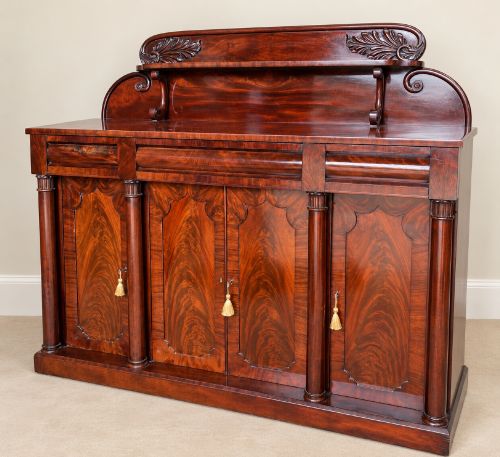
A victorian flame mahogany sideboard brings intense grain and serious storage to a room, driven by mid-nineteenth-century cabinet-making at its most confident.
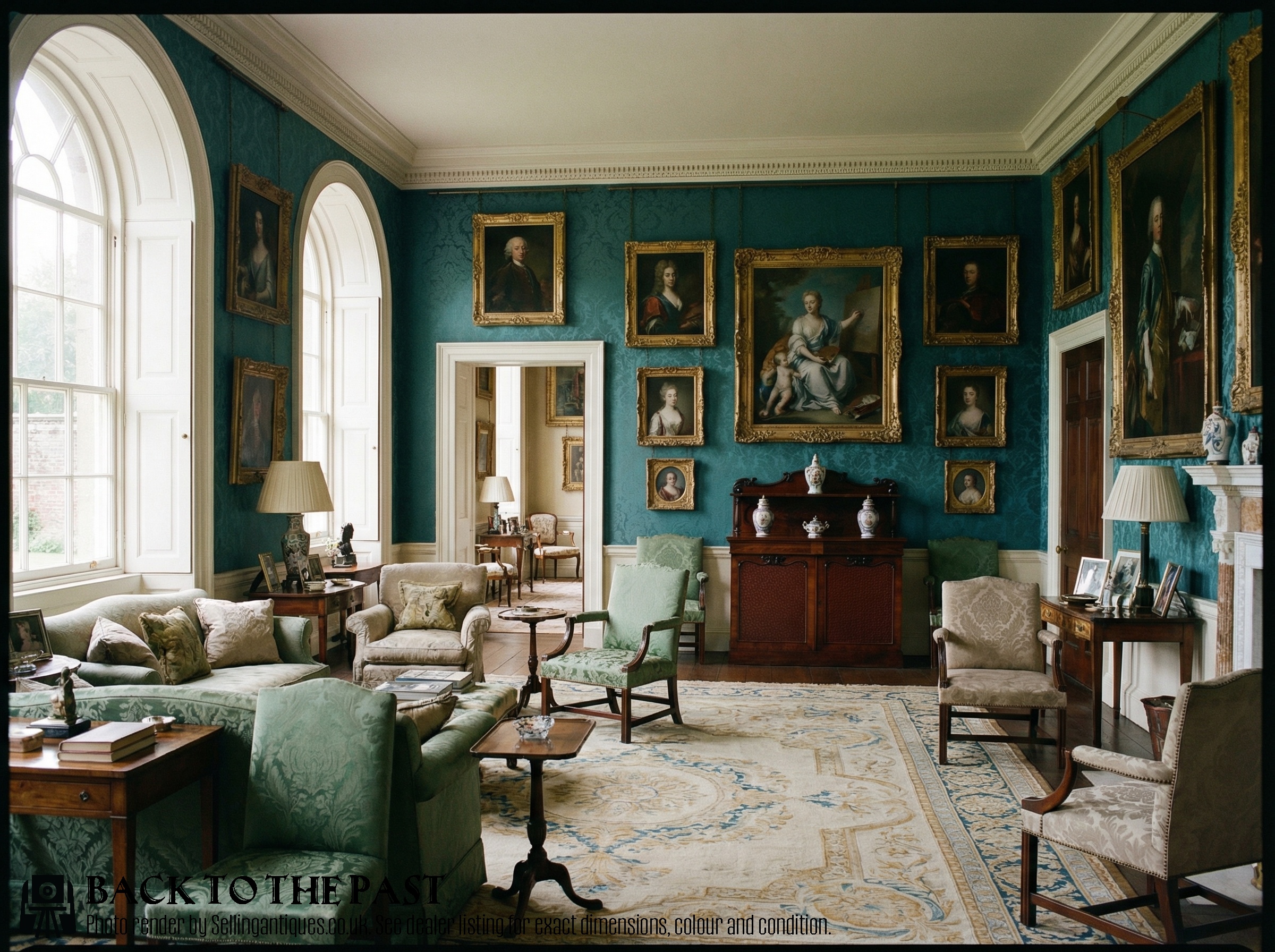
Victorian flame mahogany sideboard forms
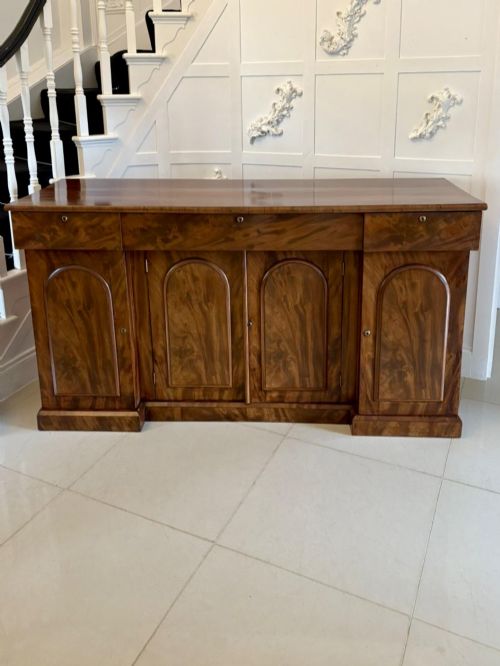
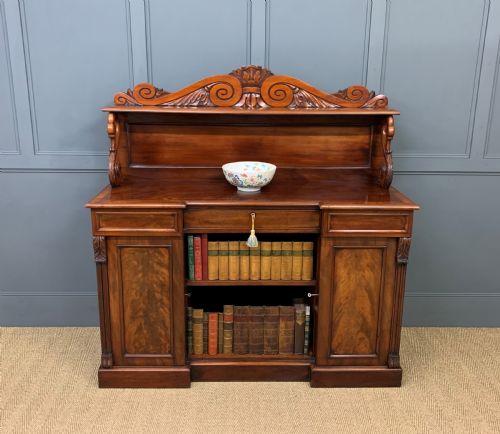
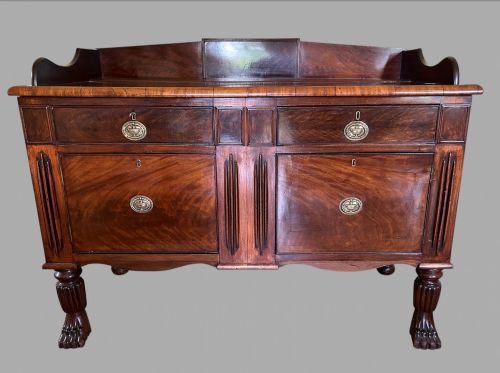
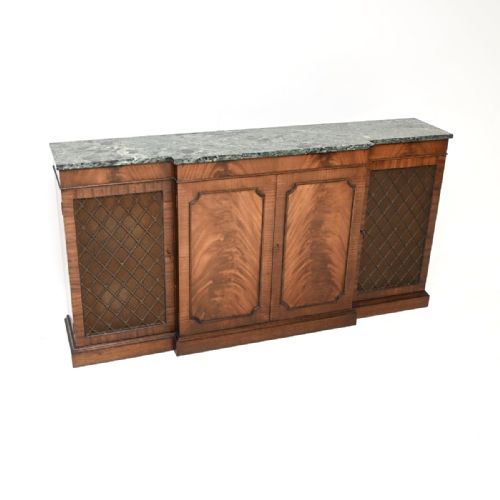
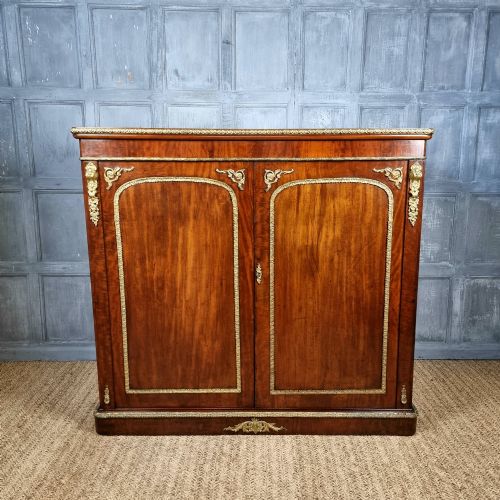
A victorian flame mahogany sideboard is a substantial dining room piece designed to hold silver, linen, and wine, appearing on this page in forms ranging from two-door and four-door cupboards to grand breakfront and bow-front designs. The records show pieces spanning the nineteenth century, including specific dates around eighteen-forty, eighteen-fifty, eighteen-sixty, eighteen-seventy, and eighteen-eighty.
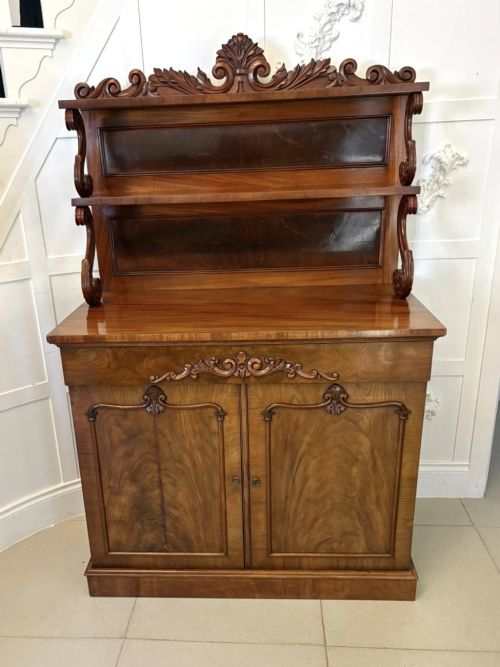
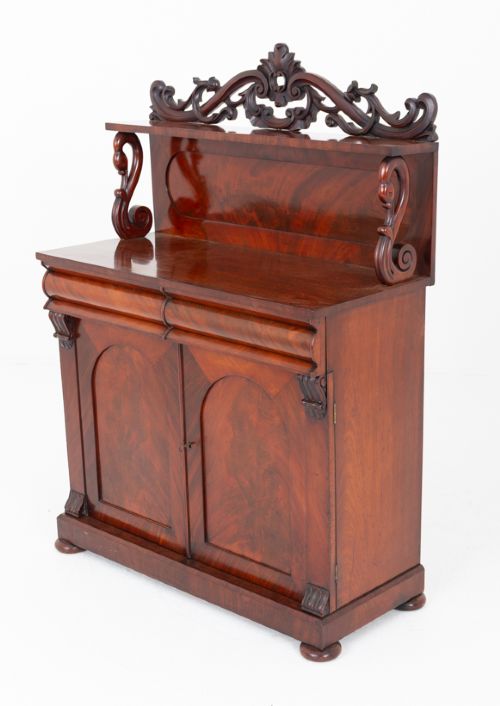
Buyers will encounter these works listed alongside chiffoniers and servers, reflecting the overlapping terminology of the period. Forms include large breakfront examples, serpentine fronted dressers, and compact country house sideboards with barley twist supports or cushion-fronted drawers.
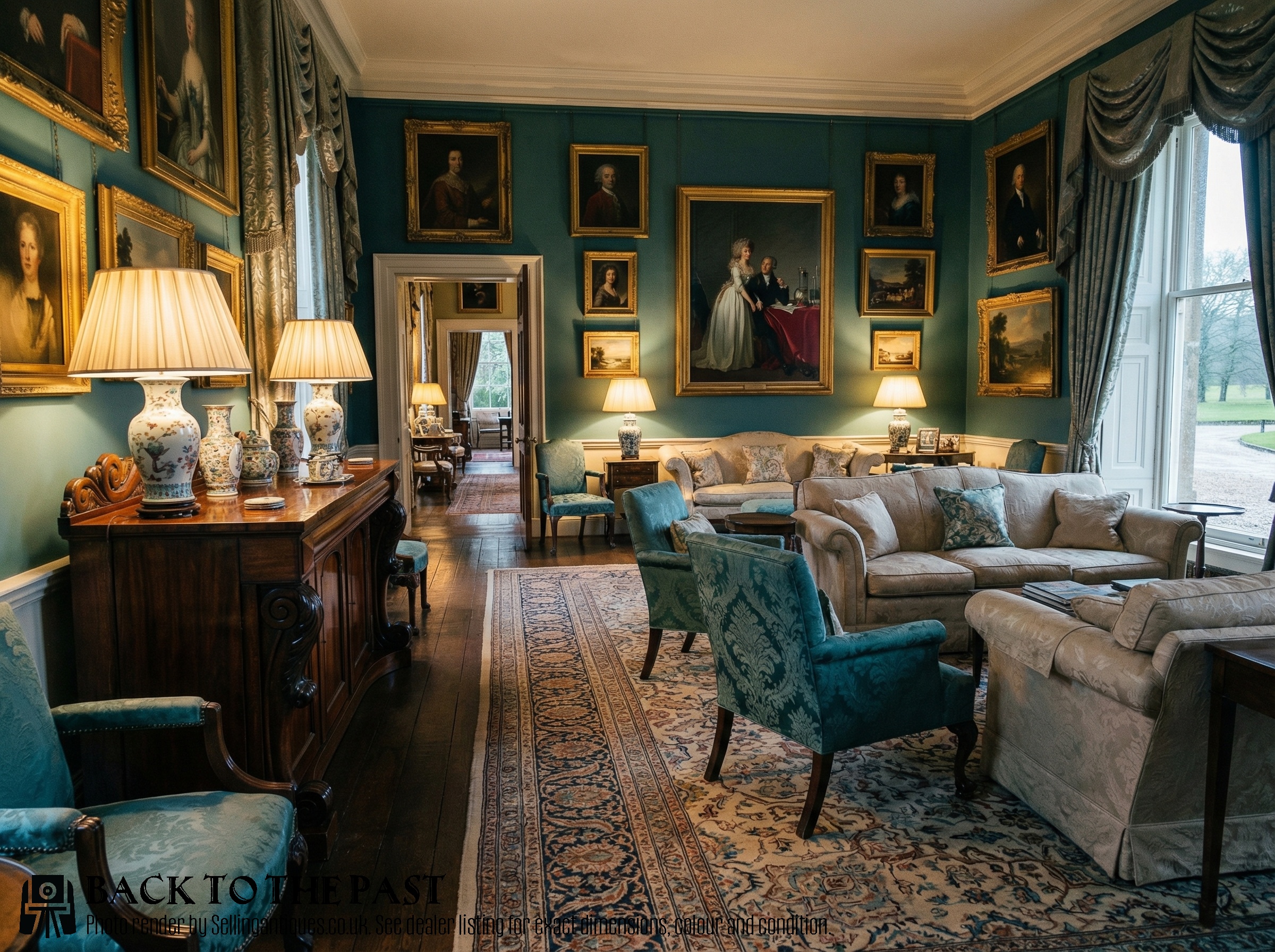
Judging quality in flame mahogany
Quality rests in the intensity and symmetry of the flame veneer across the primary surfaces, distinguishing exceptional grain selection from plain timber. The crispness of carved details, such as serpentine fronts or barley twists, separates standard production from finer workshop output.
Internal provisions like fitted cellarettes and sliding trays indicate higher-tier commissions intended for large dining rooms. The integrity of the carcass construction and the balance of proportions dictate the overall standing of each piece.
Retail Price Guide 2026
Typical UK retail prices for victorian flame mahogany sideboard, calculated from the Sellingantiques database of over a million retail prices indexed since 2003. This retail price guide relies exclusively on Sellingantiques data; no external sources or auction records are used, so the figures do not describe the wider market.
Some nineteenth-century sideboards arrived with built-in cellarettes specifically designed to keep your claret cool and secure during long dining sessions.
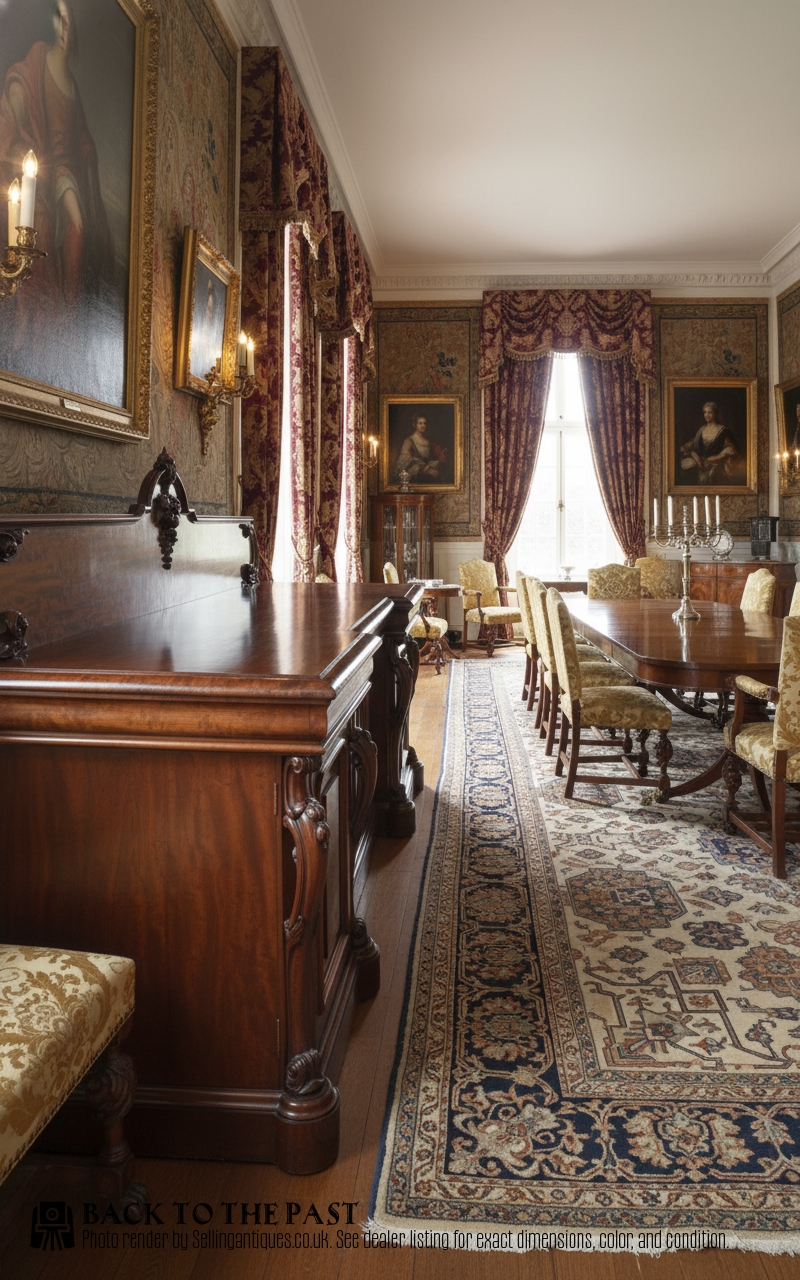
Gillows
The Victorian Flame Mahogany Sideboard Glossary
- Flame mahogany
- A veneer cut from the branch junction of the mahogany tree, producing a distinctive flame-like or feather pattern. This figured timber was prized for principal display surfaces on Victorian furniture.
- Chiffonier
- A lower cabinet or sideboard, frequently fitted with enclosed shelving below. In nineteenth-century usage, the term often overlapped with sideboard and server.
- Breakfront
- A piece of furniture where the central section projects forward from the flanking wings. This architectural arrangement creates depth and shadow on large dining room sideboards.
- Cellarette
- A compartment built into a sideboard for storing bottles securely. These lined or partitioned spaces formed a standard feature of nineteenth-century dining furniture.
- Cushion-fronted drawer
- A drawer featuring a rounded, convex profile that stands proud of the frame. This form softens the linear geometry of the upper section.
Frequently Asked Questions
How do I spot a true Victorian sideboard?
Examine the timber selection, construction methods, and hardware to confirm nineteenth-century origin. Look for solid mahogany framing combined with hand-applied flame veneer rather than modern synthetic finishes.
Check internal components like drawer linings and backboards for hand-cut joints and appropriate ageing. Terminology in listings often bridges sideboards, chiffoniers, and servers from the same era.
What is the difference between a sideboard and a chiffonier?
Sideboards traditionally served large dining rooms with extensive storage for plate and glass. Chiffoniers generally appeared as slightly more compact low cabinets, though nineteenth-century makers and modern listings frequently interchange the terms.
Both forms utilise flame mahogany veneer and solid mahogany structures. The primary distinction lies in scale and specific internal fittings such as cellarettes or slides.
Where should I place a large breakfront sideboard?
These imposing pieces require a generous wall space in a dining room, hallway, or spacious living area to accommodate their depth and width. Ensure the room allows sufficient clearance for doors and drawers to open fully.
Keep the piece away from direct heat sources and strong sunlight to protect the fragile mahogany veneer from splitting or fading. Allow the striking grain patterns to act as the primary visual anchor in the space.
How do I care for flame mahogany veneer?
Maintain the surface by dusting regularly with a soft, dry cloth and avoiding silicone-based polishes. Apply a traditional beeswax sparingly to nourish the timber and preserve the depth of the grain.
Protect the finish from moisture, extreme temperature shifts, and direct sunlight, which can degrade old polish and bleach the mahogany over time.