
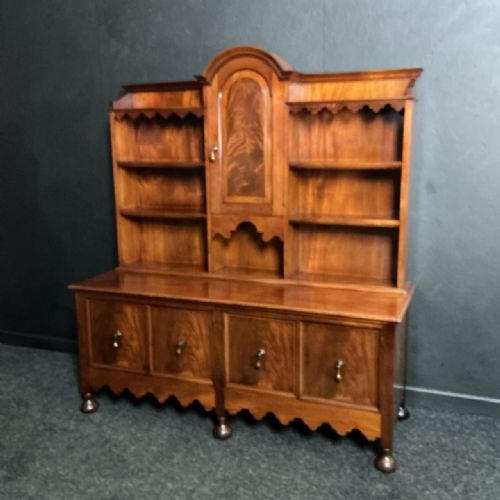
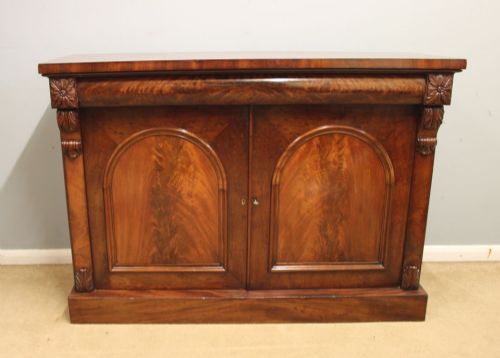
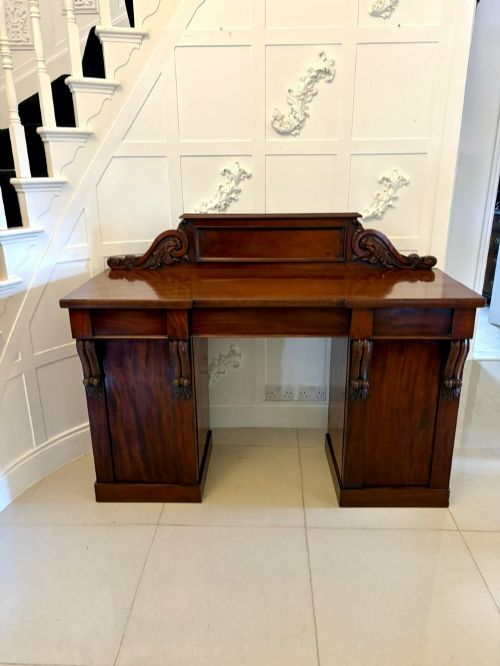
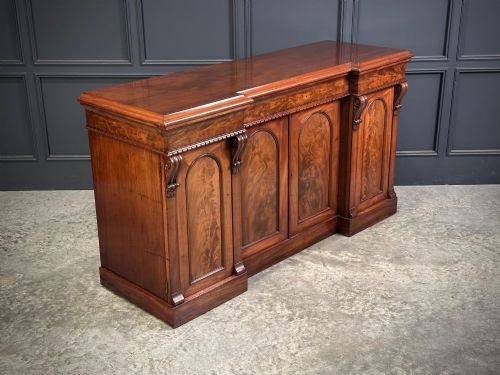
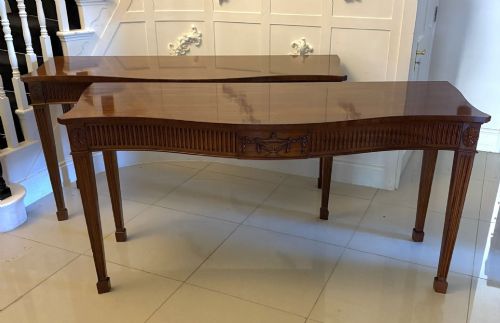
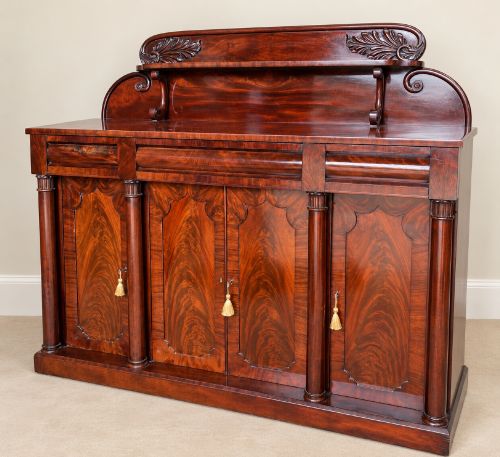
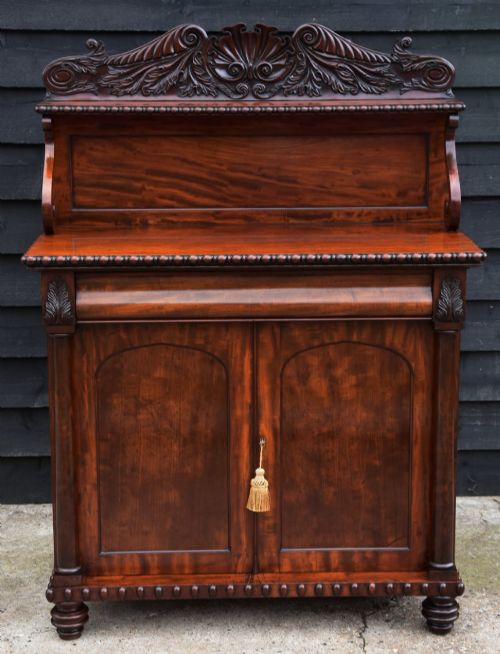
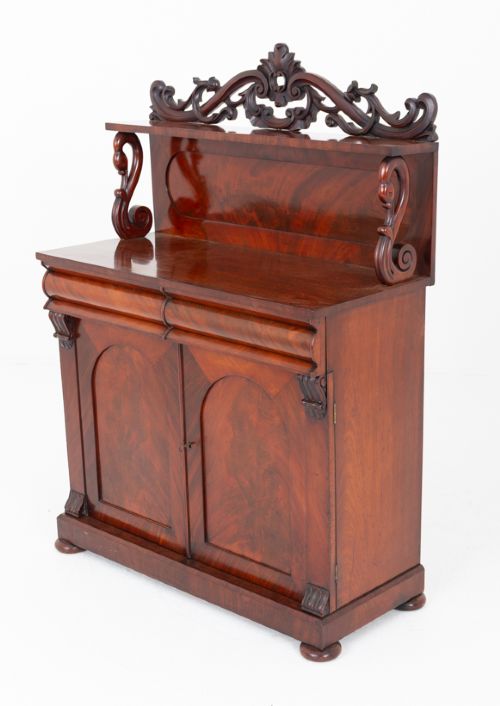
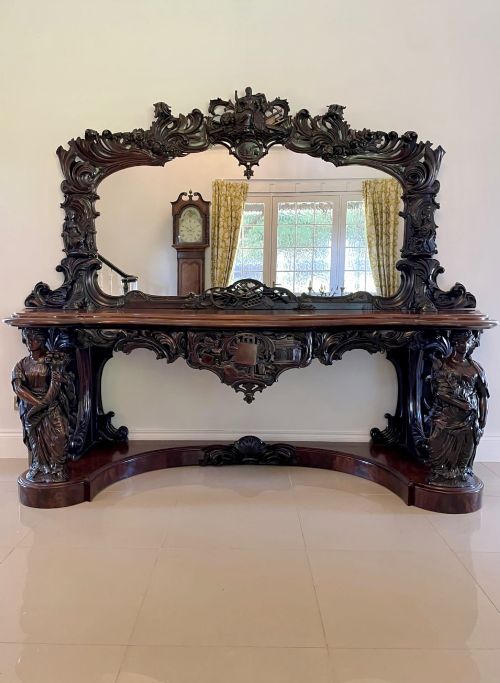
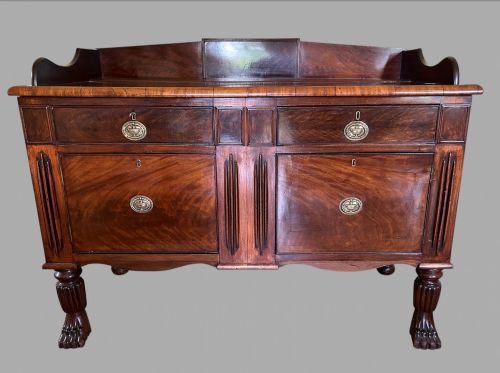
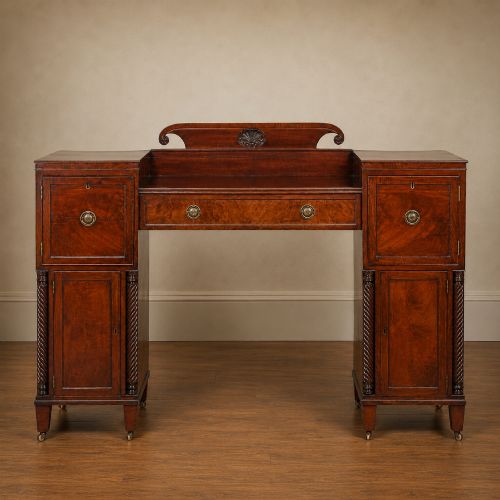
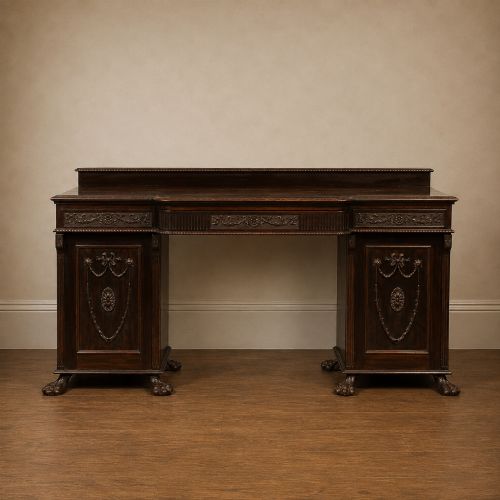
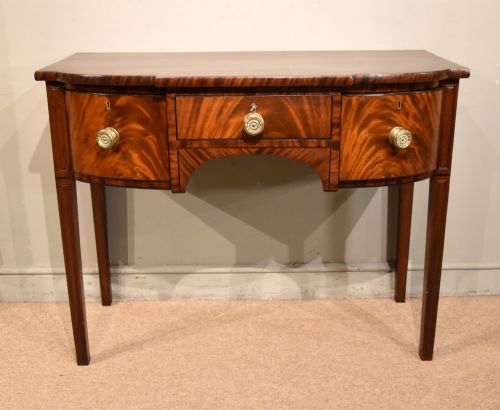
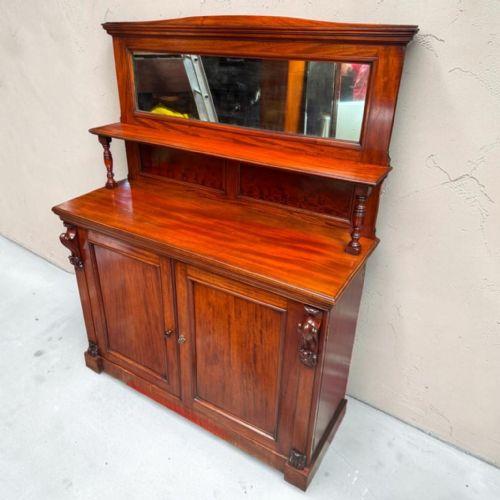
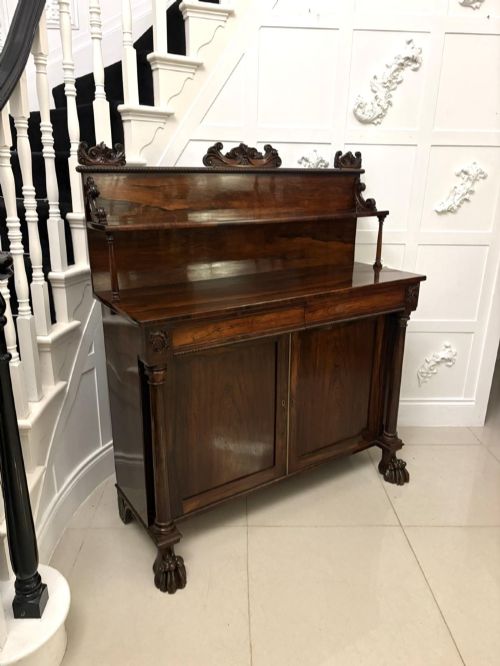
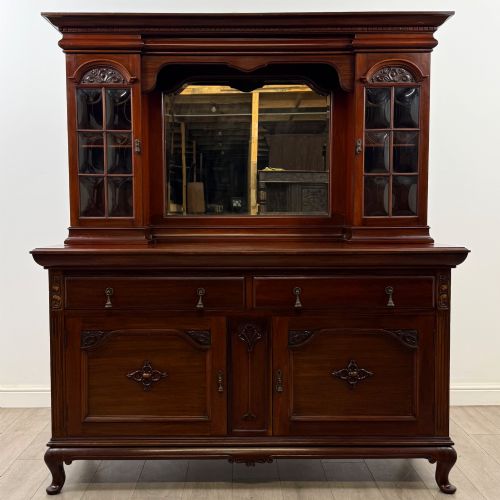
Carved Mahogany Buffet
These carved mahogany buffet pieces bring substantial timber and architectural presence to a dining space, offering both display and storage.
What a carved mahogany buffet is
A carved mahogany buffet is a substantial dining room furnishing designed for serving and storage, appearing across several distinct nineteenth century eras. These pieces bridge the gap between heavy storage cupboards and open serving tables, frequently incorporating tiered shelves or mirror tops.
The versions most commonly met on this page span the Victorian and Edwardian periods, alongside earlier William IV and Regency examples. They take the form of sideboards, servers, and multi-tiered buffets constructed primarily from solid timber and veneers.
How they were made
Cabinetmakers utilised deep hand-carving techniques to ornament the heavy frames, volutes, and uprights typical of nineteenth century workshops. Surface finishing involved polishing to enhance the deep reddish-brown tones inherent to the timber.
Retail Price Guide 2026
Typical UK retail prices for carved mahogany buffet, calculated from the Sellingantiques database of over a million retail prices indexed since 2003. This retail price guide relies exclusively on Sellingantiques data; no external sources or auction records are used, so the figures do not describe the wider market.
The listings here span the Victorian, Edwardian, William IV, and Regency periods, utilising both solid mahogany and flame mahogany veneer.
What varies in quality
Quality rests upon the selection of timber figures, where matched flame mahogany veneer demonstrates superior ambition compared to plain stock. The depth and crispness of the hand-carved ornamentation separate standard utility pieces from more prestigious commissions.
Structural complexity also dictates standing, with multi-tiered tiers and mirror-topped configurations demanding greater joinery skill than simple pedestal sideboards. The integration of original brass fittings and intact glass further elevates a piece.
The Carved Mahogany Buffet Glossary
- Flame mahogany
- A veneer cut from the fork of the mahogany tree to produce a distinctive, flickering flame-like grain pattern. It was highly prized by nineteenth century cabinetmakers for drawer fronts and central panels.
- Buffet
- A low sideboard or serving table used for holding dishes or serving food during meals. In nineteenth century usage, the term often overlaps with servers and tiered sideboards.
- Tiered buffet
- A piece featuring multiple open display shelves rising above a lower storage base. These configurations provide vertical display space for silver and porcelain.
- William IV
- A British architectural and decorative style spanning the 1830s, characterised by robust classical proportions and bold carved details. Pieces from this era often display heavy scrollwork and rich timber grain.
- Edwardian Art Nouveau
- A turn of the twentieth century design movement incorporating stylised floral motifs and flowing organic lines. It represents a lighter aesthetic departure from heavy Victorian forms.
Frequently Asked Questions
What is a carved mahogany buffet used for?
These pieces serve primarily as dining room storage for tableware, linen, and dining accessories while providing a top surface for food presentation.
Historically, they acted as staging areas for large household meals before the widespread adoption of fitted dining room cabinetry.
How do I date a carved mahogany buffet?
Dating relies upon identifying stylistic markers from periods such as William IV, Victorian, or Edwardian Art Nouveau.
Heavier, deeply carved architectural forms generally point towards the mid nineteenth century, while lighter decorative lines suggest the later Edwardian era.
Are buffets and sideboards the same thing?
The terms are often used interchangeably in antique listings, though traditional buffets frequently emphasise serving shelves and open tiers.
Sideboards generally focus more heavily on enclosed cupboard storage and banks of drawers beneath a long top surface.
How do I care for mahogany furniture?
Maintenance requires keeping timber away from direct heat sources and strong sunlight to prevent the mahogany veneer from drying or splitting.
Regular dusting with a soft cloth and occasional application of traditional wax helps preserve the natural lustre of the polished surface.