

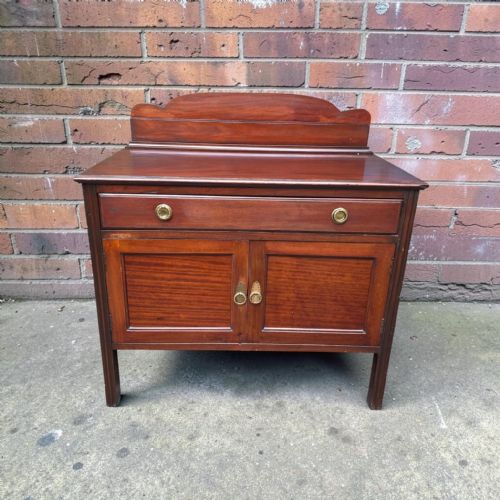
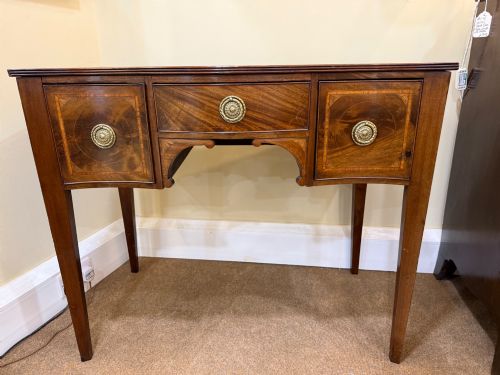
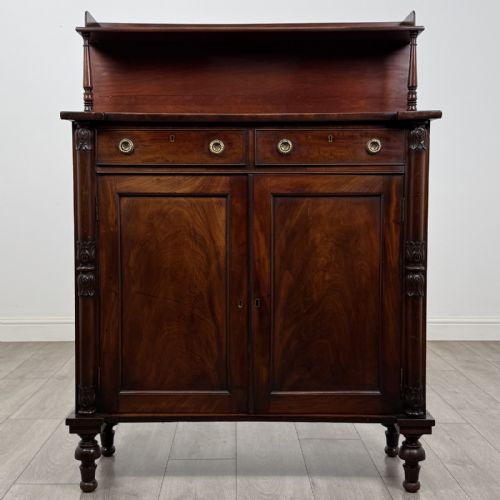
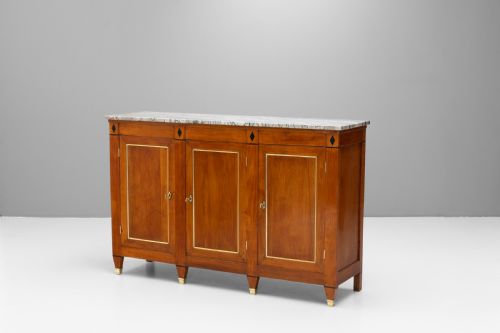
Mahogany Server Cabinet
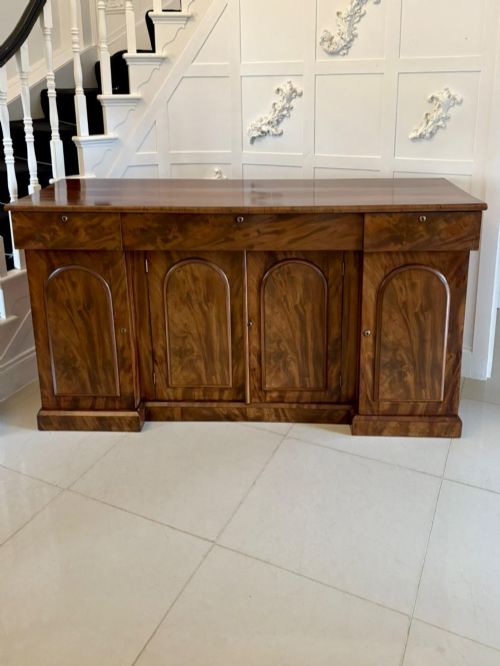
A mahogany server cabinet brings formal dining storage into a room, offering deep drawers and cupboards scaled for service.
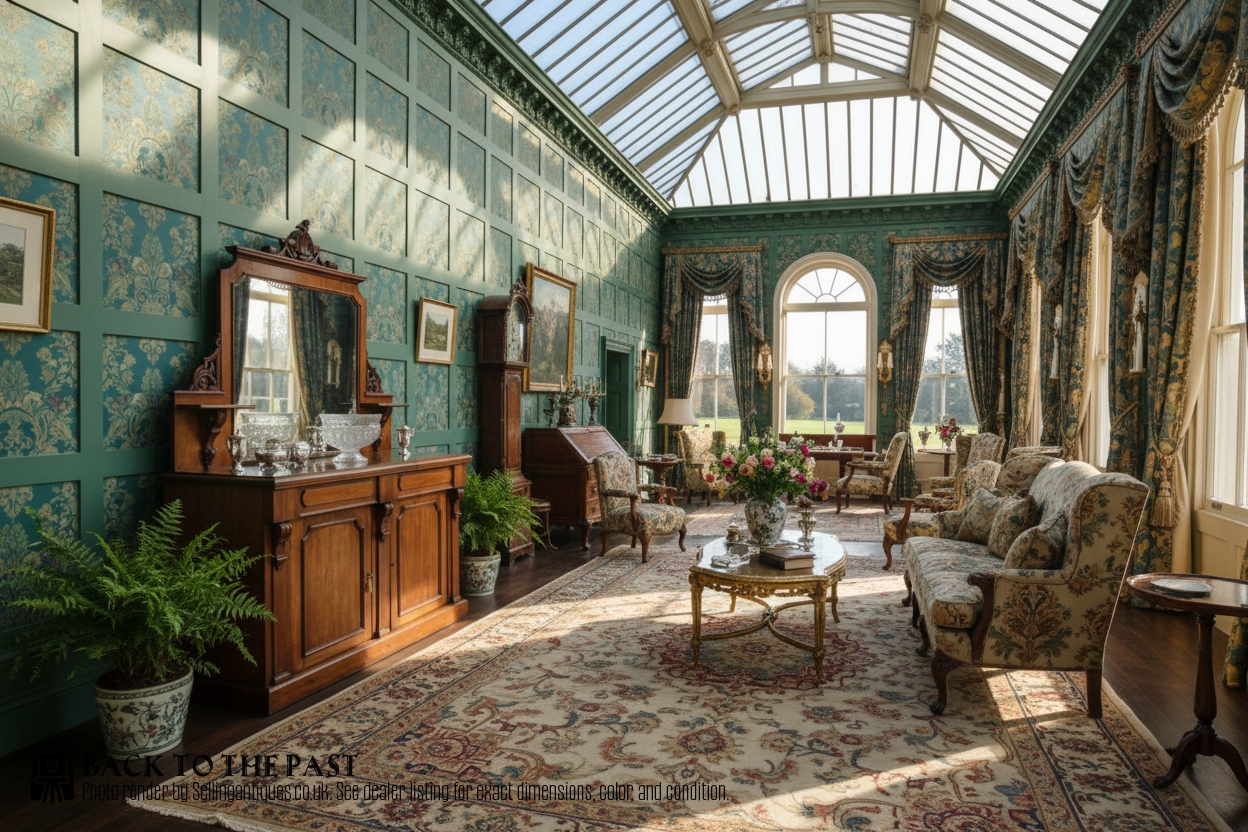
Mahogany Server Cabinet
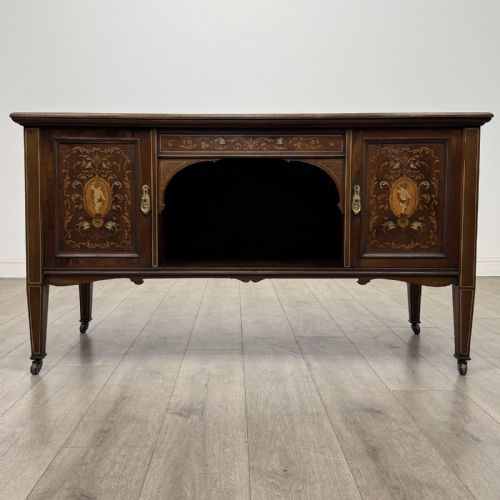
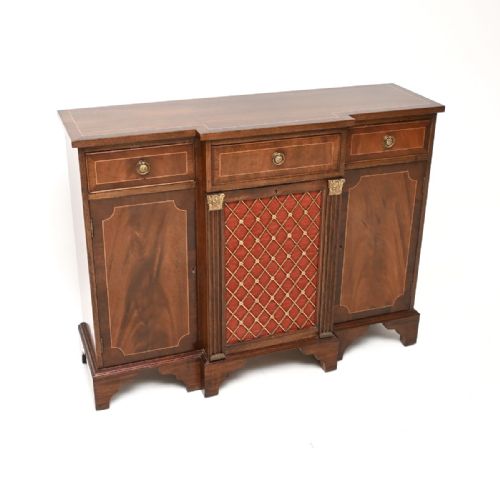
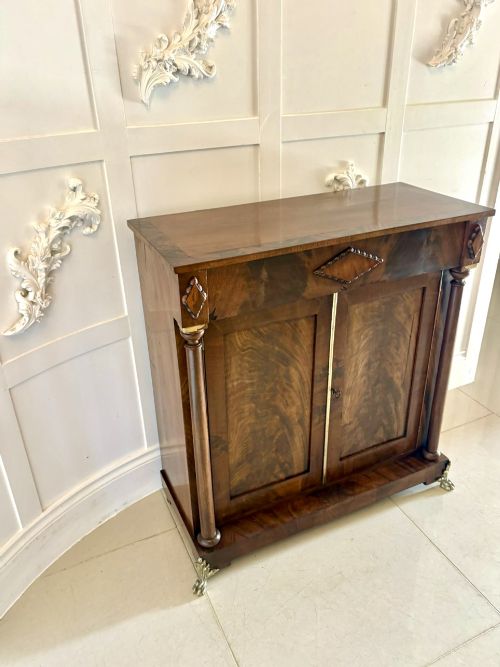
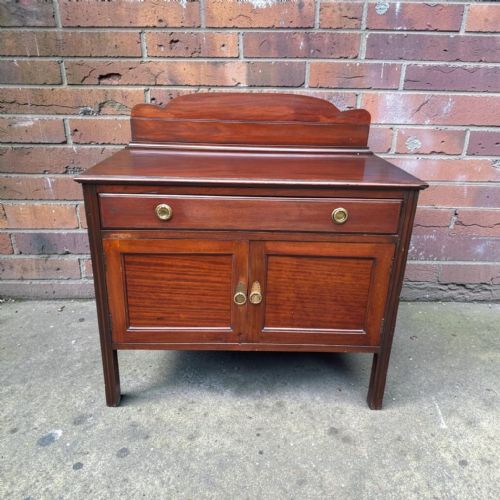
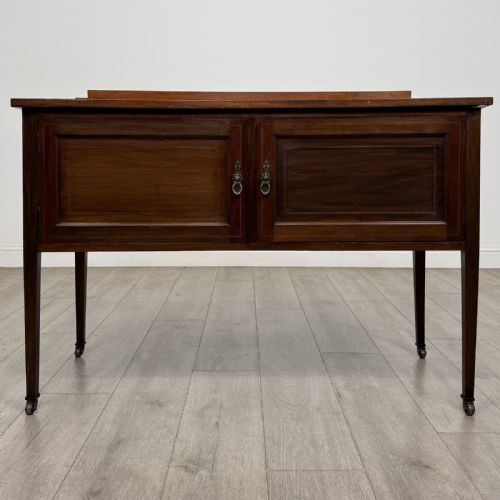
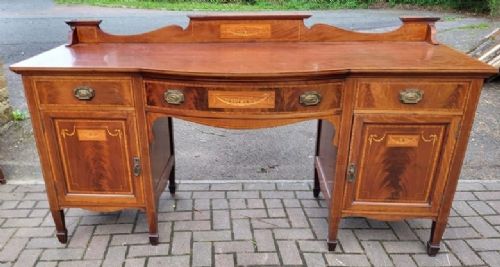
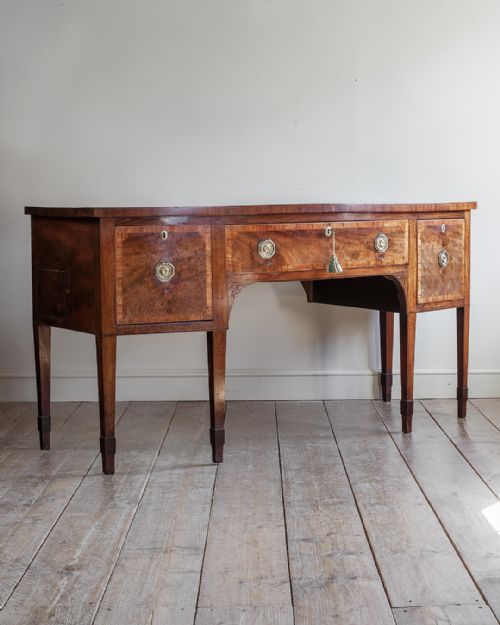
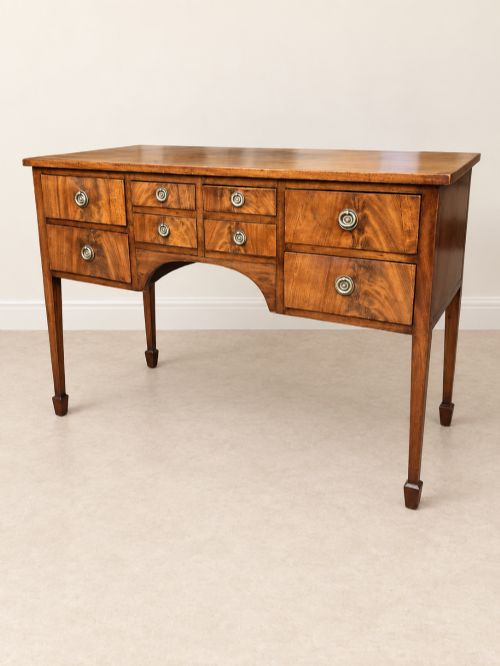
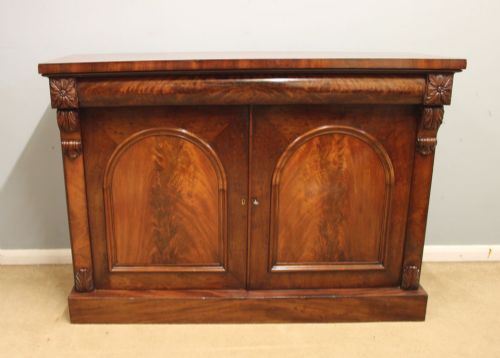
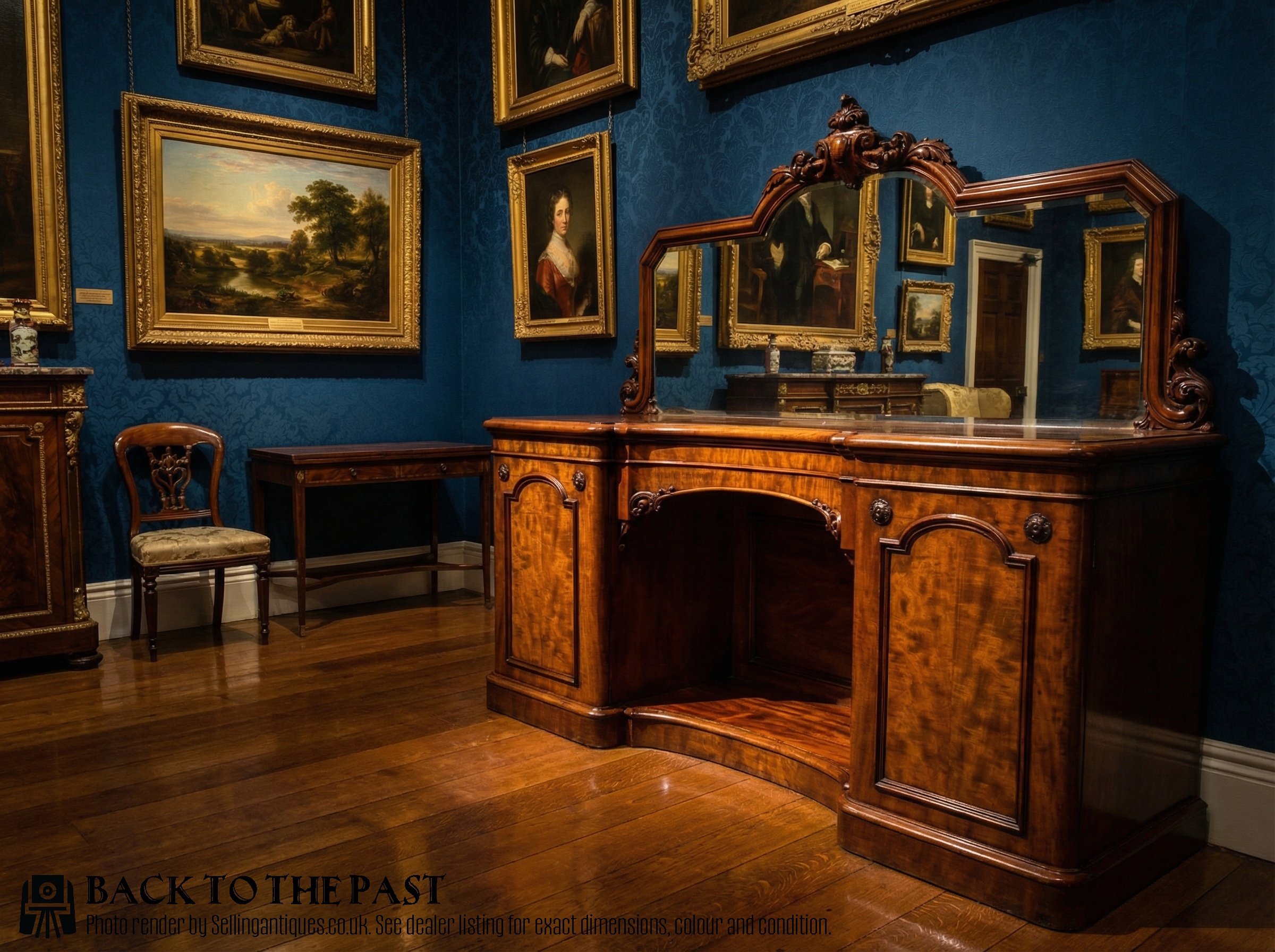
A mahogany server cabinet is typically encountered as a sideboard, buffet, or chiffonier originating from periods spanning the eighteenth, nineteenth, and early twentieth centuries. These large storage forms range from Georgian and Regency masterpieces to substantial Victorian mirror-back designs and later Edwardian Sheraton Revival pieces.
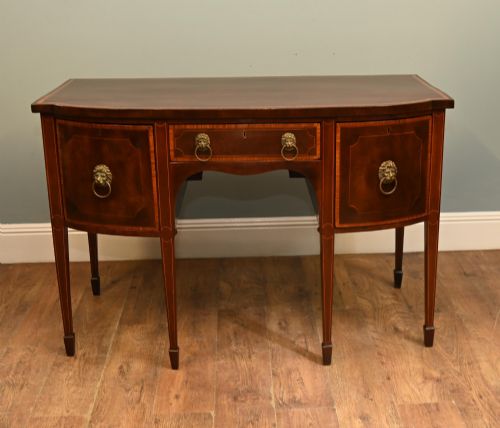
Buyers will find distinct regional and stylistic variations, including Scottish examples, bow-front and serpentine shapes, and smaller side cabinets suited for modern domestic spaces. The pieces function as serving surfaces while concealing dining silver, linen, and glassware within enclosed cupboards and drawers.
Materials and construction
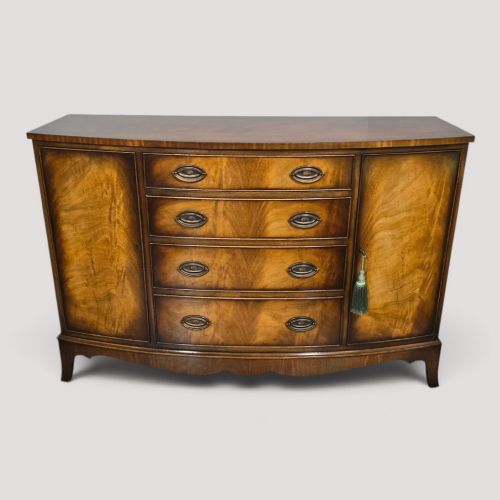
Cabinet makers built these pieces using solid mahogany and flame mahogany veneers, often highlighting rich grain patterns across drawer fronts and cupboard doors. Secondary timbers and decorative detailing incorporate satinwood, boxwood, and brass hardware.
Surface decoration frequently relies on contrasting inlay and marquetry, particularly in later revival styles, while structural forms utilise traditional joinery suited to heavy domestic service.
Mahogany Server Cabinet Retail Price Guide 2026
Typical asking prices for mahogany server cabinet among the pieces listed under this phrase on Sellingantiques today, from the lower quarter to the upper quarter. They describe what is for sale here now, not the wider market.
Materials documented across the inventory include solid mahogany, flame mahogany veneer, satinwood, boxwood, and brass hardware.
Factors of quality
The standard of a mahogany server cabinet is determined by the selection of timber figures, such as symmetrical flame veneers, and the crispness of inlaid details like boxwood and satinwood lines. Superior construction shows in the thickness of solid mahogany secondary woods, tight dovetailing on drawers, and original brass fittings.
Proportion and design execution separate standard production items from exceptional workshop creations, where carved elements like lion paw feet or mirror frames are integrated with architectural precision.
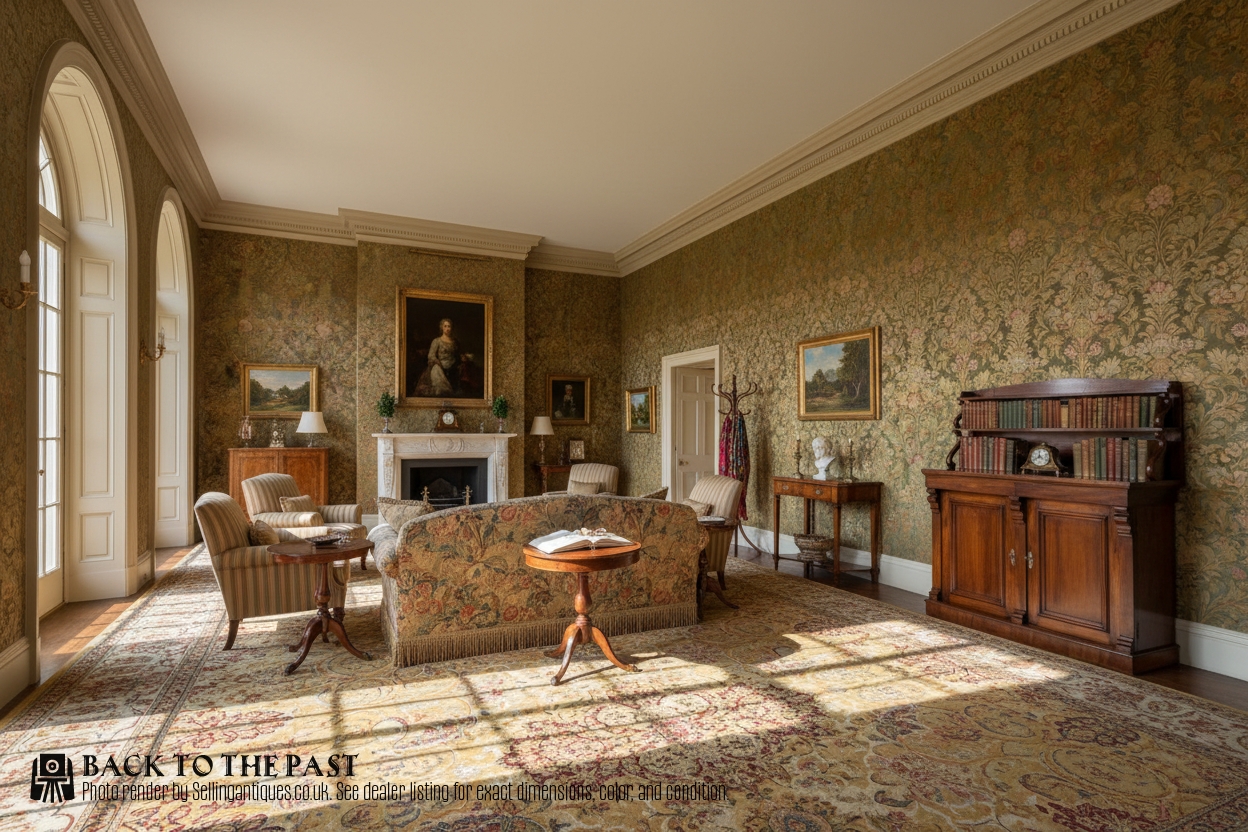
Hewetsons London·M. D. Miller & Sons Nottingham
The Mahogany Server Cabinet Glossary
- Bow front
- A convex, curved cabinet front popular during the Georgian and Regency periods. This shape softens the room's angles while increasing internal depth.
- Chiffonier
- A compact sideboard or low cabinet equipped with enclosed cupboards, frequently topped with a small shelf or mirror during the Victorian era.
- Serpentine
- A cabinet front featuring a concave centre flanked by convex ends, requiring advanced woodworking skill to shape accurately.
- Flame mahogany
- A veneer cut from timber where the branch meets the trunk, producing a distinctive, fiery ripple pattern prized by cabinet makers.
- Marquetry
- Decorative patterns formed by inserting thin slices of various woods into a veneer background to create pictorial or geometric designs.
Mahogany Server Cabinet: Frequently Asked Questions
How do I date a mahogany server cabinet?
Dating relies on architectural styling, construction methods, and timber characteristics. Georgian and Regency pieces show cleaner structural lines and hand-cut dovetails, whereas Victorian examples often introduce heavier carved decoration and mirror backs.
Later Edwardian pieces frequently revive eighteenth-century motifs using machine-sawn components and lighter satinwood crossbanding.
Where were these cabinets used?
These pieces were designed primarily for dining rooms to assist with meal service and store tableware. The top surface held dishes and serving trays during dinner parties.
Cupboards and drawers below contained cutlery, table linen, and bottles, keeping dining essentials close at hand.
Are these cabinets suitable for modern homes?
Their enclosed storage makes them practical for living rooms, hallways, or dining spaces to hide modern media equipment or dinnerware. Many variations, including bow-front and smaller side cabinets, fit comfortably against contemporary wall spaces.
The deep drawers and shelved cupboards provide functional storage while adding traditional character to a room.
What is the difference between a sideboard and a chiffonier?
A sideboard is typically a longer, heavier piece built for formal dining rooms with multiple central drawers flanked by deep cupboards. A chiffonier is generally a smaller, lower cabinet developed in the nineteenth century, often featuring an upper shelf or mirrored back.
Both fall under the wider family of serving cabinets but serve different spatial requirements.