
Carved Mahogany Buffet Cabinet
Carved mahogany buffet cabinet designs span the nineteenth and early twentieth centuries, offering practical storage paired with rich wood grain.
Carved Mahogany Buffet Cabinet
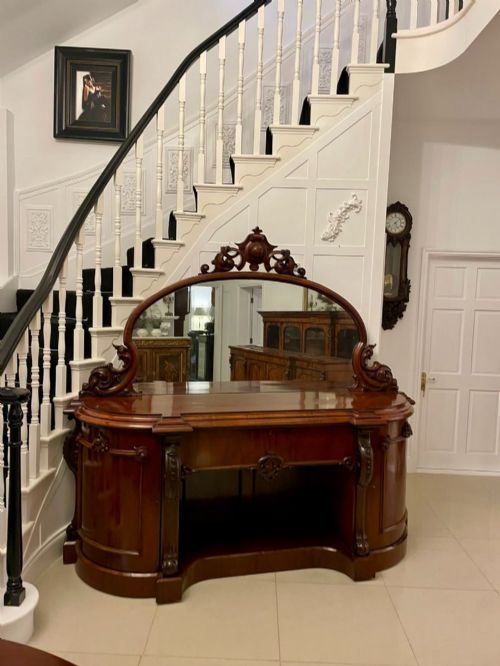
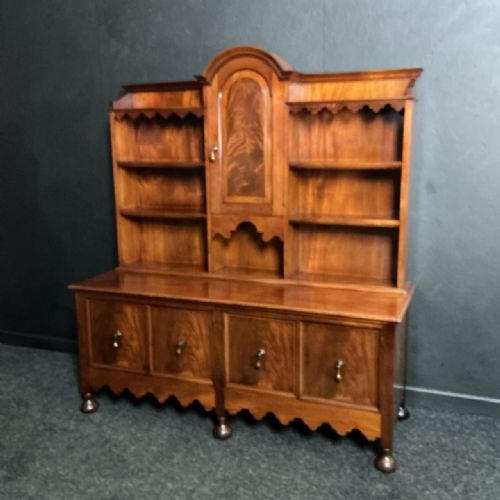
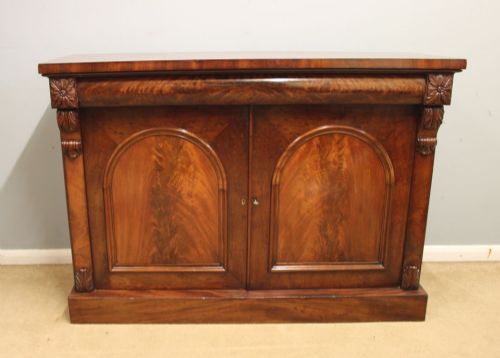
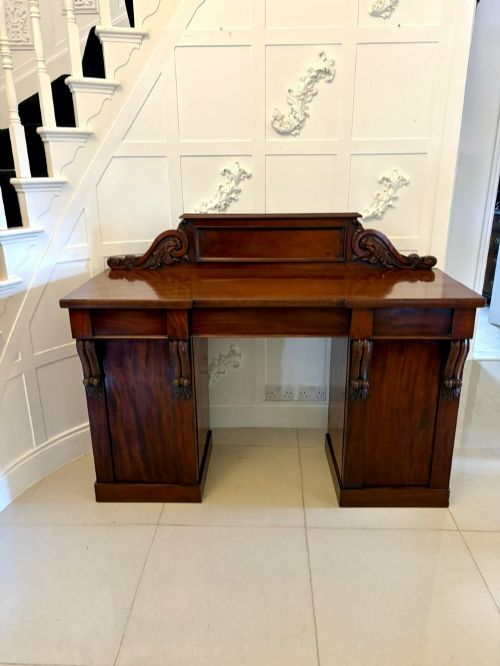
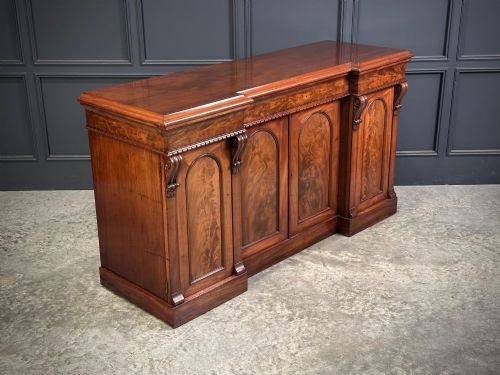
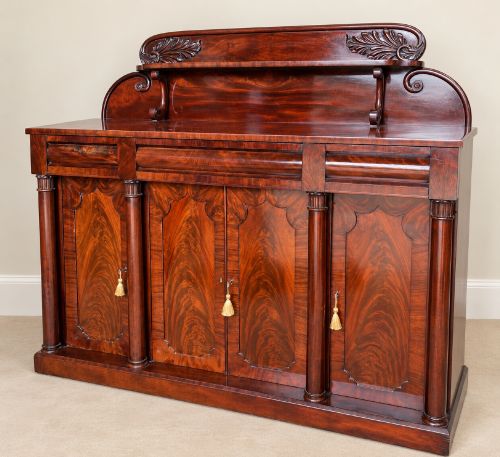
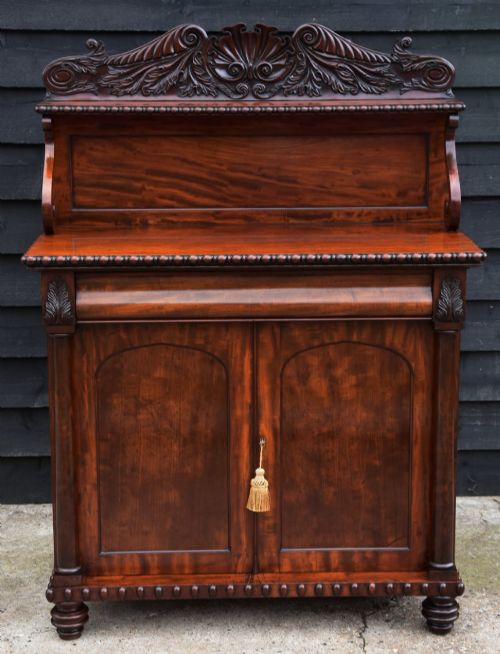
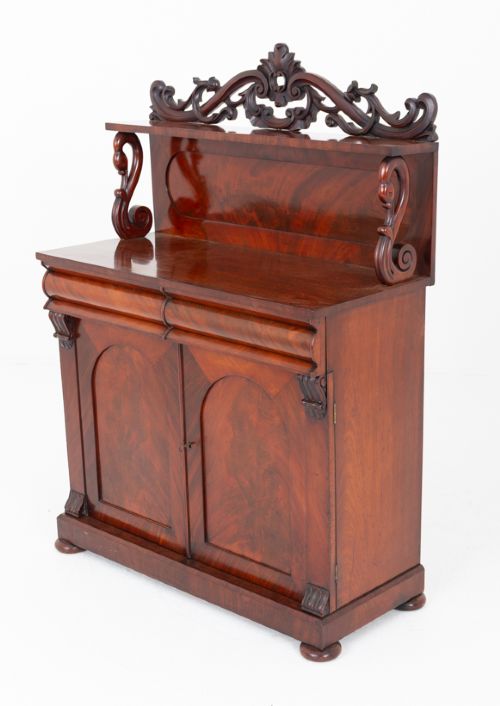
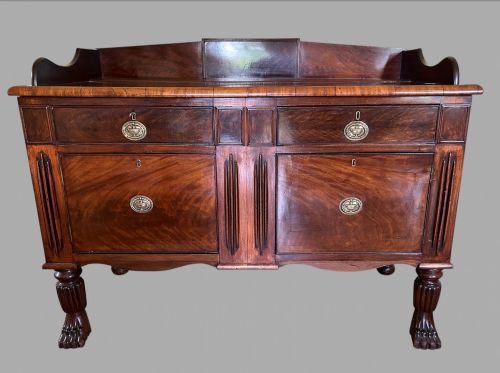
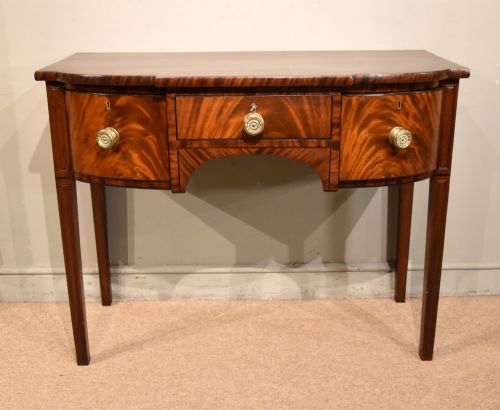
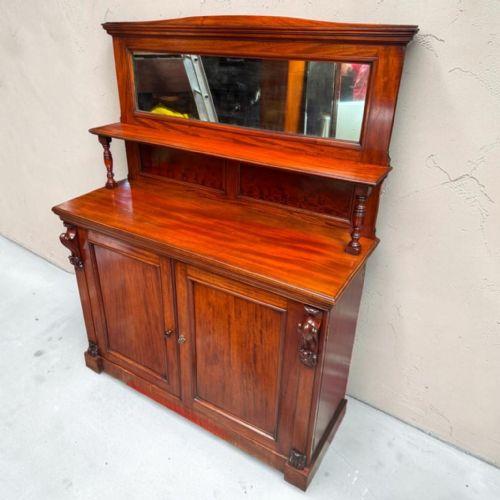
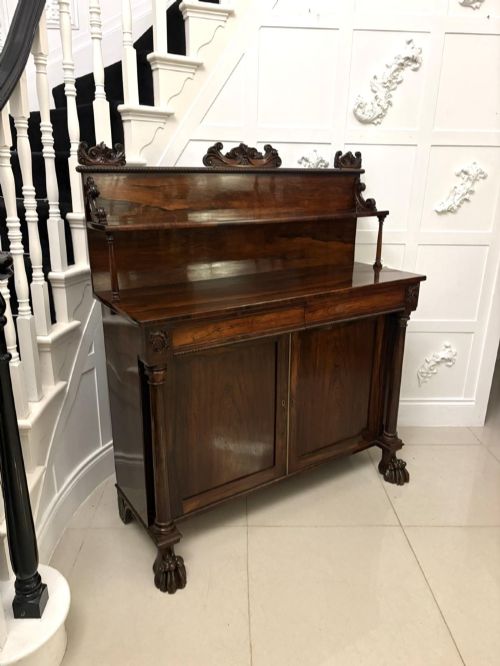
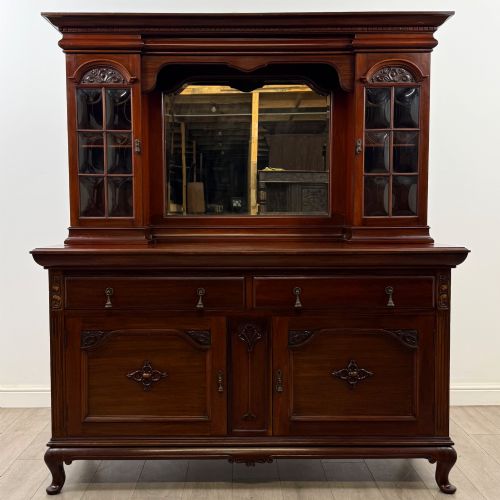
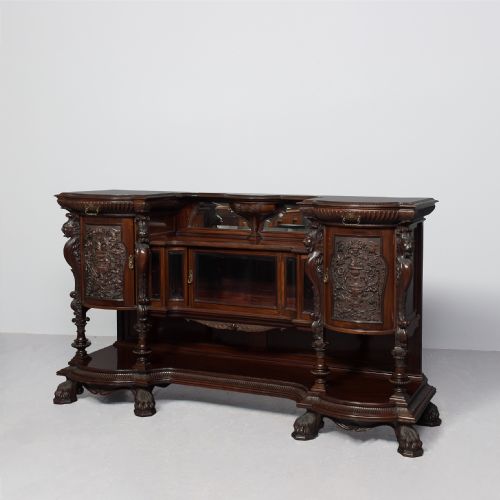
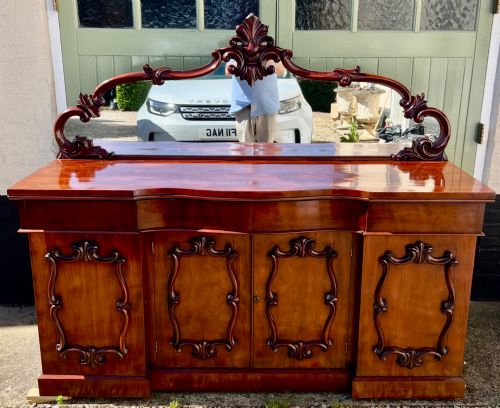
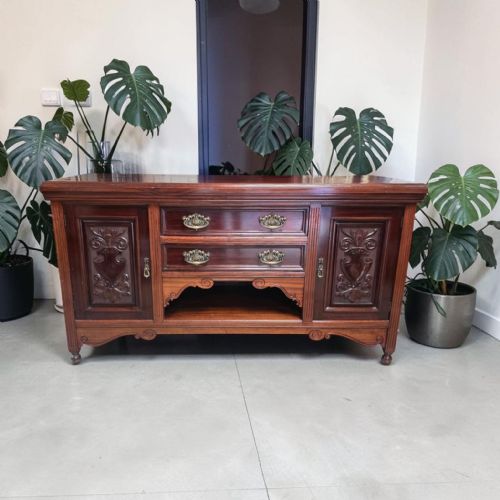
A carved mahogany buffet cabinet generally appears as a large sideboard, server, or chiffonier designed for dining room storage and display. These pieces frequently date from the Victorian and Regency periods, stretching into Edwardian and later revival eras. Buyers will regularly encounter multi-door configurations, breakfront layouts, and mirror-back designs intended to anchor a dining space.
The primary forms include pedestal sideboards, chiffoniers with raised mirror backs, and breakfront server cabinets. Many examples incorporate deep cupboards and central drawers behind heavy timber panels. The presence of carved details distinguishes these larger serving pieces from simpler utility cabinets.
Materials and construction methods
Construction relies heavily on solid mahogany and flame mahogany veneers applied over secondary timbers to create striking patterned surfaces on doors and drawer fronts. Cabinetmakers utilised brass hardware for handles, key escutcheons, and structural mounts.
Makers integrated glass panels and mirror glass into upper sections, particularly on Victorian mirror-back sideboards. Carved ornaments and stylistic motifs were hand-chiselled directly into the dense mahogany framework.
Carved Mahogany Buffet Cabinet Retail Price Guide 2026
Typical asking prices for carved mahogany buffet cabinet among the pieces listed under this phrase on Sellingantiques today, from the lower quarter to the upper quarter. They describe what is for sale here now, not the wider market.
Listings feature pieces spanning from the Georgian and Regency eras through the Victorian period, Edwardian styles, and twentieth-century revivals.
Distinctions in craftsmanship and design
Quality rests on the selection of timber and the complexity of the cabinet construction. Pieces featuring heavily figured flame mahogany veneers and intricate, deep relief carving represent the upper tier of the range. Simpler solid mahogany storage units with minimal ornamentation occupy the more utilitarian end of the spectrum.
Proportion and scale also dictate distinction, with large breakfront and pedestal forms requiring superior joinery to maintain structural integrity. The integration of original mirror glass and brass fittings further separates standard items from exceptional examples.
M. D. Miller & Sons, Nottingham
The Carved Mahogany Buffet Cabinet Glossary
- Flame mahogany
- A veneer cut from the fork of the mahogany tree to create a distinctive, flickering grain pattern. This highly decorative finish appears frequently on prominent cabinet doors and drawer fronts.
- Chiffonier
- A compact sideboard or low cabinet equipped with enclosed shelving and occasionally a raised back. These pieces served functional storage roles in nineteenth-century interiors.
- Breakfront
- A cabinet design where the central section projects forward from the flanking outer cupboards. This layout adds architectural depth and visual weight to large dining room furniture.
- Pedestal sideboard
- A heavy serving piece featuring substantial flanking cupboards beneath a long central surface. They offer significant storage capacity and anchor grand nineteenth-century dining spaces.
Carved Mahogany Buffet Cabinet: Frequently Asked Questions
What is a carved mahogany buffet cabinet used for?
These pieces served historically in dining rooms for storing tableware, linens, and serving platters. The broad top surface also functioned as a station for serving food during formal meals.
Today, they translate easily into modern homes as statement storage units in dining rooms, living spaces, or wide hallways.
How do I identify a Victorian sideboard?
Victorian examples often display heavy proportions, rich flame mahogany veneers, and deep hand-carved ornamentation. Many incorporate high mirror backs supported by carved brackets or columns.
Construction from this era relies on solid timber framing combined with extensive veneering techniques across multiple doors and drawers.
What distinguishes Regency from Edwardian pieces?
Regency items date from the early nineteenth century and typically exhibit restrained Classical restraint, clean architectural lines, and minimal carved embellishment. Mahogany timber from this time often shows rich, dark patination.
Edwardian furniture, produced around the turn of the twentieth century, frequently embraces lighter revival styles, delicate inlay work, and brighter polished finishes.
How should I care for mahogany furniture?
Mahogany requires stable indoor humidity away from direct heat sources to prevent the wood or veneer from splitting. Regular dusting with a soft, dry cloth preserves the polished surface.
Avoid commercial silicone polishes, relying instead on traditional beeswax formulations to maintain the natural depth of the timber grain.