


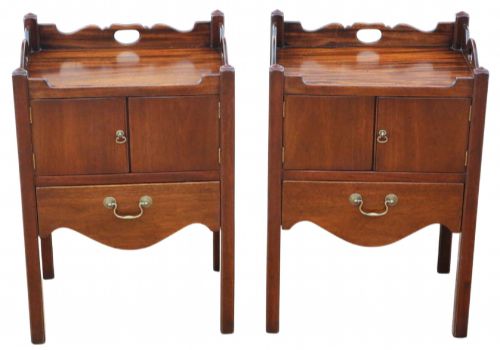

Traditional Mahogany Nightstands
Traditional mahogany nightstands bring genuine Victorian character and rich timber figure directly beside the bed.
What traditional mahogany nightstands are
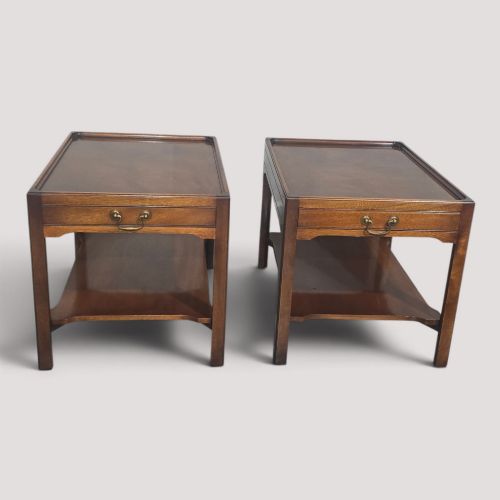
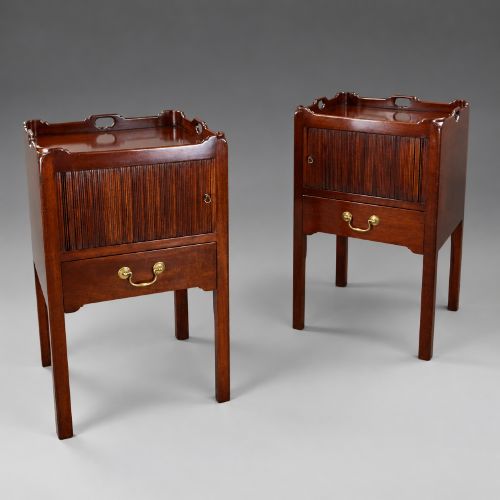
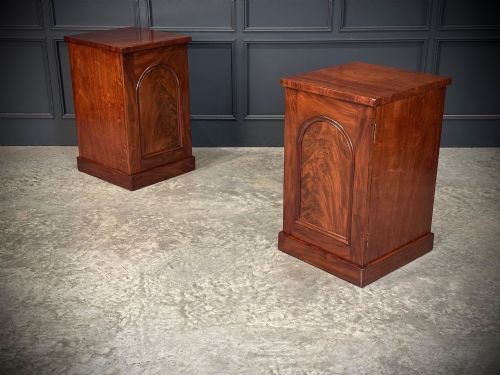
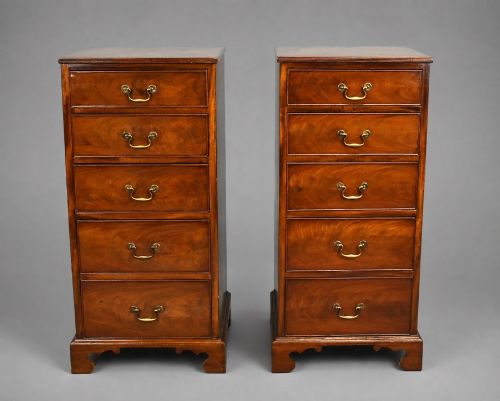
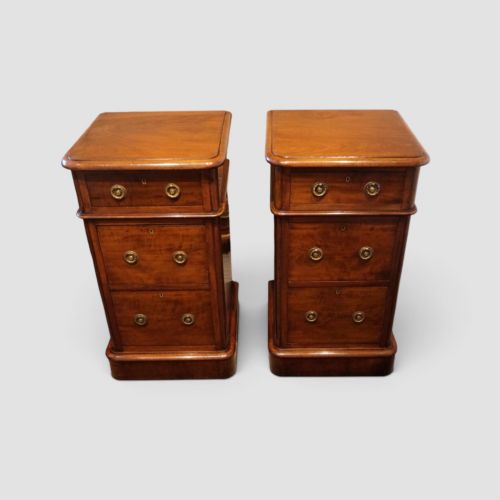
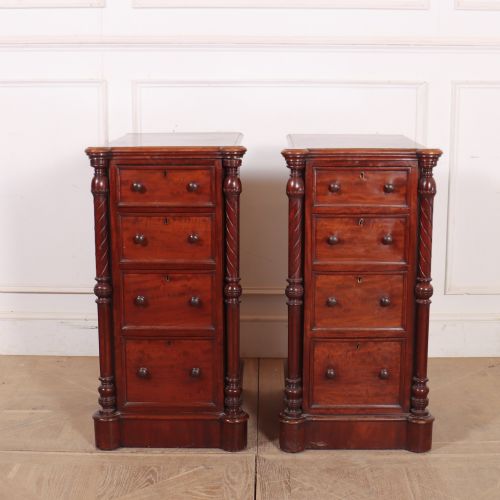
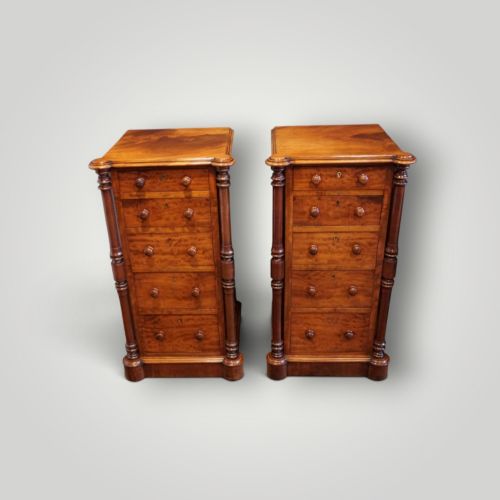
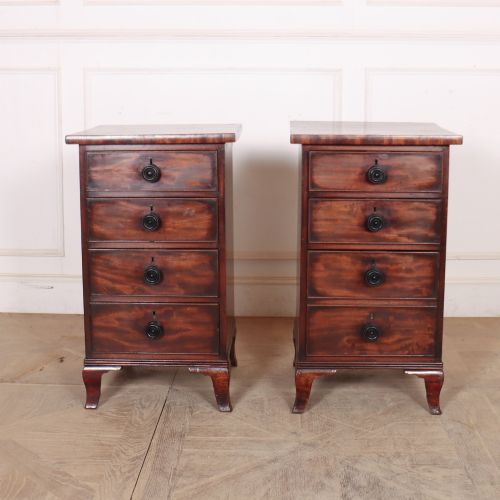
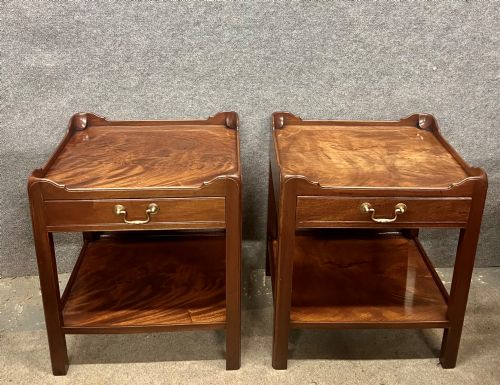
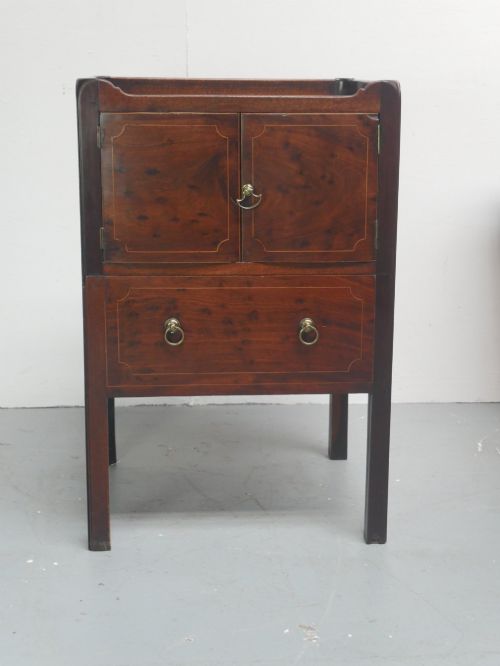
Traditional mahogany nightstands encompass bedside tables, bedside chests, and bedside cabinets dating from the Victorian era up to the nineteen-twenties. These pieces provide functional bedside storage while displaying the warm tones and characteristic forms associated with traditional cabinet making.
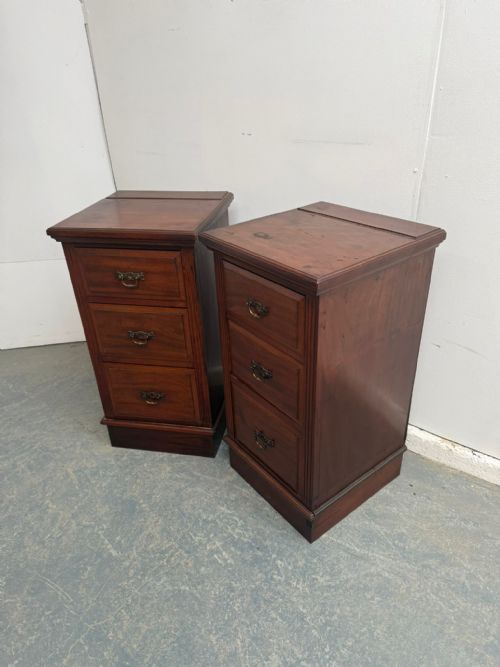
Makers such as Warings Liverpool contribute to the range of bedside chests available in this category. The forms vary from compact three-drawer nightstands to larger cabinets suited for period interiors.
How they were made
These items utilise solid mahogany and flame mahogany veneer to create deep, figured surfaces on the exterior panels and drawer fronts. The application of veneer required skilled timber selection to match grain patterns across pairs and primary surfaces.
Hardware components incorporate brass, providing functional handles and escutcheons that contrast against the dark reddish-brown timber. Joinery methods of the nineteenth and early twentieth centuries ensure structural stability across chests, tables, and cabinets.
Retail Price Guide 2026
Typical UK retail prices for traditional mahogany nightstands, calculated from the Sellingantiques database of over a million retail prices indexed since 2003. This retail price guide relies exclusively on Sellingantiques data; no external sources or auction records are used, so the figures do not describe the wider market.
Materials documented across the pieces include solid mahogany, flame mahogany veneer, and brass hardware.
What varies in quality
Quality rests upon the choice of timber figure, where striking flame mahogany veneer elevates a piece above plain stock. The skill in matching grain across paired items defines the upper tier of production.
Construction detail distinguishes standard workshop output from branded cabinet makers like Warings Liverpool. Refined drawer linings, substantial brass hardware, and precise edge moulding indicate superior execution.
Warings Liverpool
The Traditional Mahogany Nightstands Glossary
- Flame mahogany veneer
- A thin slice of timber cut from the point where a branch joins the main tree, creating a distinctive flickering flame pattern. This decorative surface appears frequently on high-status nineteenth-century furniture.
- Bedside chest
- A small chest of drawers designed to stand beside a bed for personal storage. These typically feature three working drawers and sit at a convenient height for bedside use.
- Bedside cabinet
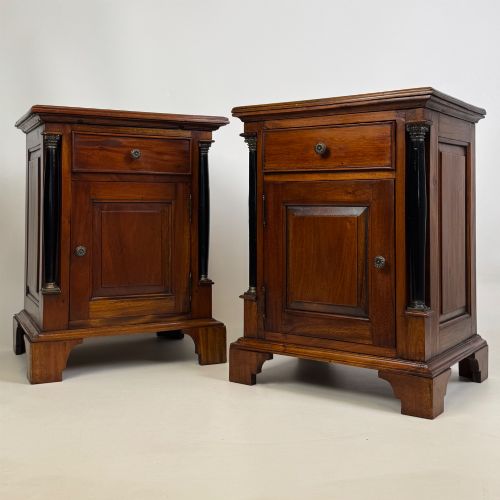
- An enclosed piece of furniture with a door opening to reveal internal storage space. These keep chamber items neatly hidden out of sight.
- Irish Regency
- A regional design style originating in Ireland during the early nineteenth century. Pieces from this tradition often exhibit bold proportions and distinctive local cabinet-making characteristics.
Frequently Asked Questions
Are traditional mahogany nightstands sold in pairs?
Many listings consist of matched pairs originating from the Victorian period. These paired pieces offer symmetrical arrangement options for either side of a bed.
Single items also appear, representing bedside chests and cabinets from various nineteenth and early twentieth-century dates.
What is the difference between a bedside chest and a cabinet?
Bedside chests provide horizontal drawer storage accessed by pulling out individual drawers. They often feature three stacked compartments for personal items.
Bedside cabinets utilise an enclosed door opening to reveal shelving or space within. Both forms serve the same domestic function beside a bed.
What wood is used in these nightstands?
The primary timber is mahogany, utilised either as solid wood or applied as flame mahogany veneer. This dense hardwood provides deep reddish-brown tones and robust construction.
Metal elements such as brass appear on handles and mounts. The combination yields a durable, decorative surface.
How do I date a traditional mahogany nightstand?
Dating relies on stylistic markers and construction methods associated with periods like the Victorian era, eighteen-sixty, and nineteen-twenty. Details such as drawer lining construction and timber preparation offer clues to age.
Maker attribution, where present, helps confirm the specific era of manufacture.