

Brown Wood Bedside Tables
Brown wood bedside tables bring warmth and utility to the bedroom, offering rich mahogany, walnut, and flame mahogany surfaces beside the bed.
What these brown wood bedside tables are
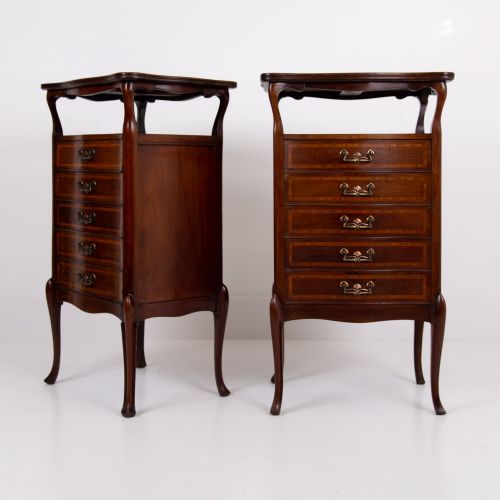
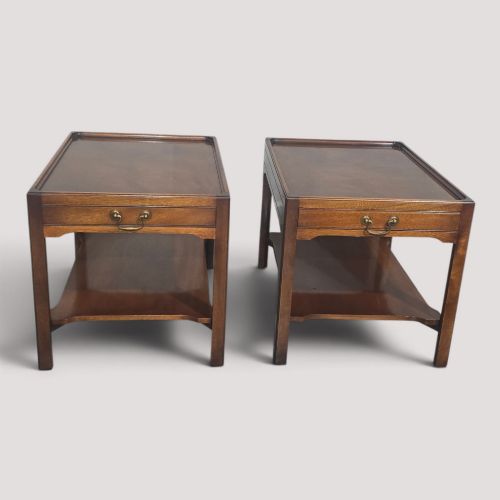
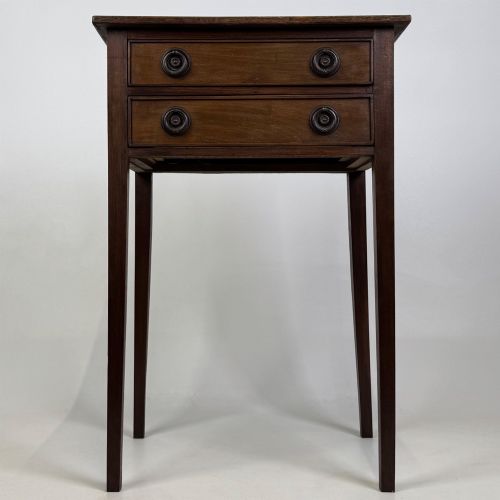
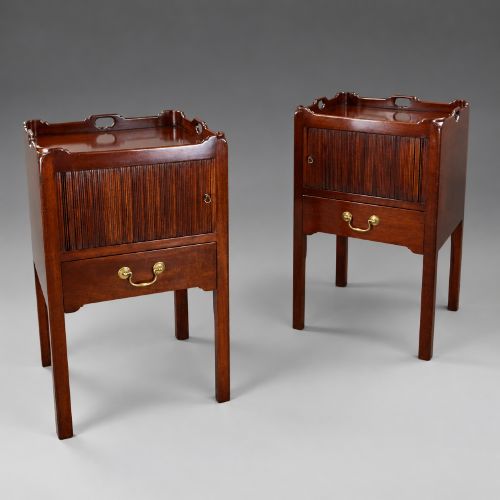
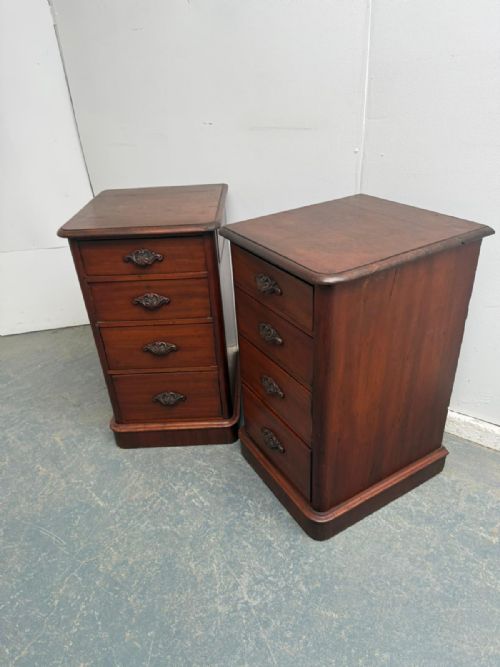
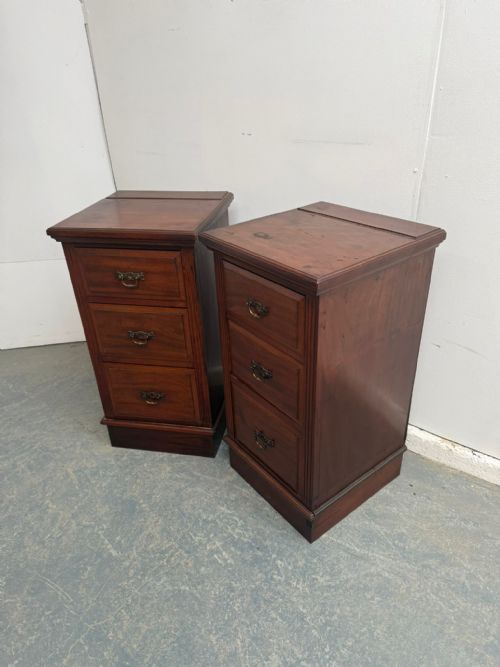
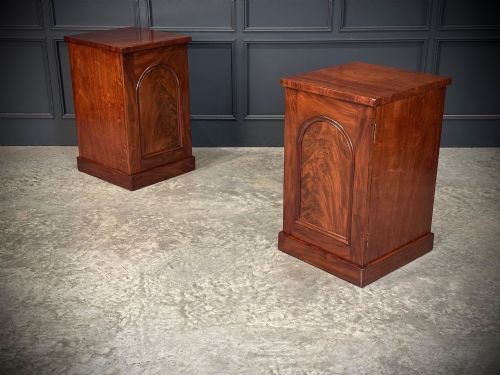
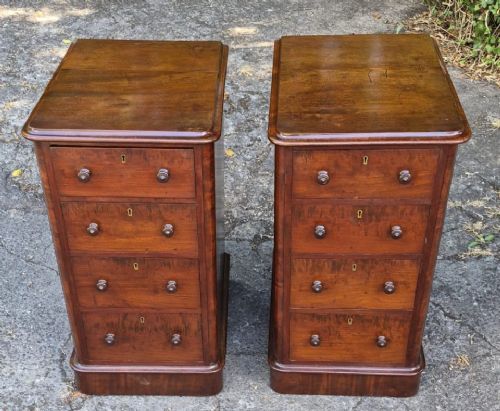
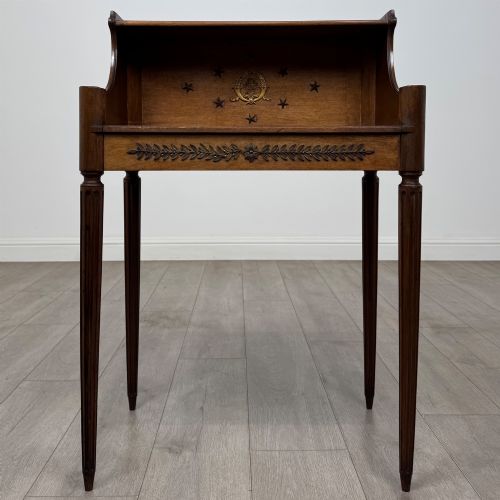
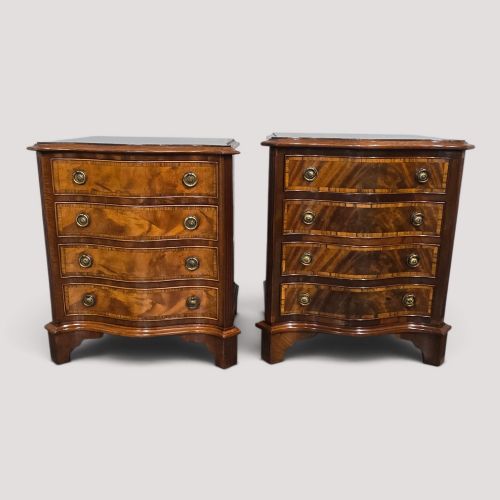
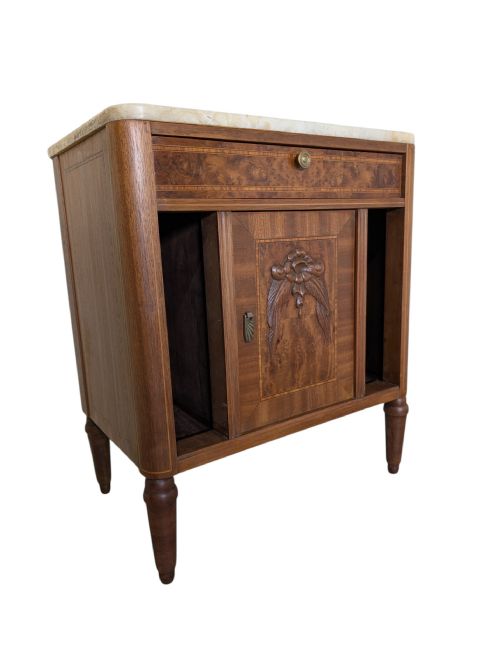
Brown wood bedside tables encompass low chests of drawers, lamp chests, cabinets, and side cabinets designed to sit beside a bed. The selection ranges across the Victorian era, 1900, and 1920, often appearing as matched pairs ready for placement on either side of a bed.
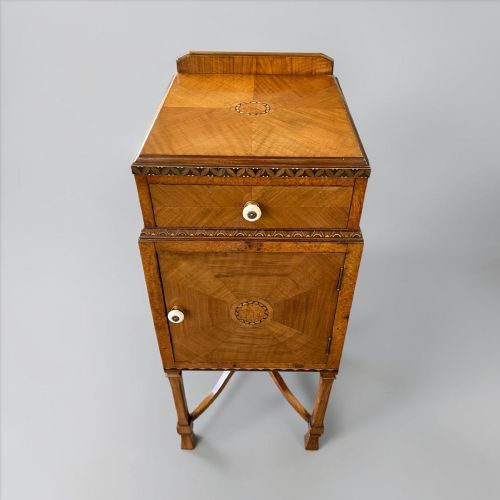
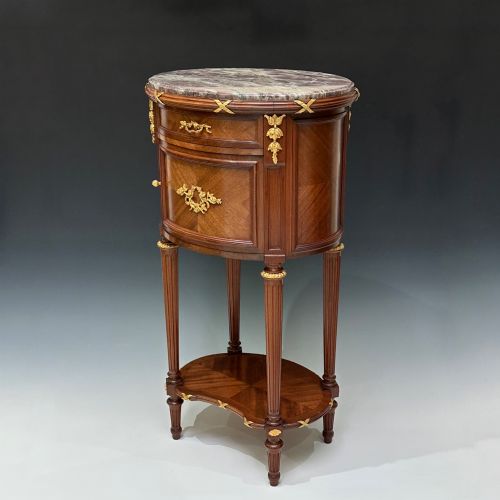
Makers and manufacturers of the period utilised rich timber veneers and solid secondary woods to create practical storage with a decorative presence. Forms vary from serpentine chests of drawers to tall bedside chests and cabinets with marquetry inlay.
The styles represented lean heavily on classical revivals, including Georgian style and Georgian Revival, alongside Victorian and Renaissance Revival designs. These pieces combine compact proportions with the deep colour and figured grain typical of traditional cabinet-making.
How they were made
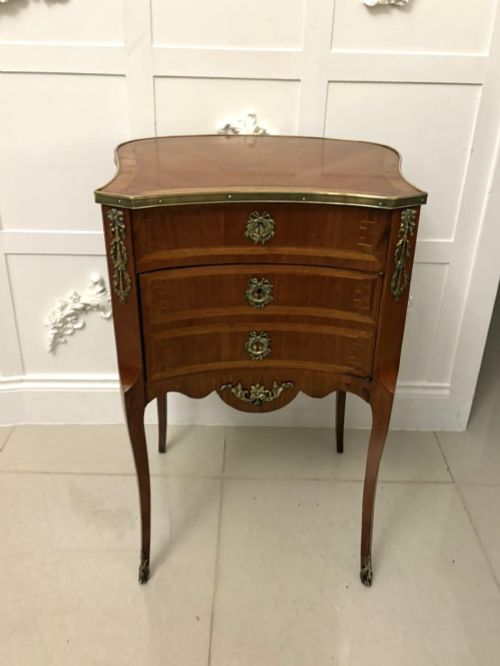
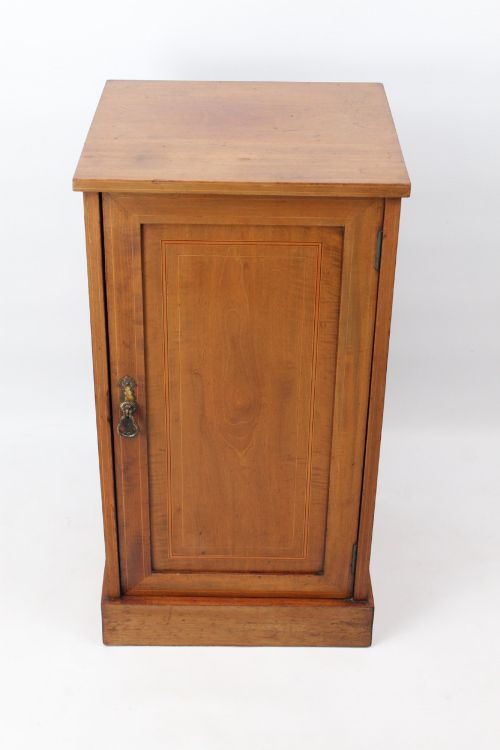
Construction relies upon traditional cabinet timbers such as mahogany and walnut, frequently enhanced by figured veneers like flame mahogany. Details such as boxwood stringing and marquetry inlay provide decorative contrast to the primary wood surfaces.
Metal hardware, including brass handles and mounts, appears alongside timber construction to finish drawers and cabinet doors. Ebonised wood is also utilised in specific decorative elements across the pieces.
Retail Price Guide 2026
Typical UK retail prices for brown wood bedside tables, calculated from the Sellingantiques database of over a million retail prices indexed since 2003. This retail price guide relies exclusively on Sellingantiques data; no external sources or auction records are used, so the figures do not describe the wider market.
Current listings feature pieces spanning the Victorian period, 1900, and 1920, constructed from mahogany, walnut, brass, and boxwood.
What varies in quality
Quality rests in the choice of timber and the execution of the veneer work, particularly where figured flame mahogany or intricate marquetry inlay is employed. Superior examples display careful grain matching and precise boxwood stringing that elevates the visual depth of the piece.
The refinement of the silhouette distinguishes finer pieces, such as the sweep of a serpentine front or the balanced proportions of a tall chest of drawers. Construction integrity in the drawers and the quality of original brass hardware further separate standard production from superior cabinet-making.
Warings Liverpool
The Brown Wood Bedside Tables Glossary
- Flame mahogany
- A veneer cut from timber where the grain creates a distinctive flame-like pattern. It is prized for its dramatic visual movement and rich optical depth.
- Marquetry inlay
- Pieces of contrasting wood and decorative materials fitted into a veneer to form geometric or pictorial designs. This technique requires exceptional precision by the cabinet-maker.
- Serpentine front
- A furniture front characterised by a concave central section flanked by two convex ends, or the reverse. The gentle S-curve demands advanced woodworking skill to execute cleanly.
- Boxwood stringing
- Thin lines of pale boxwood inlaid into grooves on the furniture surface to create borders and geometric framing. It provides a sharp linear contrast against darker timbers such as mahogany.
- Ebonised wood
- Timber treated with a chemical stain or finish to imitate ebony. It is frequently utilised to provide dark accents and structural contrast.
Frequently Asked Questions
Are these tables sold as pairs?
Many of the brown wood bedside tables on this page are listed as matching pairs, which makes them suitable for placing on opposite sides of a bed.
Pairs offer a balanced look within a bedroom scheme, sharing identical timber selection, period details, and proportions.
How do chests and cabinets differ?
Bedside chests of drawers provide stacked storage drawers for personal items, whereas bedside cabinets and side cabinets typically feature enclosed cupboard space behind a door.
Both forms serve the same functional purpose beside a bed while offering different interior storage configurations.
Which periods are represented?
The pieces span the Victorian era, the year 1900, and 1920, reflecting revival styles such as Georgian Revival and Renaissance Revival.
These dates indicate traditional craftsmanship methods and historical design influences spanning the late nineteenth and early twentieth centuries.