


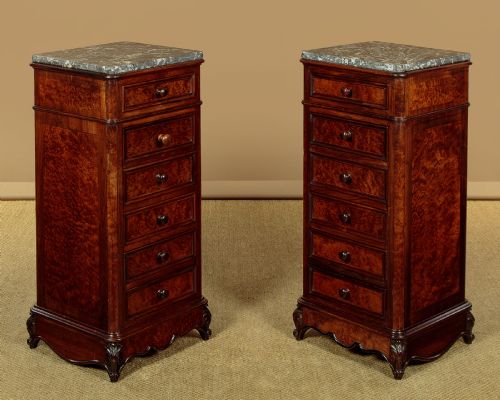

Pair Victorian Bedside Drawers
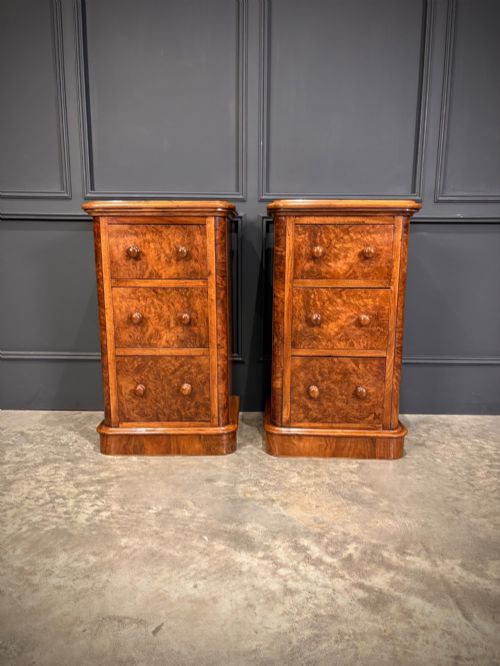
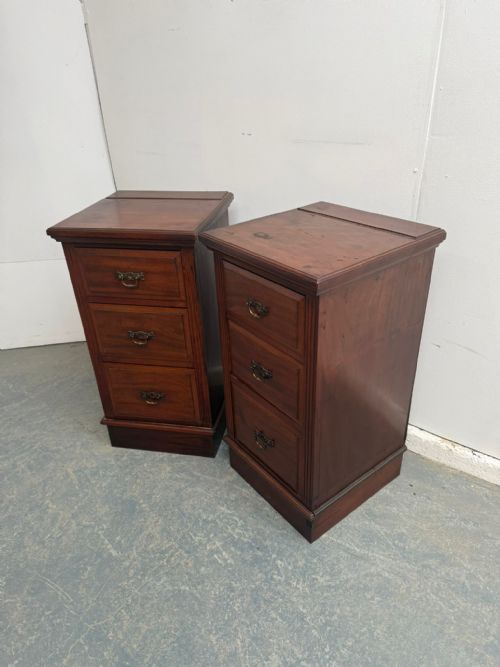
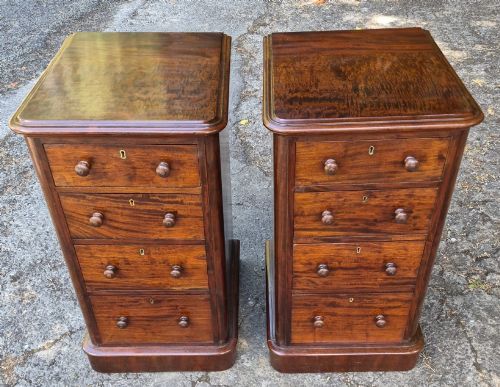
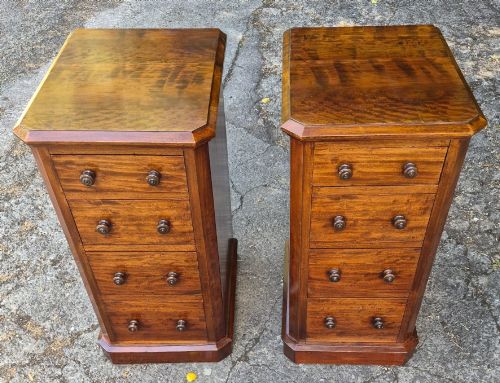
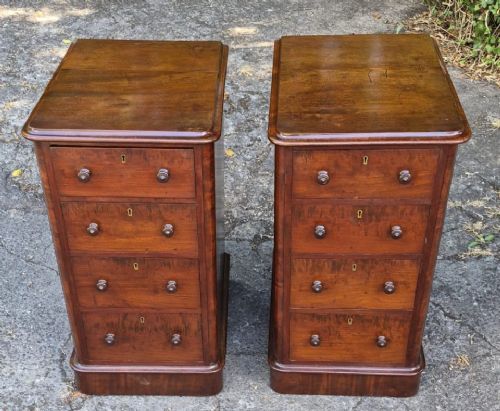
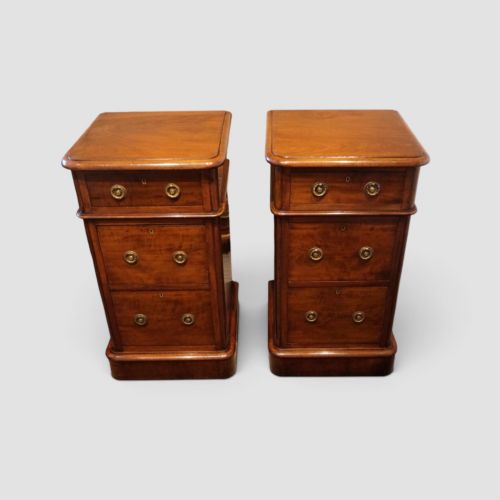
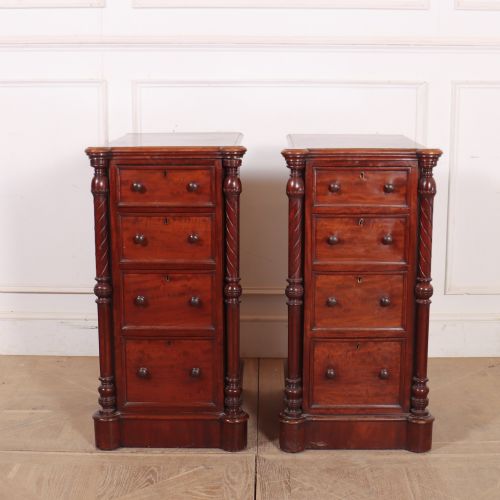
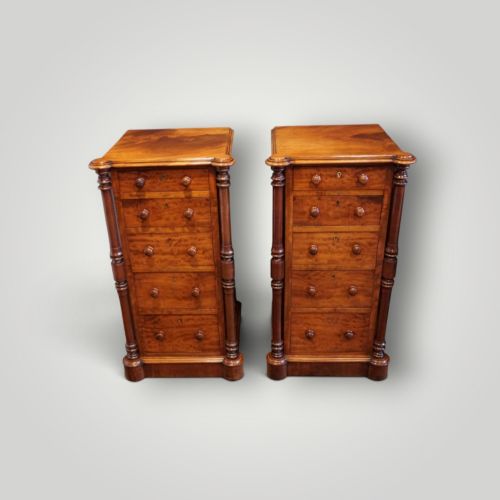
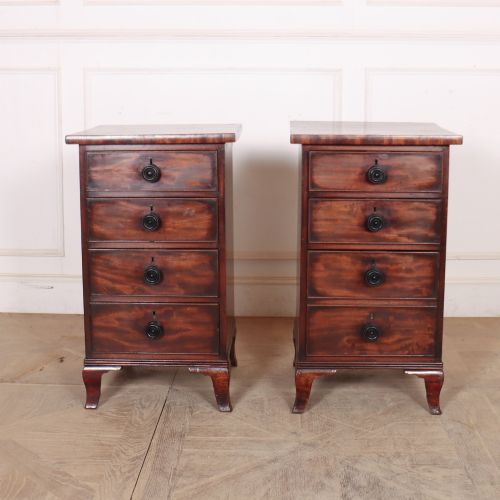
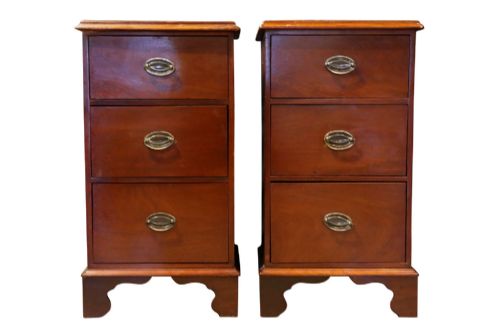
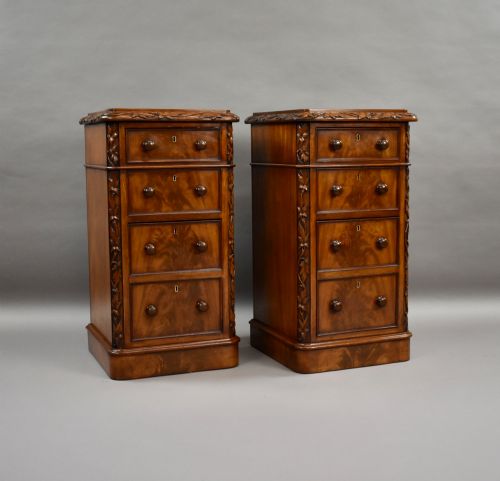
Pair victorian bedside drawers bring symmetrical storage to a bedroom, combining period timber and compact proportions.
Pair Victorian Bedside Drawers
Pair victorian bedside drawers comprise matched pairs of small-scale chests, cabinets, or lockers designed to sit beside a bed. Most examples date from the nineteenth century and use traditional timber construction tailored for domestic chambers.
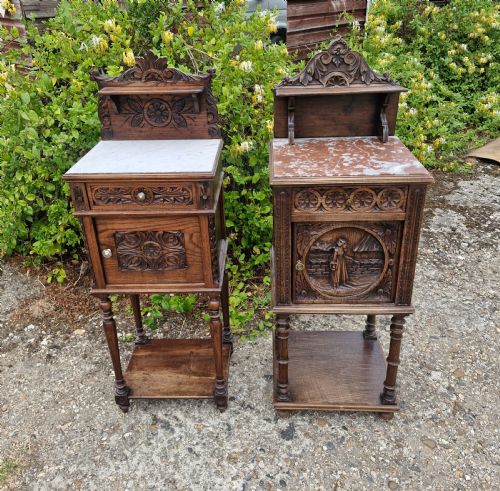
The dominant material on this page is mahogany, often built as three or four drawer chests, alongside walnut and burr walnut variations. Cabinet forms, bowfront designs, and campaign styles also appear across the inventory.
Originating in the Victorian period, these items served as functional bedside storage for night-time essentials, replacing simpler pot cupboards with dedicated drawer space.
How they were made
Joiners built these pieces using solid timbers like mahogany, walnut, and pine, frequently applying decorative veneers such as burr walnut, amboyna, or kingwood to drawer fronts and top surfaces. Cabinet makers utilised dovetail joints for drawer construction to ensure durability under daily use.
Hardware additions included brass handles, drop pulls, and recessed military-style brass mountings, while specific finishes involved French polishing, waxing, or marquetry inlay. Secondary woods like pine appeared in carcases and drawer linings.
Listings feature woods spanning mahogany, burr walnut, rosewood, satin birch, and pine across the Victorian era.
What varies in quality
The selection of timber grain largely determines the standing of a pair, with matched burr walnut or figured mahogany commanding higher regard than plain pine or secondary hardwoods. Finer examples display meticulous veneer matching across both matching units to maintain true symmetry.
Construction details such as hand-cut dovetailing, original brass hardware, and integrated locking mechanisms separate standard utility pieces from high-workshop production. Alterations, adaptations, or mismatched drawer depths influence how closely a pair matches its original nineteenth-century state.
Warings Liverpool
The Pair Victorian Bedside Drawers Glossary
- Burr walnut
- A figured wood grain showing intricate swirling patterns formed from tree growths, highly prized for Victorian cabinet fronts. It requires skilled veneering to cover flat surfaces symmetrically.
- Campaign style
- Portable furniture featuring recessed brass handles and corner brackets, designed for easy transport. These pieces often include robust side carrying handles.
- Bowfront
- A curved cabinet front that swells outward in the centre, offering extra internal depth. This shape demands expert carpentry to curve solid timber or bent laminates accurately.
- Marquetry
- The art of applying small pieces of wood veneer to form decorative pictures or geometric patterns. Artisans inlay contrasting timbers into a primary background veneer.
- Wellington chest
- A tall, narrow chest of drawers secured by a locking side flap that fastens over the drawer edges. This specific form provides secure storage in a compact footprint.
Pair Victorian Bedside Drawers: Frequently Asked Questions
What is the difference between a bedside chest and a nightstand?
Bedside chests feature enclosed drawers or cupboards for concealed storage, whereas traditional nightstands often present an open shelf or simpler table structure. Victorian examples heavily favour enclosed drawer configurations.
Both forms serve the same domestic purpose next to a bed, but chests provide greater capacity for small items.
How do I match period bedside drawers with modern beds?
Victorian heights can sit lower than contemporary mattress levels, so checking vertical dimensions against your bed frame prevents awkward access. Mahogany and walnut tones blend naturally with neutral bedroom palettes.
Using a matched pair balances the visual weight on either side of the bed, anchoring modern headboards with historic character.
Are these drawers suitable for daily use?
Solid nineteenth-century construction using dovetailed joints ensures these drawers withstand regular opening and closing. Traditional timber runners require occasional wax lubrication to maintain smooth action.
Careful placement away from direct heat sources protects historical polishes and prevents timber shrinkage in modern homes.
How can I tell a mid-Victorian piece from a late Victorian one?
Mid-Victorian pieces from around 1850 to 1870 frequently showcase dense solid mahogany or rich burr walnut with classical proportions. Late Victorian examples spanning the 1880s and 1890s sometimes introduce lighter satin birch or eclectic revival details.
Examining internal secondary woods and handle styles helps clarify the decade of manufacture.