

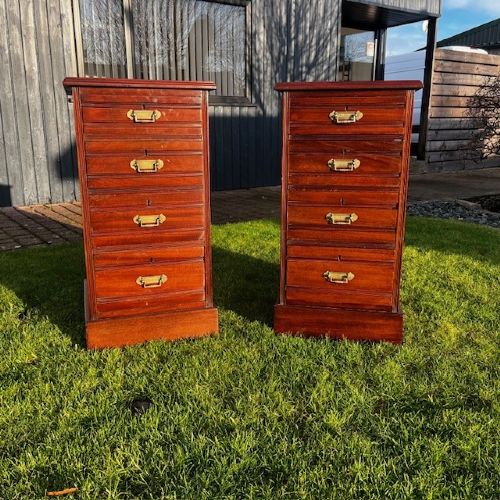


Antique Wellington Bedside Chests
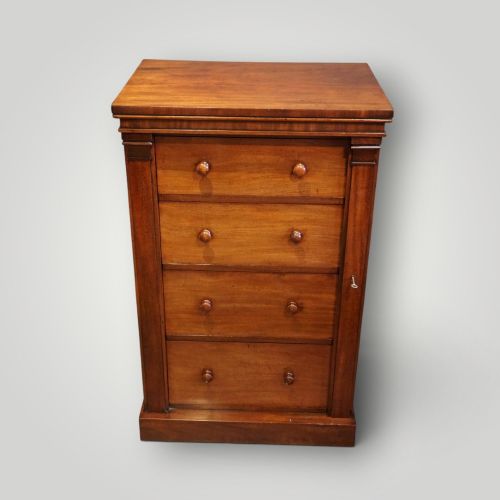
Antique wellington bedside chests are narrow, tall timber cabinets with a locking side stile, offering compact bedside storage with traditional character.
Antique Wellington Bedside Chests
When you search for antique wellington bedside chests, you encounter narrow, vertical drawer units designed for the bedroom, predominantly originating from the Victorian and Regency periods. The forms include bedside cabinets, nightstands and pot cupboards alongside standard drawer configurations.
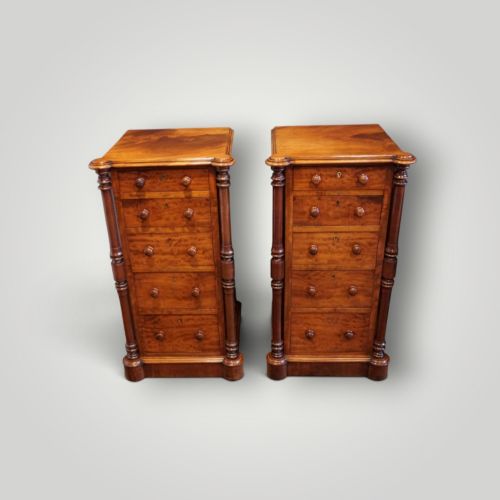
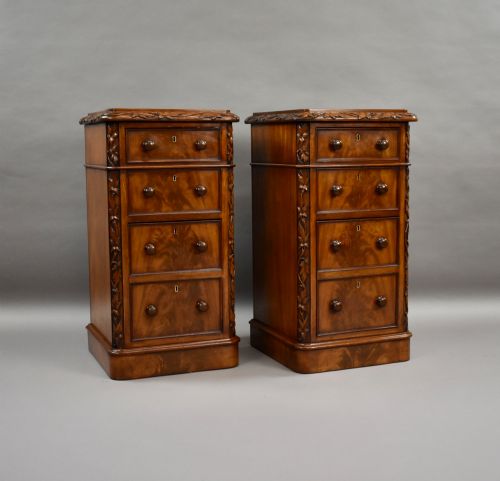
The version you meet most often on this page is the Victorian mahogany pair, standing tall with multiple stacked drawers. These pieces borrow the signature side-locking mechanism of the full-sized Wellington chest to secure the contents within a compact footprint.
Origins stretch across the nineteenth century, taking in both mid-Victorian examples and late Victorian interpretations in various rich timbers. Pairs appear frequently alongside single tall chests adapted for bedside use.
How they were made
Cabinet makers constructed these chests using solid timbers and decorative veneers such as mahogany, flame mahogany, rosewood, amboyna, burr walnut and satinwood. These woods provided durable structures while presenting striking natural grain patterns across the drawer fronts and top surfaces.
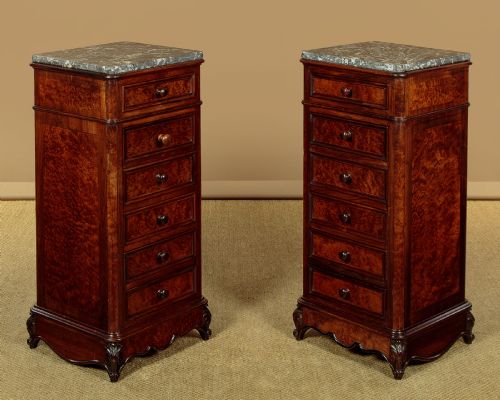
Metal hardware played a functional role in the construction, utilising brass for handles, hinges and the locking bars that secure the drawers. Some examples integrate marble tops or leather surfaces to provide a durable finish for daily bedside use.
Many a Victorian sleeper trusted a single locking side bar to keep midnight snacks safe from the household staff.
What varies in quality
The choice of decorative veneer and timber selection dictates much of the visual distinction between pieces. Figured grains like flame mahogany, amboyna and burr walnut elevate the cabinet work far beyond plain mahogany surfaces.
The inclusion of specialised details such as marquetry inlay, matching pairs, marble tops or robust locking mechanisms separates standard production from finer workshop output. Original hardware and balanced proportions further distinguish the standard of manufacture.
Warings Liverpool·James Shoolbred·S and H Jewells of London
The Antique Wellington Bedside Chests Glossary
- Wellington chest
- A tall, narrow chest of drawers featuring a hinged locking stile on one side that secures all the drawers when locked in place. This design originated in the nineteenth century to save space.
- Marquetry
- The art of applying pieces of veneer to a structure to form decorative patterns and pictures. Makers used contrasting timbers to create floral or geometric designs on the cabinet surfaces.
- Flame mahogany
- A distinct cut of mahogany timber displaying a repeating, flame-like figure across the grain. It was favoured by nineteenth-century makers for prominent drawer fronts.
Antique Wellington Bedside Chests: Frequently Asked Questions
What is a wellington chest?
A wellington chest is a tall, narrow set of drawers distinguished by a hinged wooden flap or stile on the vertical edge that locks the drawers shut. This design keeps the contents secure in a compact footprint.
Originally built in the nineteenth century, these cabinets suited smaller bedrooms and dressing rooms where floor space was at a premium.
How were these chests used?
These cabinets served beside the bed to hold nightclothes, books and personal items within easy reach of the mattress. Some variations incorporated enclosed cupboards for chamber pots or upper surfaces fitted with marble to hold washing basins and lamps.
Their tall, narrow proportions allowed them to fit into tight spaces between windows and bed frames in period homes.
How do I identify a Victorian piece?
Victorian pieces typically display deep, dense timbers like mahogany and walnut, often finished with hand-cut dovetail joints on the drawer construction. The styles reflect the periods of the nineteenth century, moving from plain classical lines to ornate marquetry and figured veneers.
Examining the secondary woods inside the drawers and the style of the brass hardware helps confirm the nineteenth-century origin.
Are pairs common?
Pairs of bedside chests appear frequently, though many were assembled as matched sets or adapted from tall cabinets over time. Finding matching pairs in original condition reflects how bedroom furniture was ordered for larger nineteenth-century houses.
Checking the timber grain and internal construction helps determine if two cabinets started life together.