
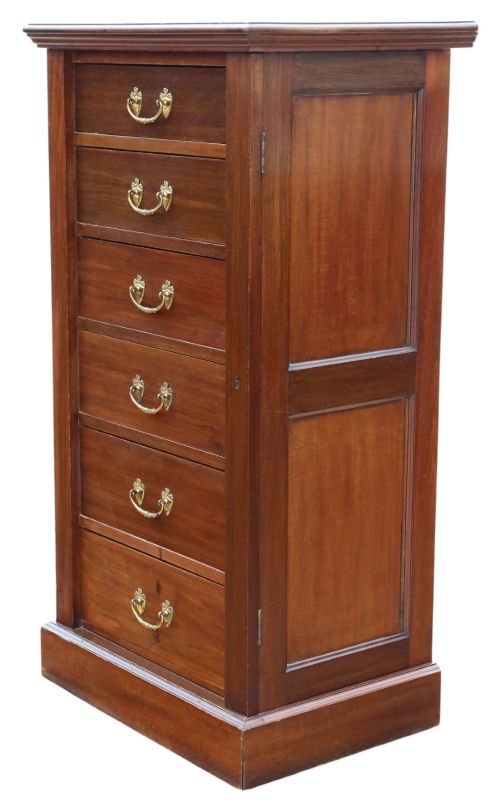
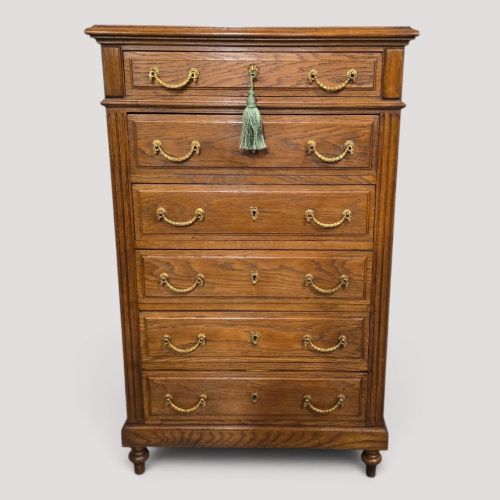

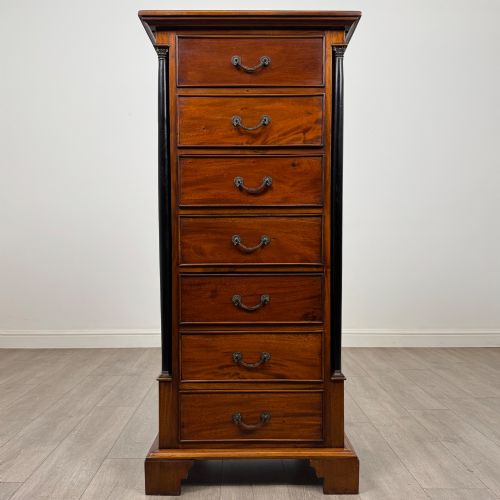
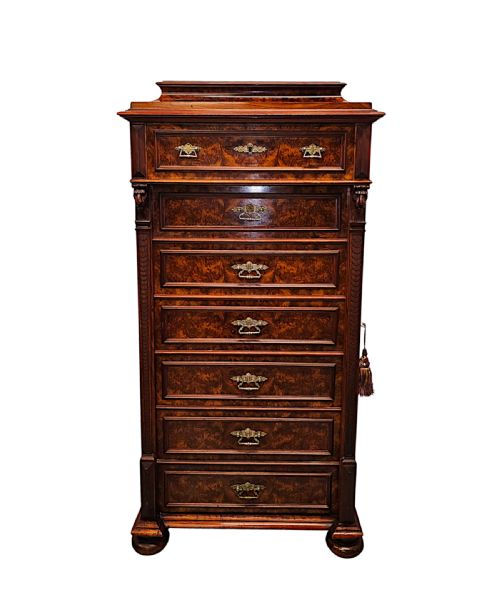
Semainier Chest of Drawers
A semainier chest of drawers provides a tall, slender silhouette designed to hold a week of linen while preserving valuable floor space.
Semainier Chest of Drawers
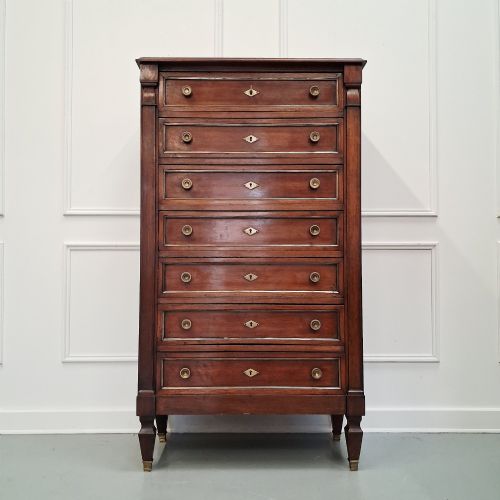
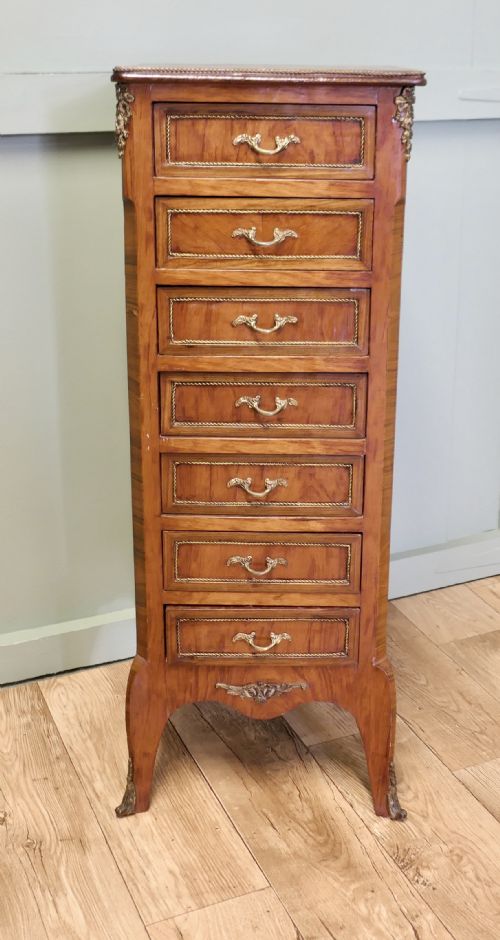
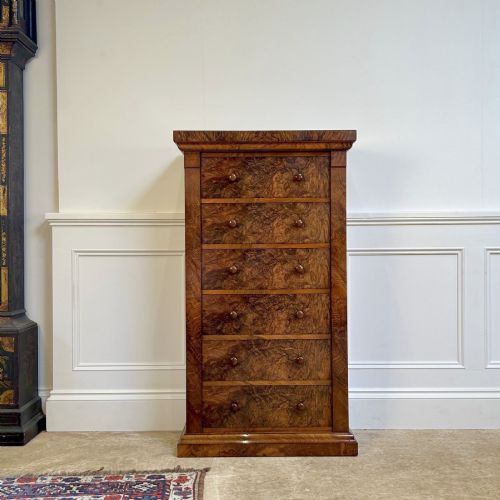
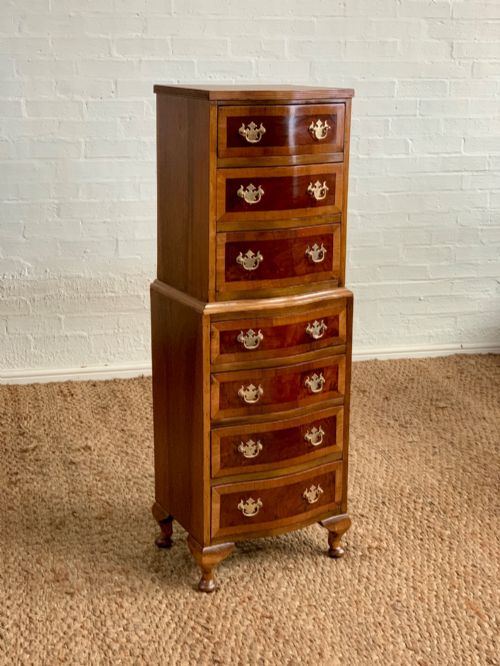
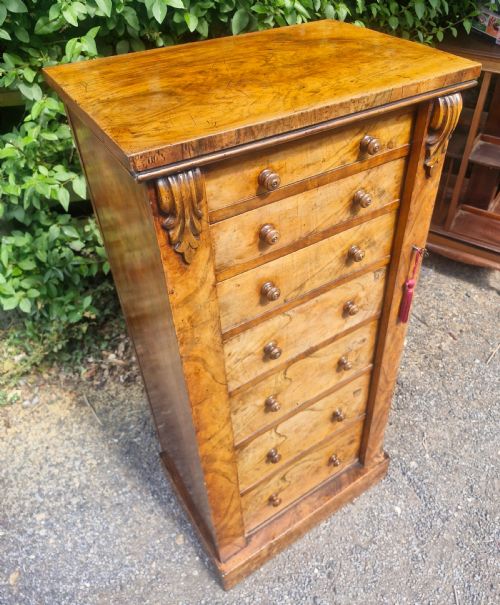
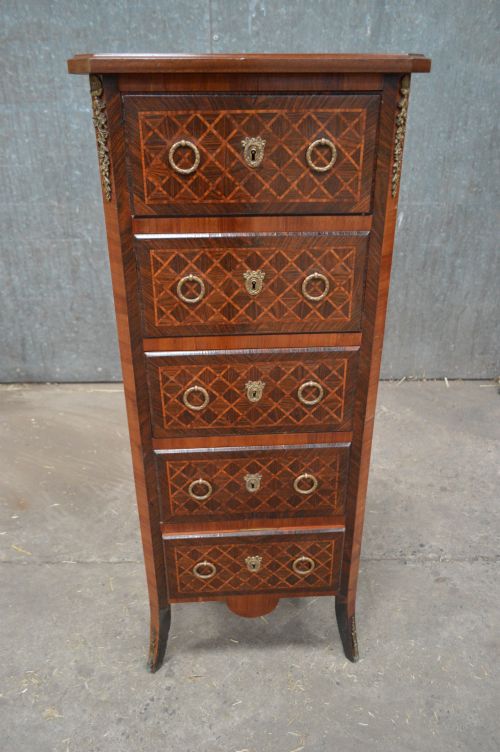
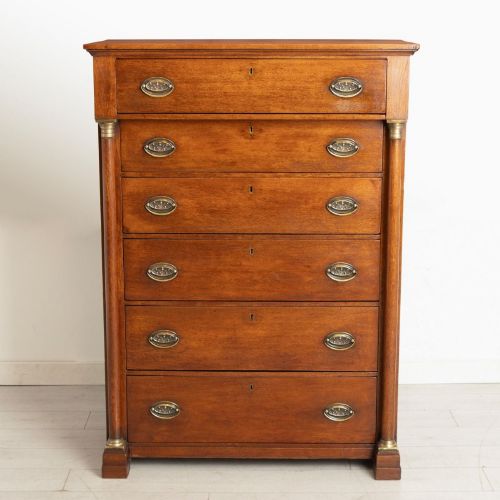
A semainier chest of drawers stands as a tall, narrow storage piece traditionally constructed with seven horizontal drawers, one for each day of the week. These pieces emerge predominantly in French workshops, alongside related Victorian and Edwardian tall narrow chests from British makers.
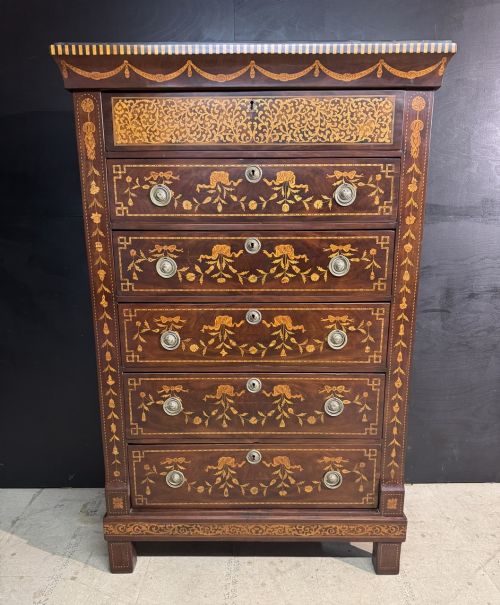
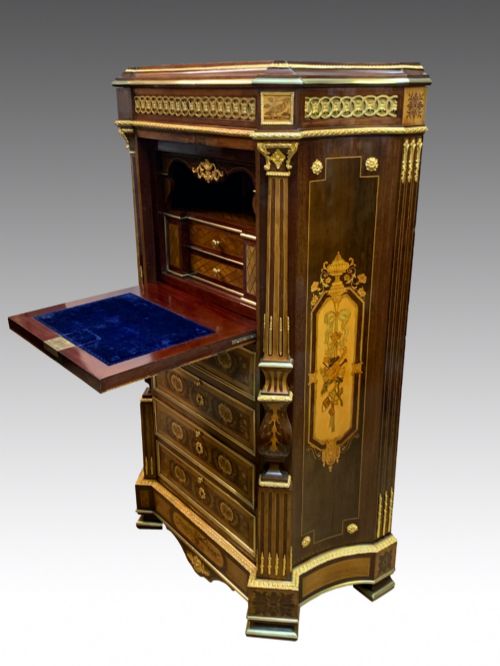
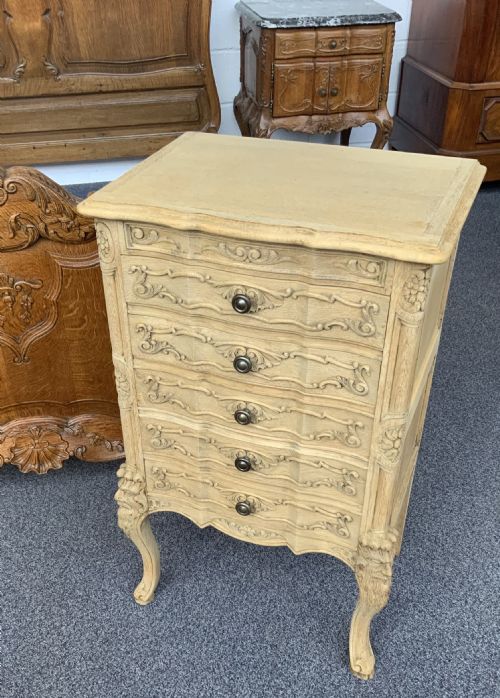
The form appears frequently in walnut, mahogany, and oak, often topped with contrasting marble slabs or detailed with intricate marquetry and parquetry. Buyers meet French provincial examples alongside refined pieces bearing Louis XV or Neo-Classical revival styling.
Makers designed these slim proportions specifically for bedrooms and dressing rooms where horizontal floor space remains limited. The characteristic seven-drawer layout offers exceptional vertical storage without dominating the room.
How they were made
Cabinetmakers utilised dense timber foundations of mahogany, walnut, and oak, often applying finely figured veneers such as burr walnut, kingwood, and tulipwood to the exterior surfaces. These timber panels are fixed to sturdy carcases using traditional joinery methods that accommodate natural wood movement over centuries.
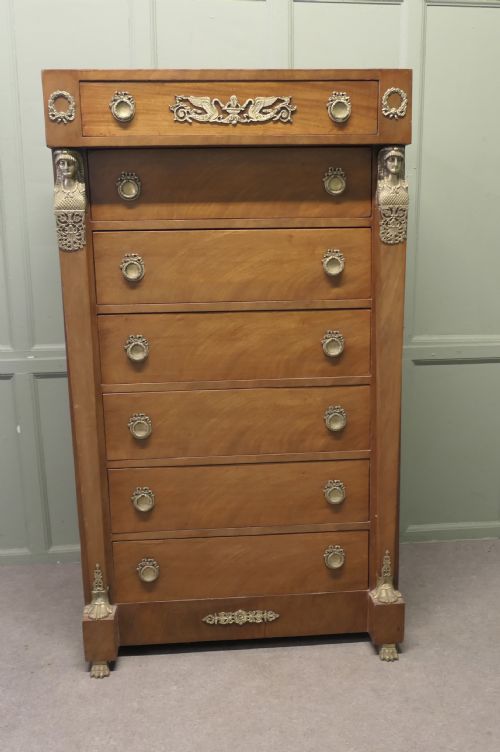
Many French examples incorporate polished marble tops and cast or gilt bronze mounts, brass inlays, and ormolu details around the drawer tiers and corners. Drawer construction relies on hand-cut dovetailing, ensuring the sliding framework remains robust through daily use.
Semainier Chest of Drawers Retail Price Guide 2026
Typical asking prices for semainier chest of drawers among the pieces listed under this phrase on Sellingantiques today, from the lower quarter to the upper quarter. They describe what is for sale here now, not the wider market.
Listings feature woods including mahogany, walnut, burr walnut, oak, and satin birch, alongside marble and brass.
What varies in quality
The calibre of a piece rests heavily on the selection of timber veneers and the precision of the parquetry or marquetry patterns. Superior examples display continuous, book-matched grain across the drawer fronts, whereas simpler items utilise plain or flat boards.
Hardware and secondary materials also dictate overall distinction, distinguishing heavy cast bronze mounts and intact marble slabs from plainer wooden mouldings. The smoothness of the drawer action and the integration of locking mechanisms reflect the original maker's investment of time and skill.
Gillows·Maison Krieger·Maple & Co.·Betty Joel
The Semainier Chest of Drawers Glossary
- Semainier
- A tall, narrow chest of seven drawers traditionally corresponding to the seven days of the week. This form originated in France during the eighteenth century.
- Wellington chest
- A sturdy British tall chest featuring a hinged vertical locking stile on the right side that secures all drawers simultaneously. These pieces often date from the nineteenth century.
- Marquetry
- Decorative veneer work forming pictorial or geometric patterns using various coloured woods. Craftsmen assemble these patterns meticulously before applying them to the carcase.
- Ormolu
- Gilded bronze mounts applied to furniture for decorative enrichment. This technique is prominent on French Empire and revival pieces.
- Parquetry
- Geometric mosaic woodwork arranged in patterns such as cubes or chequers. It creates a structured, textured surface across drawer fronts.
Semainier Chest of Drawers: Frequently Asked Questions
What is a semainier chest of drawers?
A semainier is a tall, narrow storage unit traditionally featuring seven drawers. The design allowed owners to organise their weekly wardrobe systematically within a minimal footprint.
These pieces emerged in continental Europe before being adopted by British cabinetmakers. Their vertical orientation makes them particularly useful in smaller bedrooms.
How were they used historically?
Historically, households utilised these tall chests for linens, undergarments, and daily accessories. The seven-drawer count offered a dedicated compartment for each day.
They served primarily in private dressing rooms and bedchambers. Their narrow profile allowed them to fit snugly into tight alcoves where standard chests could not go.
How do I style a semainier at home?
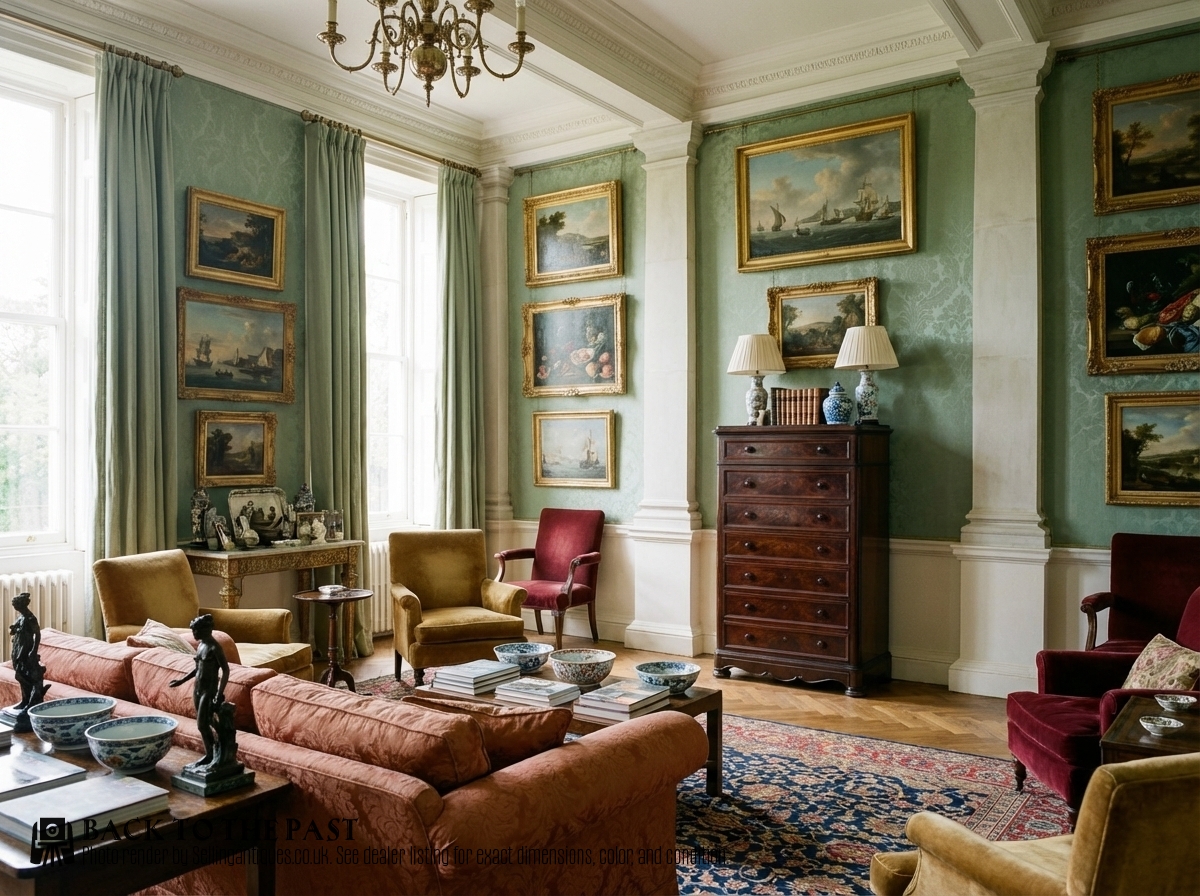
A semainier fits easily into corners or beside wardrobes due to its slender footprint. It provides practical vertical storage without cluttering the room.
Pair it with period or contemporary furnishings to anchor an empty wall. The top surface often accommodates a small lamp or decorative items.
How do I tell periods apart?
Identifying the period relies on observing timber choices, hardware styles, and decorative motifs. Nineteenth-century examples often feature heavy mahogany or walnut with substantial brass mounts, while later Edwardian pieces lean towards simpler lines.
French provincial pieces display regional carving styles, whereas revival items borrow heavily from Louis XV or Neo-Classical aesthetics. Examining the interior drawer construction and secondary woods clarifies the manufacturing era.