





French Mahogany Tallboy
A French mahogany tallboy brings vertical storage and rich timber grain to a room, offering practical elegance through classic continental design.
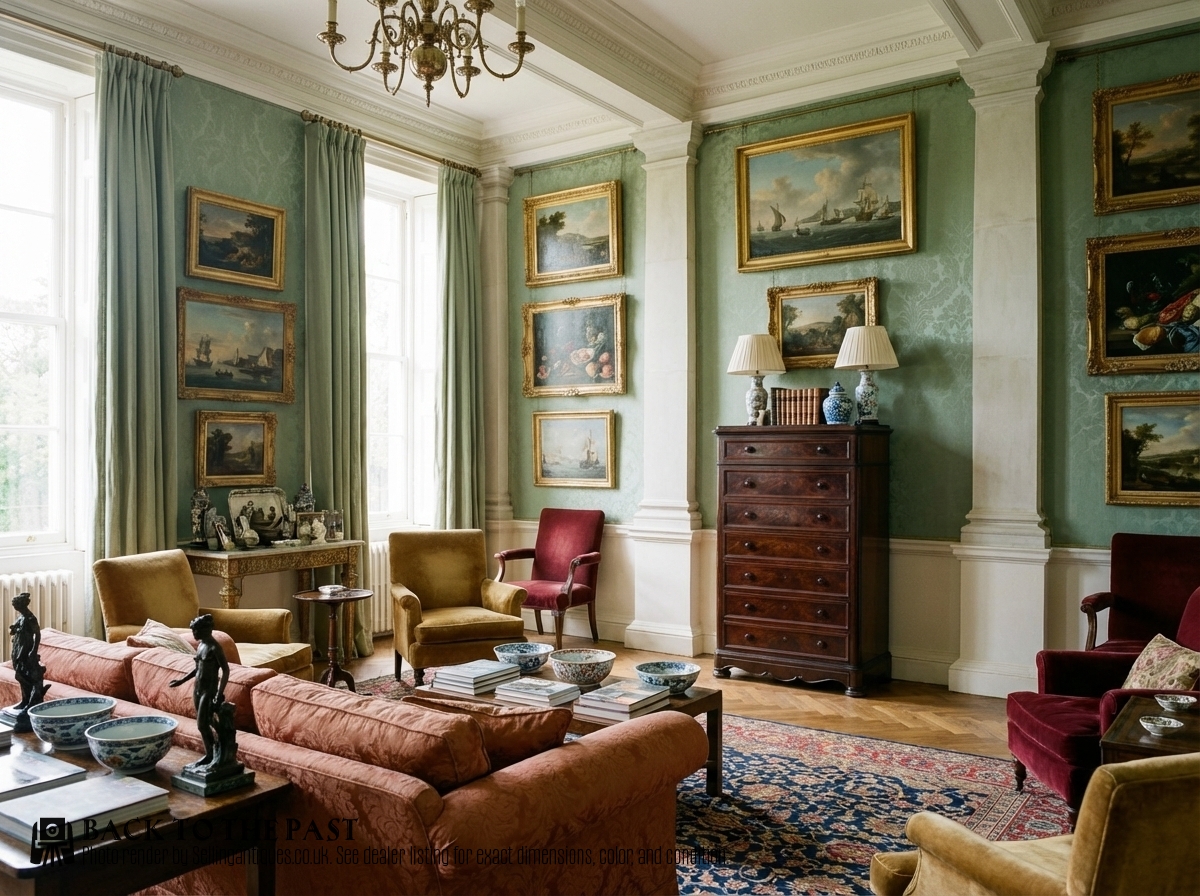
French Mahogany Tallboy
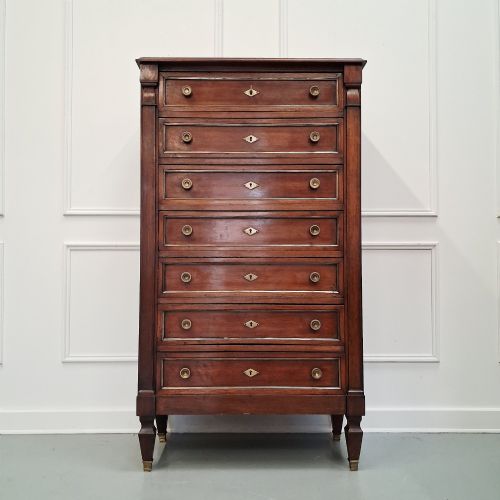
A French mahogany tallboy represents a selection of tall, narrow chests and semainiers designed to maximise storage without dominating floor space. These pieces emerge primarily from the nineteenth century, encompassing Louis Philippe, French Empire, and Charles X periods.
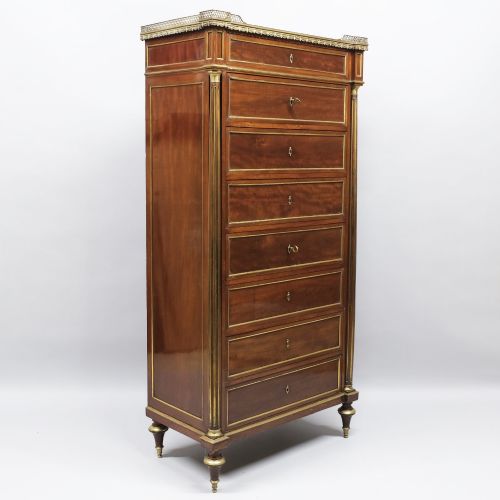
The common form on this page is the tall chest or semainier, often featuring multiple drawers for a week's supply, alongside secretaire variations and bedside cabinets. Makers shaped these items from solid timber and veneers, frequently topping them with marble.
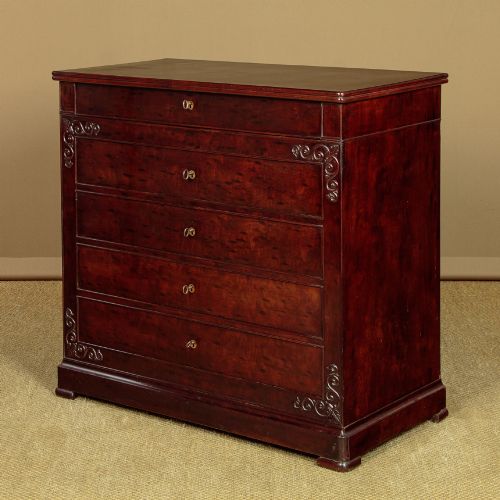
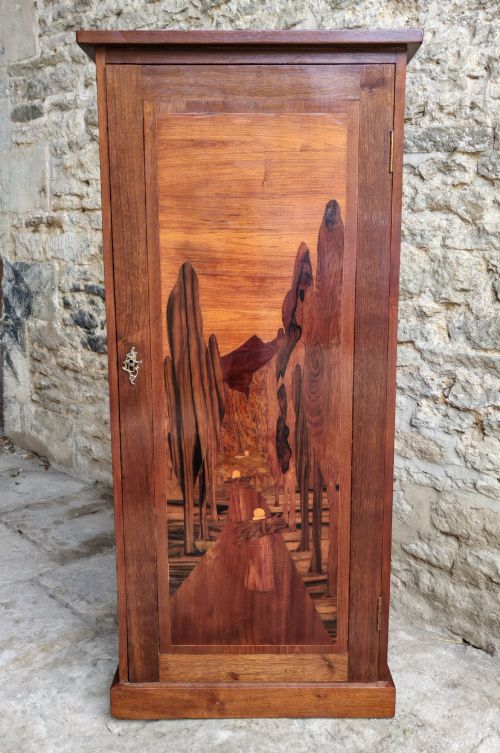
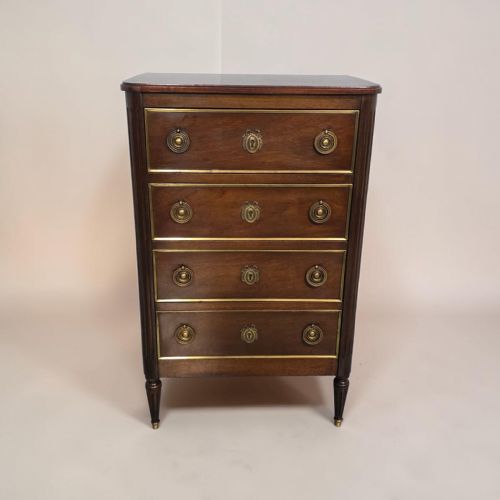
Regional variations span from strict neoclassical Empire proportions to softer nineteenth century curves, incorporating brass handles, gilt bronze mounts, or subtle inlay work. Buyers find both monumental architectural chests and smaller scaled proportional pieces.
Markers of quality
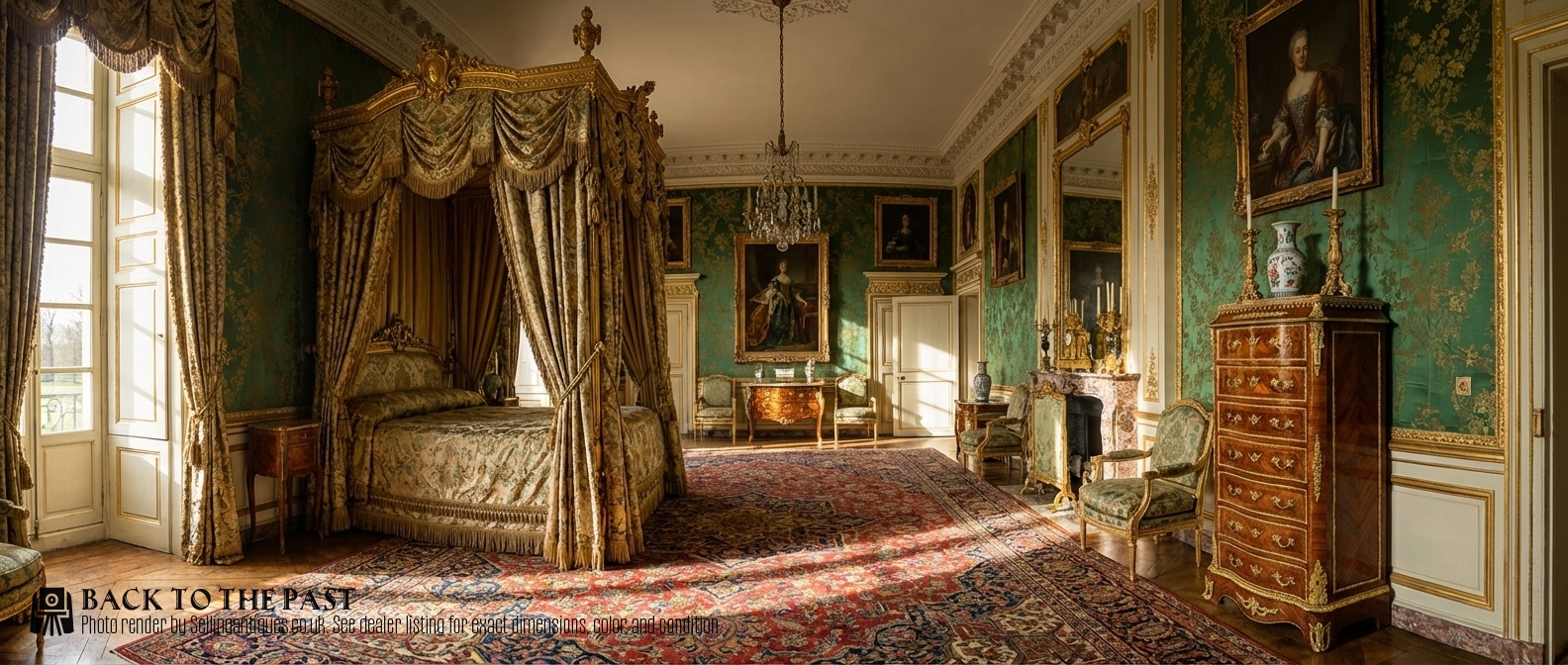
Superior examples display exceptional selection of flame mahogany veneer matched symmetrically across the drawer fronts, alongside crispness in the cast ormolu and gilt bronze mounts. Finer pieces maintain precise drawer alignment and original fitted interiors such as writing drops or secret compartments.
Construction integrity separates standard utility items from masterworks, evident in hand-cut dovetails, sound secondary woods like pine, and heavy marble tops bedded securely. The subtlety of the carving and the depth of the timber finish determine the ultimate standing of each chest.
Some pharmacy tallboys secretly guarded apothecary secrets behind drop-front writing drawers long before ending up in modern bedrooms.
The French Mahogany Tallboy Glossary
- Semainier
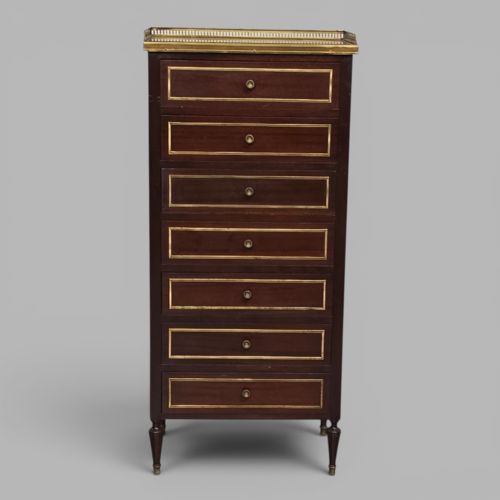
- A tall seven-drawer chest traditionally utilised to hold a week's worth of linen or garments. This form dominates continental tall storage pieces.
- Ormolu
- Gilt bronze ornamentation applied to furniture mounts and feet. Makers used this technique extensively in French Empire design.
- Cartonnier
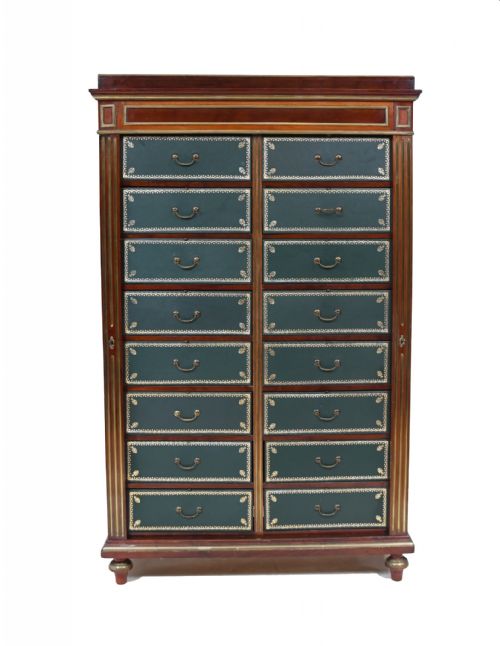
- A specialised tall cabinet or chest built to hold papers and documents. These pieces often feature numerous shallow drawers.
- Secretaire abbattant
- A tall cabinet featuring a drop-front writing surface concealing small compartments inside. This form combines a desk with vertical drawer storage.
- Flame mahogany
- A veneer cut from the fork of the mahogany tree to create a distinctive flickering flame pattern. Cabinet makers prized this wood for principal visual surfaces.
French Mahogany Tallboy: Frequently Asked Questions
What is a semainier?
A semainier is a tall, narrow chest traditionally built with seven drawers, one for each day of the week. French makers favoured this vertical format for bedroom storage where floor space was limited.
These pieces keep a small footprint while offering substantial capacity. They range from plain mahogany carcasses to highly decorated examples with marble tops.
How do I clean a mahogany chest?
Maintain mahogany surfaces using a soft, lint-free cloth and occasional applications of microcrystalline wax to nourish the timber. Avoid silicone-based polishes that build up over time and dull the grain.
Keep these tall pieces away from direct heat sources and strong sunlight to prevent the veneer from drying or cracking. Marble tops require simple wiping with a damp cloth and mild soap.
Where were tallboys placed?
Bedrooms served as the primary location for tall chests and semainiers, holding undergarments, linens, and personal items. Pharmacy and study environments also utilised taller secretaire variations for paperwork and documents.
Their vertical proportions allowed them to fit into tighter wall spaces between windows or doors. Today they function effectively in hallways, dressing rooms, and living spaces.
How do I date a French tallboy?
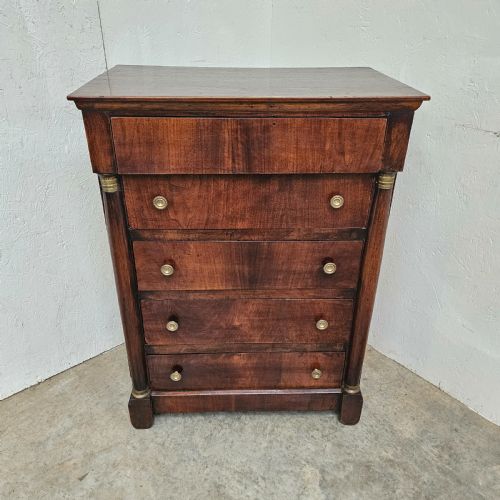
Dating relies on examining the architectural style, hardware, and construction methods. Pieces from the early nineteenth century often display strict Empire symmetry and heavy gilt bronze mounts.
Later nineteenth-century versions, such as Louis Philippe or Victorian items, lean towards simpler ogee drawer fronts and flame mahogany veneers. Secondary woods and dovetail styles provide additional clues to the exact decade of manufacture.