


Narrow Mahogany Chest Drawers
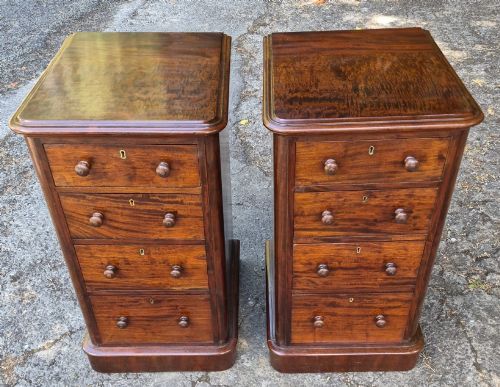
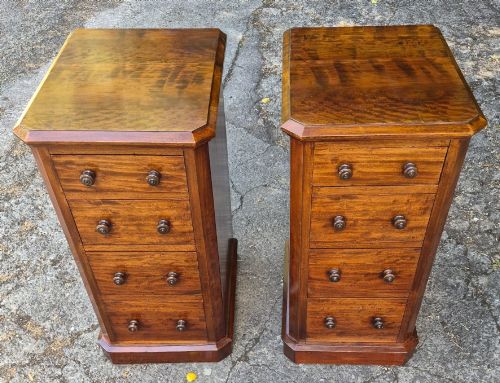
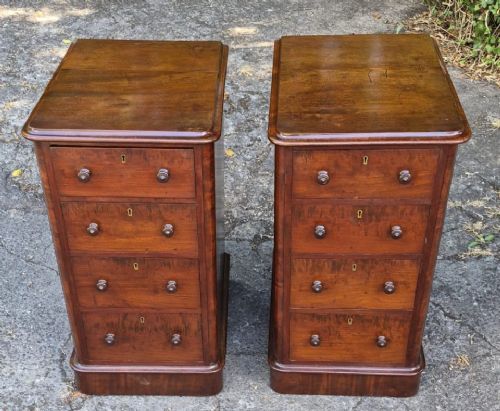
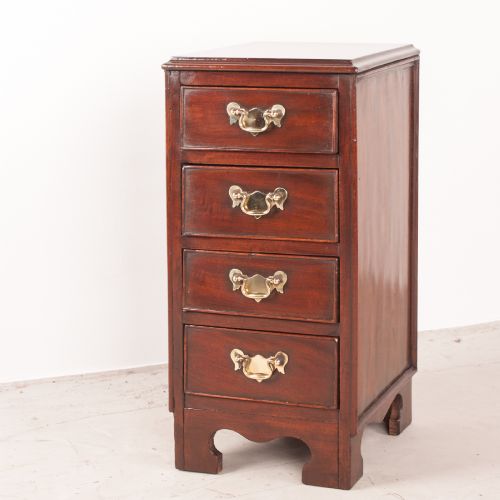
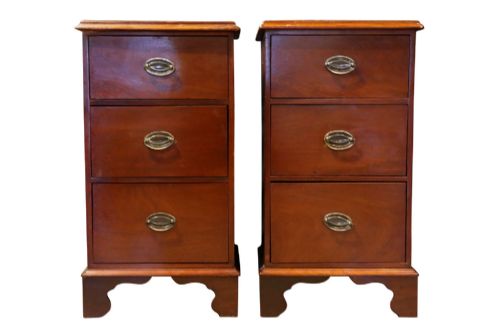
A narrow mahogany chest drawers offers compact storage with upright proportions, bridging practical utility and rich timber grain.
Narrow Mahogany Chest Drawers
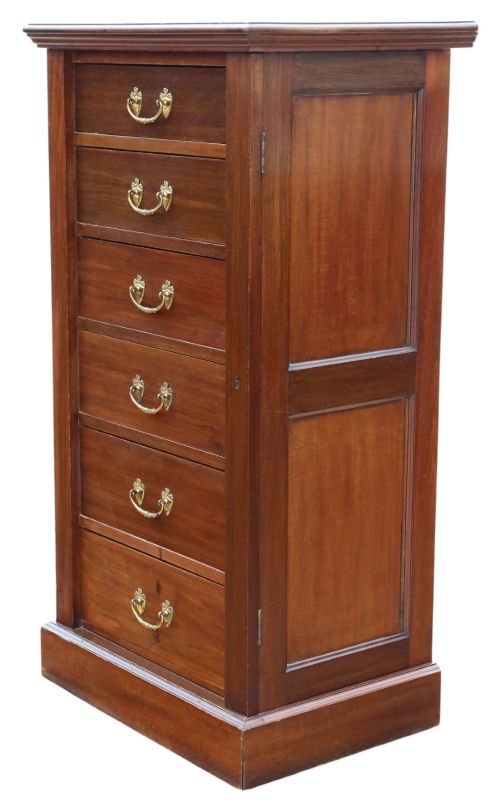
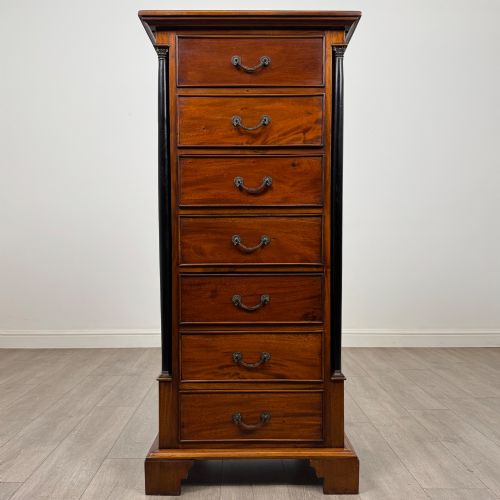
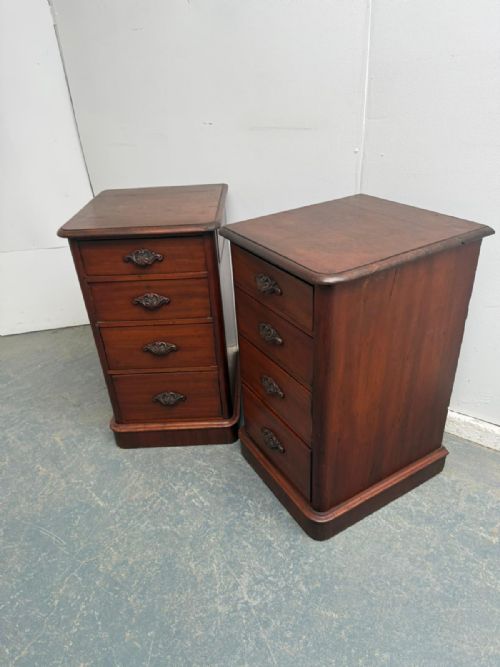
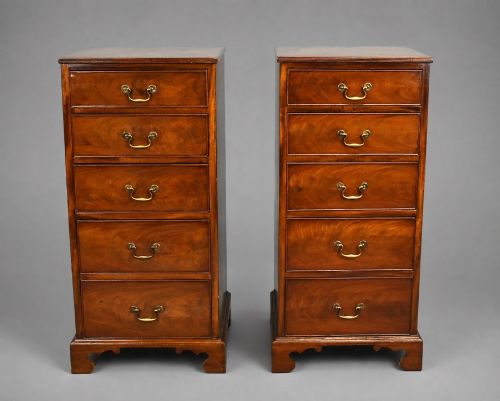
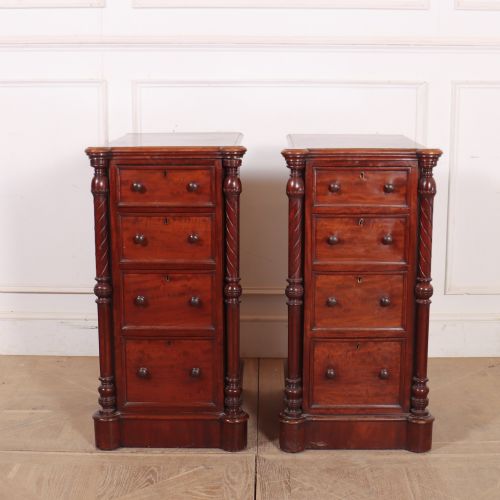
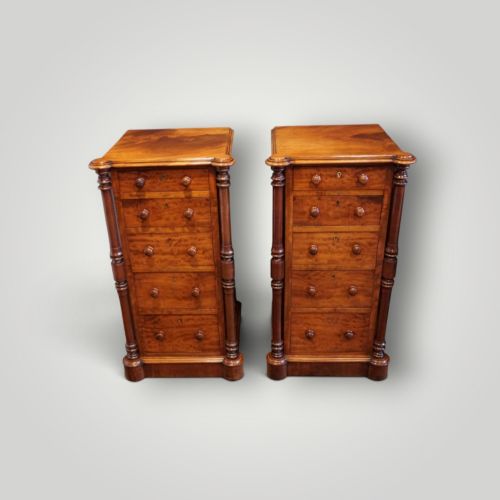
A narrow mahogany chest drawers provides vertical storage tailored for smaller rooms, frequently taking the form of tallboys, semainiers, or bedside cabinets. These pieces emerged across the Georgian, Regency, Victorian, and Edwardian periods to maximise floor space without sacrificing drawer capacity.
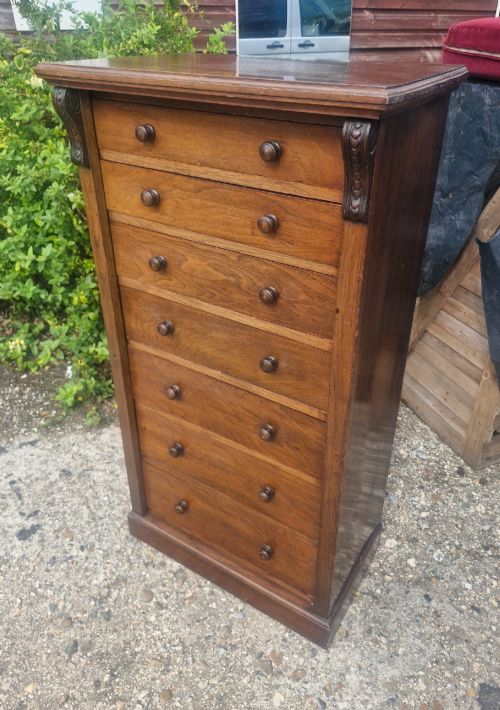
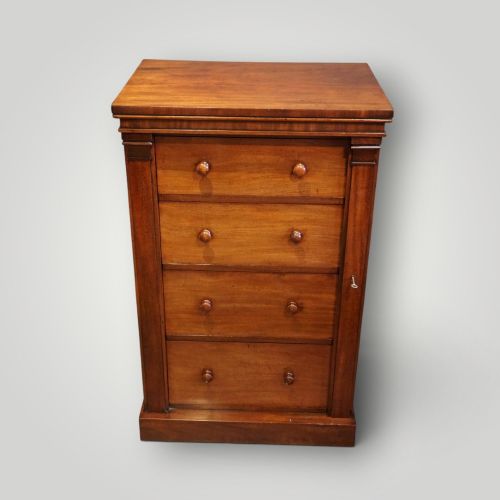
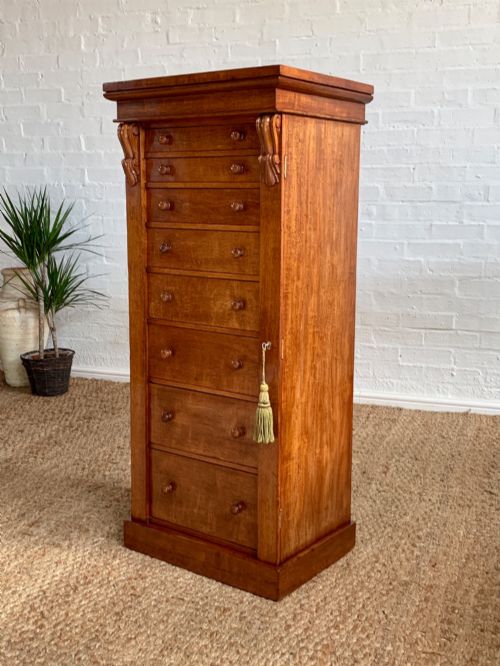
Makers produced these chests with deep timber bodies designed to fit tight alcoves or bedside spaces. Tall Wellington chests and slim drawer banks dominate the selection, often featuring multiple stacked drawers secured by a locking side stile.
Assessing Craftsmanship
Quality rests in the selection of timber veneer, where symmetrical flame patterns and rich figuring distinguish superior examples from plain boards. Crisp execution of inlaid stringing, sound drawer runners, and original turned wooden knobs or brass handles signal high workshop standards.
Structural integrity depends on tight joints and unaltered drawer depths. Pieces retaining their original locks, keys, and smooth sliding mechanisms command greater regard from collectors than heavily adapted or later altered carcases.
Narrow Mahogany Chest Drawers Retail Price Guide 2026
Typical asking prices for narrow mahogany chest drawers among the pieces listed under this phrase on Sellingantiques today, from the lower quarter to the upper quarter. They describe what is for sale here now, not the wider market.
Listings feature compact bedside chests, tallboys, and locking Wellington chests spanning the Georgian, Victorian, and Edwardian periods in solid mahogany and veneer.
Warings Liverpool·Maple and Co
The Narrow Mahogany Chest Drawers Glossary
- Wellington chest
- A tall, narrow Victorian chest featuring six or seven drawers secured by a hinged locking side bar. This locking stile typically fastens with a key to secure all drawers simultaneously.
- Flame mahogany veneer
- A decorative wood slicing displaying a distinctive torch-like or flammiform grain pattern. Cabinetmakers laid these thin sheets over stable carcase woods.
- Semainier
- A tall, slender French chest of drawers traditionally designed to hold seven daily changes of linen. The form translates closely to the English tall narrow chest.
- Bowfront
- A curved cabinet front that swells outward in a convex arc. This shape requires skilled joinery to bend wood and veneer to a uniform radius.
- Tallboy
- A tall chest of drawers constructed in two stacked sections, raising storage capacity on a compact footprint. Georgian and Edwardian examples frequently combine slender proportions with multiple graduated drawers.
Narrow Mahogany Chest Drawers: Frequently Asked Questions
What is a Wellington chest?
A Wellington chest is a tall, narrow drawer unit featuring a hinged locking flap down one side. This locking bar secures the entire stack of drawers with a single key.
Cabinetmakers designed these pieces during the nineteenth century to store documents or small garments securely in limited spaces.
How do I date a narrow mahogany chest?
Dating relies on examining construction methods, timber choice, and hardware styles across the Georgian, Victorian, and Edwardian eras. Hand-cut dovetails and wax finishes point to earlier workshop methods, while later pieces often incorporate machine tooling.
Secondary woods inside the drawers and the presence of maker stamps or specific lock signatures help narrow the manufacturing window.
Where should I place a narrow chest?
These slender units suit tight spaces, alcoves, hallways, and bedside positions where standard furniture proves too bulky. Their vertical orientation delivers substantial drawer storage without dominating floor area.
Pairs of bedside chests frequently flank a bed to balance proportions in a principal bedroom.
What is flame mahogany?
Flame mahogany is a highly figured wood veneer cut from the branch forks of the tree. The resulting grain yields dramatic, flickering patterns resembling tongues of flame.
Cabinetmakers reserved this prized material for the primary drawer fronts of high-status furniture.