

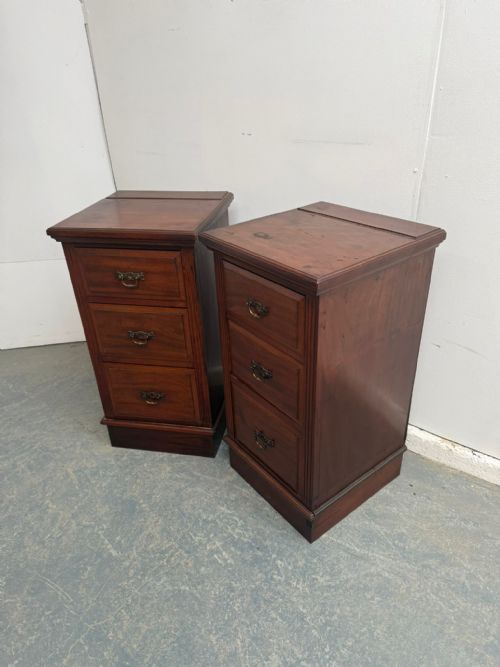
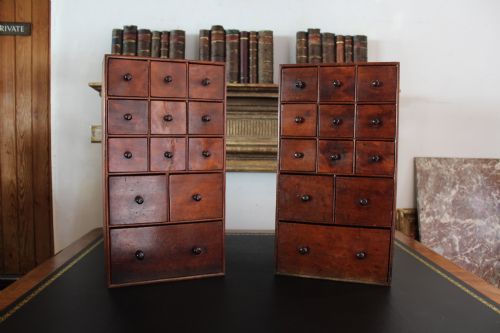
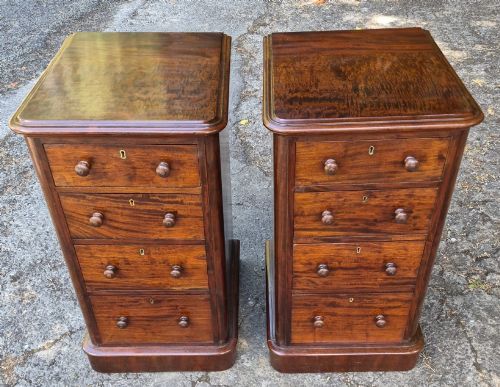
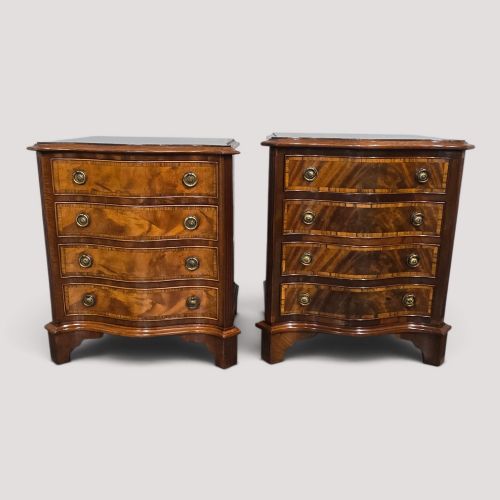
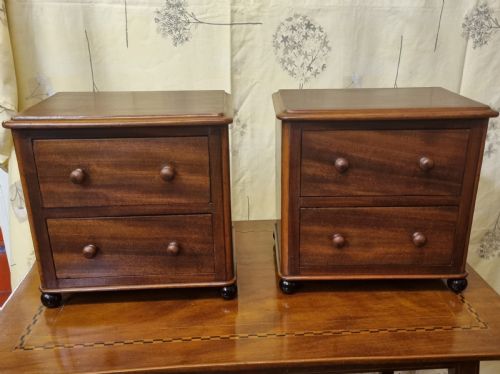
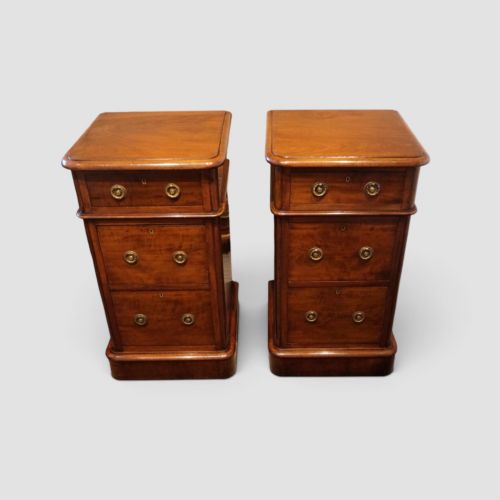
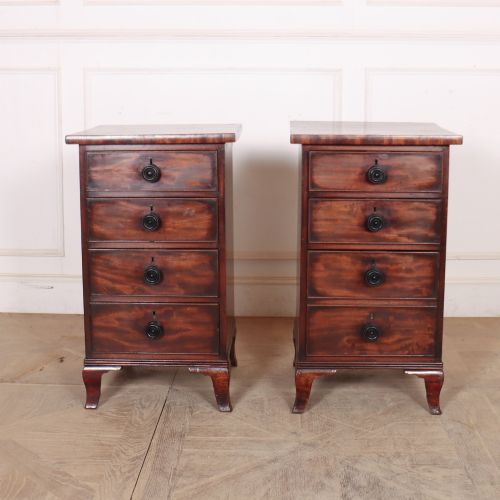
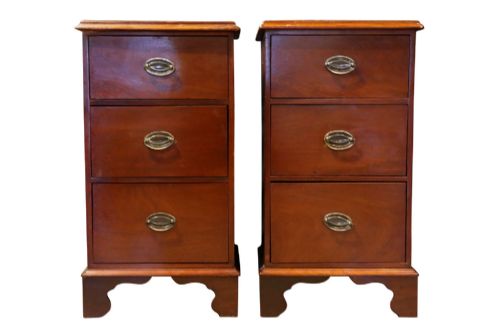
Pair Small Chests Drawers
These pair small chests drawers pieces are matched sets of compact storage designed for bedside or tabletop use, offering symmetry and period charm.
Pair Small Chests Drawers
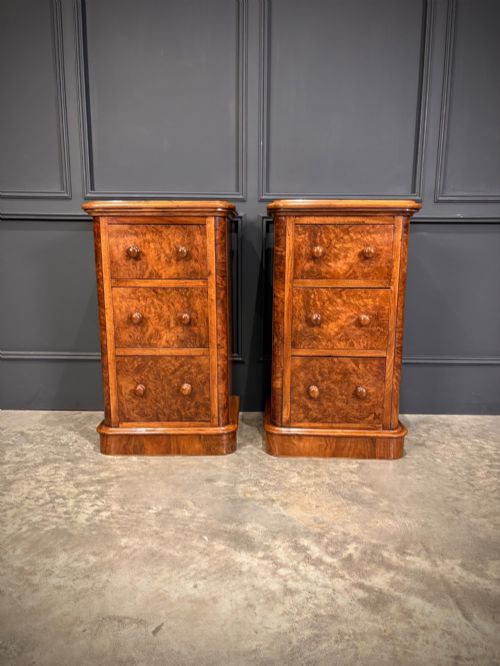
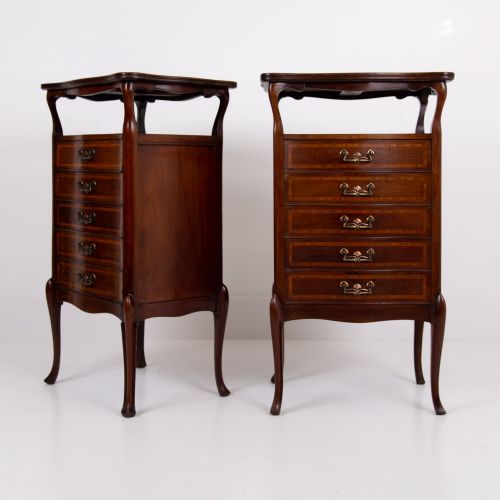
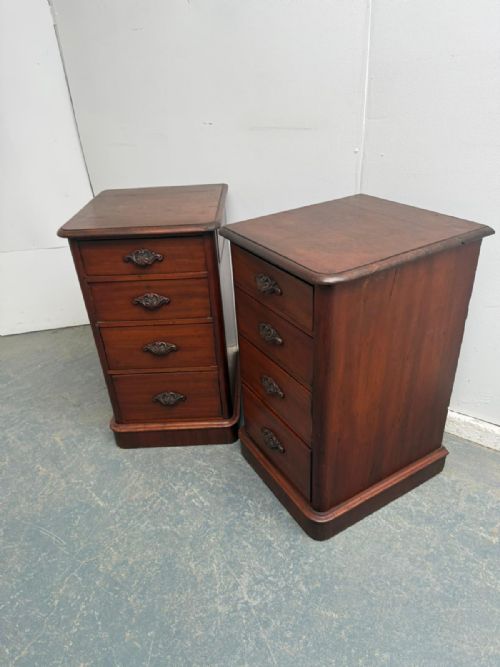
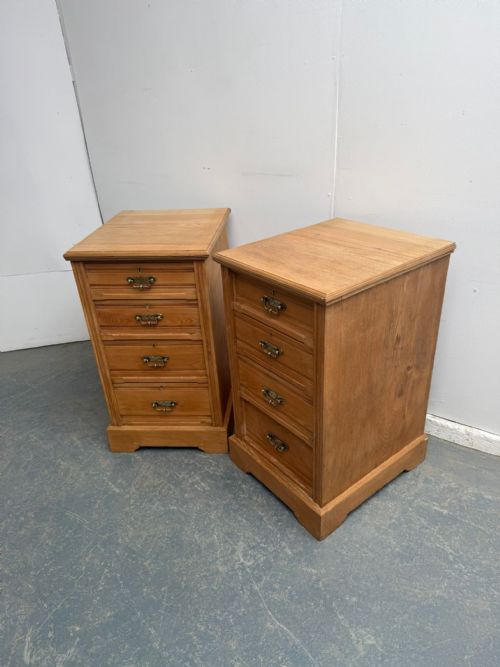
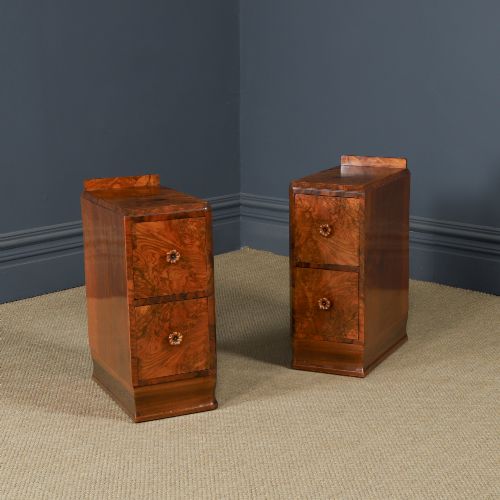
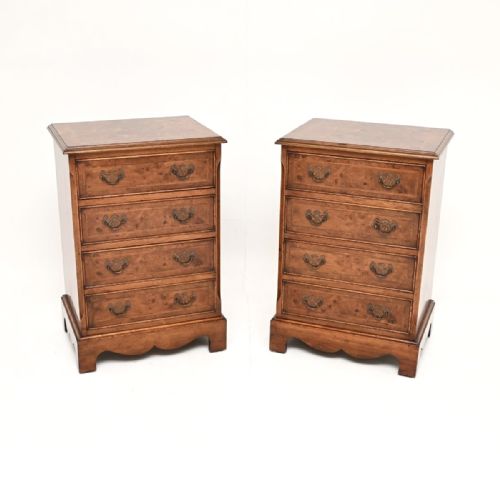
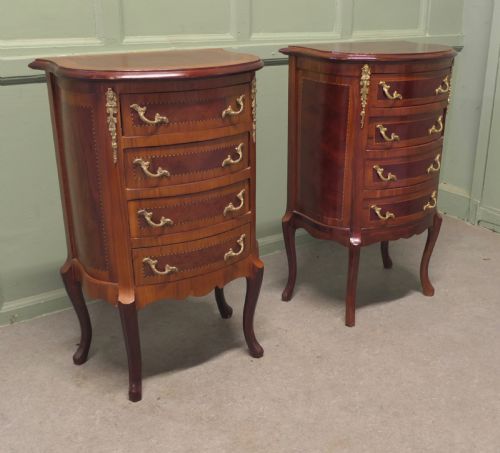
When searching for pair small chests drawers, buyers encounter matched sets of compact case furniture primarily configured as bedside tables, cabinets, and nightstands. The selection spans the Victorian, Edwardian, and Art Deco periods, alongside Georgian style revivals and Arts and Crafts examples.
The dominant forms are small bedside chests and nightstands holding two, three, or four drawers, though tabletop chests, collectors cabinets, and apothecary chests also appear. Mahogany and burr walnut are the most prevalent timbers, accompanied by walnut, pine, ash, and painted finishes.
How They Were Made
Cabinetmakers constructed these pieces using solid timbers and decorative veneers such as burr walnut and mahogany, frequently incorporating satinwood inlay or brass handles and mounts. Surfaces often received waxed or painted finishes, while specialised examples utilise lacquer or faux marble tops.
Joinery techniques follow traditional cabinetmaking methods of the nineteenth and early twentieth centuries, with drawer boxes typically assembled using dovetail joints to withstand daily use.
Pair Small Chests Drawers Retail Price Guide 2026
Typical asking prices for pair small chests drawers among the pieces listed under this phrase on Sellingantiques today, from the lower quarter to the upper quarter. They describe what is for sale here now, not the wider market.
Homeopathic and apothecary cabinets hide tiny rows of drawers once destined for powders and pills, now perfect for modern trinkets.
What Varies in Quality
Quality rests in the selection of timbers, where richly figured burr walnut veneers or dense mahogany elevate a piece above standard pine or plain woods. The crispness of inlaid details and the weight of brass hardware also signal higher production standards.
Proportion and symmetry dictate desirability, particularly in matched pairs where surviving together determines visual harmony. Alterations or adaptations, such as chests lowered in height or modified during later decades, shift the standing of an item within the range.
The Pair Small Chests Drawers Glossary
- Burr walnut
- A figured timber taken from the burl growth of a walnut tree, prized for its swirling, highly decorative grain patterns. It frequently covers the primary drawer fronts of Victorian and Edwardian cabinets.
- Serpentine
- A curved shape that undulates outward in the centre and inward at the sides, often seen on the front edges of tabletops and chests. This contour requires skilled woodworking.
- Nightstand
- A small low bedside cabinet or chest designed to hold a lamp and small personal items. They appear in matching pairs across various revival and modern styles.
- Dovetail
- A joint formed by interlocking wedge-shaped fingers, used primarily at the corners of drawer boxes for structural strength. It is a hallmark of traditional cabinet construction.
- Apothecary chest
- A small multi-drawer chest historically used for storing medicines, herbs, or homeopathic remedies. These pieces typically feature numerous small drawers.
Pair Small Chests Drawers: Frequently Asked Questions
Where do people place these small chests?
Buyers commonly set these matched chests beside a bed to function as nightstands or bedside tables. Their compact dimensions suit smaller bedrooms where floor space is limited.
They also serve in living spaces or hallways as tabletop chests, lamp tables, or small accent cabinets for storage.
Are matching pairs difficult to find?
Finding an original matching pair of small chests is less common than finding single items because furniture from the nineteenth and early twentieth centuries often gets separated over generations.
Most surviving sets originate from bedrooms where twin beds utilised identical bedside cabinets.
How do I identify Victorian pieces?
Victorian chests generally display denser timbers such as mahogany and burr walnut, often paired with hand-cut dovetails on the drawer interiors. Brass hardware and traditional waxed surfaces are typical of this era.
Stylistic cues include turned feet, panelled sides, and proportions designed for nineteenth-century domestic interiors.
What is the difference between styles?
Georgian style and revival pieces emphasise classical symmetry and mahogany veneers, whereas Arts and Crafts examples often feature simpler lines in ash or oak. Art Deco pieces introduce geometric forms and walnut veneers from the interwar period.
Painted and lacquered finishes point toward decorative Edwardian or 1920s work.