



Blue Painted Chest Drawers
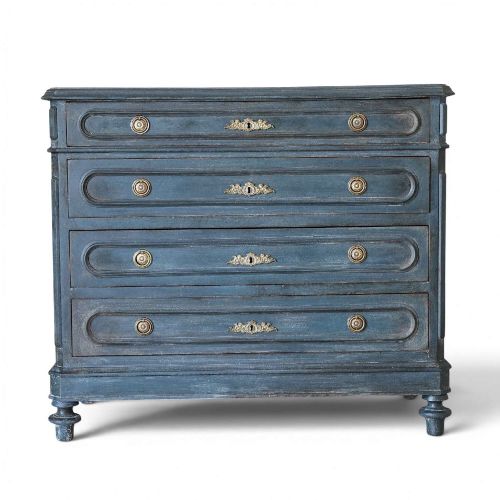
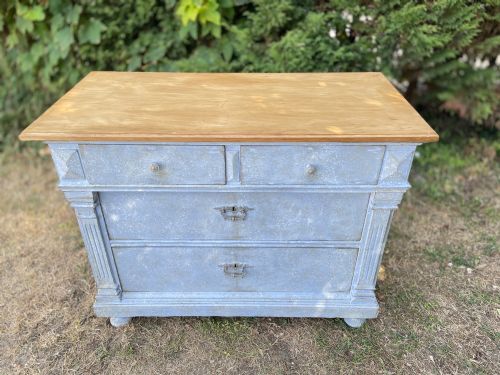
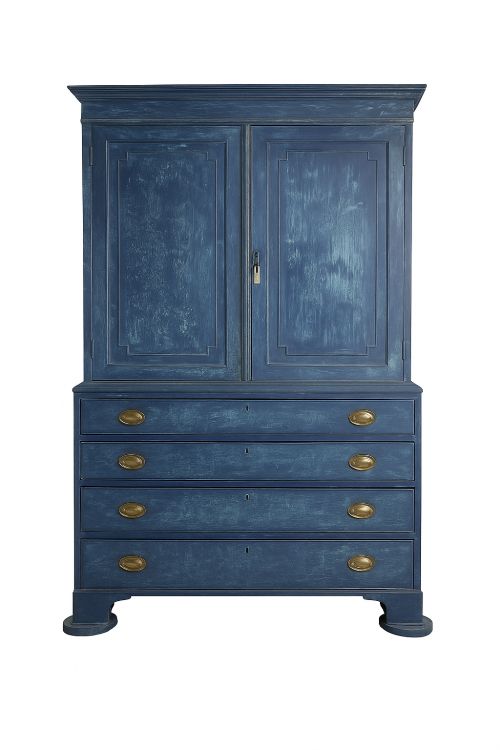
These blue painted chest drawers bring rustic charm and practical storage together, offering versatile painted timber pieces for any interior.
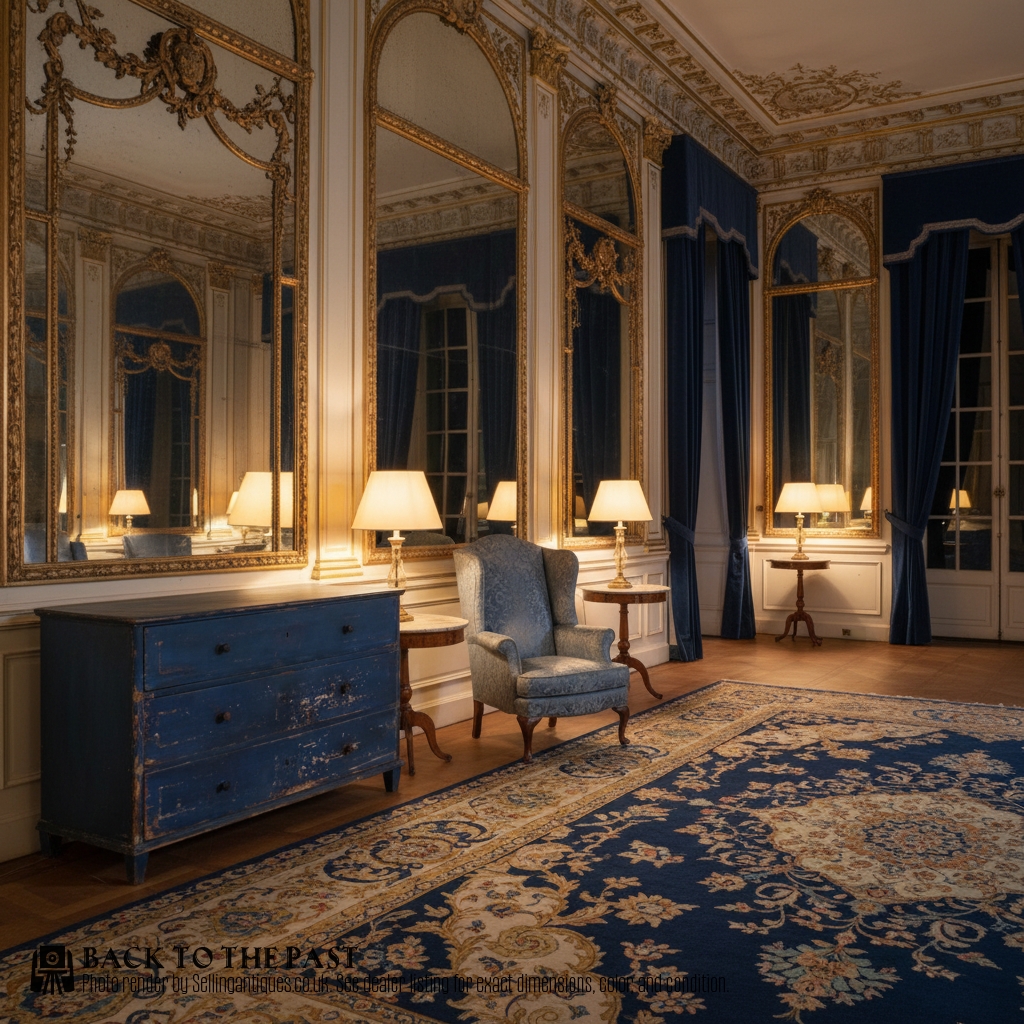
Identifying your blue painted chest drawers
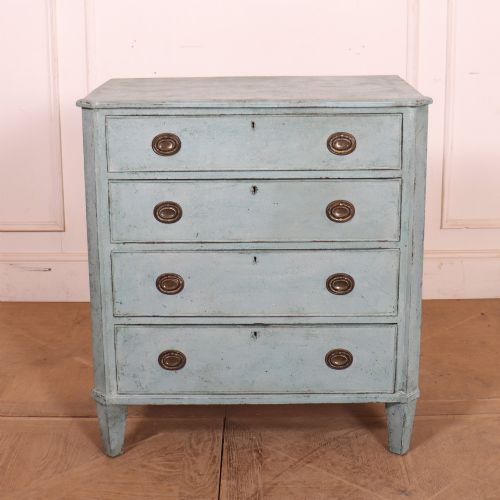
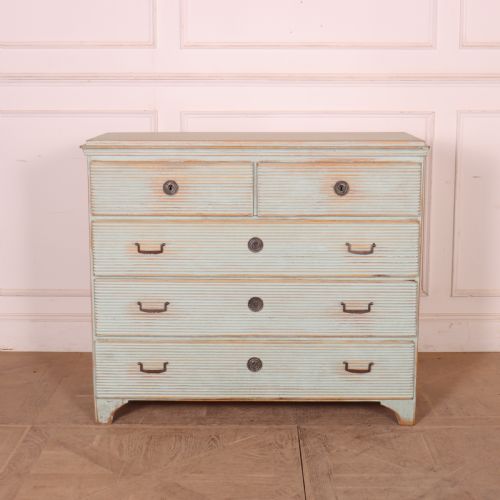
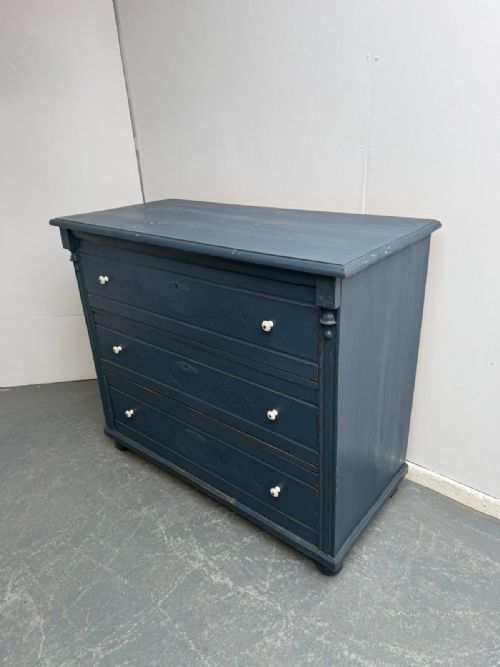
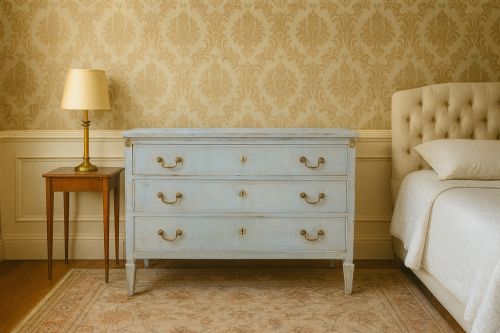
A blue painted chest drawers search brings up utilitarian storage furniture spanning several centuries, ranging from compact bedside commodes to large multi-drawer pieces. You will frequently encounter nineteenth-century pine examples alongside Georgian and Victorian items, often featuring painted finishes applied either originally or at a later date.
The selection encompasses diverse regional styles, including English country pieces, French commodes, and Scandinavian Gustavian or Baroque designs. Many of these items incorporate timber frameworks constructed from pine, softwood, or oak.
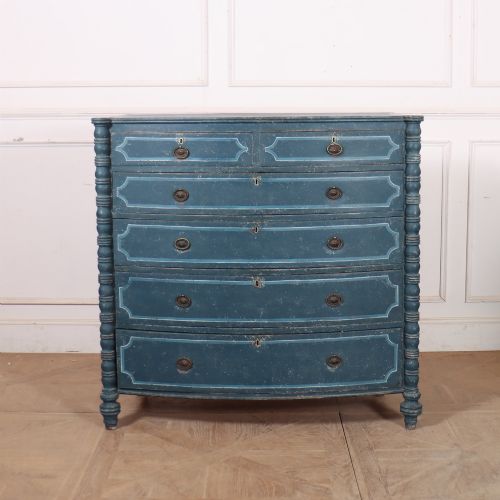
Forms vary from standard bowfront and rectangular drawer configurations to pairs of commodes with faux marble or stone tops. This variety allows the furniture to serve practical storage functions while delivering distinct decorative character.
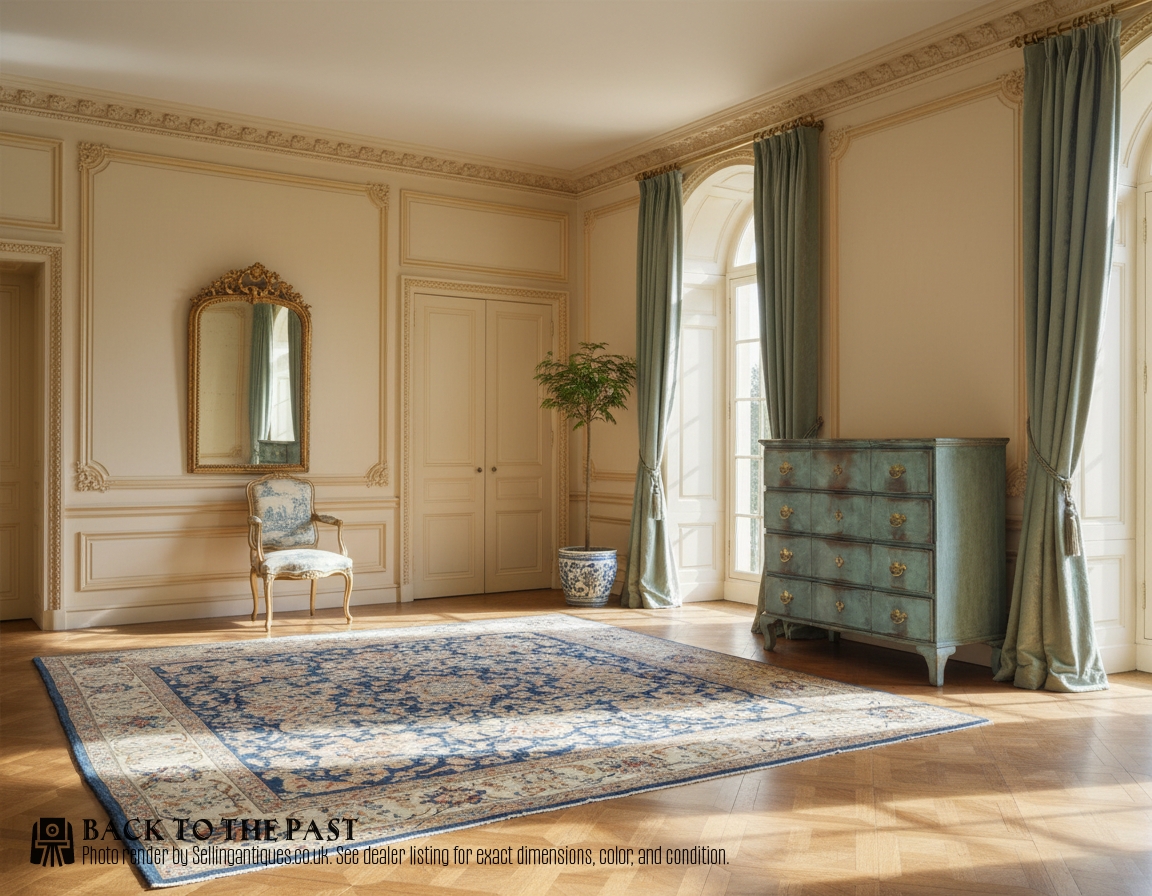
Materials and construction methods
Makers built these chests primarily using solid pine, softwood, or oak timbers, assembling carcasses with traditional joinery methods suited to utilitarian furniture. Brass hardware frequently appears on drawer pulls and key escutcheons, adding metallic contrast to the timber frames.
Surface treatments rely on applied paint finishes, ranging from original decorative schemes to later layered applications in various blue tones. Some examples incorporate specialist finishes such as faux marble tops or detailed geometric and linear painted motifs.
Retail Price Guide 2026
Typical UK retail prices for blue painted chest drawers, calculated from the Sellingantiques database of over a million retail prices indexed since 2003. This retail price guide relies exclusively on Sellingantiques data; no external sources or auction records are used, so the figures do not describe the wider market.
Several chests sport finishes with names like icy mottled blue, proving ancestors enjoyed a bold paint day just as much as we do.
Judging the quality of painted chests
Quality rests in the integrity of the timber carcass and the proportional balance of the drawer arrangement, such as traditional two-over-three configurations. Solid drawer construction and smooth operation distinguish superior cabinetwork from simpler utility pieces.
The character of the paint surface also separates examples, with intact original decoration holding distinct interest compared to later surface treatments. Finer items feature sophisticated colour application, balanced distressing, and integrated stone or marble elements.
The Blue Painted Chest Drawers Glossary
- Commode
- A low chest of drawers or cabinet, often originating from French or continental traditions. These pieces frequently feature decorative painted finishes and marble tops.
- Bowfront
- A curved front profile on a chest of drawers where the central portion projects outward. This cabinetmaking technique softens the rectangular silhouette of the furniture.
- Gustavian
- A Swedish neoclassical design style characterised by restrained classical ornamentation and pale painted finishes. It developed during the late eighteenth century under Gustav III.
- Faux marble
- A decorative painting technique designed to imitate the appearance of genuine stone or marble. Makers applied this finish to wooden tabletops for enhanced visual impact.
- Softwood
- Timber derived from conifer trees, such as pine, which makers frequently utilised for carcases and secondary drawer woods. It provides a lighter alternative to hardwoods like oak.
Frequently Asked Questions
How do I care for painted wood surfaces?
Maintain the painted finish by dusting regularly with a soft, dry cloth and avoiding harsh chemical cleaners that can degrade the paint layer.
Keep the chest away from direct sunlight and excessive humidity to prevent the underlying timber from warping or the paint from cracking.
Are these chests suitable for modern bedrooms?
Their versatile storage capacity makes them practical for organising clothing and linens in contemporary bedrooms.
The range of blue tones and regional styles allows the pieces to function as characterful focal points in modern interiors.
What is the difference between original and later paint?
Original paint finishes were applied when the furniture was first made, retaining historical integrity and period-correct pigments.
Later painted finishes represent subsequent decorative updates, often utilising distressed techniques to achieve a weathered aesthetic.
How can I distinguish French commodes from English chests?
French commodes frequently exhibit serpentine or bombé outlines, often accompanied by marble tops and continental hardware styles.
English chests tend toward more rectilinear forms, including bowfront and standard rectangular configurations executed in pine or oak.