

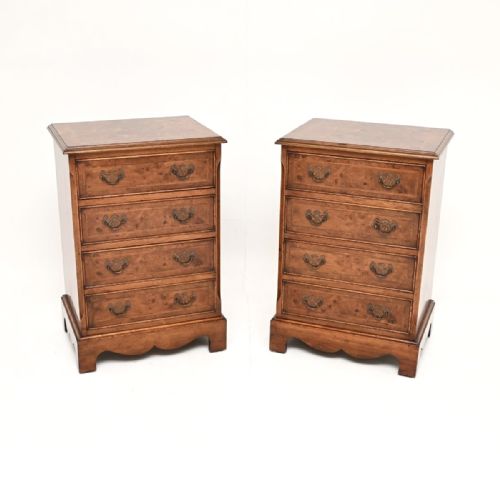


Four Drawer Bedside Chests
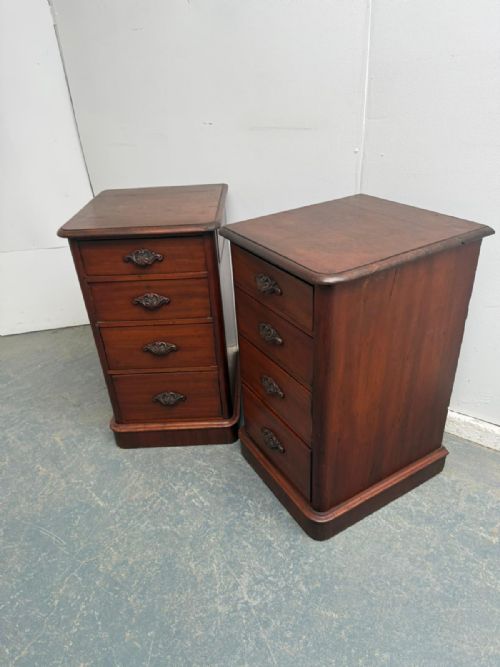
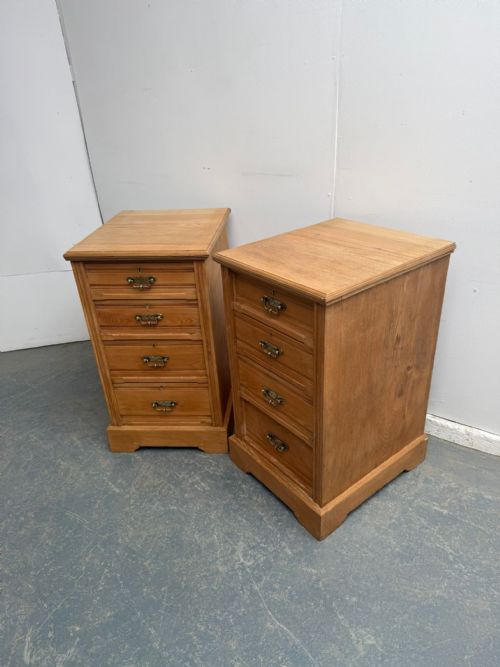
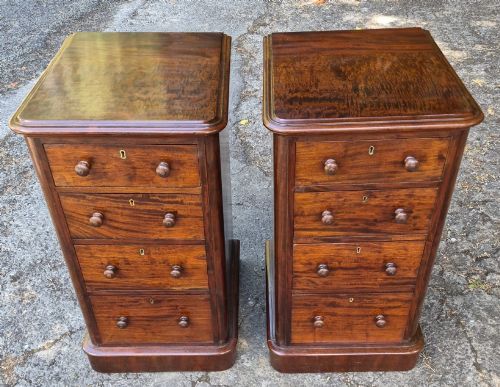
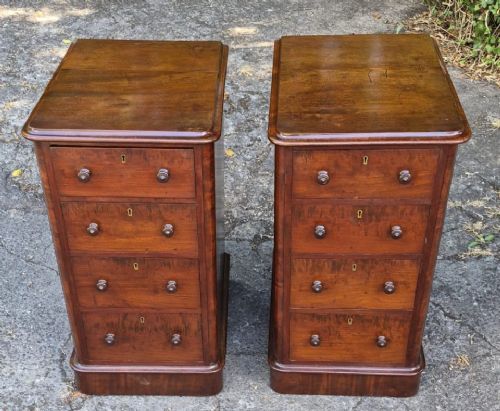
Four drawer bedside chests offer compact storage beside the bed, combining generous vertical capacity with a small footprint for practical bedroom use.
Four Drawer Bedside Chests
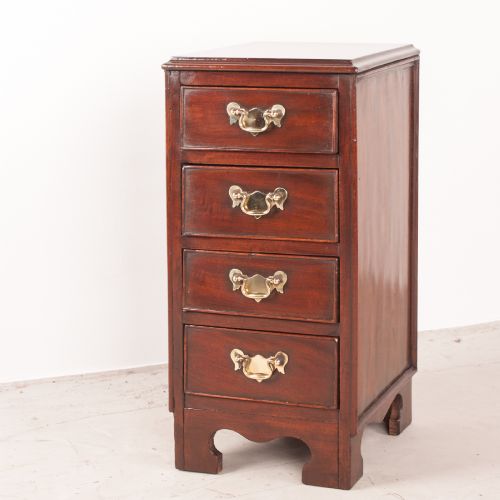
Four drawer bedside chests provide practical bedside storage by stacking four horizontal compartments within a narrow, upright frame. Buyers searching for four drawer bedside chests will find pieces originating from the Georgian, Victorian, and Edwardian eras, alongside later twentieth-century examples.
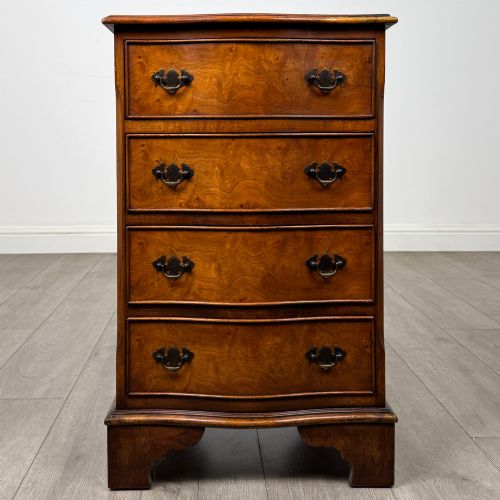
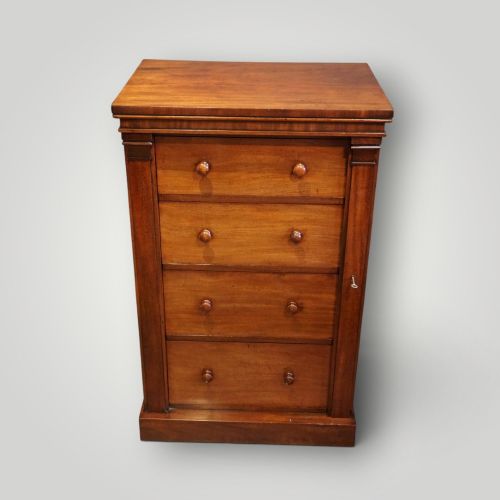
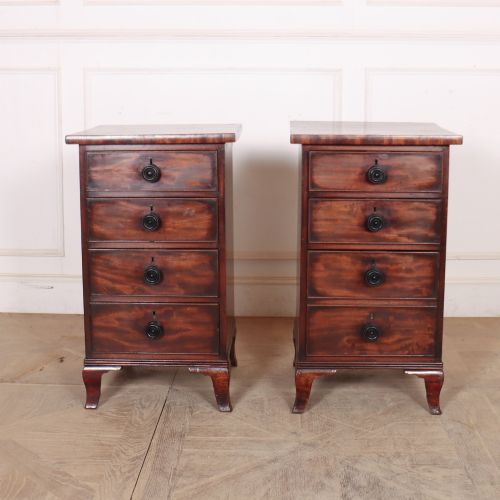
The selection includes matching pairs and single cabinets configured as tall chests, Wellington chests, and bedside lockers. Mahogany and burr walnut dominate the forms, offering traditional timber surfaces suited to domestic interiors.
Materials and Construction
Cabinet makers utilised solid timbers alongside flame mahogany and burr walnut veneers applied to carcases. Drawer construction typically incorporates dovetailed joints, while secondary woods support internal divisions.
Metal hardware such as brass handles and pulls complete the functional design of the drawers and doors. Waxed finishes protect the timber surfaces while maintaining a traditional lustre.
The listings feature mahogany, burr walnut, ash, teak, and rosewood across Georgian, Victorian, and Edwardian periods.
Assessing Quality and Execution
Quality separates through the selection of timber figures, where matched burr walnut or flame mahogany veneers demonstrate superior cabinet work. The crispness of internal drawer dovetails and the smooth operation of sliding elements indicate the maker's original skill.
Proportions also distinguish finer pieces, particularly narrow or serpentine forms that require precise joinery. Original brass hardware and intact timber patination elevate the standing of a cabinet within its period.
James Shoolbred
The Four Drawer Bedside Chests Glossary
- Burr walnut
- A figured wood veneer harvested from walnut tree growths, prized for its swirling grain patterns. It decorates the exterior surfaces of many Victorian and Edwardian chests.
- Flame mahogany
- A veneer cut from the fork of a mahogany tree to produce a flickering, flame-like pattern. This material frequently fronts the drawers of Georgian and nineteenth-century pieces.
- Wellington chest
- A tall, narrow chest of drawers secured by a hinged vertical locking bar on one side. This form appears among Victorian examples.
- Brushing slide
- A pull-out wooden shelf integrated above the top drawer to serve as a temporary surface. These are found on select eighteenth and nineteenth-century chests.
- Serpentine
- A curved cabinet front featuring a convex centre flanked by concave ends. This contour requires advanced woodworking skill.
Four Drawer Bedside Chests: Frequently Asked Questions
Are these chests suitable for modern beds?
Most antique four drawer bedside chests stand taller than contemporary bedside tables due to their four-tier design. Buyers should measure mattress height to ensure comfortable access to the top surface.
Despite the elevated height, their narrow footprints allow them to fit into compact bedroom layouts where floor space is limited.
How do I identify a Victorian chest?
Victorian four drawer bedside chests often display dense mahogany or burr walnut timbers, deep drawer capacities, and traditional brass handles. Construction details such as hand-cut dovetails help confirm the nineteenth-century origin.
Later Victorian pieces from the eighteen-eighties frequently adopt the label of bedside lockers, reflecting changing domestic terminology.
What is the difference between a cabinet and a chest?
Bedside chests rely entirely on horizontal drawers stacked vertically within the frame. Cabinets may combine drawers with enclosed cupboard storage behind hinged doors.
Both forms provide the enclosed storage necessary to keep bedside items out of sight.
How should I care for wax-finished timber?
Waxed mahogany and walnut surfaces require occasional treatment with traditional beeswax to nourish the timber and prevent drying. Regular dusting with a soft, dry cloth preserves the natural lustre.
Avoid placing these chests in direct sunlight or near heat sources to protect the wood and veneer from warping.