

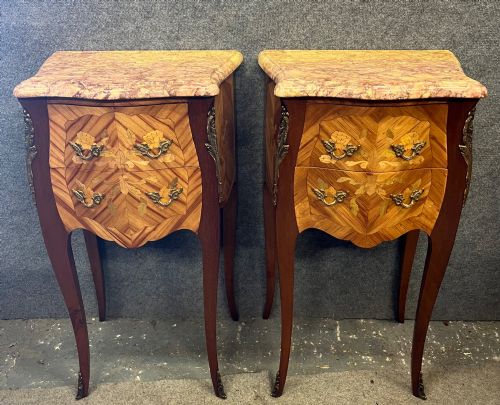

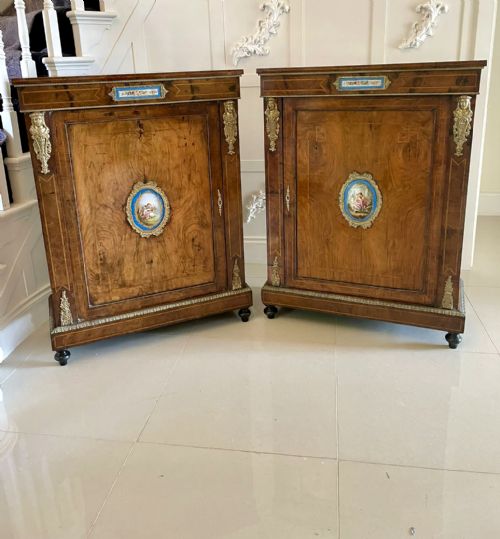
Pair Walnut Side Cabinets
Pair walnut side cabinets bring matched timber grain and practical surface space to bedroom and living spaces alike.
Pair Walnut Side Cabinets
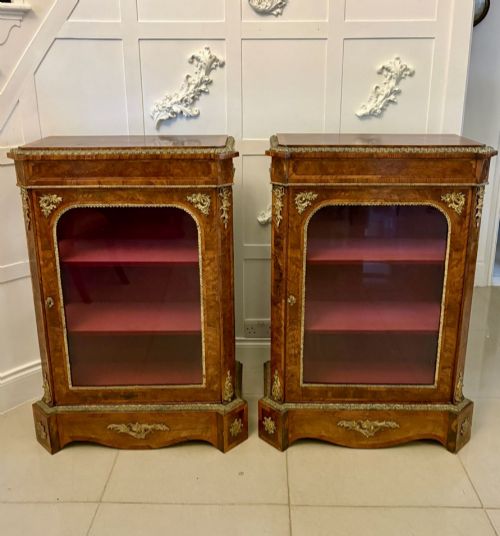
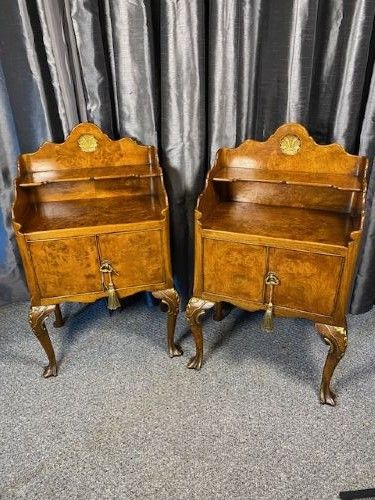
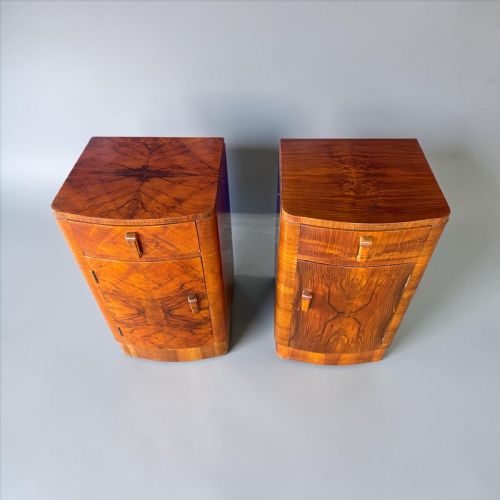
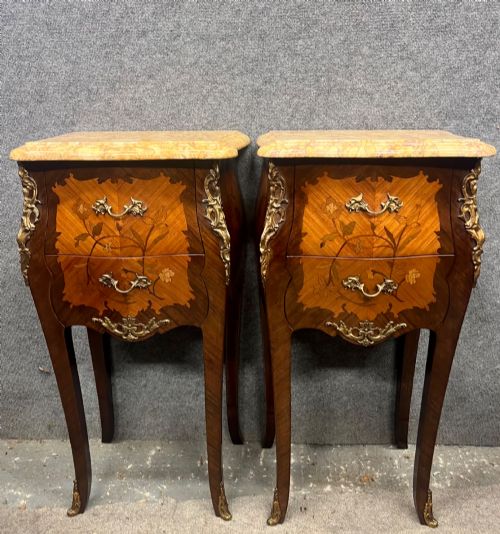
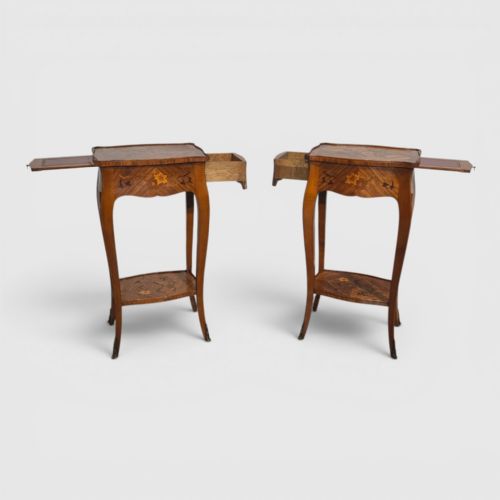
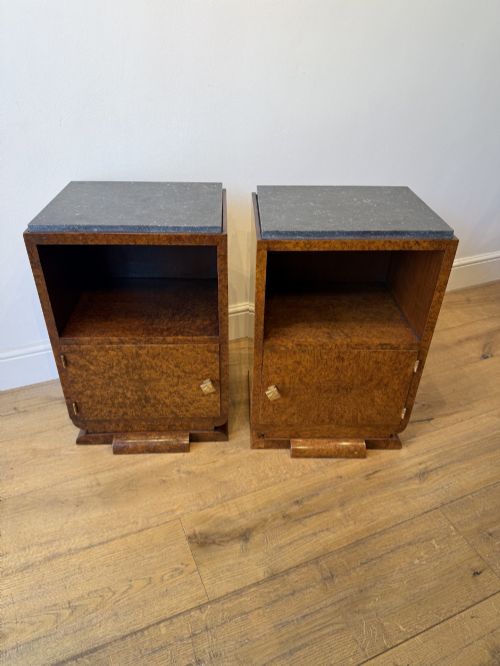
When searching for pair walnut side cabinets, buyers encounter a diverse selection of small storage furniture spanning the Victorian era through the Art Deco period. These matching units function primarily as bedside tables, lamp stands, and compact pier cabinets designed to sit neatly beside larger furnishings.
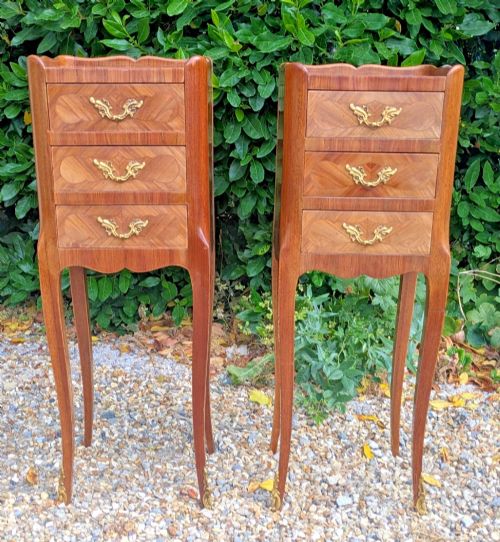
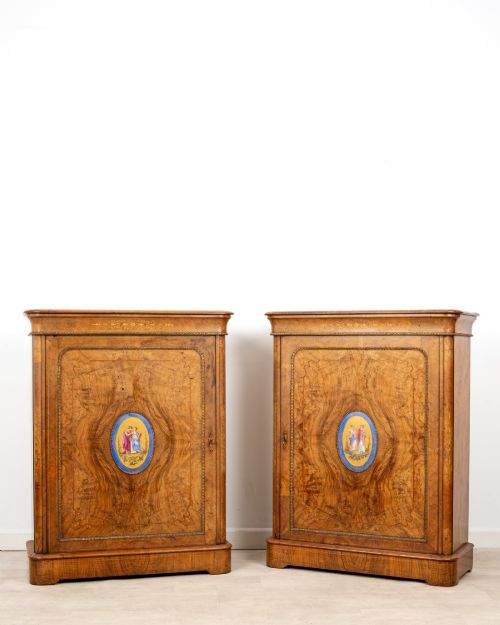
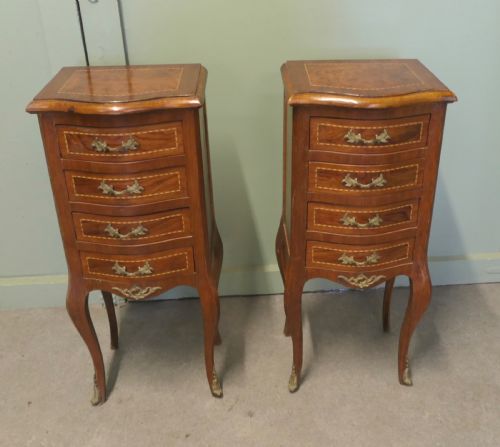
The inventory ranges from ornate mid-nineteenth century Victorian designs featuring rich burr veneers to streamlined 1930s Art Deco forms. French provincial influences and Louis XV revival styles also appear frequently alongside English and Italian interpretations.
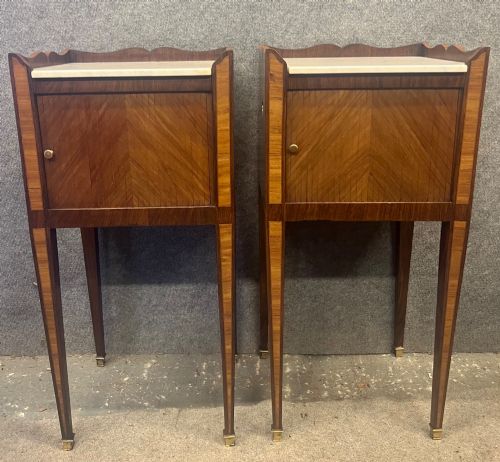
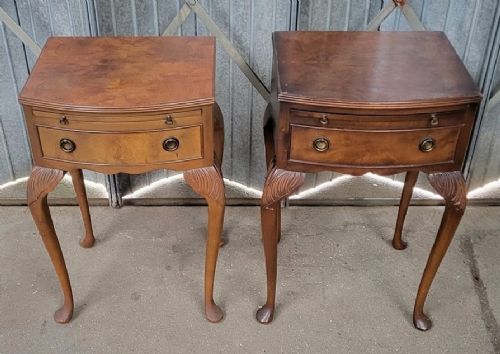
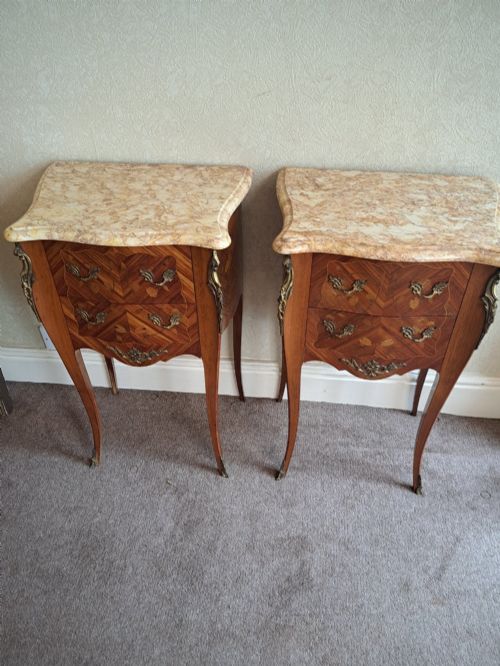
Most examples serve specific domestic roles, offering enclosed cupboard space or small drawers paired with marble or timber tops. Buyers frequently select these matched pairs to achieve symmetry in interior layouts while introducing warm wood tones.
How they were made
Cabinet makers utilised solid timber framing overlaid with decorative walnut veneers, frequently selecting burr walnut to create striking figured patterns across the surfaces. Marquetry and parquetry inlays introduce geometric or floral motifs using contrasting woods such as kingwood and satinwood.
Many iterations incorporate inset marble tops and cast brass or ormolu mounts to accent the corners and door frames. Porcelain plaques occasionally adorn the exterior panels of mid-nineteenth century examples.
Construction techniques combine traditional joinery with specialised veneer sawing, ensuring stable panels that highlight the natural grain variations inherent in walnut timber.
Listings feature walnut, brass, marble, ormolu, burr walnut, kingwood, glass, and rosewood across Victorian and Art Deco periods.
What varies in quality
The standard of timber selection heavily influences the overall appeal, with richly figured burr walnut commanding greater visual interest than plain stock. Precision in the matching of veneer patterns across both units demonstrates superior cabinet making skill.
The refinement of bronze, brass, or ormolu mounts and the intricacy of marquetry inlays separate standard production pieces from finer workshop examples. Heavy marble tops with clean bevelling and undamaged porcelain plaques also distinguish the upper tier of the range.
Maurice Adams
The Pair Walnut Side Cabinets Glossary
- Burr walnut
- A prized veneer taken from the gnarled growths of a walnut tree, yielding complex and swirling grain patterns. This material is frequently chosen for the primary facade surfaces of high-end nineteenth-century cabinets.
- Ormolu
- Gilded bronze mounts applied to the exterior angles and feet of furniture for decorative effect. Makers used these cast metal elements extensively on French revival and Victorian pieces.
- Marquetry
- The art of applying small pieces of veneer to a structure to form decorative patterns and pictures. Craftsmen utilise contrasting timbers to achieve pictorial depth.
- Pier cabinet
- A tall, narrow display or storage cabinet designed specifically to fit the wall space between windows. These pieces often feature glass doors or fine mounts.
- Parquetry
- Geometric mosaic woodwork used for repeating patterns on tabletops and cabinet doors. This technique relies on precise cutting of small wood blocks.
Pair Walnut Side Cabinets: Frequently Asked Questions
What periods do these cabinets represent?
The available selection spans from the Victorian era of the mid-nineteenth century through early twentieth-century French designs up to 1930s Art Deco creations.
Victorian pieces tend to feature heavier proportions and burr veneers, whereas 1930s items often display cleaner geometric lines and simpler veneered surfaces.
How were these cabinets originally used?
These matched pairs served primarily as bedside tables, nightstands, and small lamp tables within domestic bedchambers and sitting rooms.
The enclosed cupboards and drawers provided discreet storage for personal items while the upper surfaces held lighting and evening necessities.
Are the marble tops original to the pieces?
Many French and continental examples incorporate fitted marble tops designed as an integral part of the original construction to protect the wood underneath.
Colours and thicknesses vary according to the period and region of manufacture, ranging from white slabs to darker veined varieties.
How do I care for walnut veneer?
Walnut surfaces require protection from direct sunlight and excessive moisture to prevent the underlying timber and delicate veneers from fading or lifting.
Regular dusting with a soft cloth helps maintain the natural sheen without the need for heavy chemical polishes.