


Burr Walnut Display Case
Burr walnut display cases combine rich, swirled timber veneers with glazed panels to present prized collections.
Burr Walnut Display Case
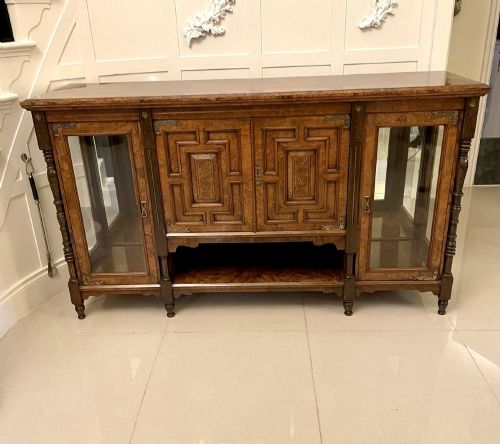
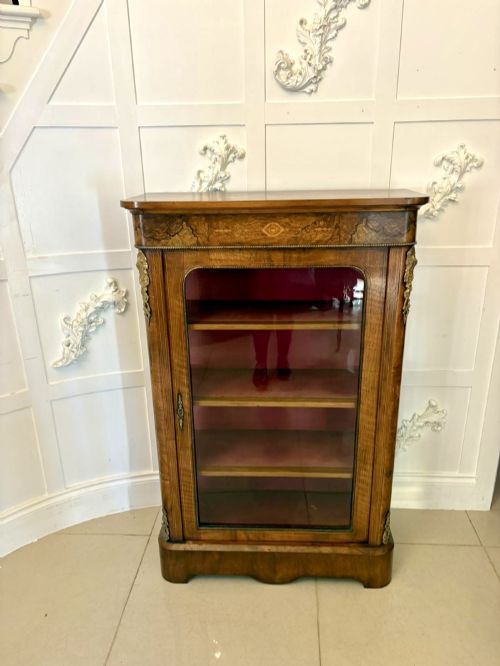
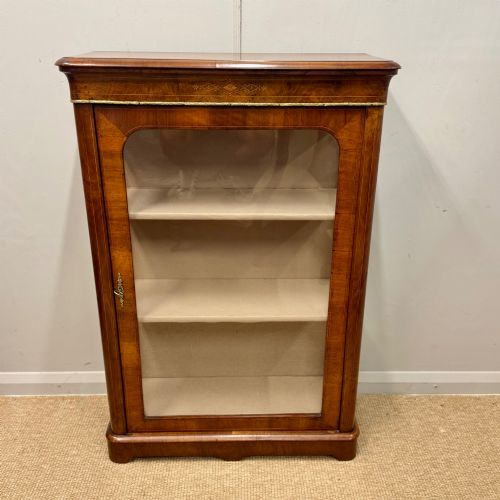
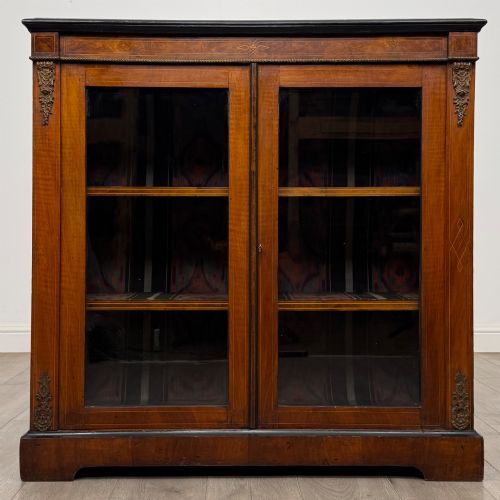
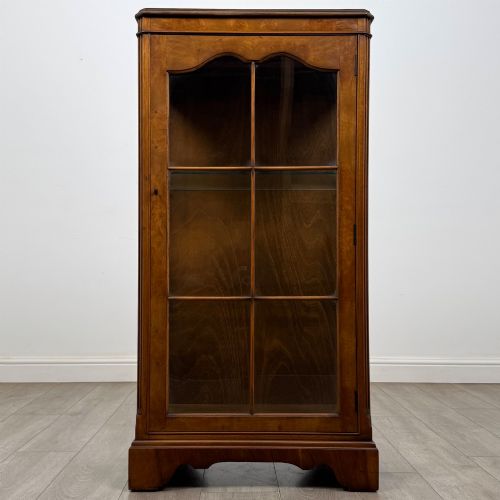
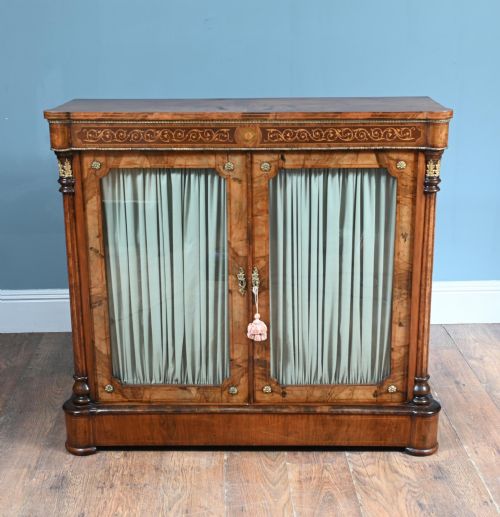
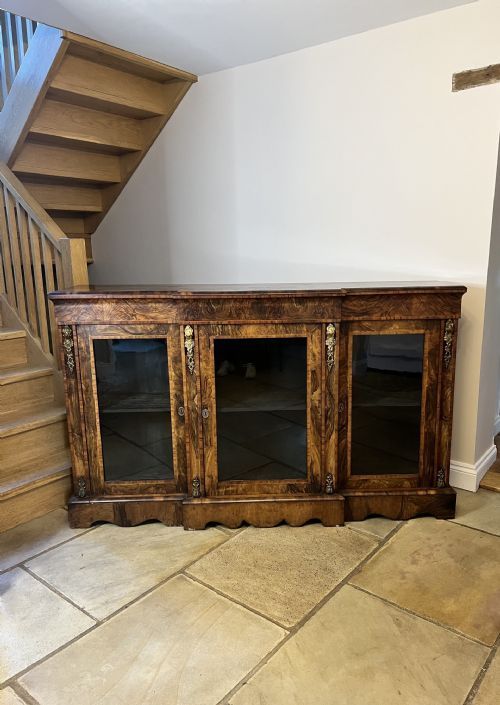
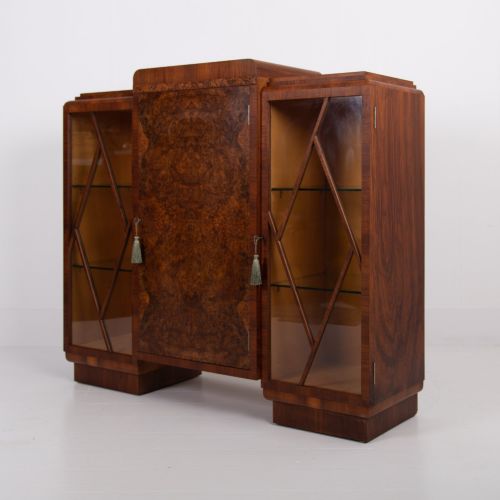
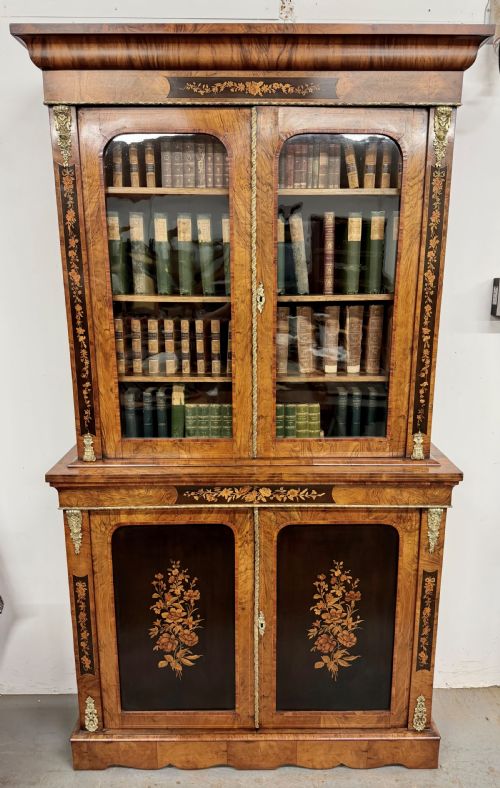
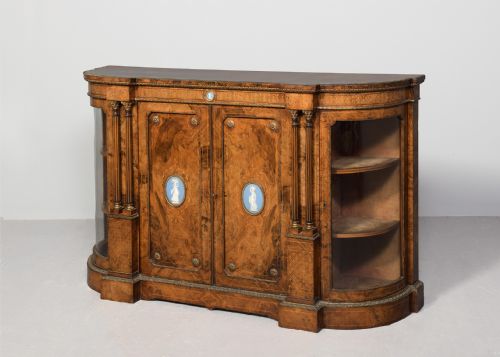
A burr walnut display case serves to protect and exhibit valued items behind glass doors. The search phrase covers a variety of forms found on this page, including pier cabinets, credenzas, breakfront bookcases, and corner cabinets.
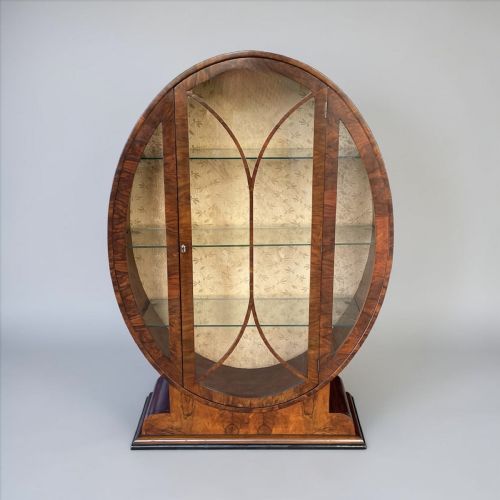
Most examples originate from the Victorian period, particularly the 1860s, alongside pieces from the Edwardian era and the 1930s Art Deco period. Victorian iterations frequently feature freestanding pier cabinets and low credenzas, while later decades introduce geometric display cabinets and bookcases.
Makers and designers working across these eras utilise distinct regional aesthetics, spanning English Victorian workshops, Dutch baroque influences, and twentieth-century streamline designs. Buyers encounter everything from tall breakfront bookcases to compact table cabinets.
Materials and construction methods
Craftsmen construct these pieces using timber frames overlaid with highly figured burr walnut veneer, celebrated for its complex knot formations and intricate grain patterns. Secondary timbers provide structural stability behind the decorative outer surfaces.
Glazing forms the primary front-facing element, paired with brass mounts, ormolu accents, and marquetry inlay. Interior shelving often sits behind glazed doors framed by ebonised wood or walnut borders, sometimes lined with velvet or fabric.
Some Victorian pier cabinets spent decades hiding sheet music before finding new life displaying porcelain.
Distinguishing quality across the range
The sophistication of the veneer matching determines the visual impact, with top-tier examples displaying symmetrical grain alignment across large unbroken expanses. Inferior pieces rely on fragmented veneer patterns or heavier applied stains.
Hardware and secondary decorative elements separate standard production from exhibition pieces. High-end items incorporate finely chased ormolu mounts, intricate marquetry inlay, and robust brass fittings rather than plain timber mouldings.
Epstein
The Burr Walnut Display Case Glossary
- Burr walnut
- A veneer sliced from the woody growths on walnut trees, yielding highly ornamental swirling patterns. It is prized for creating decorative furniture facades.
- Pier cabinet
- A slender cabinet designed to fit against the wall space between windows. These Victorian forms typically feature single glazed doors and shallow depths.
- Credenza
- A low sideboard or cabinet, frequently mounted with ormolu and enclosed by glazed side cupboards. Victorian examples often display elaborate marquetry.
- Marquetry
- Decorative patterns formed by fitting together thin pieces of wood veneer. Artisans inlay these floral or geometric motifs directly into the cabinet surface.
- Ormolu
- Gilded bronze mounts applied to furniture edges and corners. This decorative technique adds metallic contrast to dark walnut timbers.
Burr Walnut Display Case: Frequently Asked Questions
What is a burr walnut display case?
A burr walnut display case is an enclosed cabinet featuring glazed doors and decorative wood veneers derived from walnut tree growths. These pieces are built to house and exhibit collections while protecting items from dust.
They appear in various formats on this page, including tall breakfront bookcases, narrow pier cabinets, and low credenzas dating from the nineteenth and twentieth centuries.
How do I date a burr walnut display case?
Dating relies on observing structural forms, secondary timbers, and decorative vocabularies associated with specific periods. Victorian pieces from the 1860s often incorporate marquetry and ormolu mounts, whereas 1930s Art Deco examples favour clean geometric lines and minimal ornamentation.
Construction techniques, such as drawer dovetailing and the choice of interior lining fabrics, also help establish the era of manufacture.
Where were these cabinets placed in a home?
Historically, pier cabinets stood specifically against the narrow wall spaces, known as piers, located between large drawing room windows. Credenzas and breakfront bookcases occupied main reception rooms to display silver, ceramics, and bound volumes.
Corner cabinets and smaller table variants utilised otherwise neglected angles or smaller domestic spaces for storage and presentation.
How do I care for burr walnut furniture?
Maintaining burr walnut involves keeping the timber away from direct sunlight and steady humidity sources to prevent veneer lifting or fading. Regular dusting with a soft, dry cloth preserves the polished surface without the need for heavy waxes.
Interior velvet or fabric linings benefit from gentle vacuuming with a brush attachment to remove accumulated dust particles.