





Pair Painted Bedside Tables
When hunting for pair painted bedside tables, buyers discover matching companions that bring symmetry, colour, and historical character to a bedroom.
Pair Painted Bedside Tables
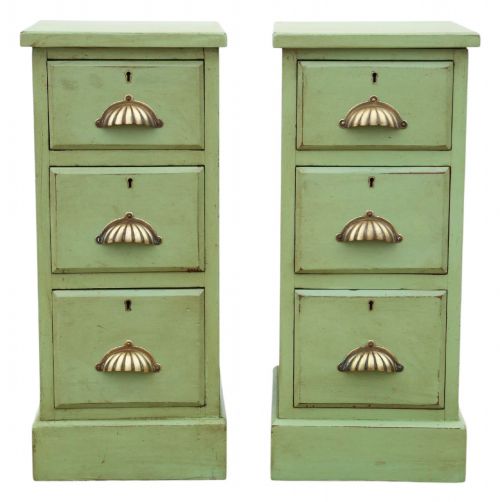
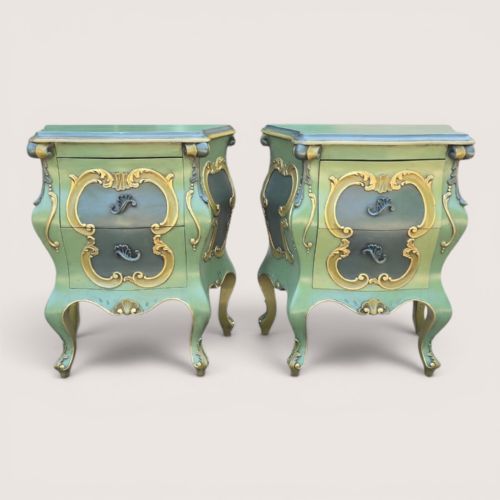
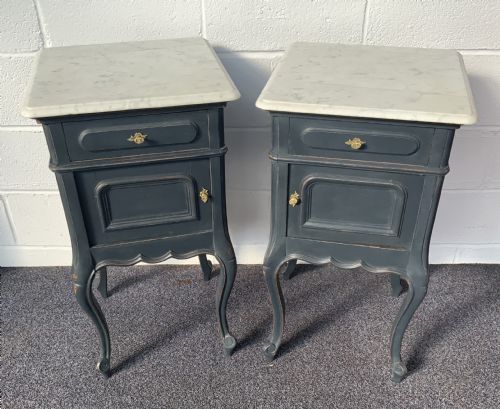
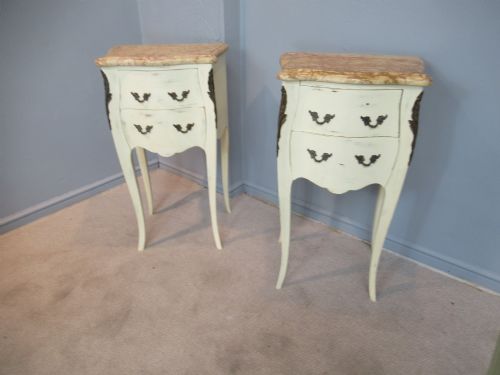
Pair painted bedside tables encompass a diverse collection of matching small furniture designed to sit beside a bed, holding lamps, books, and night-time essentials. The selection frequently includes French commodes, Swedish cupboards, and English chests dating from the nineteenth and early twentieth centuries.
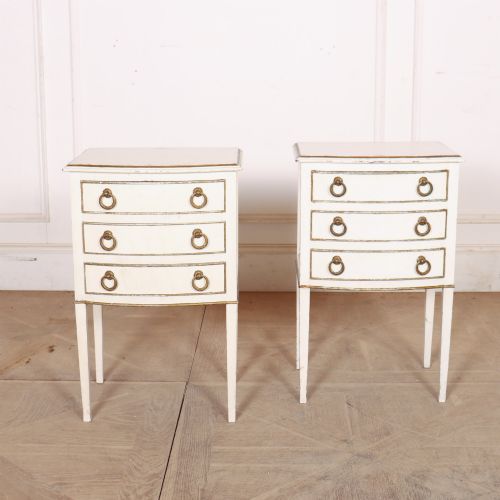
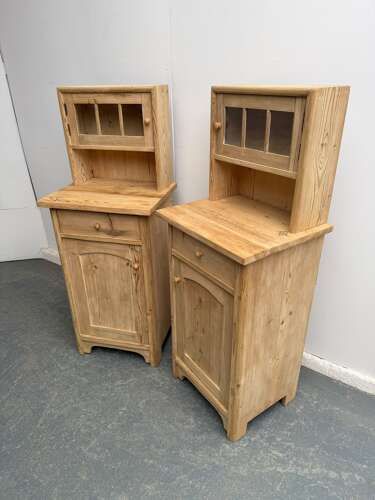
Most examples found in commerce are French or Scandinavian styles featuring applied paint finishes, ranging from simple country pine to sophisticated Chinoiserie and Louis XVI aesthetics. Forms vary from traditional bedside cabinets with cupboards to small chests of drawers and demi-lune console tables.
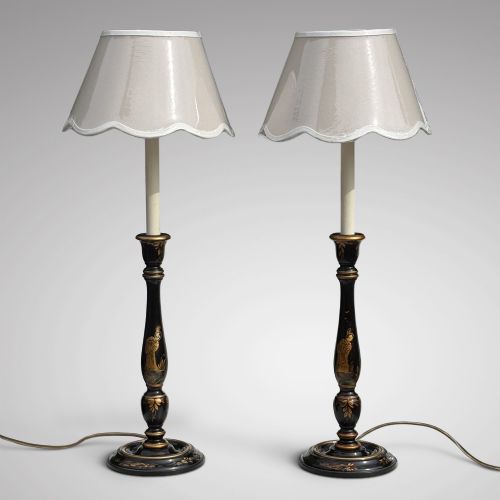
Makers and workshops from the Victorian era through the 1930s produced these matching duos to satisfy domestic demand for balanced bedroom schemes. The grouping also extends to decorative table lamps utilising painted wood, porcelain, and brass elements.
How they were made
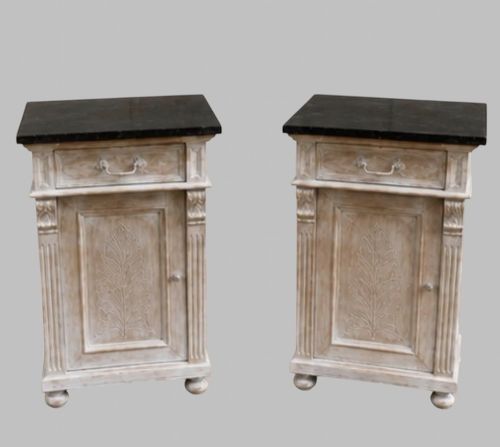
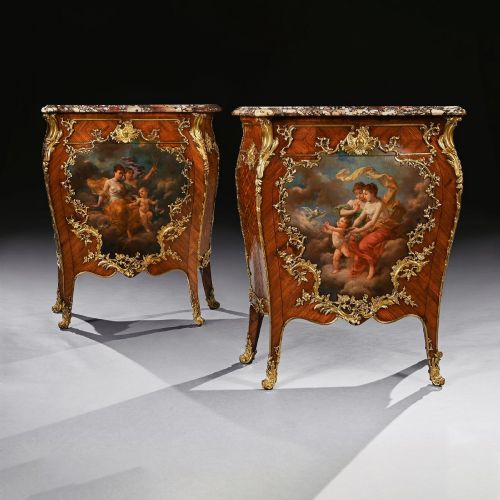
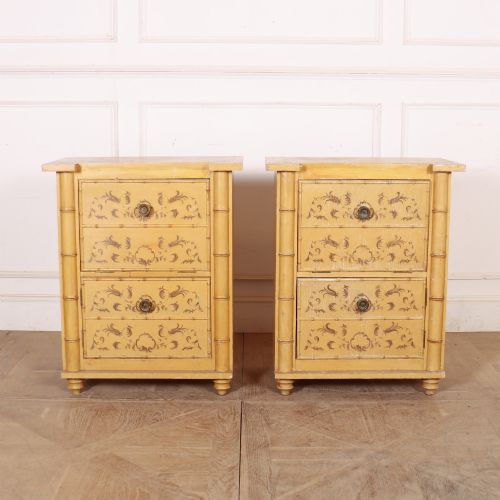
Makers utilised traditional timbers such as oak, pine, satinwood, and kingwood as the structural foundation for these painted items. Surfaces were then prepared and finished with decorative paint schemes, sometimes incorporating gilt bronze mounts, faux bamboo turnings, or marble tops.
Hand-painted details define the aesthetic across many pieces, utilising techniques seen in Gustavian, Chinoiserie, and French provincial traditions. Lacquer work, wax finishes, and glazed panels further protected and enhanced the decorative painted surfaces.
Design styles represented include Gustavian, French Chateau, Chinoiserie, and Anglo-Indian, alongside marble-topped commodes and faux bamboo cabinets.
What varies in quality
The sophistication of the painted decoration and the precision of the underlying cabinet-making separate standard examples from finer works. Superior items display meticulous hand-applied motifs, balanced proportions, and integrated luxury materials like genuine marble tops or gilt bronze mounts.
Originality of the surface finish and hardware strongly influence the standing of any pair. Pieces retaining their early or original paint schemes hold greater distinction than later, heavily restored coatings.
Heals
The Pair Painted Bedside Tables Glossary
- Commode
- A low cabinet or chest of drawers, often featuring decorative painted finishes and marble tops. French examples from the nineteenth century are particularly sought after for bedroom schemes.
- Gustavian
- A Swedish neoclassical style characterised by pale, restrained painted finishes and subtle carved details. This aesthetic emerged during the late eighteenth century and influenced Scandinavian furniture production for generations.
- Chinoiserie
- European decorative style reflecting Chinese artistic traditions, featuring hand-painted motifs on lacquered surfaces. It appears frequently on early twentieth-century lamp tables and cabinets.
- Satinwood
- A durable hardwood with a lustrous, golden-yellow sheen used extensively in fine cabinetry. Edwardian makers utilised this timber for refined bedside cupboards.
- Vernis Martin
- A simulated Japanese lacquer technique developed in eighteenth-century France and emulated later. It involves multiple layers of translucent varnish over painted decoration.
Pair Painted Bedside Tables: Frequently Asked Questions
Are these tables strictly for bedrooms?
While designed primarily for bedside use, many of these matching pieces function equally well as lamp tables or small side tables in living spaces.
Their compact proportions allow them to fit narrow hallways and drawing rooms where symmetry is desired.
What is Gustavian style?
Gustavian furniture draws inspiration from Swedish neoclassical design, favouring light grey or white painted finishes and restrained fluted columns.
These pieces bring a clean, balanced aesthetic that contrasts with more ornate continental styles.
How do I care for painted wood?
Maintain painted surfaces by dusting gently with a soft cloth and avoiding harsh chemical cleaning agents.
Keep wooden furniture away from direct heat sources and strong sunlight to protect the historic paint layers.