

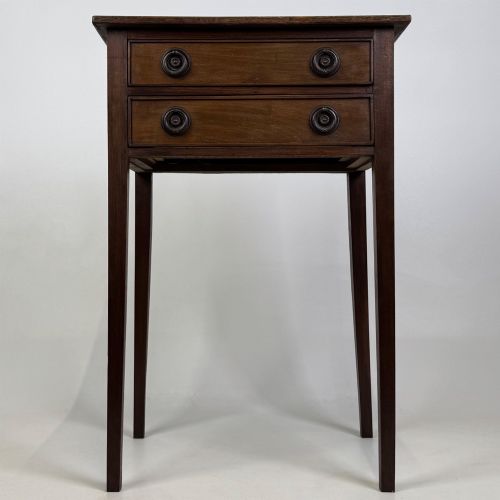
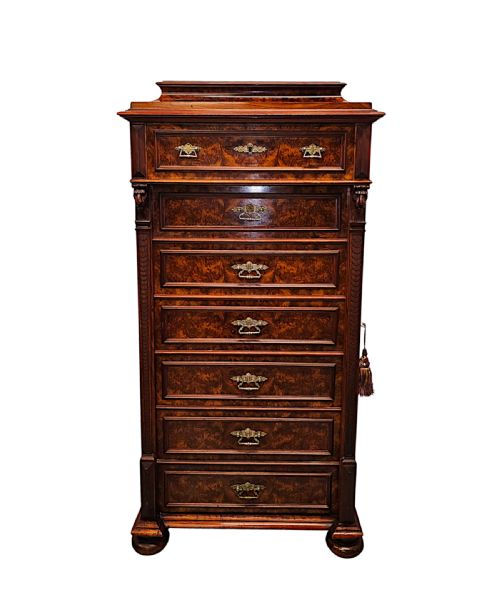
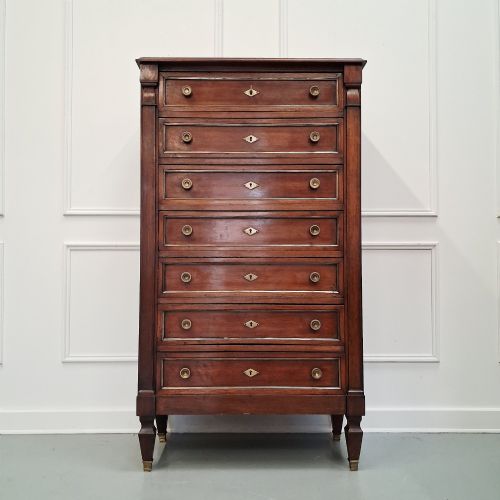
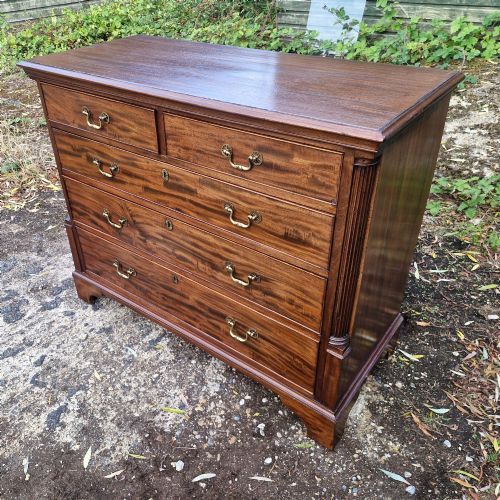
Mahogany Tall Chest Drawers
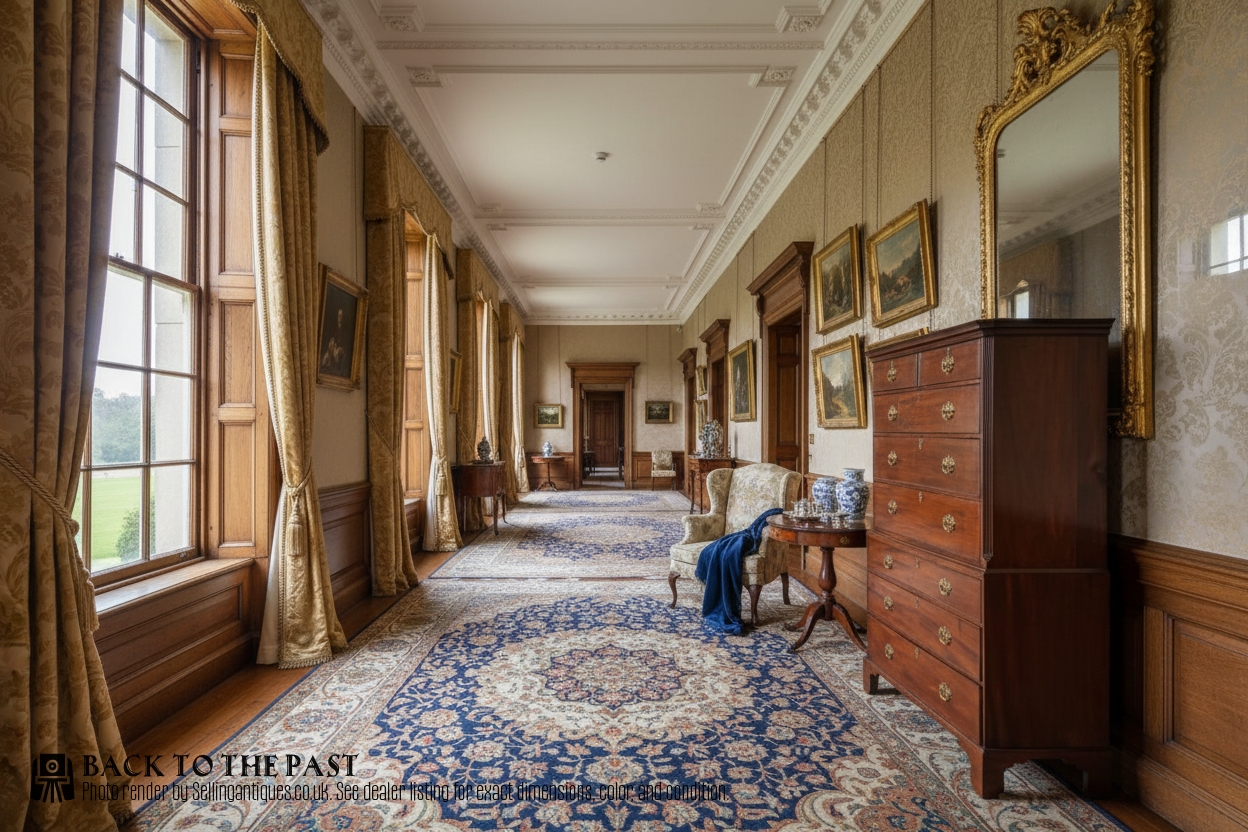
These mahogany tall chest drawers offer immense vertical storage, bringing dignified Georgian and 19th-century craft into modern rooms.
What mahogany tall chest drawers are
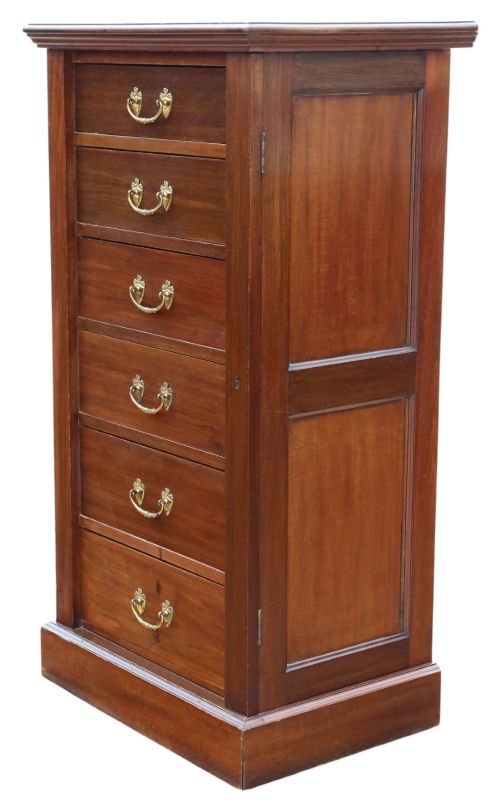
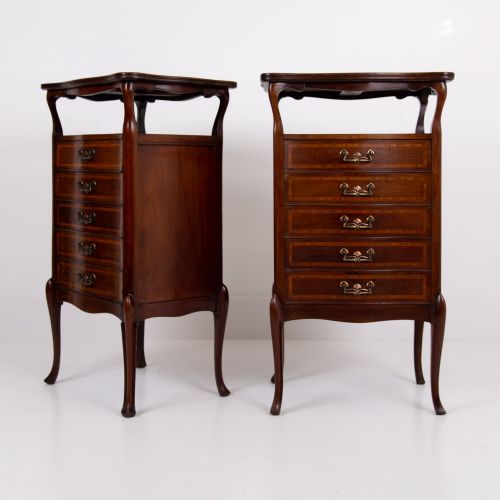
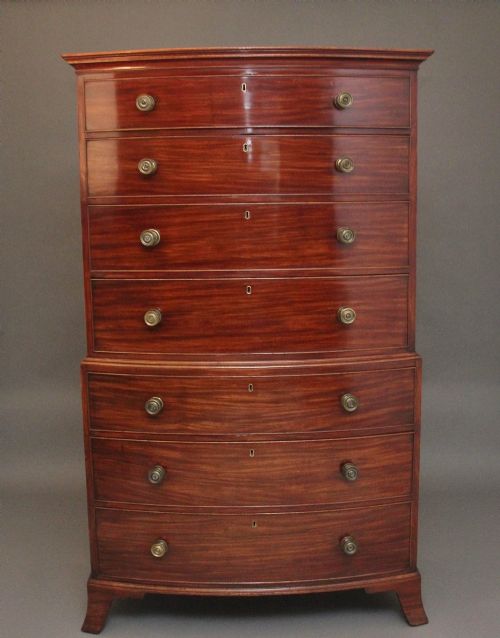
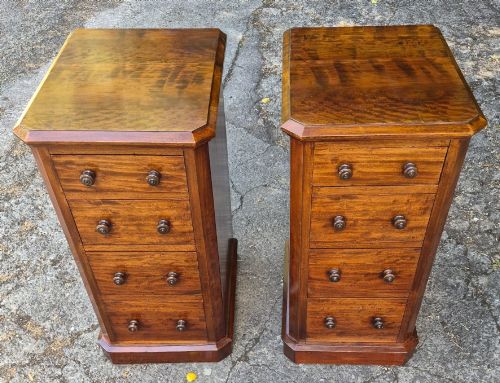
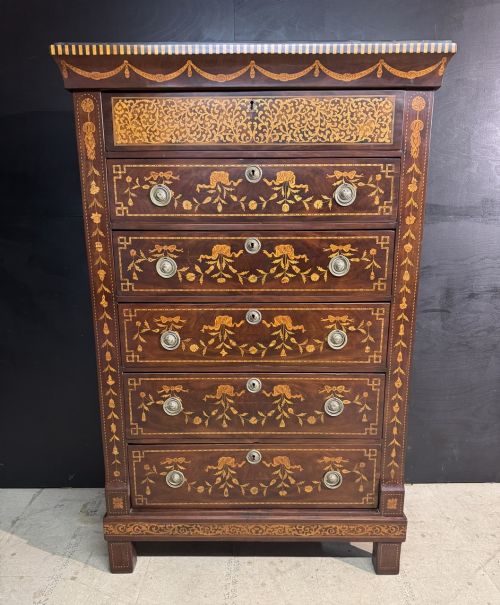
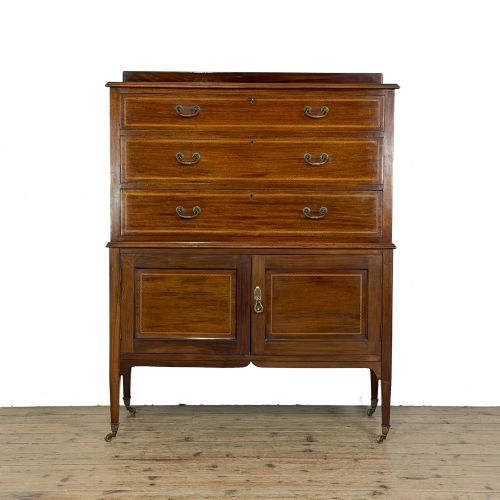
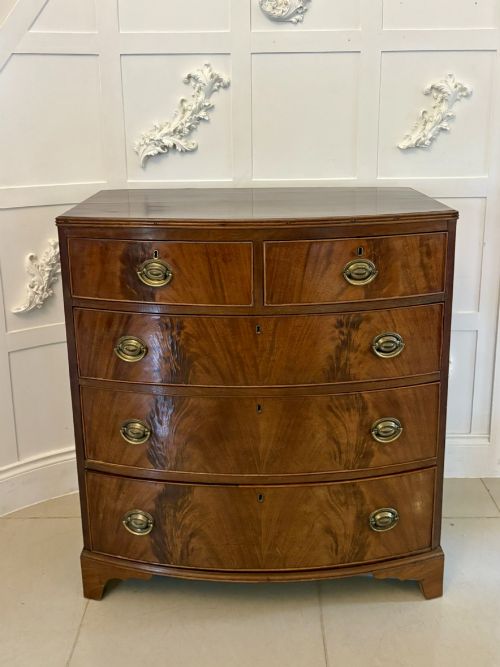
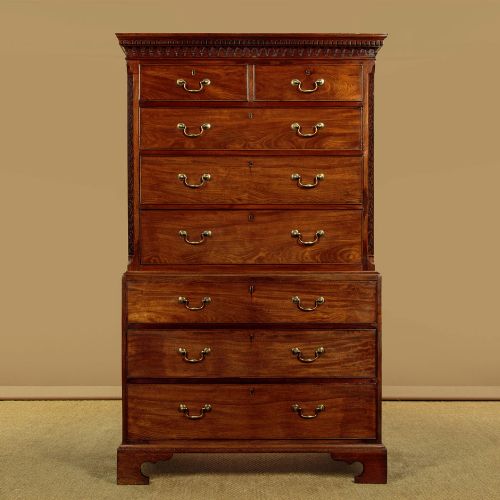
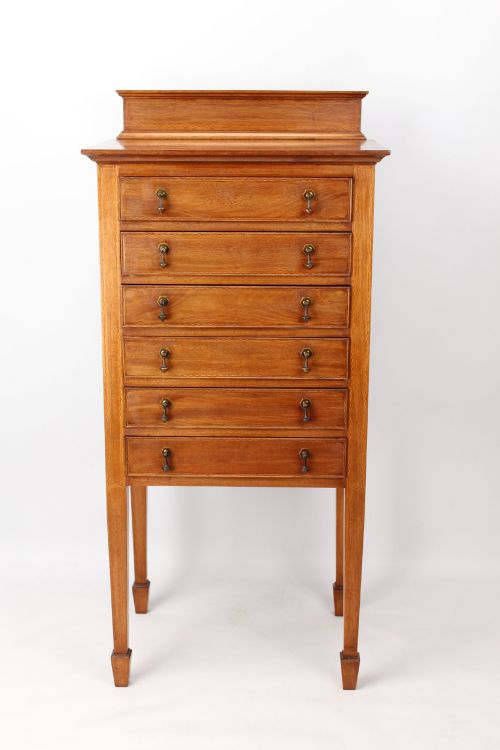
When you search for mahogany tall chest drawers, you encounter pieces designed to maximise vertical storage while occupying a minimal floor footprint. The selection includes narrow forms, towering chest-on-chest structures, and substantial multi-drawer formats developed across successive design periods.
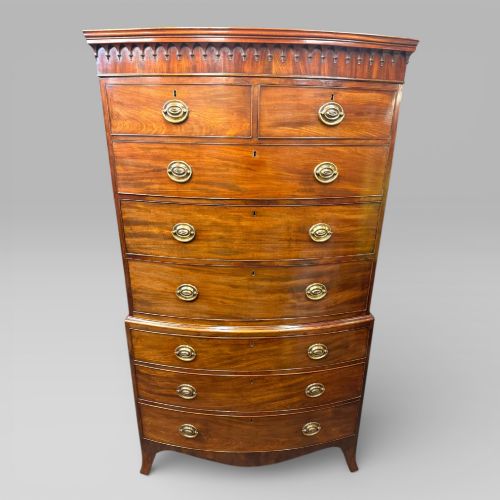
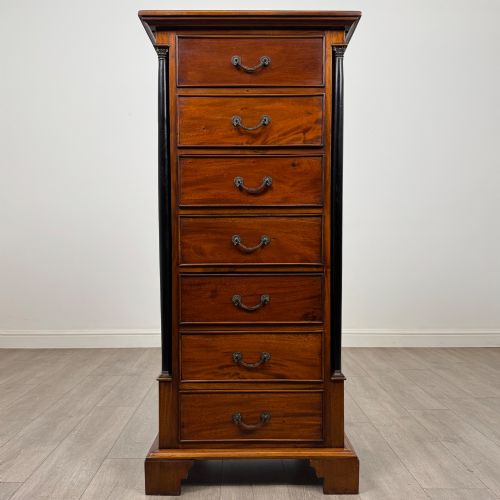
Georgian and George III examples dominate the early portion of the record, often showcasing refined proportions and stacked tier configurations like the traditional tallboy. Alongside these, 19th-century pieces bring variations such as bow fronts, narrow Irish formats, and French Empire influences.
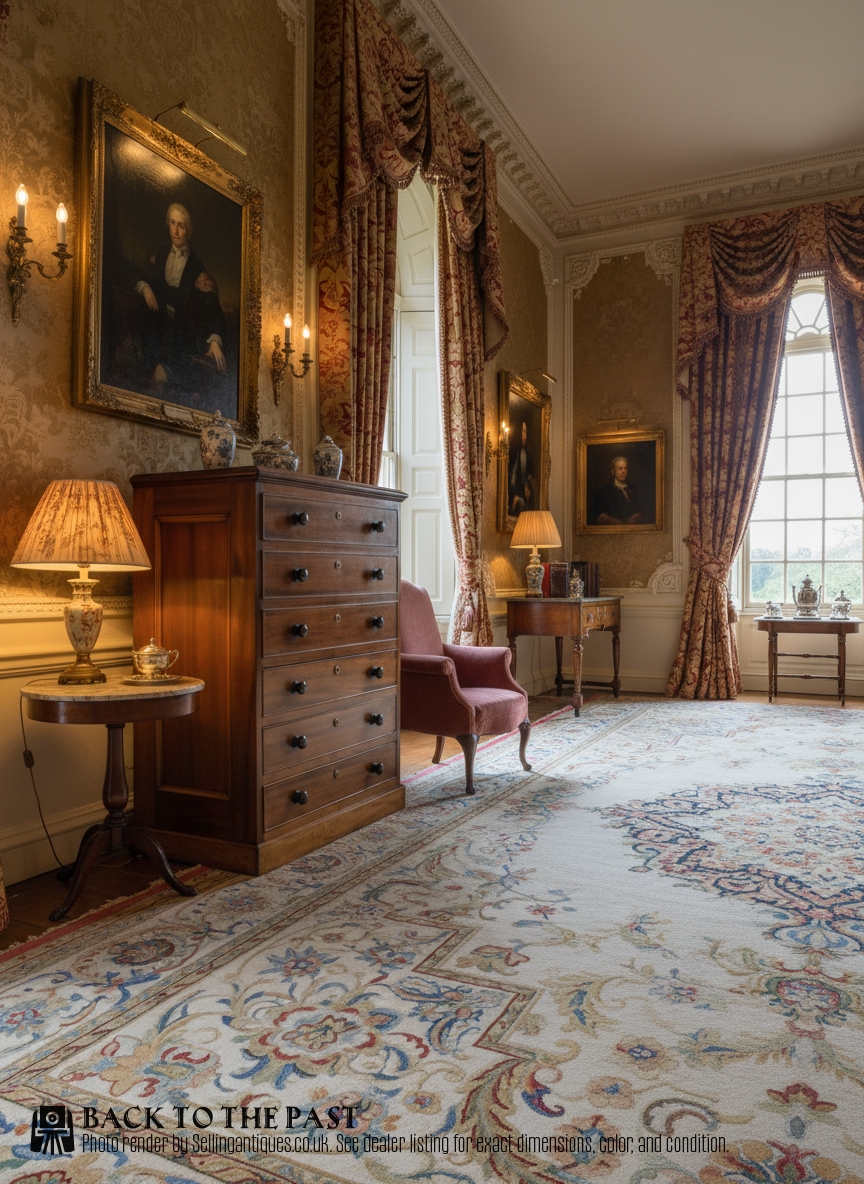
Victorian and Edwardian iterations continue the vertical tradition into later decades, employing figured and flame grain timbers across five, six, or seven drawers. The pieces you meet here range from straightforward straight-front banks to elaborate two-part modular constructions.
What varies in quality
The distinction between standard utility storage and superior cabinet work rests in the choice of timber and the precision of the drawer construction. Finer examples display carefully matched flame grain mahogany across the entire facade, whereas simpler pieces rely on standard straight-grained stock.
Proportion and architectural detailing set the upper tier apart, particularly in chest-on-chest formats where cornice mouldings and brass hardware must balance the considerable height. The integrity of the internal drawer linings and the smoothness of the pull mechanisms further differentiate workshop standards.
Retail Price Guide 2026
Typical UK retail prices for mahogany tall chest drawers, calculated from the Sellingantiques database of over a million retail prices indexed since 2003. This retail price guide relies exclusively on Sellingantiques data; no external sources or auction records are used, so the figures do not describe the wider market.
Listings feature mahogany, brass, and ormolu across Georgian, 19th-century, and French Empire styles.
J.Maple
The Mahogany Tall Chest Drawers Glossary
- Tallboy
- A tall chest of drawers, often constructed as a chest-on-chest where a smaller upper section sits atop a larger base. This format emerged in the 18th century to provide maximum storage without increasing the room footprint.
- Semainier
- A tall, slender chest traditionally featuring seven drawers, one for each day of the week. Originating in France, this form privileges narrow proportions and refined decorative mounts.
- Chest on chest
- A two-part storage piece where a smaller upper chest rests directly upon a larger lower chest. This design allowed large furniture to be moved in two manageable sections up winding staircases.
- Flame grain
- A distinctive ripple pattern in mahogany timber resembling flickering flames. Cabinet makers prized this figure for drawer fronts to create dramatic visual movement.
- Bow front
- A convex curved cabinet front that projects outward in the centre. This styling softens the imposing vertical lines of tall chests.
Frequently Asked Questions
How do I date a tall chest?
Dating relies on observing structural characteristics, hardware styles, and timber selection across the piece. Georgian examples often display restrained lines and bracket feet, while Victorian versions may feature flame grain veneers and bobbin turnings.
Examining the drawer construction and internal secondary woods also offers clear indicators of the period of manufacture.
Where should I place a tall chest?
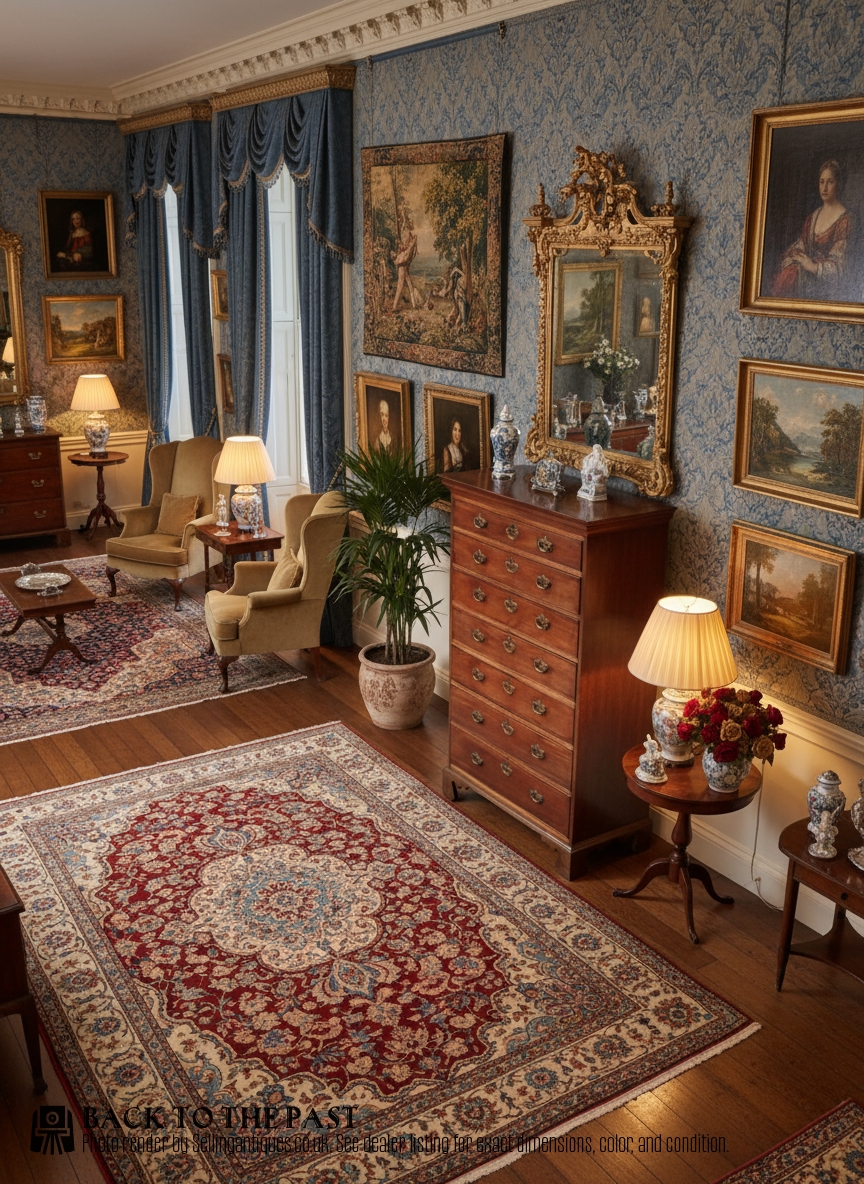
These vertical chests suit bedrooms, dressing rooms, and hallways where floor space is restricted but storage capacity is essential. Their height draws the eye upward, making them functional anchors for high-ceilinged rooms.
Securing taller chest-on-chest formats to the wall ensures stability when accessing upper drawers.
How do I clean mahogany?
Maintain mahogany surfaces by dusting regularly with a soft, dry cloth to prevent grit accumulation. Avoid modern silicone polishes, opting instead for traditional beeswax applied sparingly to nourish the timber.
Keep these chests away from direct sunlight and heat sources to protect the grain and prevent wood splitting.