
Ormolu Mounted Chest Drawers
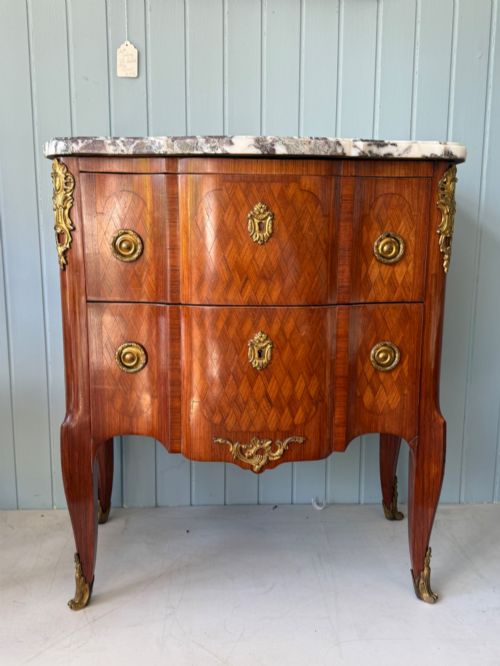
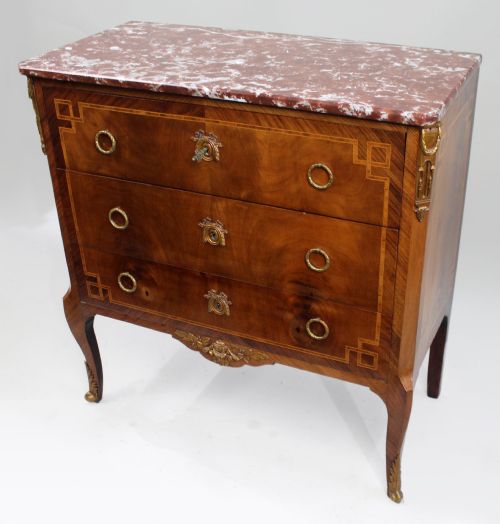
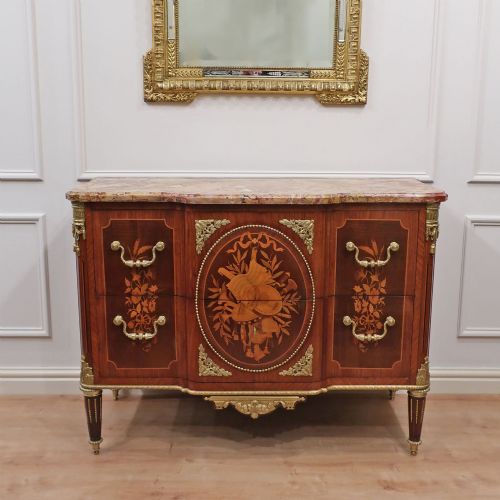
An ormolu mounted chest drawers brings French continental elegance to a room through rich timber veneers and bright gilt bronze mounts.
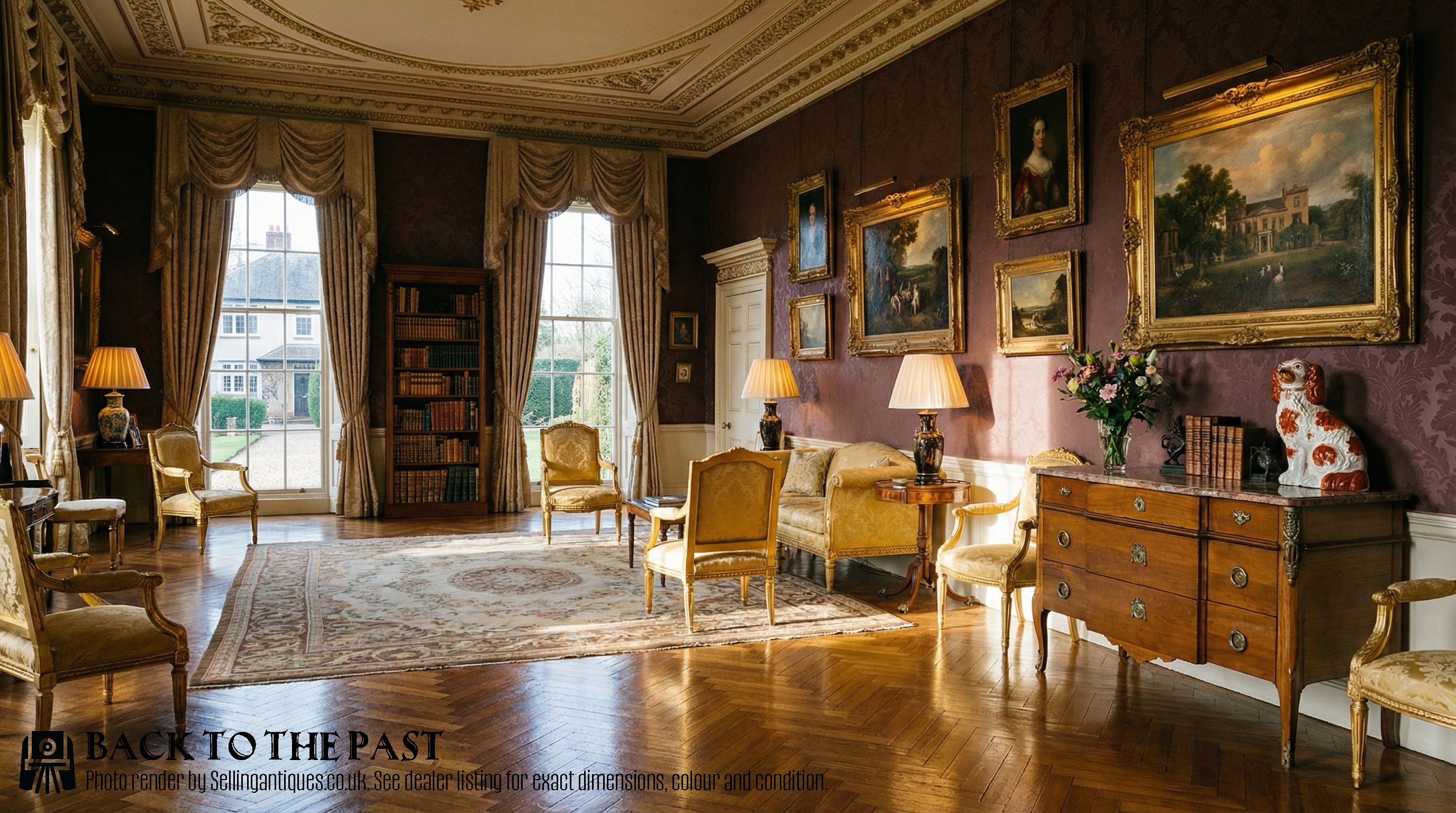
Ormolu Mounted Chest Drawers
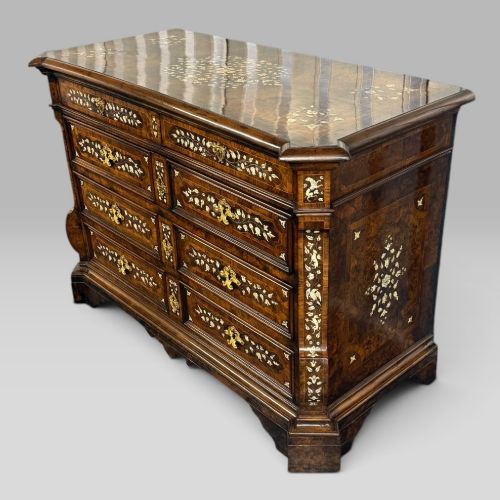
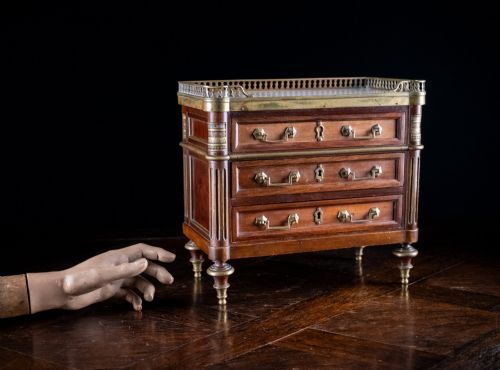
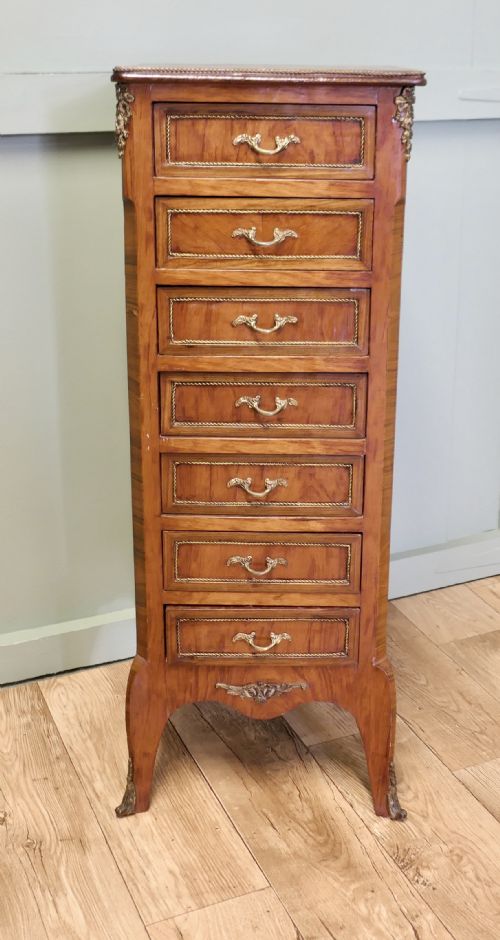
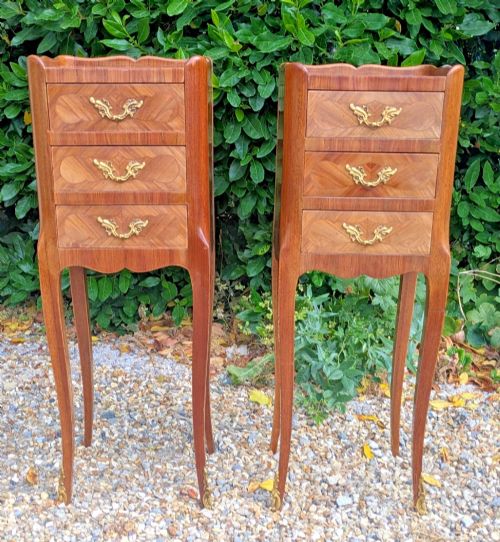
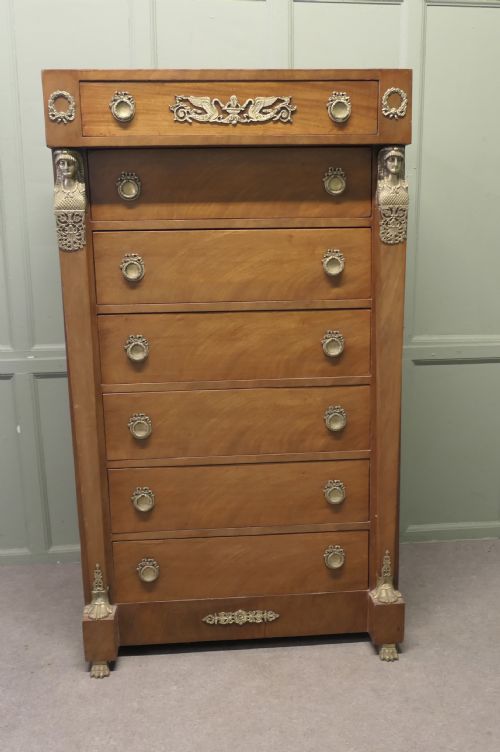
When you search for ormolu mounted chest drawers, you encounter a selection of continental European storage pieces dominated by French commodes and bedside cabinets from the eighteenth and nineteenth centuries.
The pieces appearing on this page span several decades, ranging from eighteenth century cabinet work to later revival pieces produced in the nineteenth and early twentieth centuries.
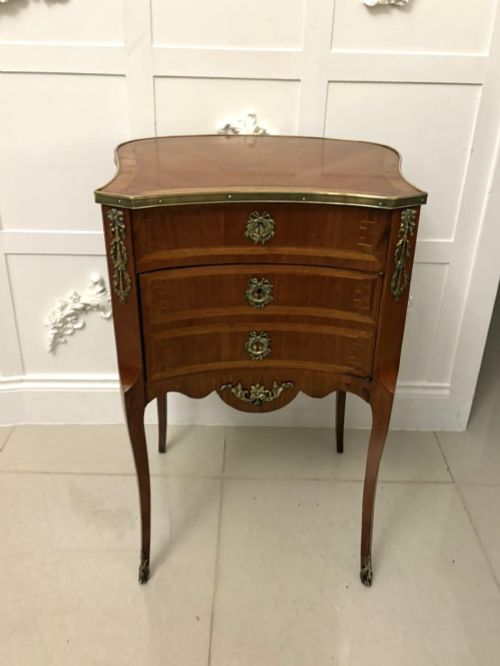
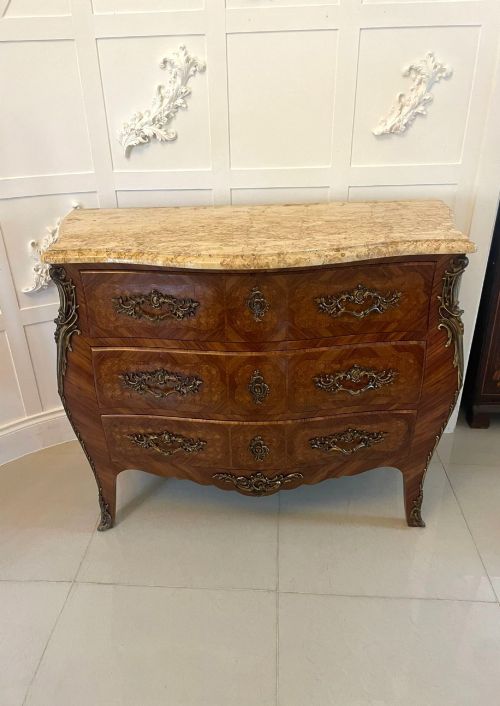
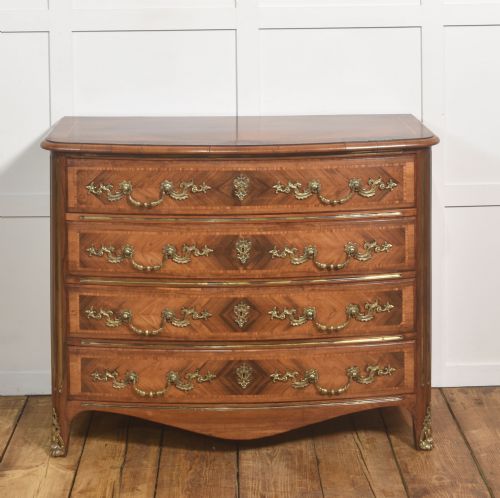
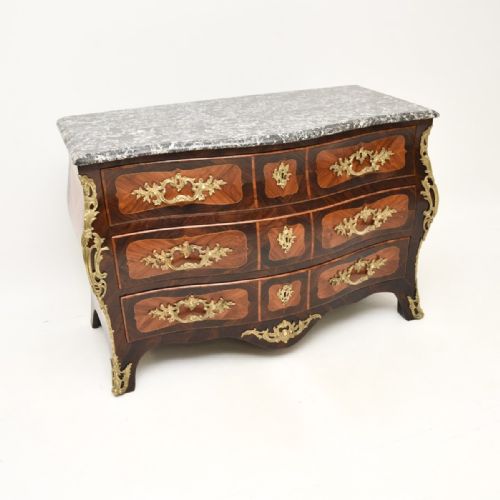
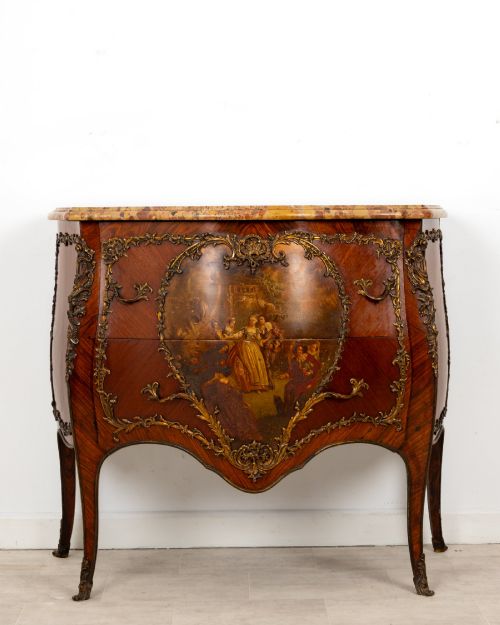
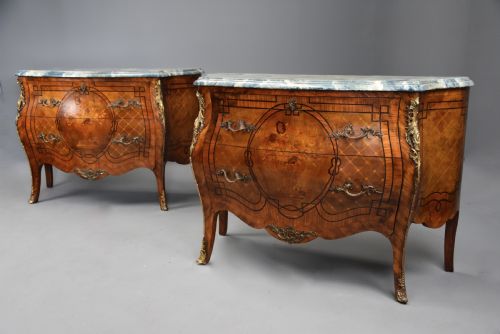
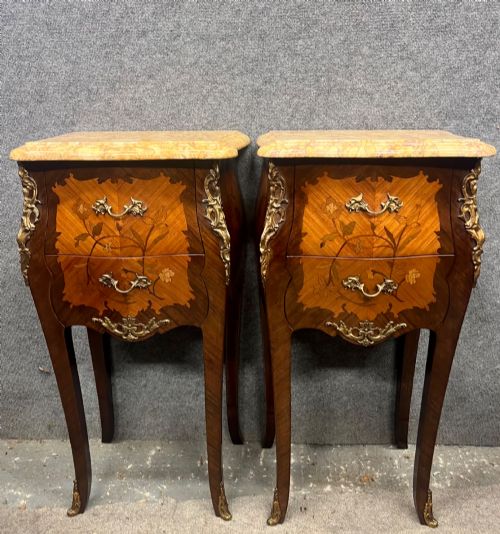
Most examples take the form of commodes, side cabinets or bedside tables constructed in walnut, kingwood and mahogany, often shaped with serpentine fronts or bombe curves.

Materials and construction methods
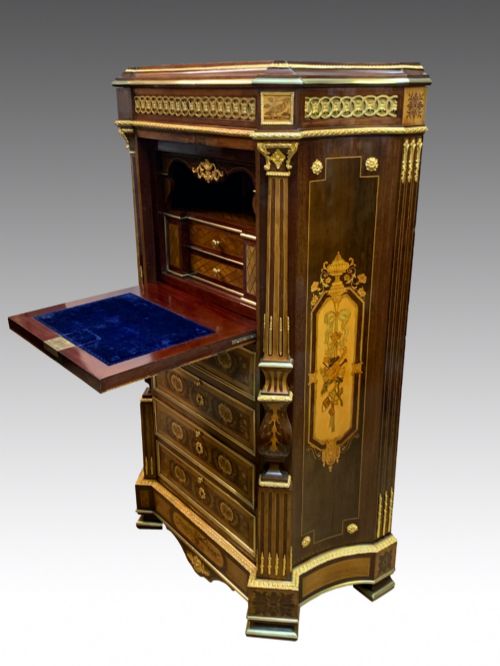
Cabinet makers constructed carcass frames in native timbers before applying decorative veneers of kingwood, tulipwood, walnut and rosewood arranged in intricate marquetry and parquetry patterns.
Mounts of gilt bronze and brass provide structural edge protection and ornamental detail, securing corners and framing drawer fronts.
Heavy slabs of marble, including rouge and white varieties, sit atop many of the pieces, shaped to follow the contours of the timber carcases below.
Ormolu Mounted Chest Drawers Retail Price Guide 2026
Typical asking prices for ormolu mounted chest drawers among the pieces listed under this phrase on Sellingantiques today, from the lower quarter to the upper quarter. They describe what is for sale here now, not the wider market.
Listings feature walnut, kingwood and mahogany timbers combined with marble and gilt bronze across the eighteenth and nineteenth centuries.
Distinctions in execution and material
The refinement of the gilt bronze mounts creates a primary division, with chased and fire gilt details offering a sharper definition than simpler cast elements.
Veneer selection and the precision of the marquetry inlay determine the visual depth of the timber surfaces.
Originality of the marble top and the survival of period mounts contribute to the integrity of each individual piece.
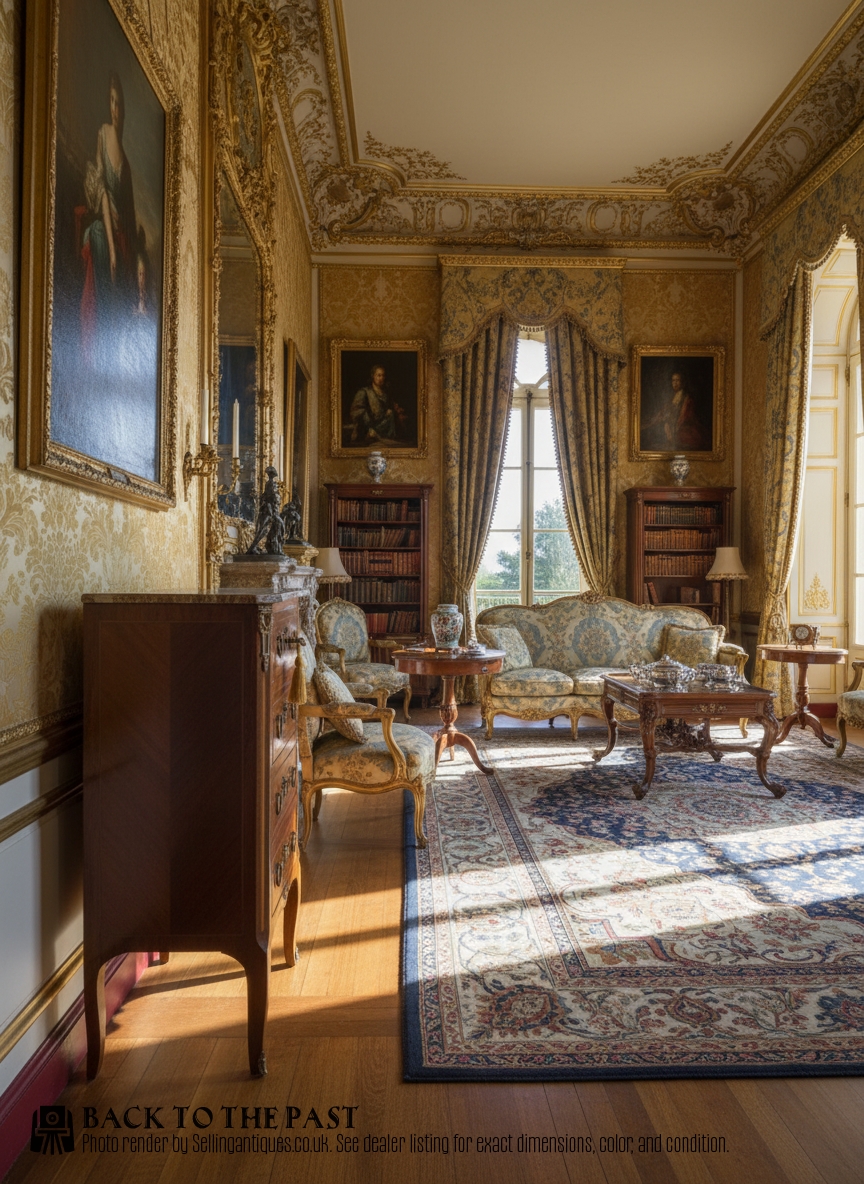
Jacques Bircklé·Grand Ducal Workshops·Maison Krieger·Thomas Hache of Grenoble
The Ormolu Mounted Chest Drawers Glossary
- Ormolu
- Gilt bronze mounts applied to furniture. This technique involves coating cast bronze with a mercury and gold amalgam before heating.
- Commode
- A decorative chest of drawers developed in France during the seventeenth century. These low storage cabinets usually feature marble tops and ornate mounts.
- Bombe
- A swelling, outward curving shape found on the sides and front of cabinet furniture. This undulating form requires advanced woodworking skill.
- Marquetry
- Inlaid patterns of wood veneer forming pictorial or geometric designs. Craftsmen cut contrasting veneers together to ensure a tight fit within the ground timber.
Ormolu Mounted Chest Drawers: Frequently Asked Questions
What is an ormolu mounted chest drawers?
These pieces are decorative storage furniture, primarily French commodes and bedside cabinets, featuring gilt bronze mounts attached to veneered wooden carcases.
They combine practical drawer space with ornamental display, frequently finished with shaped marble tops.
How do I identify a revival period piece?
Nineteenth century revival pieces adopt eighteenth century Louis styles such as Louis XV and Louis XVI, utilising similar marquetry and ormolu techniques.
Clues lie in the construction methods, secondary timbers used inside the drawers, and the sharpness of the bronze casting.
Where should I place a commode at home?
These pieces work well as focal points in drawing rooms, hallways or bedrooms where their decorative veneers and marble tops can be appreciated.
Their substantial presence makes them suitable for holding lamps or display objects while providing enclosed storage.
How do I care for the marble and ormolu?
Marble surfaces require gentle cleaning with mild soap and water to prevent staining from acidic liquids.
Ormolu mounts should be dusted dry without abrasive cleaners to preserve the gilt surface layer on the bronze.