


Mid Victorian Wooden Chest
A mid victorian wooden chest brings solid utility and distinct period character into a room, spanning forms from drawers to coffers.
Mid Victorian Wooden Chest
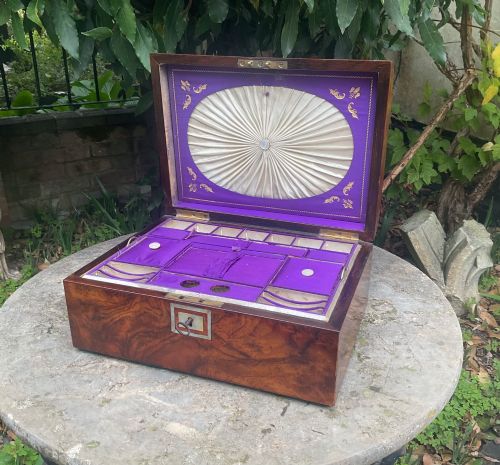
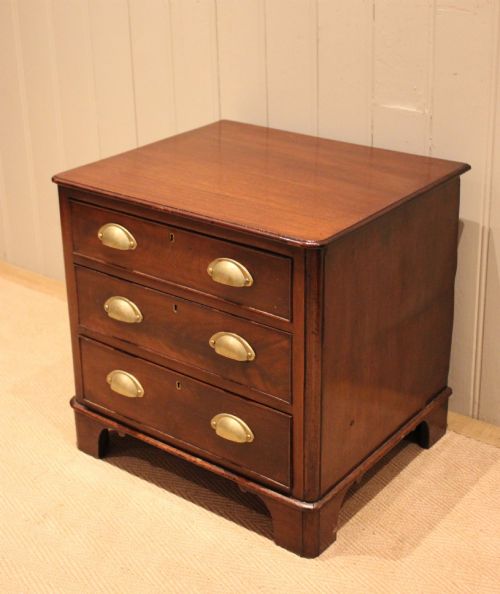
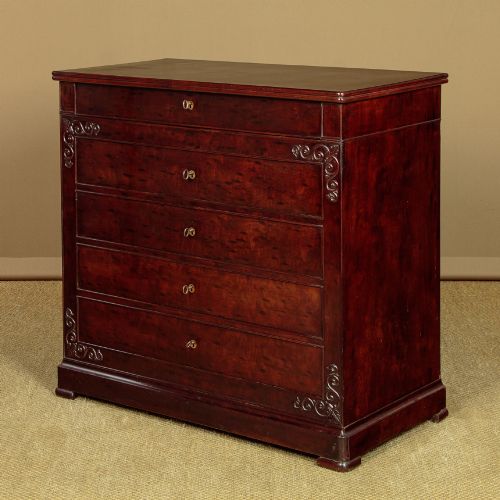
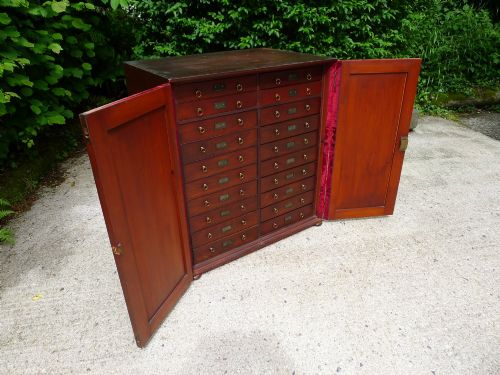
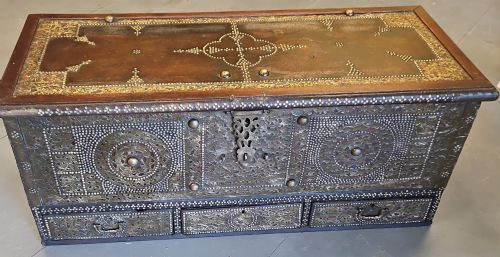
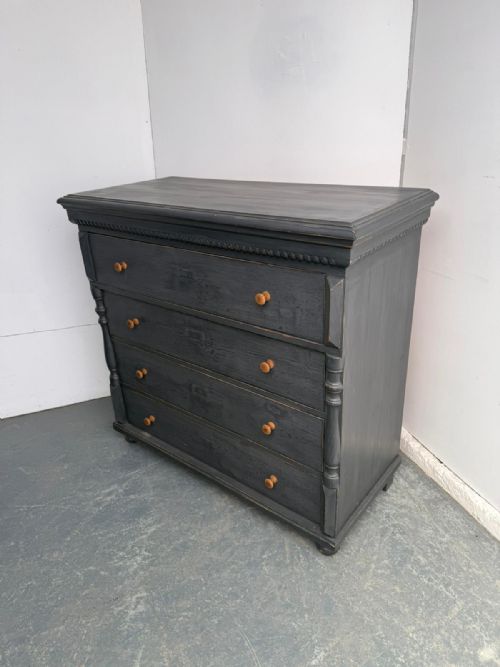
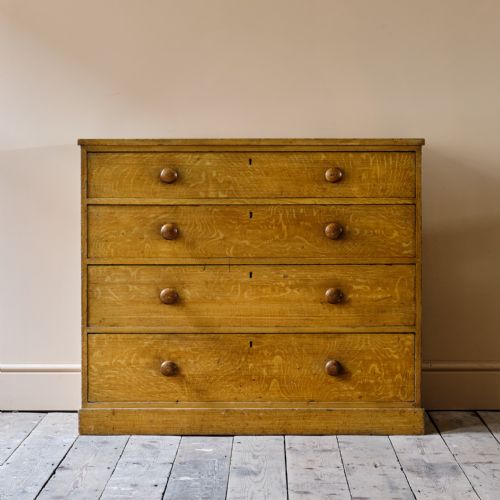
A mid victorian wooden chest encompasses a varied group of storage furniture from the nineteenth century, including chests of drawers, collectors cabinets, trunks, and coffers. These pieces reflect the domestic and travelling storage needs of the period through practical construction and diverse regional styles.
How they were made
Cabinet makers utilised dense hardwoods like mahogany and burr walnut, alongside softer timbers such as pine and deal, often finished with polish, paint, or intricate inlay. Structural robustness relied on solid timber framing and dovetailed drawer construction.
Hardware additions commonly involved brass handles, escutcheons, and iron reinforcing straps, particularly on campaign styles, trunks, and heavy silver chests. Surfaces range from unadorned polished wood to original paint finishes and flame mahogany veneers.
Materials represented across the selection include mahogany, burr walnut, oak, pine, brass, iron, and paint.
What varies in quality
Quality differences emerge in the selection of timber veneers, such as flame mahogany or burr walnut, and the precision of the cabinet work. Superior examples display finer grain patterns, careful matching of veneers, and well-executed decorative details like profuse inlay or carved elements.
The condition of original surfaces, whether polished wood or early paint, distinguishes pieces alongside the integrity of internal construction and original hardware fittings. Scale also affects desirability, with miniature items, childs chests, and compact proportions demonstrating notable cabinet-making skill.
The Mid Victorian Wooden Chest Glossary
- Wellington chest
- A tall, narrow chest of drawers typically secured by a hinged locking stile on one side. This design originated in the nineteenth century for efficient paper and linen storage.
- Burr walnut
- A prized timber marked by swirling knot growths that create highly decorative grain patterns. Cabinet makers utilised these veneers on primary drawer fronts.
- Flame mahogany
- A veneer cut from the branch junction of a mahogany tree, producing a distinct flickering flame effect. It defined high-status nineteenth-century case furniture.
- Galleried back
- A raised wooden border along the top rear edge of a chest. This feature prevented items from sliding off the surface.
Mid Victorian Wooden Chest: Frequently Asked Questions
What is a Wellington chest?
A Wellington chest is a tall, narrow set of drawers distinguished by a locking wooden flap on the vertical edge that secures all the drawers simultaneously.
Originally designed for linen or documents, these pieces offer substantial vertical storage while occupying minimal floor space in a bedroom or study.
How do I clean a wooden chest?
Clean wooden surfaces using a soft, dry cloth to remove dust without disturbing the polished finish or historic wax layers.
Avoid modern chemical sprays and excessive moisture, applying a traditional beeswax sparingly only when the timber appears dry.
Where should I place a chest?
These chests suit bedrooms, hallways, or living spaces where surface display and concealed storage are both required.
Keep them away from direct sunlight and radiators to prevent the solid timbers and delicate veneers from drying and splitting.
How are different wood types identified?
Mahogany presents a deep reddish-brown tone with straight or flame grain patterns, while walnut exhibits richer dark brown figuring with contrasting swirls.
Oak displays prominent growth rings and medullary rays, whereas pine and deal show softer, paler grain lines often found beneath painted finishes.