

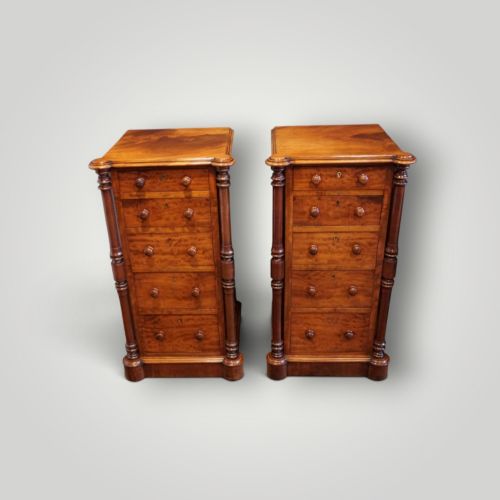
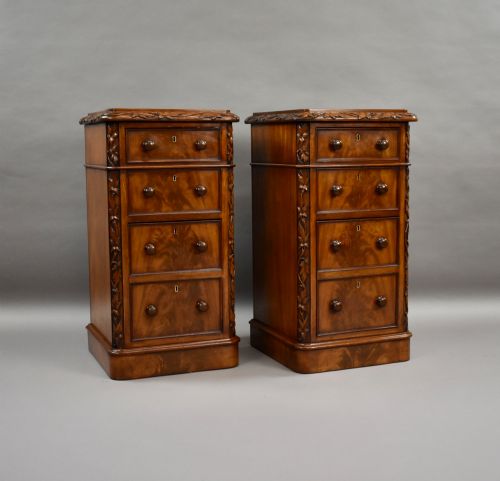
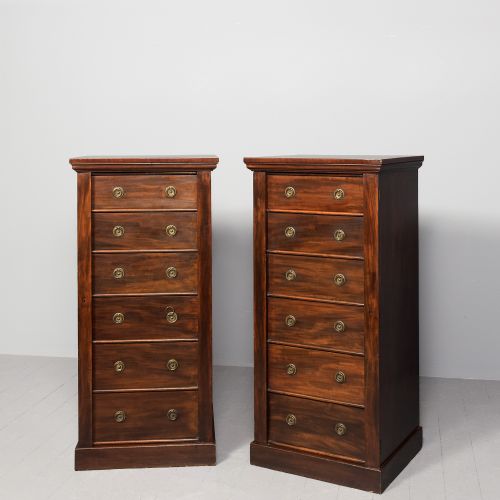
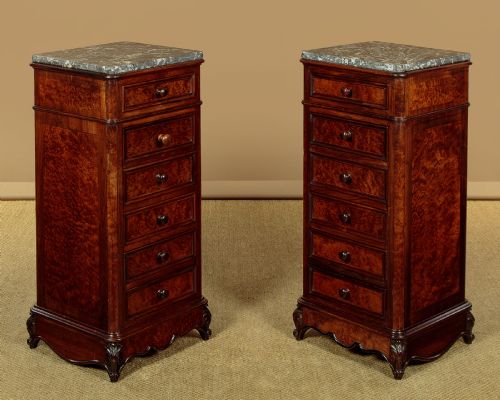
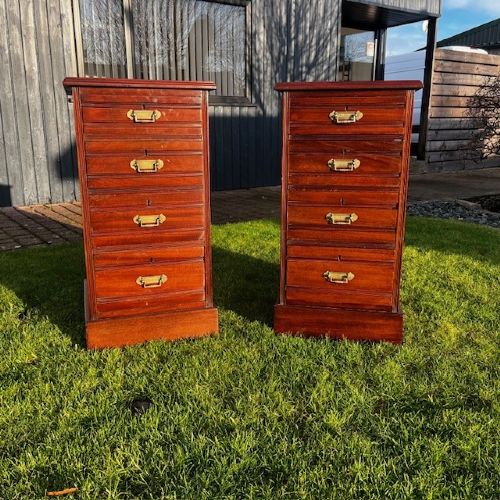


Pair Wellington Chests
These tall, narrow drawer stacks known as pair wellington chests bring symmetry and clever storage to a bedroom or study.
Pair Wellington Chests
A pair wellington chests arrangement consists of matching tall, narrow drawer units, most frequently encountered from the Victorian and Regency periods. These pieces often serve as bedside cabinets, nightstands or small collector chests alongside a bed.
Judging quality in matching pairs
Quality depends upon the matching symmetry of the timber grain across both cabinets and the crispness of the drawer joinery. Matched pairs require identical proportions and consistent wood selection to hold their visual balance.
The integrity of the locking mechanism and the original side pilaster hinges also dictate standard. Better examples retain sound internal drawer linings and unwarped frames that allow the locking bar to swing freely.
Warings Liverpool·James Shoolbred·S & H Jewells of London
The Pair Wellington Chests Glossary
- Wellington chest
- A tall, narrow timber chest of drawers secured by a hinged locking flap on one vertical edge. This design originated in the nineteenth century.
- Pilaster
- The vertical locking stile that fastens down the side of the drawer fronts. It turns on hinges to block the drawer openings when locked.
- Flame mahogany
- A timber veneer displaying a rippled, flame-like grain pattern. Cabinetmakers selected this cut for prominent drawer fronts.
- Collector's chest
- A specialised small-drawer cabinet intended for specimens or small items. These often match the narrow proportions of a wellington chest.
Pair Wellington Chests: Frequently Asked Questions
What are pair wellington chests used for?
These matching narrow chests function primarily as bedside tables or lamp stands in bedrooms. Their stacked drawer arrangement offers vertical storage without taking up much floor space.
They also serve as collector chests or small drawer units in studies and dressing rooms. The locking mechanism keeps private papers or small items secure.
How do I live with pair wellington chests?
Place them symmetrically beside a bed or flanking a fireplace to make the most of their matched appearance. Ensure you leave enough clearance beside the units for the side locking bars to swing open.
Keep them away from direct heat sources to protect the polished timber surfaces and veneers. Regular dusting with a dry cloth maintains the finish.
How do I spot a true wellington chest?
Look for the signature vertical locking bar attached to one side of the frame. When closed and locked with a key, this hinged piece prevents the drawers from opening.
Check that the proportions are tall and narrow rather than wide. The drawer count is typically high for the overall height of the cabinet.
What periods do these chests come from?
The examples seen date predominantly from the Victorian era, spanning various decades through the nineteenth century. A small number originate from the Regency period.
Stylistic shifts appear from earlier Regency designs to late Victorian marquetry and inlaid variations. Timber choices also reflect these changing Victorian and Regency preferences.