

Pair of Chests
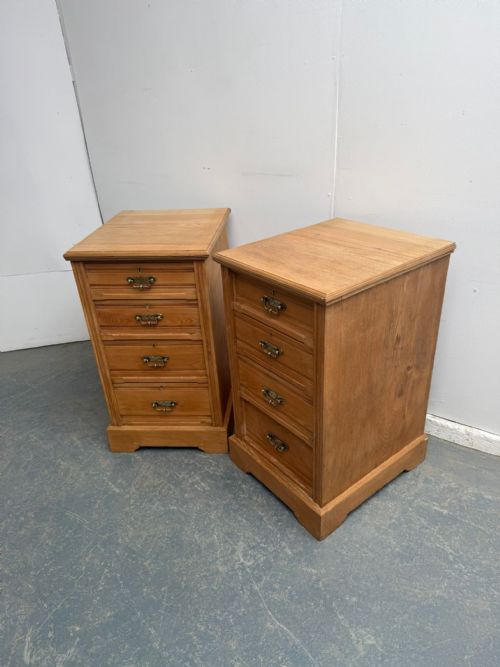
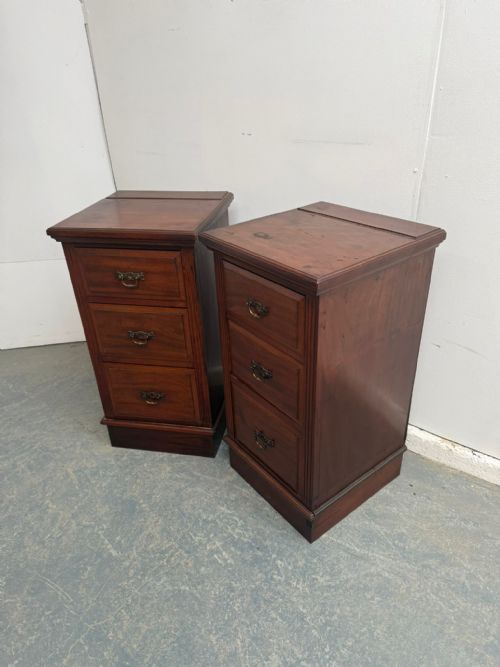
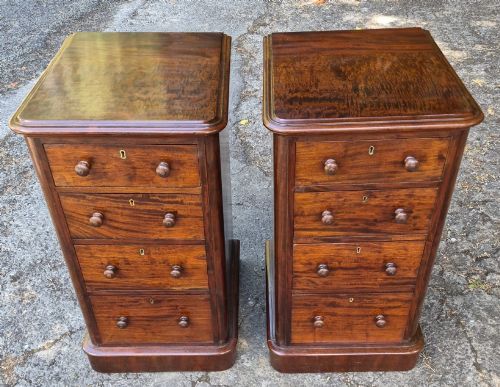
A matching pair of chests brings symmetry to a room, offering practical storage through matched timber and polished surfaces.
Pair of Chests
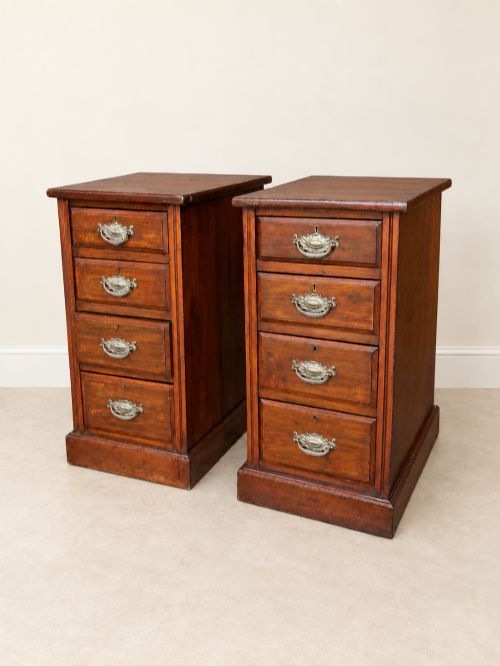
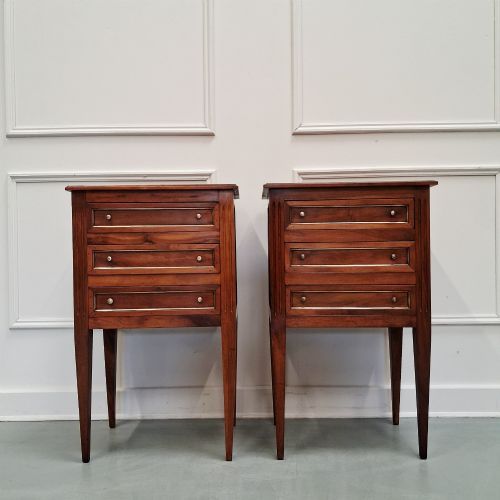
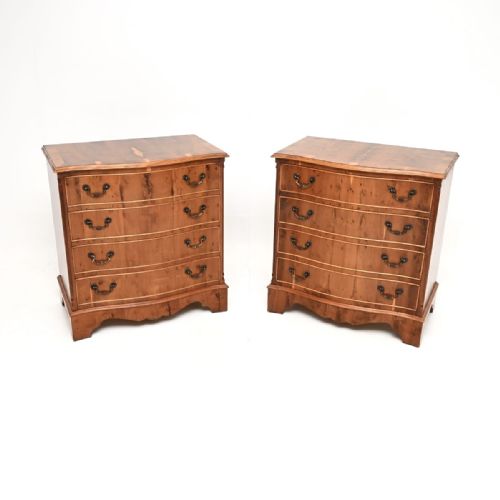
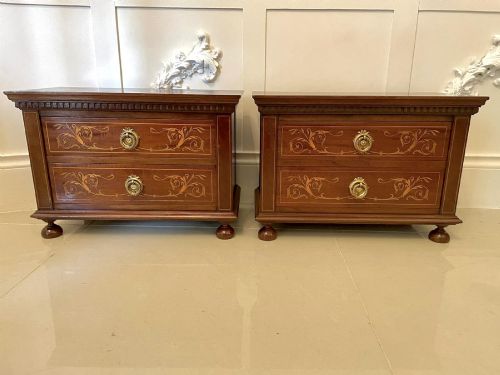
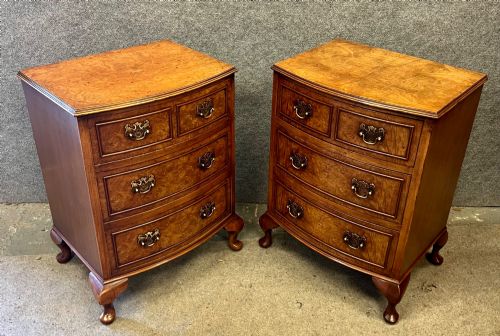
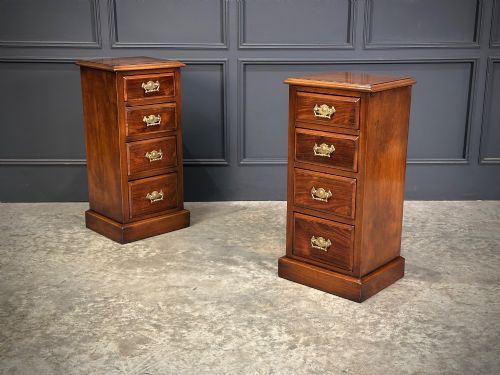
A search for a pair of chests leads buyers primarily to bedside cabinets, nightstands, and small commodes designed to flank a bed or anchor a smaller space.
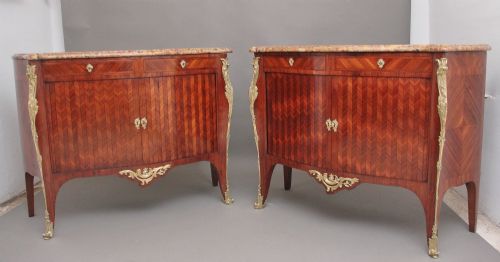
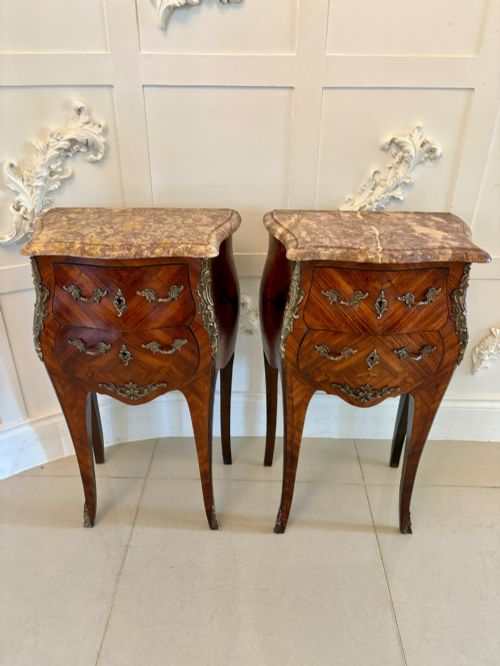
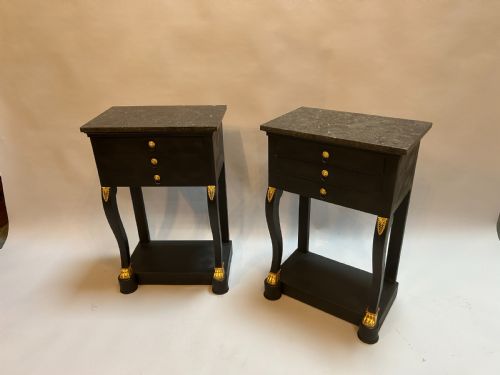
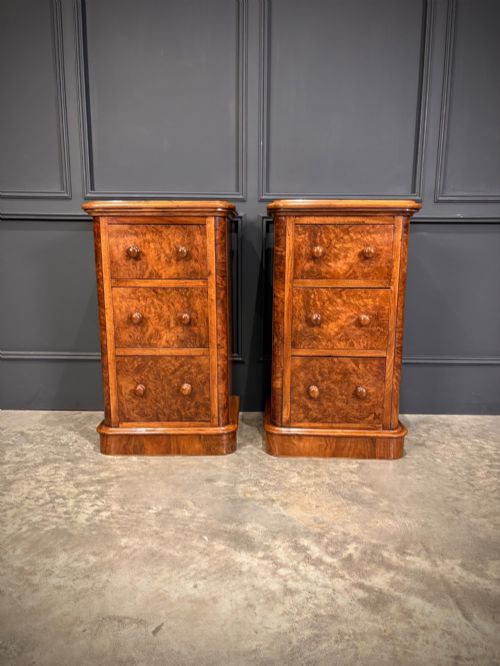
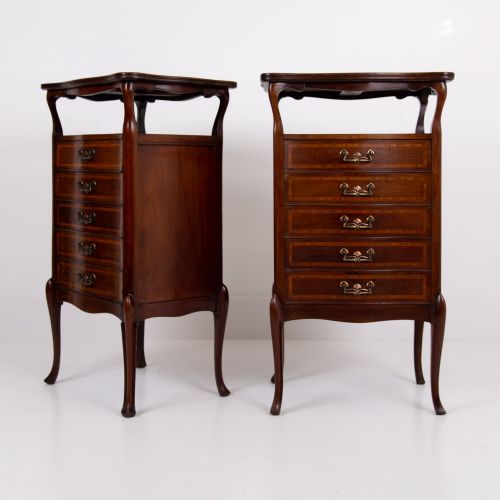
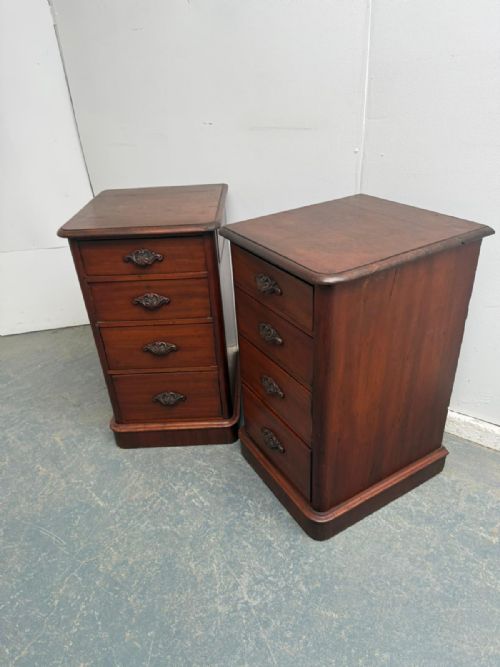
The selections span from Victorian mahogany versions to Edwardian inlaid designs and French Kingwood pieces finished with marble tops.
Makers and craftsmen adapted these storage forms across the nineteenth and early twentieth centuries, producing both utilitarian bedside tables and decorative commodes.
Materials and construction
Cabinet makers utilised dense hardwoods like mahogany, walnut, and rosewood, often pairing them with decorative veneers such as burr walnut, kingwood, and satinwood.
Many French and continental examples incorporate fitted marble tops and intricate marquetry or ormolu mounts to enhance the visual weight of the timber.
Joinery techniques ranged from simple dovetailed drawer construction to serpentine fronts and curved bombe shapes requiring specialist wood-bending skills.
Several Victorian nightstands discreetly housed chamber pots behind small cupboards before plumbing moved indoors.
Quality and execution
The standard of a pair of chests rests on the crispness of the timber grain matching and the precision of any marquetry inlay across both items.
Subtle details such as original brass handles, smooth drawer runners, and well-fitted marble slabs distinguish finer workshop output from simpler commercial production.
Warings Liverpool
The Pair of Chests Glossary
- Commode
- A low cabinet or chest of drawers, often French in origin and featuring decorative mounts or marble tops.
- Marquetry
- Decorative veneer work forming pictures or geometric patterns using various coloured woods.
- Ormolu
- Gilded bronze mounts applied to furniture for decorative accent, common in French revival pieces.
- Serpentine
- A furniture front curved in a gentle wave shape with a convex centre and concave sides.
- Bombe
- A swelling, bulging outward curve found on the sides and fronts of advanced cabinet furniture.
Pair of Chests: Frequently Asked Questions
Are these matching pieces genuine pairs?
Many listings show pieces constructed together in workshops as matched sets for bedrooms and drawing rooms.
Some combinations consist of near pairs collected over time, sharing similar timber and dimensions rather than originating from the same bench.
How were these cabinets used historically?
Bedside chests served to hold chamber pots, night lighting, and personal items within easy reach of the bed.
Larger commodes and tabletop chests provided enclosed storage for documents, linens, and small valuables in private rooms.
How do I care for polished mahogany and walnut?
Maintain timber surfaces by applying natural wax sparingly and buffing with a soft cloth to preserve the sheen.
Keep these chests away from direct heat sources and strong sunlight to prevent the timber and delicate veneers from drying out.
How do I distinguish Victorian from Edwardian styles?
Victorian examples typically display heavier proportions, darker polished mahogany, and robust construction suited to period interiors.
Edwardian pieces often introduce lighter satinwood, delicate inlay work, and simpler lines reflecting changing aesthetic preferences around the turn of the century.