
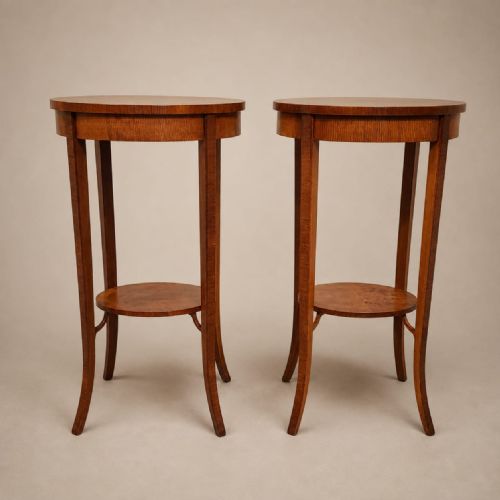
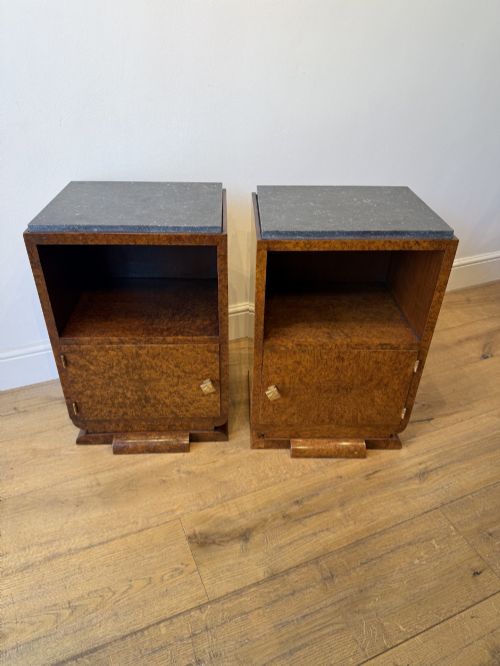

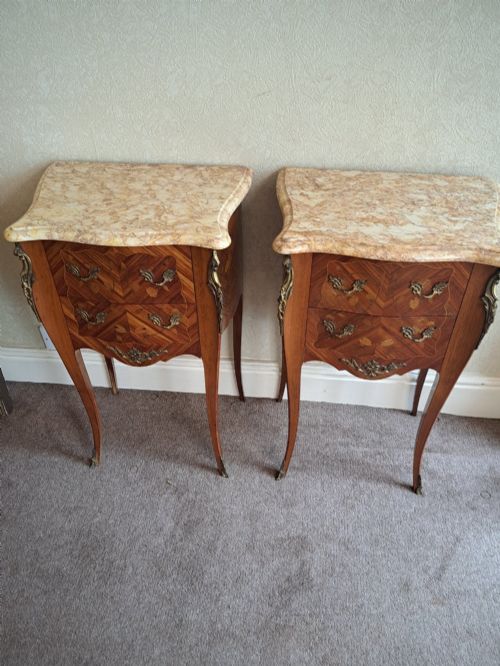
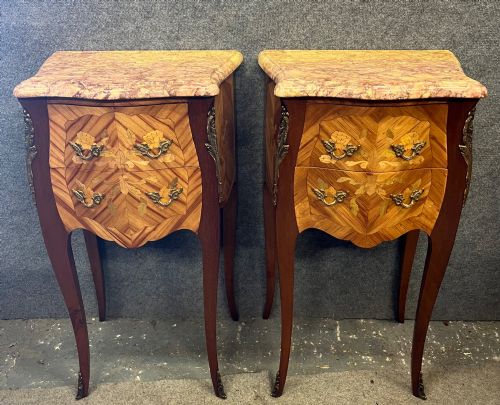
Pair Walnut Side Tables
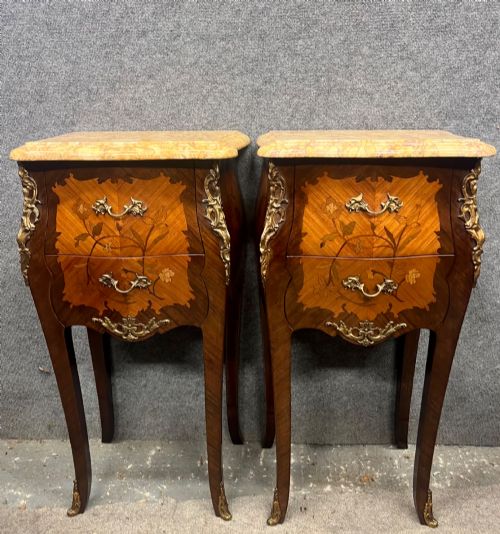
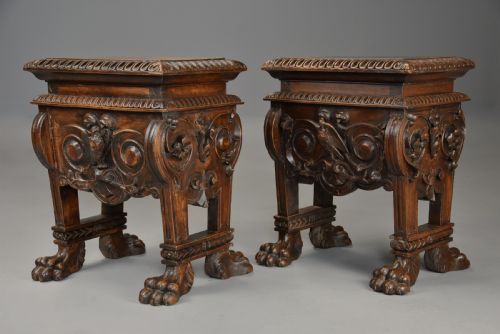
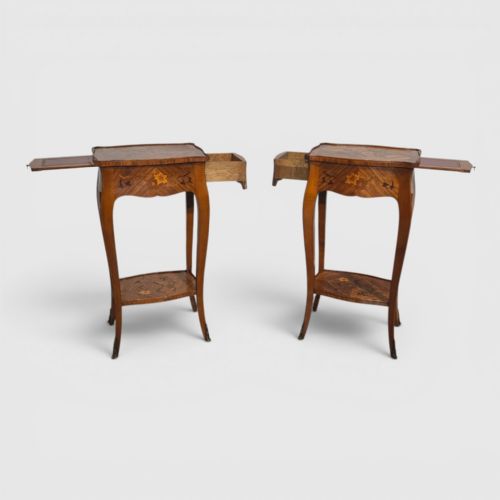
When hunting for a pair walnut side tables, you are looking at matched twins that anchor a room with timber grain.
Pair Walnut Side Tables
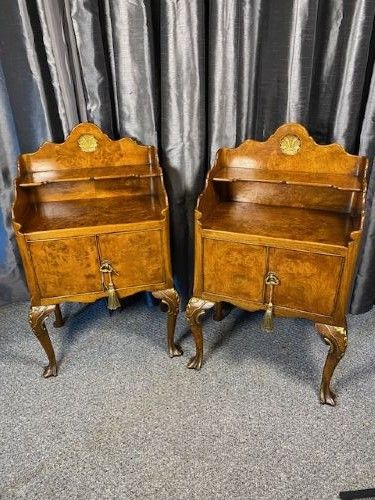
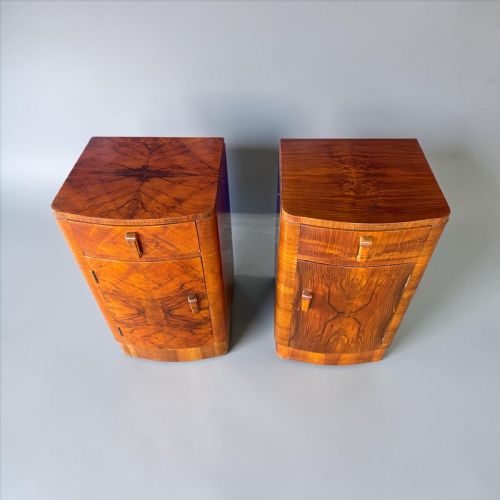
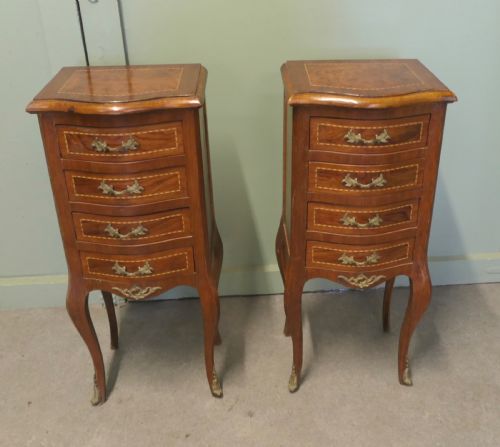
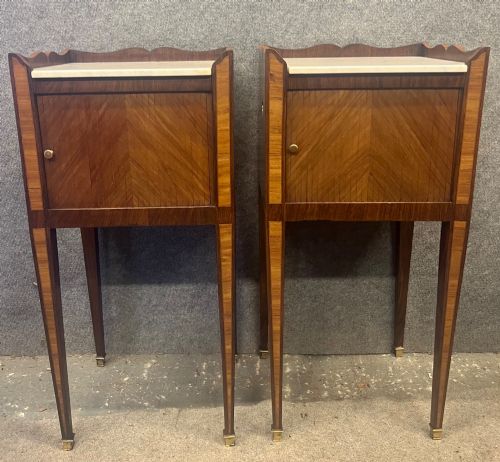
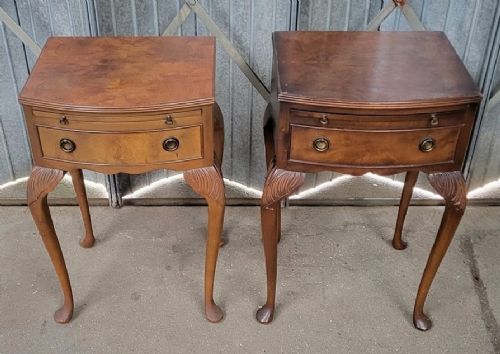
Pair walnut side tables encompass a variety of small companion furniture pieces designed for symmetry, frequently encountered as bedside cabinets, lamp tables, and lamp chests from the eighteenth century to the art deco era.
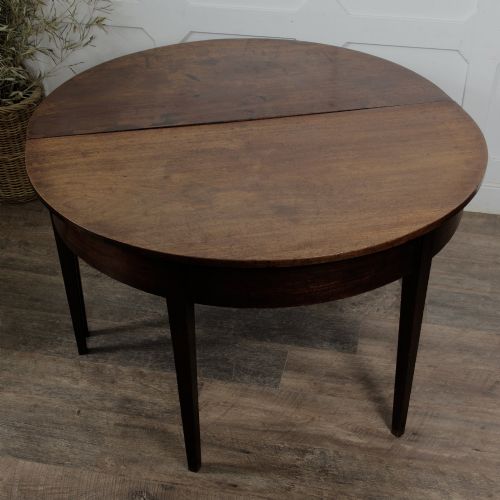
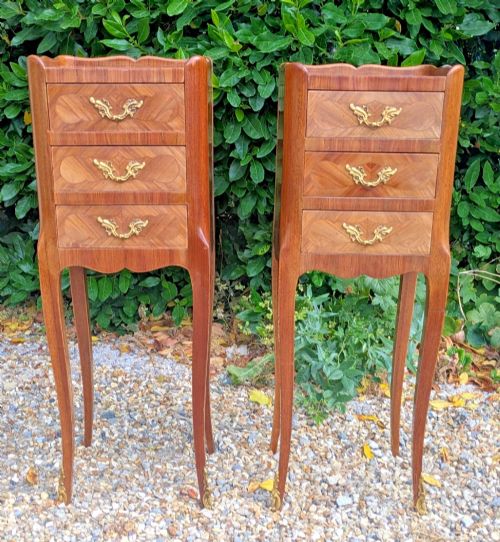
The selections on this page lean heavily towards twentieth-century French and art deco interpretations, alongside Georgian demilune console tables and Victorian bedside chests.
Buyers seek these matching configurations to bring balance to a bed or seating arrangement while offering practical surface area and concealed storage.
How They Were Made
Cabinetmakers utilised solid walnut and decorative veneers like burr walnut, kingwood, and satinwood over secondary timbers, often applying intricate marquetry and parquetry patterns to top surfaces.
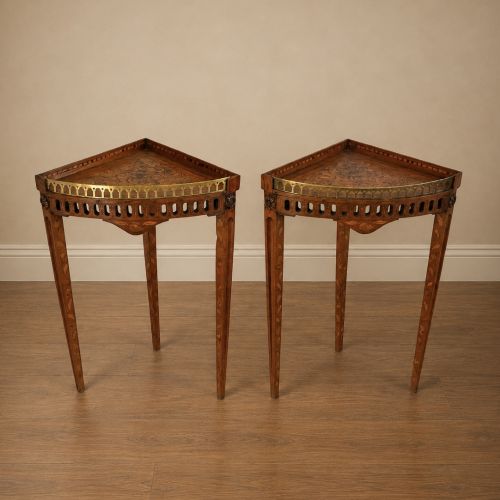
Many examples incorporate contrasting materials, pairing timber with inset marble tops, cast or chased ormolu mounts, and pierced brass galleries around the edges.
Construction techniques range from traditional joinery in eighteenth-century pieces to streamlined veneered carcasses in the art deco period.
Pair Walnut Side Tables Retail Price Guide 2026
Typical asking prices for pair walnut side tables among the pieces listed under this phrase on Sellingantiques today, from the lower quarter to the upper quarter. They describe what is for sale here now, not the wider market.
One exceptional hotel batch spent its early days holding midnight water glasses at The Savoy in London.
What Varies in Quality
Quality rests upon the selection and matching of the walnut veneers, where symmetrical grain patterns and figured burr walnut elevate a piece significantly above plain timber.
The refinement of secondary details, such as hand-carved mounts, precise marquetry inlay, and the heavy weight of genuine marble slabs, separates standard production from top-tier workshop output.
Gilbert Rohde·Maurice Adams
The Pair Walnut Side Tables Glossary
- Demilune
- Half-moon shaped furniture designed to sit flat against a wall. These console or lamp tables are typical of the Georgian era.
- Marquetry
- Decorative veneer patterns formed by fitting together small pieces of different woods. It creates elaborate pictorial designs on table tops.
- Parquetry
- Geometric wood inlay patterns resembling mosaics. This technique is common on the surfaces of art deco bedside cabinets.
- Burr walnut
- Wood taken from a tree growth that produces swirling grain patterns. Highly prized by makers for its decorative appearance.
Pair Walnut Side Tables: Frequently Asked Questions
How do I style pair walnut side tables?
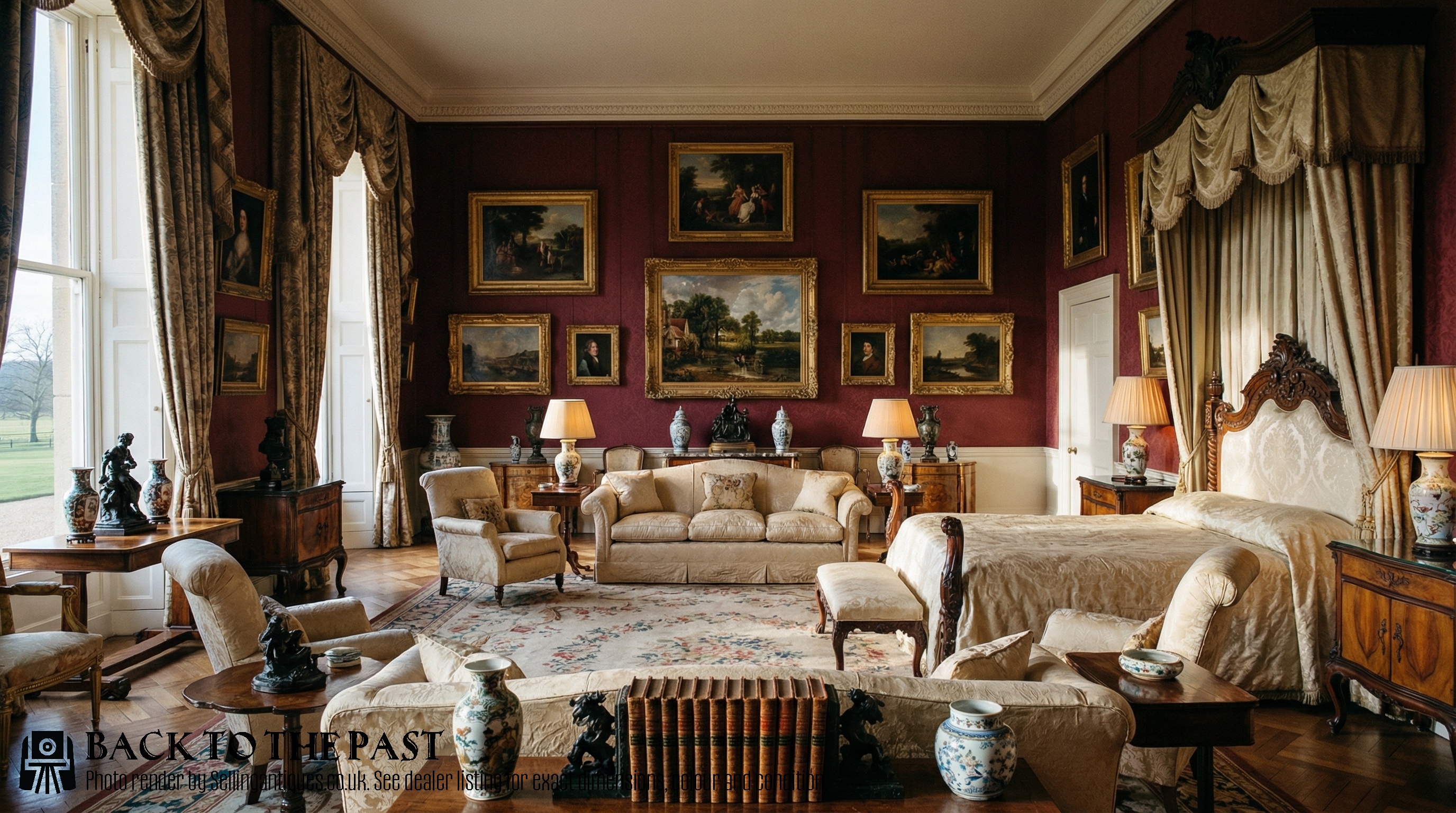
Symmetrical placement works best when flanking a bed or positioned beside a sofa. Keep lamps and decorative objects balanced to highlight the matching grain.
Allow the timber tones to complement surrounding furniture rather than attempting to match every wood finish in the room.
Are marble tops original to these tables?
Many French and Italian bedside cabinets were constructed specifically to hold inset marble slabs. These stone surfaces provided durable, water-resistant space for washing and night-time water jugs.
White and grey veined marble varieties appear frequently across nineteenth-century and art deco examples.
What is the difference between burr walnut and plain walnut?
Burr walnut comes from a knotted growth on the tree, yielding dense, swirling, and highly figured grain patterns. Plain walnut displays a straighter, more uniform grain structure.
Makers reserved burr veneers for the most prominent display surfaces like table tops and drawer fronts.
How do I identify art deco examples?
Art deco pieces favor geometric forms, drum shapes, and streamlined silhouettes without heavy carving. They rely on the natural beauty of figured walnut veneers and contrasting satinwood highlights.
These twentieth-century designs often incorporate simple hardware and clean lines suited to modern interiors.