

Antique Pedestal Bedside Tables
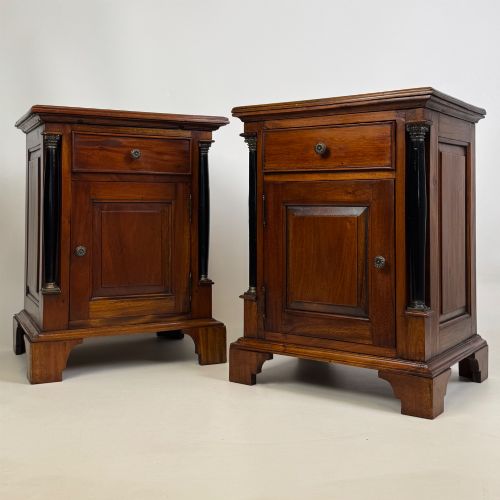
These antique pedestal bedside tables bring practical surface space and enclosed storage to the bedroom, grounding the room with period timber and traditional craftsmanship.
Antique Pedestal Bedside Tables
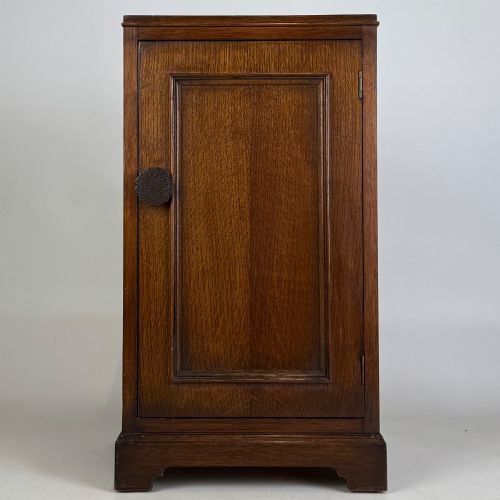
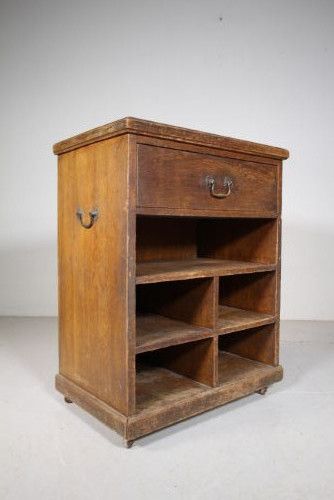
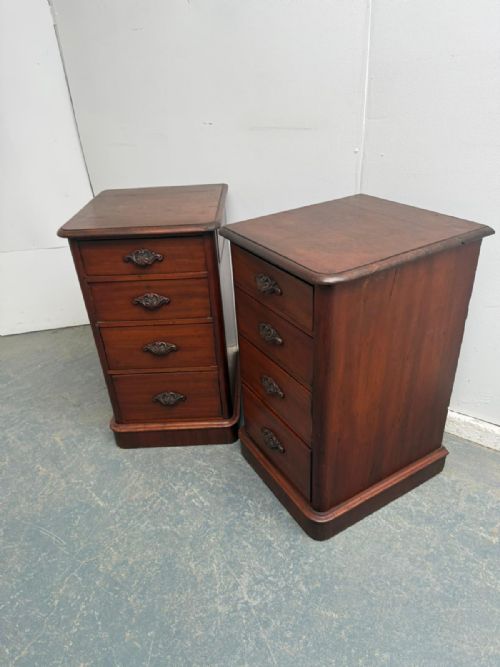
When you search for antique pedestal bedside tables, you encounter compact single-pedestal cupboards and matching pairs designed to sit beside a bed. The selection spans the Georgian, Victorian, and Edwardian eras, alongside later Art Deco examples.
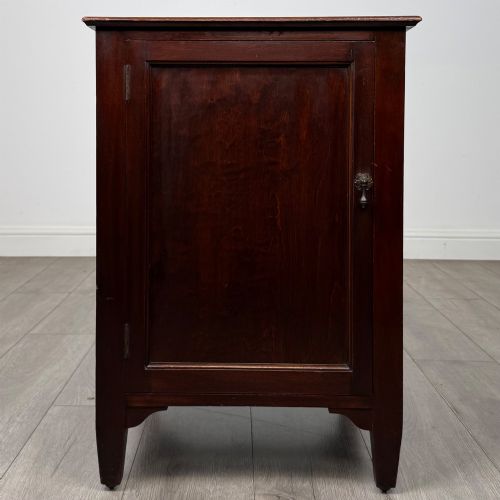
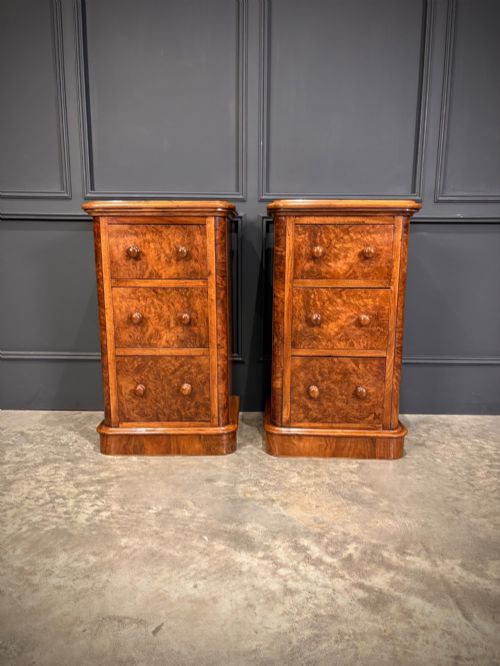
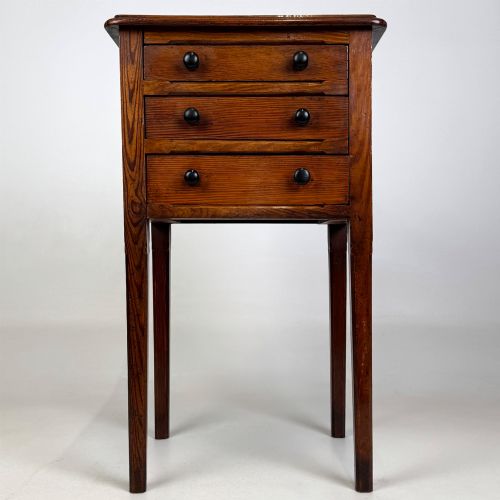
Mahogany and walnut predominate, often featuring single doors enclosing internal shelving or small banks of drawers. Formats range from simple freestanding cupboards to sophisticated inlaid cabinets.
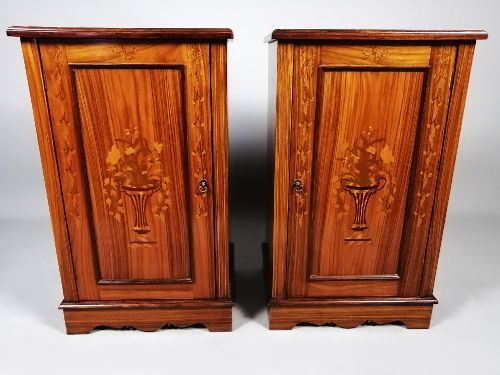
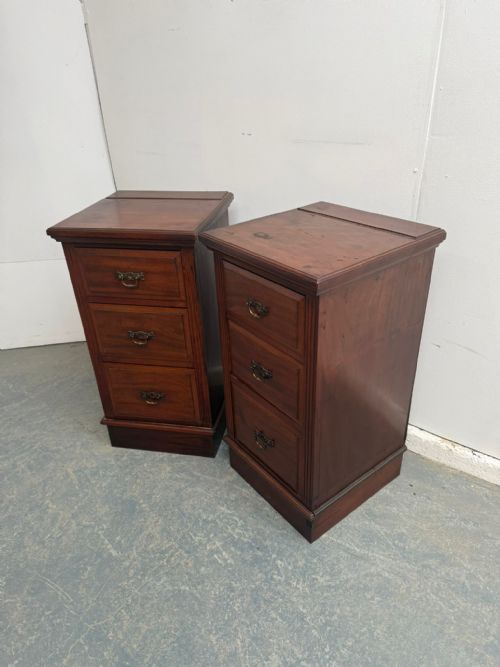
Victorian and Edwardian versions form the bulk of the offering, frequently constructed as matched pairs with panelled doors or small drawer configurations. Georgian and mid-eighteenth-century iterations appear alongside 1930s walnut and satinwood pieces.
Materials and Construction
Cabinet makers relied primarily on solid mahogany, walnut, burr walnut, and oak, often applying figured veneers to door fronts and tabletops. Secondary timbers such as pine or oak were utilised for internal framing and drawer linings.
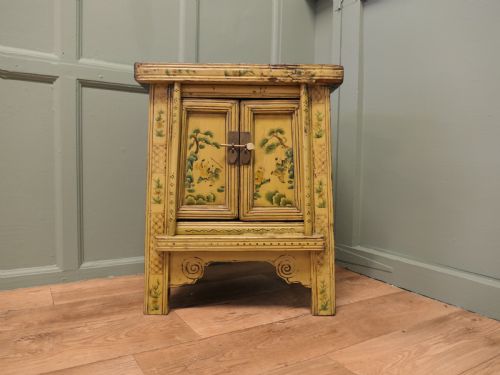
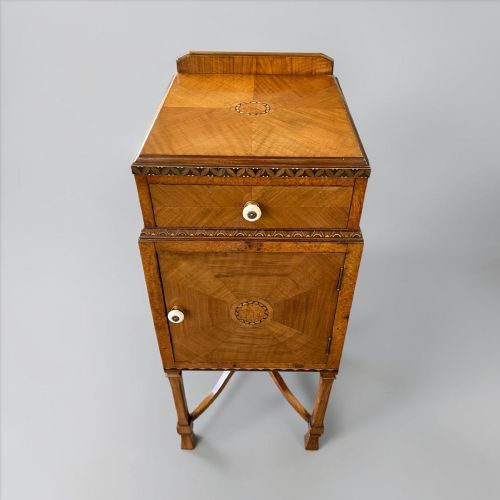
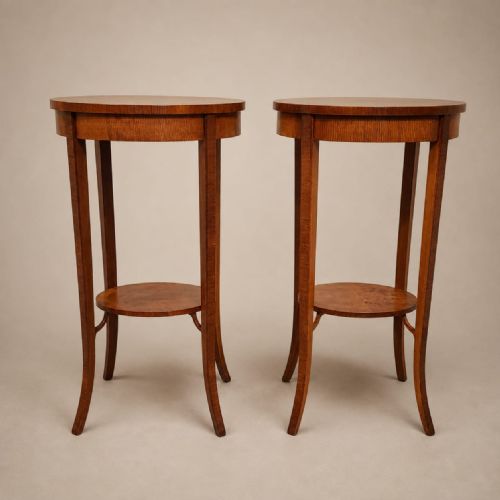
Surface ornamentation involved marquetry inlay, brass handles, and hand-applied wax finishes that highlight the grain of the wood. Some examples incorporate marble tops or hand-painted Chinoiserie decoration.
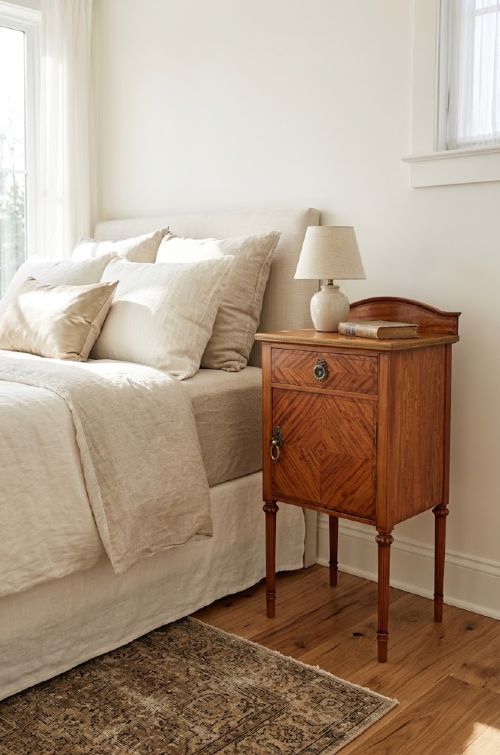
Joinery techniques relied on dovetailed drawer construction and mortise and tenon joints to ensure stability in daily use. Individual pieces display carved mouldings and turned pedestal supports specific to their period of manufacture.
Mahogany and walnut remain the most prevalent timbers across nineteenth-century listings.
Quality Variations
The degree of refinement in the timber selection and veneer matching determines the standing of an individual piece. Highly figured burr walnut or flame mahogany veneers indicate a more ambitious commission than plain secondary woods.
The crispness of carved details, the subtlety of marquetry work, and the original integrity of brass hardware separate standard utility pieces from high-workshop production. Surviving pairs command greater interest due to the difficulty of matching individual cabinets over time.
Walter Carter Harrods·Morant and Co·Holland and Sons
The Antique Pedestal Bedside Tables Glossary
- Marquetry
- Decorative patterns formed by fitting together small pieces of veneered wood into a larger surface. This technique creates complex pictorial or geometric designs on cabinet doors and tabletops.
- Burr walnut
- Timber taken from a growth on a walnut tree, yielding swirling, knotty grain patterns. Cabinet makers prized this wood for its decorative surface movement on luxury furniture.
- Nightstand
- An alternative term for a bedside table or small cabinet. The designation generally refers to low furniture designed to hold a chamber light or water jug during the night.
- Commodino
- An Italian term for a small bedside chest or cabinet. These often feature delicate inlay and proportions typical of continental neoclassical design.
- Flame mahogany
- Timber cut from the fork of a mahogany tree where the grain fans out in a flame-like figure. It was frequently selected for prominent drawer fronts and cupboard doors.
Antique Pedestal Bedside Tables: Frequently Asked Questions
How do I spot a matched pair?
Matched pairs display identical timber grain direction, matching hardware, and corresponding dimensions. Minor variations in hand-carved elements often confirm their period origin.
Inspect the internal construction and backboards to verify that both cabinets share the same workshop methods and ageing characteristics.
Were these originally made as pairs?
Many Victorian and Edwardian bedside cabinets were manufactured as pairs for twin beds or larger bedrooms. Single pieces often result from the separation of a set over time.
Georgian examples are more commonly found as single units because bedroom furniture was rarely produced in identical pairs during that period.
What fits inside these cabinets?
Internal spaces typically accommodate books, night-time essentials, and small personal items behind a single panelled door. Some versions include small drawers above the main cupboard space.
Dimensions vary, so checking the internal clearance helps determine if specific modern items will fit.
How do I care for antique timber?
Maintain the finish by applying natural beeswax periodically and buffing gently with a soft cloth. Avoid placing these tables near direct heat sources or strong sunlight to prevent veneer cracking.
Use coasters to protect polished mahogany and walnut surfaces from moisture.