
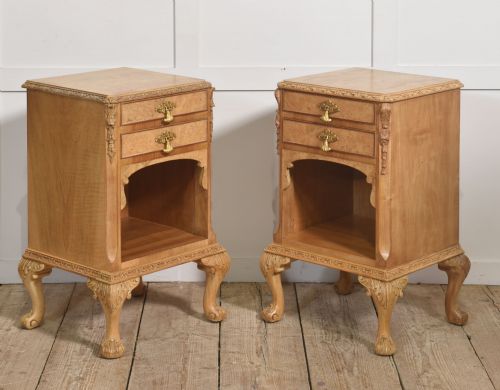


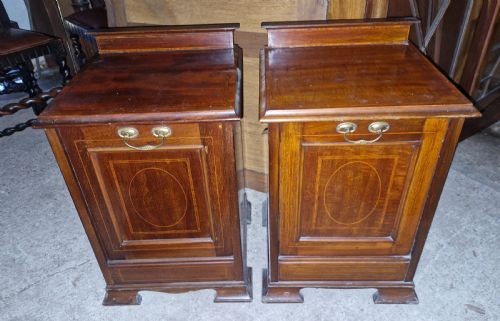


Matching Bedside Tables
Matching bedside tables solve the perennial problem of symmetry beside a bed, offering coordinated storage or display across periods from Georgian to Art Deco.
Matching Bedside Tables
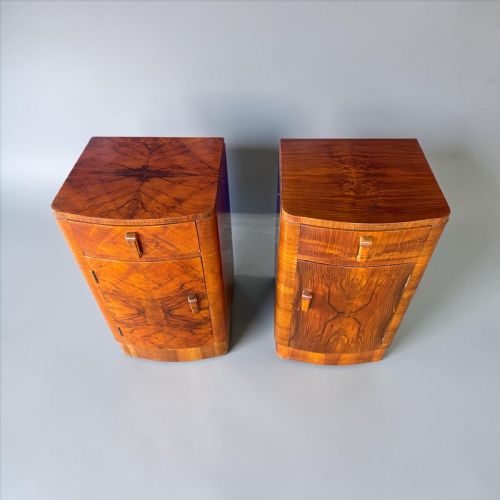
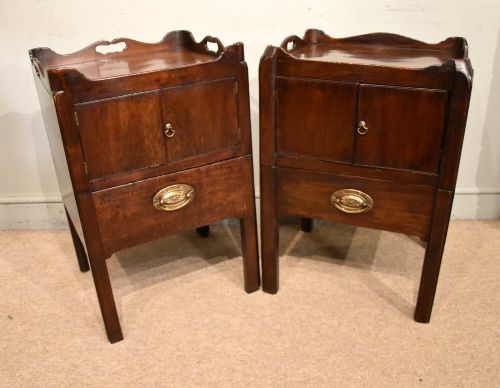
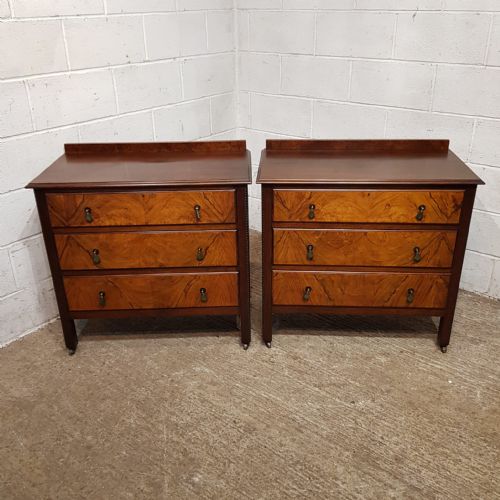
Matching bedside tables are pairs of coordinated night stands, cabinets or small chests designed to sit beside a bed. When you search for matching bedside tables, you encounter everything from compact Art Deco drum cabinets to substantial Victorian cylindrical cupboards and Georgian revival pieces.
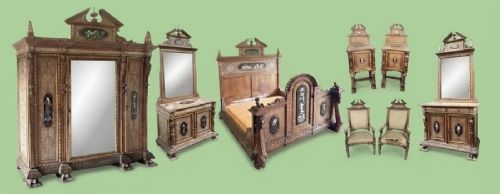
The version you are most likely to meet on this page is the Art Deco walnut or burr walnut cabinet from the nineteen thirties, often French or Italian in origin. These items frequently appear as part of larger bedroom suites that include matching beds and wardrobes, though pairs also turn up on their own.
Earlier examples stretch back through the nineteenth and eighteenth centuries, taking the form of mahogany cabinets, architectural washstands or inlaid Edwardian pieces. Whether French chateau style or Georgian revival, these items provide surface space and enclosed storage flanking the sleeping quarters.
Materials and Construction
Cabinet makers utilised dense timbers such as mahogany, oak and walnut, frequently applying fine veneers like burr walnut, blonde maple, elm and bird's-eye maple to the primary surfaces. These timbers were shaped into rectilinear, cylindrical or drum forms, sometimes incorporating marble tops or delicate marquetry inlay.
Construction techniques combined traditional joinery for the carcases with veneered panels, brass hardware and occasional carved ornamentation. French and Italian workshops often favoured sweeping curves and figured grain, whilst earlier English pieces relied on solid mahogany or architectural proportions.
Materials range from solid oak and mahogany to exotic veneers including blonde maple, bird's-eye maple and burr elm.
Judging Quality
Quality rests in the choice of timber and the precision of the matching veneers across both pieces in a pair. The finest examples display continuous or symmetrically arranged grain patterns on the drawer fronts and doors, turning functional storage into a balanced visual composition.
Construction integrity and hardware also dictate worth, distinguishing mass-produced items from superior cabinet work. Well-fitted doors, solid secondary woods in the drawer linings and original brass or cast fittings mark out the higher tier of these bedside furnishings.
Waring & Gillows·Gillows
The Matching Bedside Tables Glossary
- Burr walnut
- A figured timber obtained from the burl growths of walnut trees, prized for its swirling, organic patterns. It was frequently applied as a veneer on Art Deco and Victorian cabinet work.
- Bedside cabinet
- An enclosed piece of furniture with a door or drawers designed to hold night-time essentials. They offer more concealed storage than an open bedside table.
- Drum shaped
- A circular furniture form resembling a drum, popular in Art Deco designs. These pieces often feature curved doors opening to reveal interior shelving.
- Matched pair
- Two items produced at different times or by different means but selected for their striking similarity in timber, scale and style. They function together as a coordinated set beside a bed.
- Satinwood
- A pale, lustrous hardwood used for fine furniture and decorative inlay during the eighteenth and nineteenth centuries. It provides a bright contrast against darker timbers like mahogany.
Matching Bedside Tables: Frequently Asked Questions
Are all matching bedside tables sold as pairs?
Most listings comprise matched or original pairs designed to sit symmetrically on either side of a bed. Collectors and decorators specifically seek these coordinated sets to maintain visual balance in a bedroom.
Occasionally, single tables appear, but true pairs dominate the offerings, especially from the Art Deco period and within larger bedroom suites.
How do I fit Art Deco tables into a traditional room?
Art Deco bedside tables bring warmth and geometric elegance through figured veneers like burr walnut and blonde maple. Their clean lines contrast well with traditional architecture.
Pairing them with neutral walls allows the rich grain of the wood to stand out without competing with other antique furnishings in the space.
How do I identify a Georgian revival piece from an original?
Georgian revival pieces date from later periods such as the Edwardian era or the early twentieth century, emulating the mahogany timber and classical proportions of the eighteenth century. Examining the interior construction, secondary woods and hardware reveals the true age.
Original eighteenth-century cabinets show hand-cut joinery and signs of period wear that later revivals simply do not possess.