





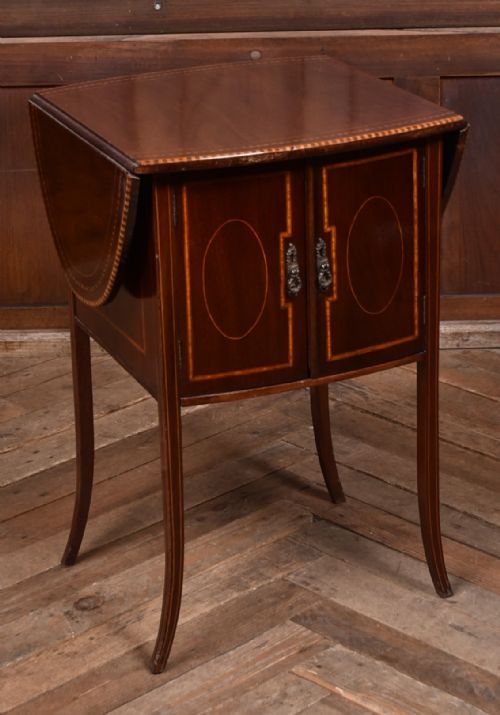

Vintage Satinwood Nightstands
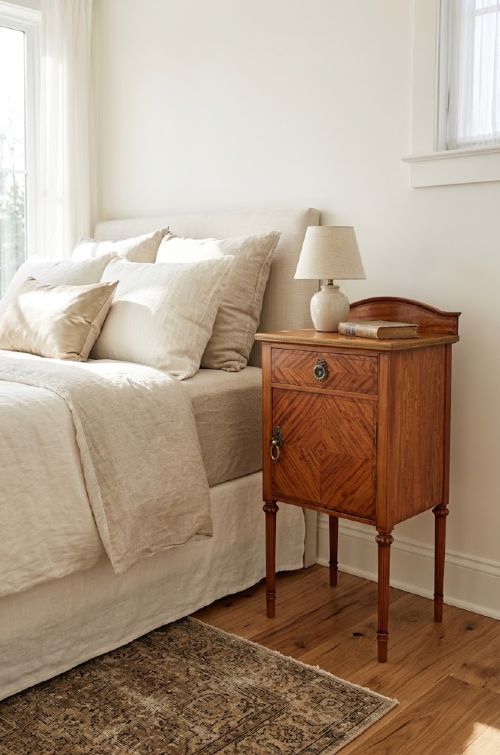
Vintage satinwood nightstands are compact bedroom storage pieces that bring light timbers and refined inlay into period schemes.
Vintage Satinwood Nightstands
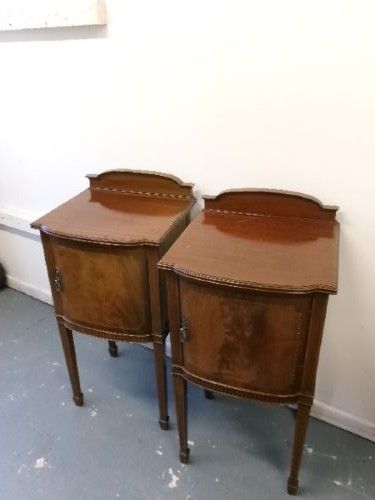
Vintage satinwood nightstands encompass bedside cupboards, tables, and cabinets designed to hold nighttime essentials while introducing a pale, figured timber surface to the bedroom. These pieces frequently appear from the Edwardian era and the Victorian period, though examples stretch into Art Deco designs and the early twentieth century.
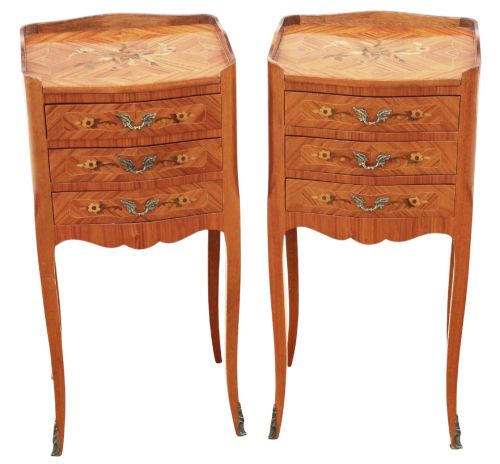
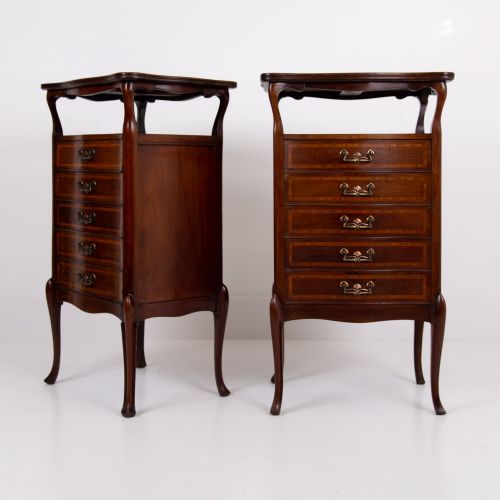
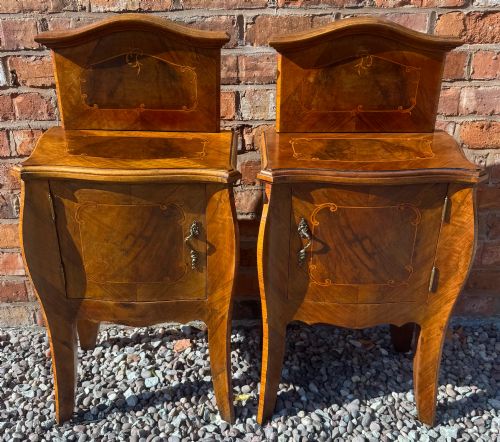
The buyer meets various formats on this page, ranging from single cupboards to matched pairs featuring inlaid decoration. Forms extend beyond traditional cabinets to include drop-leaf occasional tables and side tables utilised for bedside placement.
Originating largely from British and French design vocabularies, these cabinets reflect revival movements such as Sheraton Revival and Neo-Classical styles. Their compact proportions make them suitable for modern interiors requiring period character without heavy mass.
Materials and construction
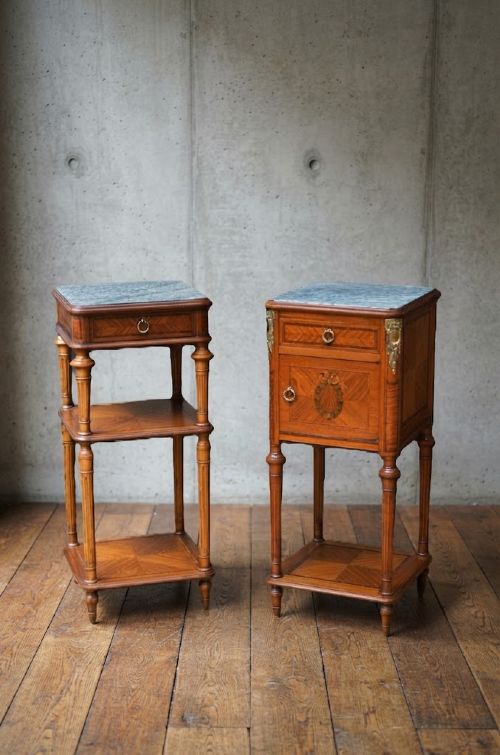
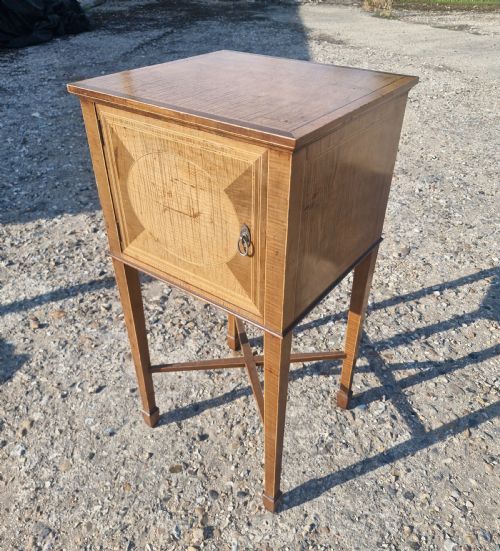
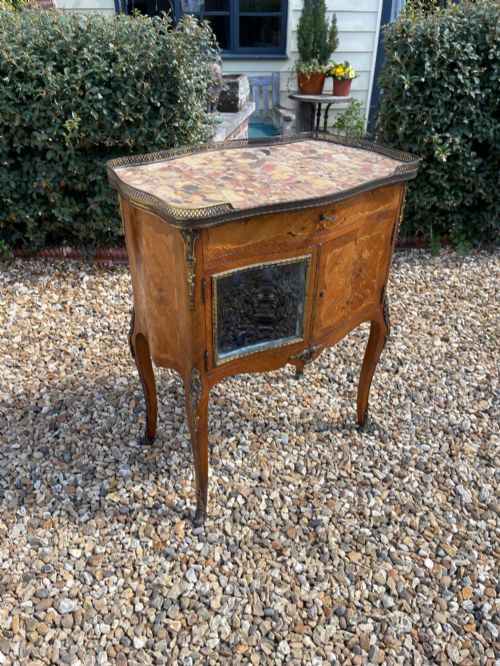
Makers utilised satinwood as a primary veneer or solid timber, often combining it with contrasting woods like mahogany, walnut, and boxwood for decorative stringing and marquetry. Brass hardware, marble tops, and glass elements appear across various pieces to provide functional durability and visual contrast.
Cabinetmakers employed techniques such as parquetry and intricate inlay to articulate geometric and floral motifs across drawer fronts and cupboard doors. The structural carcass typically relied on solid mahogany or pine underneath fine satinwood veneers.
Some Edwardian shoe cabinets disguise their practical function behind elegant satinwood doors fit for any bedroom.
Assessing quality in construction and design
Quality reveals itself in the crispness of the inlay and the selection of figured satinwood veneers. Superior examples display seamless grain matching across panels and precise juxtaposition of contrasting timber stringing.
The integrity of the structural joinery and the original hardware distinguish finer cabinets from standard workshop production. Cabinets bearing maker stamps or specific cabinet-making attribution demonstrate higher workshop standards.
Morant Co London·Betty Joel·Gillows·Maple Co
The Vintage Satinwood Nightstands Glossary
- Satinwood
- A dense, lustrous hardwood known for its golden-yellow sheen and smooth grain. It serves as a primary decorative veneer in late nineteenth and early twentieth century furniture.
- Marquetry
- The art of applying pieces of veneer to a structure to form decorative patterns and pictorial designs. This technique frequently defines the doors and tops of Edwardian and Art Deco cabinets.
- Sheraton Revival
- A late nineteenth and early twentieth century design movement that reinterpreted the elegant, classical furniture forms of George Sheraton. Pieces from this style often feature delicate satinwood and inlaid boxwood.
- Parquetry
- A geometric mosaic of wood pieces used for decorative floors and cabinet surfaces. It appears on lamp tables and bedside chests to create structured surface patterns.
- Bow Front
- A convex curved cabinet front that softens the angles of bedroom furniture. This contour is characteristic of refined Sheraton Revival bedside pieces.
Vintage Satinwood Nightstands: Frequently Asked Questions
What is a satinwood nightstand?
A satinwood nightstand is a small bedroom cabinet or table constructed using pale, figured satinwood timber. These pieces provide enclosed or open storage beside a bed.
They emerged strongly during the Victorian and Edwardian eras, often featuring delicate marquetry and contrasting wood inlays.
How do I care for satinwood?
Satinwood requires gentle dusting with a soft, dry cloth to preserve its polished surface. Avoid placing these pieces in direct sunlight or near heat sources to prevent veneer cracking.
Applying occasional specialist wax helps maintain the natural lustre of the timber.
Are these cabinets sold in pairs?
Many bedside cabinets and tables on this page are offered as matched pairs for symmetrical bedroom placement. Single cabinets also appear frequently for alternative layouts.
Pairs often originate from the same Edwardian or Art Deco suites.
How do I date a nightstand?
Dating relies on examining construction methods, timber choices, and stylistic revival markers. Edwardian and Victorian pieces typically display hand-cut dovetails and specific inlay motifs.
Art Deco examples introduce geometric forms and pairings with walnut.